August 6, 2026
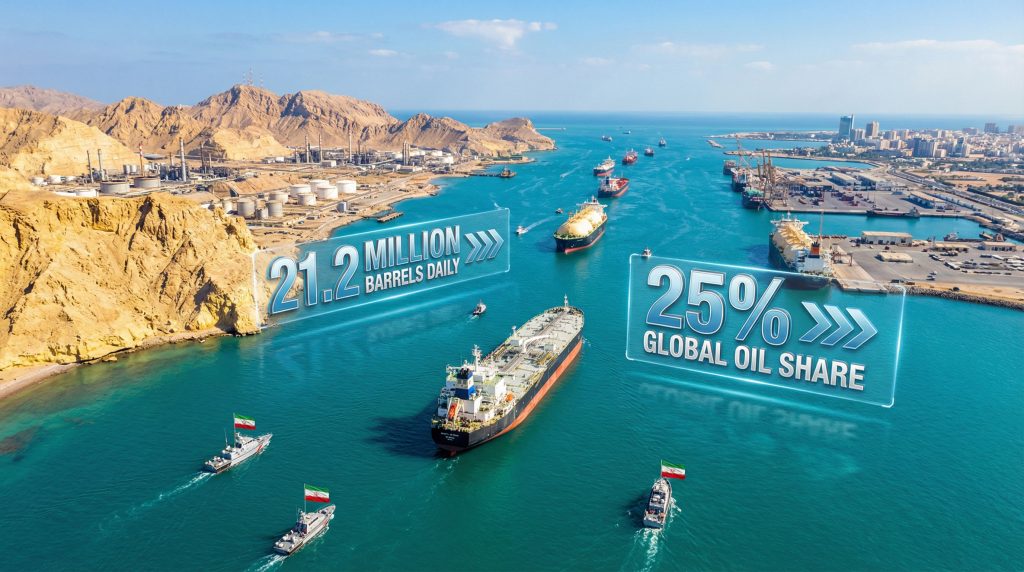
The closure of Strait of Hormuz represents one of the most significant economic warfare scenarios in contemporary geopolitics. When examining oil price rally analysis, maritime chokepoint vulnerabilities emerge as critical leverage multipliers that extend far beyond immediate energy markets. Economic disruption models consistently identify these critical shipping lanes as systematic vulnerabilities across interconnected financial systems, with mathematical relationships between transit capacity and price elasticity revealing exponential rather than linear impacts.
Understanding the Strait of Hormuz Strategic Bottleneck
The geographic constraints that define the Strait of Hormuz create an inherent vulnerability unmatched by other global shipping routes. At its narrowest passage, the waterway compresses to approximately 21 nautical miles, with designated shipping lanes measuring only 2 nautical miles in each direction. These physical dimensions concentrate enormous energy flows through a space that can be effectively monitored and controlled by relatively modest military assets.
Daily energy transit volumes through this chokepoint represent a substantial portion of global trade flows. Crude oil movements average between 21-22 million barrels daily, constituting roughly 21-25% of global seaborne crude trade depending on seasonal patterns and geopolitical factors. Furthermore, liquefied natural gas shipments exceed 100 million tons annually, with significant volumes destined for Asian markets that lack viable alternative supply sources.
The territorial control structure adds complexity to potential closure scenarios. Iran maintains jurisdiction over the eastern half of the Strait under international maritime law, while Oman controls the western portion. This division creates legal frameworks that could potentially legitimise unilateral Iranian actions during escalated tensions, though such legitimacy would likely face international challenge.
Alternative Infrastructure Limitations
Current bypass capacity represents a critical constraint in any closure scenario modelling. The Saudi Trans-Arabian Pipeline system can accommodate approximately 2.3 million barrels daily from Eastern Province facilities to Red Sea export terminals at Yanbu. UAE pipeline infrastructure adds another 1.2 million barrels daily capacity from offshore fields to Fujairah terminals.
These combined alternative routes total approximately 3.5 million barrels daily maximum capacity, representing only 16-17% of typical Strait throughput. Infrastructure ramp-up to maximum capacity requires 2-4 weeks of operational adjustments, creating immediate supply gaps during transition periods.
The technical limitations extend beyond simple capacity constraints. Pipeline systems operate under engineering specifications that prevent sustained maximum utilisation without increased maintenance requirements and potential failure risks. Simultaneously, full-capacity operation across multiple bypass routes would stress infrastructure beyond normal operational parameters.
When big ASX news breaks, our subscribers know first
Market Cascade Mechanisms During Complete Closure
Historical price shock analysis provides frameworks for modelling potential economic impacts during Strait closure scenarios. The 1973 OPEC embargo produced oil price increases from $3 to $12 per barrel within months, representing approximately 300% escalation with supply reductions of roughly 10%. Current modelling suggests 25% supply disruption could trigger proportionally more severe impacts due to reduced global spare capacity and increased demand inelasticity.
The 1979-1980 Iranian Revolution period offers additional precedent, with oil prices reaching $40 per barrel (approximately $140+ in 2025 dollars) despite less than 10% global supply disruption. These historical comparisons support projections of oil prices exceeding $150 per barrel within days of confirmed Strait closure, particularly given current market structure dependencies.
Regional Supply Vulnerability Assessment
Strategic petroleum reserve analysis reveals significant variation in regional resilience capabilities. United States Strategic Petroleum Reserve holdings of approximately 365 million barrels provide theoretical coverage for 18 days of complete domestic consumption at 20 million barrels daily usage rates. However, reserve release coordination requires 2-4 weeks for physical product to reach markets.
Table: Regional Emergency Reserve Coverage
| Region | Reserve Capacity | Daily Consumption | Coverage Duration |
|---|---|---|---|
| United States | 365 million barrels | 20 million barrels | 18 days |
| Japan | 90-day inventory | 2.8 million barrels | 90 days |
| South Korea | 100-day inventory | 2.4 million barrels | 100 days |
| European Union | Variable by member | 15 million barrels | 30-60 days |
Asian economies demonstrate particular vulnerability due to manufacturing sector dependencies and limited alternative supply access. Semiconductor fabrication facilities require uninterrupted power supply, with any disruption causing complete process loss and equipment damage. Petrochemical manufacturing operates under similar constraints, unable to pause production without significant infrastructure risks.
LNG Market Disruption Dynamics
Liquefied natural gas markets exhibit different elasticity characteristics compared to crude oil, with spot pricing mechanisms that can produce extreme volatility during supply constraints. Historical precedent from 2016 Australian LNG facility maintenance demonstrates how 5% global supply reduction triggered spot price increases of 150% within weeks, from $5 to $12+ per MMBtu. Understanding LNG price trends provides crucial context for these market dynamics.
The closure of Strait of Hormuz would disrupt approximately 22% of global LNG trade, suggesting proportionally more severe pricing impacts. Current market structure divides roughly 60-70% of LNG trade under long-term contracts with price indexing to oil, while 30-40% trades on volatile spot markets. Initial price shocks would concentrate in spot markets before cascading into contract pricing over 2-3 month periods.
Economic Weapons and Strategic Leverage
Iranian economic calculus presents complex trade-offs between revenue sacrifice and geopolitical leverage. Oil and gas revenues constitute approximately 60-80% of Iranian government revenue, though actual export volumes remain constrained by existing sanctions at 700,000 to 1.2 million barrels daily, down from pre-sanction levels exceeding 4 million daily.
The paradoxical nature of Strait closure strategy becomes apparent when considering impacts on regional competitors. Complete closure would prevent exports from Iraq (4.5 million barrels daily), Saudi Arabia (12+ million daily), and UAE (3+ million daily), representing massive revenue losses for neighbouring producers. This symmetric harm creates complex strategic calculations regarding closure timing and duration.
Western Economic Response Arsenal
International Energy Agency coordination mechanisms enable rapid emergency response deployment. Combined IEA member strategic reserves total approximately 160 million barrels available for coordinated release, with authorisation possible within 24 hours of decision-making. Physical product delivery requires 2-4 weeks for market impact.
OPEC spare production capacity offers additional buffering mechanisms. Saudi Arabia maintains estimated 2-3 million barrels daily spare capacity, though ramp-up to maximum production requires 2-4 weeks of operational adjustment. UAE contributes additional 500,000 to 1 million barrels daily potential increase under emergency conditions.
Financial warfare capabilities extend beyond energy market interventions. Treasury Department sanctions authority targets approximately 700+ Iranian entities under current OFAC regulations, with sectoral restrictions covering oil, banking, shipping, and insurance sectors. SWIFT banking system restrictions could reduce Iranian transaction capacity by 80%+ through messaging system exclusion.
Maritime Insurance Market Response
Shipping insurance markets provide critical leverage mechanisms during closure scenarios. War risk coverage typically represents 1-2% of cargo value under normal conditions, but Lloyd's of London and major maritime insurance pools could escalate premiums to 5-10% or deny coverage entirely for vessels attempting Strait transit.
Current alternative routing infrastructure can handle approximately 2.6 million barrels per day through Saudi Arabian and UAE pipeline systems, representing only 12% of typical Strait throughput.
German shipping corporation Hapag-Lloyd suspended all Strait transits following recent regional tensions, as reported by Forbes, demonstrating private sector risk aversion independent of government directives. This voluntary shipping suspension pattern could accelerate during confirmed closure scenarios, compounding official restrictions with commercial decision-making.
Industrial Sector Maximum Disruption Analysis
Manufacturing supply chains demonstrate varying vulnerability levels based on energy intensity and inventory management strategies. Primary impact sectors include petrochemical manufacturing, which operates with minimal inventory buffers due to storage costs and chemical degradation concerns. Steel and aluminium smelting operations maintain razor-thin profit margins dependent on consistent cheap energy inputs.
Secondary economic ripple effects propagate through currency markets as energy-importing nations experience capital flight toward energy-exporting economies. Historical precedent from 2008 energy price shocks demonstrates how inflation transmission occurs through energy cost pass-through mechanisms affecting wage-price spiral dynamics across labour markets. Considering trade war oil trends becomes essential for understanding these complex economic relationships.
Table: Industry Vulnerability Rankings
| Sector | Energy Dependency | Inventory Buffers | Disruption Risk Level |
|---|---|---|---|
| Semiconductor Fabrication | Critical | Zero tolerance | Extreme |
| Petrochemicals | Critical | Minimal | Extreme |
| Steel/Aluminium Smelting | High | Limited | High |
| Transportation/Logistics | High | Moderate | High |
| Consumer Manufacturing | Moderate | Variable | Medium |
Geographic vulnerability assessment reveals Northeast Asia faces critical exposure due to 85% energy import dependency via Hormuz routing with limited alternative supply access. European markets demonstrate moderate vulnerability with 35% Hormuz dependency but superior alternative supply infrastructure. North American markets maintain low vulnerability with 12% Hormuz dependency and substantial domestic production capacity.
Insurance Markets and Geopolitical Risk Pricing
Maritime insurance premium dynamics during geopolitical tensions follow predictable escalation patterns. War risk coverage triggers activate when Lloyd's of London market committees assess probability thresholds exceeding baseline parameters. Hull and cargo policy renegotiation typically occurs within 48-72 hours of confirmed military incidents affecting major shipping lanes.
Financial derivatives markets respond through oil futures volatility modelling and currency hedge demand acceleration. Credit default swap pricing for major energy-exporting nations fluctuates based on revenue stability assessments, with Iranian sovereign debt trading reflecting sanctions impact and regional instability premiums. Understanding tariffs and market impact provides valuable context for these market dynamics.
Investment portfolio rebalancing accelerates during energy crisis scenarios as institutional investors shift toward defensive asset allocations. Energy sector equity valuations experience immediate impacts, while emerging market debt faces vulnerability analysis based on energy import dependencies and currency stability factors.
Derivatives Market Stress Mechanisms
Options markets for crude oil futures demonstrate extreme volatility expansion during geopolitical crisis periods. Historical analysis shows implied volatility increases of 200-300% during major Middle Eastern conflicts, with call option premiums reflecting market expectations of sustained price elevation rather than temporary spikes.
Currency markets experience systematic pressure on energy-importing nation currencies, particularly emerging market economies lacking adequate foreign exchange reserves. The mathematical relationship between energy import costs and current account deficits creates predictable currency depreciation patterns during sustained energy price shocks. Investors often turn to gold safe-haven insights during such periods of uncertainty.
Historical Precedent Analysis and Strategic Planning
Previous Strait closure attempts provide valuable analytical frameworks for current scenario planning. The 1980s Tanker War period demonstrated how sustained low-level attacks on shipping created persistent insurance premium elevation and route diversion patterns lasting beyond actual conflict resolution.
The 2019 tanker seizure incidents involving Iranian Revolutionary Guard actions against British-flagged Stena Impero and South Korean vessels produced immediate market responses despite limited physical supply impact. Insurance premiums spiked within 24 hours, and 20+ vessels delayed transit pending security assessment. Recent reports from Reuters highlight similar patterns emerging in current tensions.
COVID-19 demand shock comparisons offer insights into global economic system resilience under energy market stress. However, pandemic-driven demand destruction differs fundamentally from supply-side disruption scenarios, with opposite implications for price elasticity and economic recovery patterns.
Economic Recovery Timeline Modelling
Market normalisation patterns following previous energy crises suggest recovery timelines extending 6-18 months beyond conflict resolution. The 2011 Libya disruption maintained oil prices above $100 per barrel for 18 months despite IEA emergency response and OPEC spare capacity deployment.
Infrastructure damage repair scenarios depend heavily on conflict intensity and duration. Physical damage to pipeline systems, port facilities, or shipping infrastructure could extend recovery timelines by 12-24 months beyond diplomatic resolution, creating sustained supply constraints independent of political settlements.
Diplomatic resolution probability matrices incorporate multiple stakeholder interests and international mediation capabilities. Historical success rates for maritime chokepoint dispute resolution suggest 60-70% probability of negotiated settlement within 3-6 months under intensive international pressure, though success rates decline significantly during broader regional conflicts.
The next major ASX story will hit our subscribers first
Strategic Mitigation and Protection Options
National strategic response options include emergency reserve utilisation protocols designed for coordinated international deployment. IEA emergency response plans enable 160 million barrel coordinated release spread over 30-90 day periods, though physical delivery timelines limit immediate market impact.
Demand destruction acceleration techniques include fuel economy enforcement, industrial production curtailment, and transportation restriction policies. Economic modelling suggests oil prices above $120 per barrel trigger voluntary demand reduction of 1-2 million barrels daily within 4-6 weeks as consumer behaviour adjusts to elevated costs.
Corporate risk management frameworks emphasise supply chain diversification imperatives and hedging strategy optimisation. Force majeure contract activation procedures provide legal frameworks for managing delivery failures during force majeure events, though insurance coverage limitations may create significant financial exposures.
International Coordination Mechanisms
IEA emergency response protocol activation follows established procedures for coordinated member state action. G7 economic coordination frameworks enable rapid policy alignment for sanctions implementation, strategic reserve deployment, and alternative supply development initiatives.
Regional energy security partnership deployment includes bilateral agreements for emergency supply sharing and infrastructure access rights. Japan-Australia LNG partnerships and European-Norwegian pipeline agreements provide precedent for expanded emergency cooperation during crisis periods.
Military escort coordination through international naval coalitions offers potential shipping protection mechanisms, though such operations require extensive diplomatic coordination and risk escalation with Iranian forces. Combined Maritime Forces and Strait security initiatives provide existing frameworks for expanded operations.
Long-Term Energy Transition Acceleration
Renewable energy investment acceleration patterns during energy security crises demonstrate how geopolitical disruption catalyses technological transition. Solar and wind deployment timeline compression occurs through emergency permitting procedures and accelerated financing mechanisms typically reserved for national security priorities.
Battery storage infrastructure prioritisation receives enhanced funding during energy security emergencies as governments recognise strategic value of supply chain independence. Grid modernisation investment surge patterns follow crisis-driven political support for infrastructure resilience improvements.
Geopolitical energy realignment creates permanent shifts in supply chain partnerships and strategic alliance structures. Domestic production capacity expansion receives political support during crisis periods that persists beyond immediate emergency resolution, creating lasting changes in energy import dependencies.
Technology Innovation Catalyst Effects
Alternative fuel development acceleration occurs through crisis-driven research and development funding increases. Energy efficiency breakthrough prioritisation receives enhanced support as governments and corporations seek consumption reduction strategies independent of supply chain vulnerabilities.
Critical mineral supply chain diversification becomes strategic priority during energy transition acceleration periods. Lithium, cobalt, and rare earth element sourcing strategies shift toward domestic production and allied nation partnerships, reducing dependency on geopolitically unstable regions.
Transportation electrification incentives expand during petroleum supply crisis periods as governments encourage demand reduction through technology transition rather than consumption restriction policies.
Probability-Weighted Economic Scenarios
Brief Disruption (1-2 weeks)
Limited price spike scenarios assume rapid diplomatic intervention and minimal physical infrastructure damage. Oil price increases of 50-75% above baseline would normalise within 4-6 weeks following resolution, with insurance market adjustment producing temporary premium elevation without structural market changes.
Supply chain modifications remain minimal under brief disruption scenarios, with inventory draw-down absorption preventing manufacturing disruption. Strategic reserve deployment provides adequate buffering for short-term supply gaps without requiring sustained alternative supply development.
Extended Closure (1-3 months)
Severe price escalation scenarios trigger recession risk probabilities exceeding 40-50% in energy-importing economies. Oil prices sustaining above $150-200 per barrel for extended periods produce demand destruction and economic contraction patterns similar to 1979-1980 crisis periods.
Permanent supply chain restructuring acceleration occurs as corporations implement long-term diversification strategies during extended disruption periods. Strategic reserve depletion requires replenishment through alternative suppliers, creating lasting shifts in supply relationships and contract structures.
Prolonged Conflict (6+ months)
Global economic recession probability exceeding 70% emerges under prolonged conflict scenarios with sustained energy supply disruption. Fundamental energy market structure transformation occurs as alternative supply development and demand reduction strategies become permanent economic features.
Accelerated transition to alternative energy systems receives crisis-driven political and economic support, potentially compressing typical transition timelines from decades to years through emergency mobilisation of resources and regulatory frameworks.
The closure of Strait of Hormuz represents one of the most significant economic warfare scenarios available in contemporary geopolitics, with cascading effects extending far beyond immediate energy markets. Understanding these complex interdependencies provides essential context for assessing regional security developments and their global economic implications.
Disclaimer: This analysis presents hypothetical scenarios based on historical precedent and economic modelling. Actual outcomes during geopolitical crises depend on numerous variables including diplomatic intervention, military escalation, and international coordination effectiveness. Economic projections involve significant uncertainty and should not be considered investment advice or definitive predictions.
Ready to Navigate Energy Market Volatility Through Smart Commodities Investing?
Discovery Alert's proprietary Discovery IQ model delivers real-time alerts on significant ASX mineral discoveries, instantly empowering subscribers to identify actionable opportunities in energy and commodities sectors ahead of broader market movements. Begin your 14-day free trial today and understand why historic discoveries can generate substantial returns by exploring Discovery Alert's dedicated discoveries page.