June 18, 2026
Sasol's recent coal destoning plant represents one of the mining industry's most sophisticated approaches to addressing feedstock quality challenges in integrated energy operations. As coal-fired gasification systems face increasing pressure to maximise efficiency while managing equipment wear, density-based separation methods have emerged as critical infrastructure investments for industrial facilities requiring consistent fuel specifications.
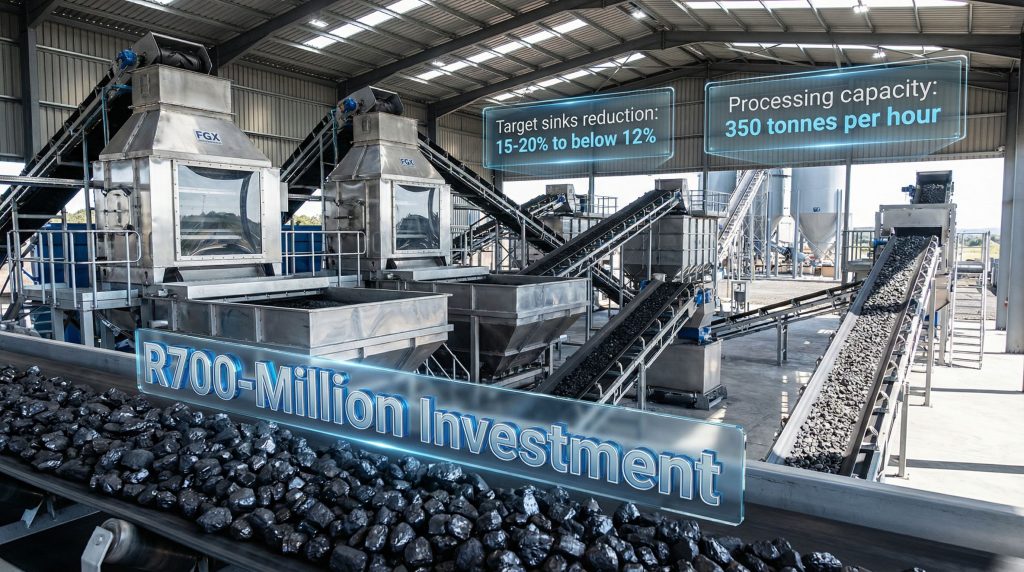
Furthermore, the fundamental engineering principles underlying destoning operations centre on exploiting specific gravity differences between coal particles and rock fragments. Modern facilities employ multiple separation technologies working in sequence to achieve target quality parameters, with capital investments often exceeding R700 million for large-scale implementations capable of processing millions of tonnes annually. In addition, these developments align closely with broader mining industry trends towards technological integration and operational optimisation.
Understanding Coal Destoning Technology: Operational Mechanics and Quality Enhancement
Coal destoning fundamentally operates through density-based separation principles, exploiting the specific gravity differential between coal particles (typically 1.2-1.5 g/cm³) and rock fragments or "sinks" (generally 2.5-3.0 g/cm³). This physical characteristic enables mechanical separation through various beneficiation technologies designed to stratify materials according to their settling velocities in air or liquid media.
Critical Performance Parameters:
- Target sinks reduction: From baseline levels of 15-20% to operational targets below 12%
- Premium quality output: Achieving 0-1.5% sinks content for specialised applications
- Processing throughput: Industrial facilities typically handle 8-12 million tonnes annually
- Investment threshold: R600-800 million for integrated beneficiation complexes
The Sasol coal destoning plant, operational since December 2025, demonstrates practical implementation of these principles at industrial scale. The facility successfully reduces sinks content to approximately 12% total content in coal delivered to gasification operations, representing a substantial improvement from typical raw coal quality parameters.
Modern destoning plants achieve superior separation efficiency through multi-stage processing approaches. Dense medium separation circuits utilise magnetite suspensions to create precise specific gravity cutpoints, while pneumatic systems employ air-pulsed stratification for water-free processing. However, these technologies enable continuous quality improvement while maintaining high throughput rates essential for industrial supply chains.
Quality Control Integration:
- Real-time ash content monitoring through X-ray transmission systems
- Automated particle sorting based on density and composition analysis
- Process optimisation through sensor-based feedback mechanisms
- Statistical quality control protocols ensuring consistent output specifications
Consequently, the economic justification for destoning investments stems from downstream operational benefits rather than commodity price premiums alone. Improved coal quality translates directly into enhanced gasifier performance, reduced maintenance requirements, and extended equipment lifecycles in synthetic fuel production facilities.
When big ASX news breaks, our subscribers know first
Advanced Separation Technologies: Engineering Solutions for Industrial Coal Processing
Pneumatic Jig Systems (FGX Technology)
Pneumatic separation represents the most water-efficient approach to coal beneficiation, utilising air-pulsed density stratification to separate materials based on settling characteristics. These systems process up to 350 tonnes per hour for +6mm coal fractions while preserving inherent moisture content and calorific values.
The air-pulsed mechanism creates differential motion between coal and rock particles, with denser materials penetrating the fluidised bed while lighter coal particles remain suspended. This continuous separation process eliminates water requirements while maintaining precise quality control over output streams.
Dense Medium Separation (DMS) Circuits
Dense medium systems employ magnetite suspensions to create artificial density environments where particles with specific gravities above the medium sink while lighter materials float. Typical operating densities range from 1.4-1.8 g/cm³, enabling precise separation control for various coal quality specifications.
DMS circuits achieve separation efficiencies exceeding 95% for particles larger than 1mm, making them particularly effective for coarse coal fractions. The magnetite recovery systems enable continuous medium recycling, maintaining operational economics despite higher capital requirements.
X-Ray Transmission (XRT) Sorting
XRT technology provides real-time compositional analysis of individual coal particles, enabling automated sorting decisions based on ash content, sulphur levels, and density characteristics. High-speed pneumatic ejection systems remove reject particles with millisecond response times, achieving precise quality control at industrial throughput rates.
This sensor-based approach particularly benefits fine coal processing where conventional gravity separation becomes less effective. XRT systems can process materials down to 6mm particle size while maintaining sorting accuracy above 90%.
Air Table Stratification
Air tables utilise differential particle motion across inclined vibrating surfaces with controlled airflow patterns. Materials separate based on density differences as particles follow distinct trajectories according to their aerodynamic properties. This technology proves especially effective for fine coal fractions where other separation methods show reduced efficiency.
The continuous flow processing capability enables integration with other separation technologies in multi-stage beneficiation circuits. Air tables typically achieve 80-85% separation efficiency for particles in the 0.5-6mm size range.
Industrial Applications: Gasifier Performance Enhancement Through Quality Optimisation
Mechanical Equipment Protection
Destoned coal delivery to gasification facilities directly addresses one of the most persistent operational challenges in synthetic fuel production. Rock fragments in coal feedstock cause accelerated wear on gasifier internals, particularly refractory linings, feed systems, and gas cleanup equipment.
Sasol Secunda Operations experienced a 10% period-on-period output increase to 3.7 million tonnes during the interim period following destoning plant commissioning. This performance improvement reflects both enhanced feedstock quality and reduced unplanned shutdowns associated with equipment damage from high-sinks coal.
Gasifier refractory repair cycles typically extend by 15-20% when processing destoned coal compared to raw feedstock. The reduced mechanical abrasion translates into lower maintenance costs and improved facility availability for continuous synthetic fuel production.
Process Chemistry Optimisation
Coal quality directly influences gasification reaction kinetics and syngas composition in Fischer-Tropsch synthesis applications. Lower sinks content improves carbon conversion efficiency while reducing slag formation that can impede reactor performance.
Destoned coal enables more stable gasification temperatures, typically maintaining operating ranges within ±50°C compared to ±100°C variations with high-sinks feedstock. This thermal stability improves catalyst performance and extends catalyst lifecycles in downstream synthesis reactors.
Economic Impact Quantification
Sasol's external coal procurement costs averaged R700 per tonne during the destoning plant ramp-up period, with annual purchases reaching 4.9 million tonnes in H1 2026. The projected reduction to 4-6 million tonnes annually represents potential cost avoidance of R300-700 million yearly.
The strategic objective involves increasing internal saleable production to between 32-34 million tonnes annually while introducing additional production at costs below external procurement thresholds, according to industry analysis.
Processing costs for destoning operations typically range R80-180 per tonne, depending on separation technology selection and throughput requirements. This cost structure enables positive returns when external procurement exceeds R280-350 per tonne for equivalent quality specifications.
Mine Life Extension: Reserve Optimisation Through Beneficiation Technology
Marginal Reserve Activation Strategies
Coal destoning enables economic extraction from deposits previously classified as sub-commercial due to high rock content or impurity levels. By upgrading coal quality through beneficiation, mining operations can access reserves that would otherwise remain stranded assets.
The reserve classification upgrade process involves reassessing geological resources based on post-beneficiation quality parameters rather than raw coal characteristics. This approach can extend mine life by 3-8 years for operations with substantial marginal reserves containing 18-25% sinks content.
Production Capacity Optimisation
Sasol's strategic production target of 32-34 million tonnes annually represents approximately 13-27% growth beyond current guidance levels of 28-30 million tonnes. This expansion relies heavily on accessing previously uneconomic coal seams through destoning technology implementation.
Previously closed low-quality sections have been reactivated following destoning plant commissioning, demonstrating practical reserve recovery through beneficiation. These sections typically contain 20-30% higher rock content than conventional mining areas but become economically viable through quality improvement processing.
Infrastructure Utilisation Enhancement
Existing mining infrastructure including conveyor systems, preparation plants, and transportation networks can support higher production volumes when processing lower-grade reserves through destoning. This approach maximises return on historical capital investments while extending facility operational lifecycles.
The Twistdraai facility conversion from export terminal to destoning plant exemplifies infrastructure repurposing strategies. Rather than constructing new beneficiation capacity, the R700 million retrofit investment provided immediate processing capability while utilising existing material handling systems.
Investment Framework: Capital Allocation and Return Analysis for Destoning Infrastructure
Primary Investment Components
| Investment Category | Typical Range (R Million) | Percentage of Total |
|---|---|---|
| Dense medium separation equipment | 180-250 | 30-35% |
| Material handling systems | 120-180 | 20-25% |
| Quality control instrumentation | 80-120 | 15-18% |
| Environmental compliance systems | 60-100 | 10-15% |
| Civil works and infrastructure | 100-150 | 15-20% |
Operational Cost Structure Analysis
Processing costs for coal destoning operations demonstrate significant variability based on technology selection and throughput requirements. For instance, the investment strategy components for such operations must consider both capital and operational expenditure frameworks:
- Dense medium separation: R120-180 per tonne processed
- Pneumatic separation: R80-140 per tonne processed
- Combined technology circuits: R150-220 per tonne processed
- Quality assurance and testing: R15-25 per tonne processed
Maintenance requirements represent 15-25% of total operating costs, with high-wear separation equipment requiring regular replacement of screens, cyclones, and pump components. Dense medium systems additionally require magnetite makeup and recovery system maintenance.
Return on Investment Metrics
Destoning facility investments typically achieve payback periods of 3-5 years for large-scale operations processing 8+ million tonnes annually. The economic justification relies primarily on external procurement cost avoidance rather than commodity price premiums.
Key Financial Assumptions:
- External coal procurement cost baseline: R650-750 per tonne
- Internal production cost (including destoning): R400-550 per tonne
- Net cost advantage: R200-400 per tonne processed
- Annual processing volume: 8-12 million tonnes
- Projected annual savings: R1.6-4.8 billion
Quality premiums for destoned coal range 8-12% above standard specifications in industrial markets, though this premium varies significantly based on end-user requirements and market conditions.
Facility Integration: Optimising Destoning Operations Within Existing Mining Systems
Infrastructure Adaptation Requirements
Converting export-oriented facilities to domestic supply chains requires substantial modifications to material flow systems, quality control protocols, and logistics coordination. The Twistdraai conversion demonstrates practical implementation of this transition approach.
Key Modification Areas:
- Feed system reconfiguration for multiple mine sources
- Product handling adaptation for varied output streams
- Quality control laboratory expansion for increased testing requirements
- Transportation system optimisation for domestic distribution networks
Multi-Source Feed Management
Destoning plants typically receive coal from multiple mining operations, requiring sophisticated blending protocols to maintain consistent input specifications. Feed sources including Thubelisha and Bosjesspruit operations contribute varying quality parameters that must be balanced through strategic blending ratios.
Real-time feed quality monitoring enables dynamic blending adjustments to optimise separation efficiency. Automated sampling systems provide continuous ash content, moisture, and density measurements for feed stream optimisation.
Logistical Coordination Systems
Integrated mine-to-mill optimisation strategies coordinate extraction, transportation, and processing activities to maximise overall system efficiency. This approach minimises inventory requirements while ensuring consistent destoning plant feed rates.
Transportation Optimisation Elements:
- Conveyor system capacity balancing across multiple feed sources
- Stockpile management for quality buffering and blending capability
- Product distribution networks for varied customer specifications
- Emergency supply protocols for processing equipment downtime
The next major ASX story will hit our subscribers first
Environmental Considerations: Sustainable Processing and Regulatory Compliance
Water Management Advantages
Dry processing methods eliminate significant water consumption typically associated with coal beneficiation operations. Pneumatic separation systems require no process water, addressing sustainability transformation concerns in water-scarce operational environments.
Traditional wet beneficiation consumes 0.5-2.0 cubic metres of water per tonne of coal processed, representing substantial environmental liability in semi-arid mining regions. Dry destoning eliminates this requirement while maintaining comparable separation efficiency.
Waste Stream Management Protocols
Reject material from destoning operations typically comprises 15-25% of input tonnage, requiring structured disposal and potential recovery strategies. Rock fragments separated during processing often possess sufficient quality for construction aggregate applications.
Reject Material Utilisation Options:
- Construction aggregate for road base and concrete applications
- Mine backfill material for underground operations
- Land reclamation and rehabilitation projects
- Industrial mineral applications where size specifications permit
Environmental rehabilitation planning must account for increased reject material volumes compared to conventional mining waste streams. However, the higher rock content often provides superior drainage characteristics for engineered landforms.
Regulatory Compliance Framework
Air quality management represents the primary environmental compliance challenge for destoning facilities. Dust control systems must address particulate generation from multiple sources including crushing, screening, and material transfer operations.
Compliance Requirements:
- Ambient air quality monitoring for PM10 and PM2.5 concentrations
- Noise abatement measures for continuous processing operations
- Groundwater monitoring where reject material disposal occurs
- Environmental impact assessment for facility modifications
Noise abatement measures become particularly important for facilities operating in proximity to residential areas. Sound attenuation typically requires 60-80 dB reduction from source levels through equipment enclosure and barrier installation.
Emerging Technologies: Advanced Processing Solutions for Coal Beneficiation
Sensor-Based Sorting Evolution
Near-infrared spectroscopy integration provides real-time compositional analysis beyond traditional density-based separation. This technology enables ash content determination, sulphur level assessment, and calorific value estimation for individual particles at industrial processing rates.
Artificial intelligence optimisation of separation parameters represents the next evolution in destoning technology. Machine learning algorithms analyse historical performance data to predict optimal operating conditions for varying feed characteristics. Furthermore, these data-driven mining operations enhance overall process efficiency through automated decision-making systems.
Predictive Maintenance Integration
Vibration analysis, thermal imaging, and oil analysis systems provide early warning indicators for equipment degradation in high-wear separation circuits. These predictive maintenance advancements reduce unplanned downtime by 25-40% compared to time-based maintenance schedules.
Process Automation Advancement
Integrated control systems coordinate multi-stage processing operations through real-time quality feedback and adjustment mechanisms. Automated dense medium density control, cyclone pressure optimisation, and product stream diversion based on quality measurements improve consistency while reducing labour requirements.
Alternative Processing Applications
Briquetting technology enables utilisation of fine coal fractions typically lost in conventional processing operations. Thermal treatment options including mild pyrolysis can enhance coal quality through moisture removal and volatile matter optimisation for specific end-use applications.
Integration with renewable energy systems for processing power addresses sustainability concerns while potentially reducing operating costs through time-of-use electricity pricing optimisation.
Strategic Implementation: Scaling Destoning Capacity for Long-Term Industrial Success
Modular Expansion Framework
Destoning facility development benefits from modular construction approaches enabling phased capacity increases aligned with demand growth and capital availability. Initial installations typically target 60-70% of ultimate capacity with expansion capability designed into infrastructure systems.
Scalability Design Principles:
- Modular processing circuits enabling independent operation and expansion
- Oversized material handling systems accommodating future throughput growth
- Flexible separation technology integration for varying feed characteristics
- Common infrastructure utilisation including power, water, and control systems
Technology Selection Methodology
Processing technology selection requires evaluation of multiple factors beyond capital cost considerations. Feed coal variability, product specification requirements, environmental constraints, and operational complexity influence optimal technology combinations.
Selection Criteria Matrix:
- Processing capacity requirements and future scalability potential
- Feed coal characteristics including size distribution and quality variability
- Product specification requirements and market quality premiums
- Environmental compliance requirements and water availability constraints
- Operational complexity and skilled labour availability
Performance Monitoring Excellence
Comprehensive performance monitoring frameworks enable continuous improvement and optimisation of separation operations. Key performance indicators encompass technical efficiency, economic performance, and environmental compliance metrics.
Critical Performance Metrics:
- Separation efficiency by size fraction and density range
- Product quality consistency and specification compliance rates
- Equipment availability and maintenance cost optimisation
- Energy consumption per tonne processed and environmental impact indicators
Quality control protocols require statistical sampling procedures ensuring representative product assessment across varying operating conditions. Laboratory testing capabilities must support real-time decision-making for process optimisation and customer specification compliance.
Economic performance tracking enables identification of optimisation opportunities through detailed cost allocation analysis. Processing cost variance analysis by technology, throughput level, and feed quality characteristics guides operational decision-making and future investment planning.
Investment Disclaimer: The analysis presented reflects industry trends and operational data available through public sources. Investment decisions involving coal processing infrastructure should incorporate detailed technical studies, market analysis, and regulatory compliance assessment specific to each operational context. Performance projections remain subject to commodity price volatility, regulatory changes, and technological developments affecting the coal industry.
Seeking Investment Opportunities in Mining Technology and Processing Innovation?
Discovery Alert's proprietary Discovery IQ model delivers real-time notifications on significant ASX mineral discoveries, enabling subscribers to identify actionable investment opportunities in mining technology and processing innovations before the broader market. Begin your 14-day free trial today to position yourself ahead of emerging developments in the sector.