June 9, 2026
Coal gasification represents one of the most complex thermochemical transformations available to modern industry, capable of converting solid carbon feedstock into versatile synthetic gas while fundamentally altering how energy systems approach fuel utilization. This conversion technology operates through controlled high-temperature reactions that break down molecular structures, creating opportunities for cleaner combustion and diverse industrial applications across power generation, chemicals manufacturing, and emerging hydrogen economy sectors. Furthermore, this technology addresses coal supply challenges while offering pathways toward cleaner energy production.
Understanding the Fundamental Mechanisms of Coal-to-Gas Conversion
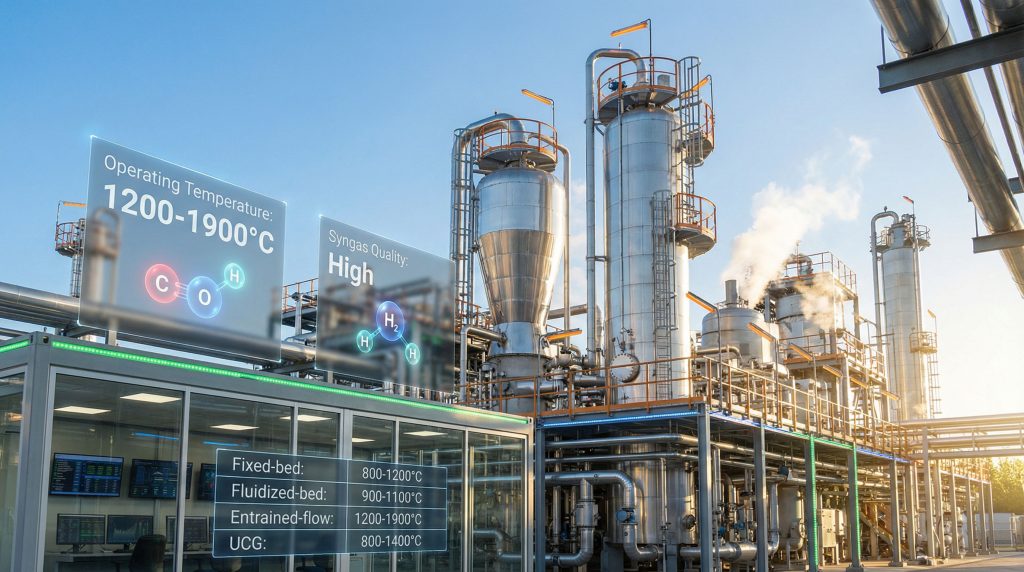
The thermochemical conversion process underlying coal gasification involves precise temperature and pressure management to achieve optimal synthetic gas composition. Operating temperatures typically range from 800°C to 1,900°C depending on the specific technology employed, with controlled atmospheric conditions using steam and oxygen to drive molecular breakdown reactions.
The primary chemical reactions produce synthetic gas containing carbon monoxide (CO) and hydrogen (H₂) as the main components, though exact ratios depend on operating parameters and coal characteristics. These reactions occur through coal gasification processes that avoid complete combustion, preserving energy content while transforming the fuel's physical state.
Modern gasification systems integrate several essential components to maintain operational efficiency:
• Gasifier reactor vessels designed for extreme temperature and pressure conditions
• Coal preparation systems that optimize particle size and moisture content
• Gas cleaning technologies for removing impurities and contaminants
• Heat recovery networks that capture thermal energy for system integration
• Process control systems monitoring reaction parameters continuously
The chemical complexity requires careful management of oxidant-to-fuel ratios, residence time, and temperature profiles to achieve target gas composition while minimizing unwanted byproducts.
When big ASX news breaks, our subscribers know first
Comparing Performance Characteristics Across Gasification Technologies
Different gasification approaches offer distinct advantages depending on application requirements, with technology selection influenced by coal characteristics, product specifications, and economic considerations. Each technology type operates under specific parameter ranges that determine performance outcomes.
Fixed-bed gasification systems utilize stationary fuel beds with controlled airflow patterns, operating at moderate temperatures between 800°C and 1,200°C under pressures from 0.1 to 3.0 MPa. These systems offer relatively simple operation but produce variable gas quality depending on coal properties and operational management.
Fluidized-bed technologies suspend coal particles in controlled gas streams, maintaining temperatures between 900°C and 1,100°C under pressures ranging from 0.1 to 4.0 MPa. This approach provides better temperature control and mixing characteristics, resulting in improved gas quality consistency.
Entrained-flow gasifiers represent the highest-performance option, operating at temperatures between 1,200°C and 1,900°C under elevated pressures from 2.0 to 10.0 MPa. These systems achieve superior gas quality through complete carbon conversion but require significant capital investment and operational complexity.
| Technology Type | Operating Temperature (°C) | Pressure Range (MPa) | Gas Quality Level | Capital Requirements |
|---|---|---|---|---|
| Fixed-bed | 800-1200 | 0.1-3.0 | Moderate | Low |
| Fluidized-bed | 900-1100 | 0.1-4.0 | Good | Medium |
| Entrained-flow | 1200-1900 | 2.0-10.0 | Excellent | High |
| Underground (UCG) | 800-1400 | 0.1-1.0 | Variable | Very Low |
Underground coal gasification (UCG) presents a unique approach by conducting gasification reactions within coal seams, eliminating mining requirements while operating at moderate temperatures between 800°C and 1,400°C. This technology requires minimal surface infrastructure but faces challenges in gas quality control and environmental management.
Each technology offers specific advantages for different deployment scenarios, with selection criteria including coal characteristics, product requirements, environmental constraints, and economic factors influencing optimal technology choice.
Industrial Applications Driving Market Development
Power generation through Integrated Gasification Combined Cycle (IGCC) systems represents a significant application area, combining gas turbine efficiency with steam cycle integration for enhanced energy recovery. These systems achieve higher efficiency rates compared to conventional coal combustion while providing superior emission control capabilities.
IGCC plants offer several operational advantages:
• Enhanced efficiency through combined cycle heat recovery
• Improved load-following capabilities for grid stability support
• Superior emission control through pre-combustion gas cleaning
• Fuel flexibility accommodating various coal grades and alternative feedstocks
Chemical manufacturing applications utilize synthetic gas as feedstock for various industrial processes, including hydrogen production for refinery operations, ammonia synthesis for fertilizer manufacturing, and methanol production for chemical intermediates. These applications value the consistent gas composition and reduced impurity levels achievable through gasification processes.
The steel industry increasingly explores hydrogen-based reduction processes as alternatives to traditional coke-based methods, potentially utilizing gasification-derived hydrogen for direct reduction iron (DRI) production. This application could significantly reduce carbon emissions from steel manufacturing while maintaining production efficiency.
Emerging applications include:
• Synthetic diesel fuel production through Fischer-Tropsch processes
• Petrochemical feedstock development for plastics and chemicals
• Industrial heating applications requiring high-quality gaseous fuels
• Energy storage integration through power-to-gas systems
South Eastern Coalfields Limited (SECL), as a Coal India subsidiary, has recognized coal gasification's strategic importance by including it among key diversification initiatives alongside ultra-supercritical thermal power and critical minerals exploration, reflecting industry acknowledgment of gasification's role in future energy portfolios. Moreover, the decarbonisation benefits achieved through these technologies align with global sustainability objectives.
Environmental Performance and Emission Control Capabilities
Coal gasification offers significant environmental advantages over direct combustion through pre-combustion pollutant removal and enhanced emission control. The technology enables sulfur removal efficiency exceeding 95% through gas cleaning processes that extract hydrogen sulfide before combustion, dramatically reducing sulfur dioxide emissions.
Mercury capture systems integrated with gas cleaning technologies achieve superior removal rates compared to post-combustion controls, while particulate matter elimination occurs during syngas processing rather than after combustion, improving overall air quality outcomes.
Key environmental benefits include:
• Pre-combustion sulfur removal achieving >95% efficiency
• Mercury capture through specialized gas cleaning systems
• Particulate elimination during gas processing stages
• Nitrogen oxide reduction through controlled combustion conditions
• Carbon dioxide concentration facilitating capture and storage
Carbon dioxide management represents a critical advantage, as gasification produces concentrated CO₂ streams that simplify capture and storage compared to diluted flue gas from conventional combustion. This concentration benefit reduces capture costs and energy penalties associated with carbon management systems.
However, environmental considerations extend beyond air emissions to include water resource management for cooling and gas cleaning operations, wastewater treatment requirements for process streams, and solid waste management for ash and slag byproducts.
Underground coal gasification requires particular attention to groundwater protection through controlled subsurface operations and monitoring systems that prevent contamination of aquifer resources. Consequently, the sustainable mining transformation approach emphasises comprehensive environmental management throughout the process lifecycle.
Environmental Monitoring Requirements: Long-term environmental monitoring protocols must address air quality, groundwater protection, subsurface impacts, and waste management to ensure sustainable operations across different gasification technologies.
Economic Drivers and Financial Considerations
Investment decisions for coal gasification projects depend on multiple economic factors, including capital requirements, operating costs, fuel prices, and regulatory environments. Initial capital investments vary significantly by technology type, with entrained-flow systems requiring the highest investment but offering superior performance characteristics.
Technology-specific cost considerations include:
• Fixed-bed systems: Lower capital requirements but higher operational complexity
• Fluidized-bed technologies: Moderate investment with balanced performance
• Entrained-flow gasifiers: High capital costs offset by superior efficiency
• Underground gasification: Minimal surface infrastructure but site-specific risks
Natural gas price volatility significantly influences gasification economics, as synthetic gas must compete with abundant natural gas supplies in many markets. When natural gas prices rise above critical thresholds, gasification projects become more economically attractive, particularly for regions with abundant coal resources but limited natural gas access.
Carbon pricing mechanisms create additional economic incentives by recognizing gasification's emission reduction capabilities compared to conventional coal combustion. Projects incorporating carbon capture and storage benefit from carbon credit revenues that improve overall project economics.
Government policy support varies by region but increasingly includes:
- Research and development funding for technology advancement
- Tax incentives for clean coal technology deployment
- Regulatory frameworks supporting commercial demonstration
- Carbon pricing systems rewarding emission reductions
Financial risk assessment must consider technology maturity, market demand stability, fuel supply security, and environmental compliance costs to develop comprehensive project evaluation frameworks.
Global Development Patterns and Regional Leadership
Asia-Pacific regions dominate commercial coal gasification deployment, led by China's extensive industrial gasification capacity and India's growing strategic interest in coal diversification. China operates the world's largest commercial gasification installations, primarily supporting chemical manufacturing and synthetic fuel production.
India's approach emphasises energy security through domestic coal utilisation, with organisations like SECL pursuing gasification as part of broader diversification strategies encompassing ultra-supercritical thermal power, critical minerals exploration, and renewable energy integration. Additionally, the growing focus on coal gasification in Asia demonstrates the region's commitment to this technology.
Regional development patterns include:
• China: Large-scale commercial deployments for chemicals and fuels
• India: Strategic diversification and energy security initiatives
• Australia: Clean coal technology research and demonstration
• South Korea: Advanced gasification research and development programs
North American development focuses on IGCC demonstration projects and carbon capture integration, with the United States leading research into advanced gasification technologies and environmental performance optimisation. Canadian applications emphasise integration with oil sands operations and industrial heating applications.
European initiatives concentrate on renewable energy integration and industrial decarbonisation, with Germany exploring gasification for grid balancing and chemical feedstock production. The Netherlands and United Kingdom pursue carbon capture and storage integration to support climate objectives.
Technology transfer and international cooperation facilitate knowledge sharing between regions, with academic institutions and government research programs collaborating on advanced gasification development. Furthermore, the advancement of mining industry innovation supports these international collaborative efforts.
The next major ASX story will hit our subscribers first
Technical Challenges and Operational Limitations
High-temperature material durability presents ongoing challenges for gasification systems, requiring specialised alloys and refractory materials capable of withstanding extreme operating conditions while maintaining structural integrity over extended operating periods. Material degradation affects maintenance schedules and operational reliability.
Process control complexity demands sophisticated automation systems and skilled operators capable of managing multiple interdependent variables simultaneously. Temperature profiles, pressure management, fuel feeding rates, and gas cleaning operations require precise coordination to maintain optimal performance.
Key operational challenges include:
• Equipment durability under extreme temperature and pressure conditions
• Process optimisation across multiple operational variables
• Maintenance scheduling to minimise production disruptions
• Safety management for high-temperature, high-pressure operations
• Environmental monitoring for comprehensive compliance
Underground coal gasification faces additional technical challenges including controlled combustion zone management, subsurface gas flow control, and environmental impact mitigation. Groundwater protection requires sophisticated monitoring and control systems to prevent contamination.
Economic competitiveness against natural gas and renewable energy sources creates ongoing pressure for cost reduction and efficiency improvement. Technology advancement focuses on reducing capital requirements while improving operational reliability and environmental performance.
Regulatory uncertainty affects long-term investment planning, particularly regarding carbon pricing, environmental standards, and government support programmes. Policy stability becomes crucial for project financing and commercial development.
Technology Evolution and Innovation Pathways
Advanced catalyst development drives efficiency improvements by enhancing reaction rates and selectivity while reducing operating temperatures and pressures. New catalyst formulations target improved carbon conversion rates and extended operational lifespans.
Modular gasifier designs enable flexible deployment strategies, allowing smaller-scale installations and distributed generation applications. Modular approaches reduce capital requirements and construction timelines while providing operational flexibility.
Innovation focus areas include:
• Artificial intelligence integration for process optimisation and predictive maintenance
• Hybrid renewable systems combining gasification with solar and wind power
• Biomass co-gasification for carbon neutrality objectives
• Waste-to-energy applications expanding feedstock options
• Hydrogen economy integration supporting fuel cell and transportation applications
Power-to-gas energy storage represents an emerging application where excess renewable electricity drives gasification processes for grid balancing and energy storage. This integration supports renewable energy penetration while providing dispatchable power generation. The implementation of renewable energy integration strategies enhances these technological synergies.
Carbon utilisation technologies explore converting captured CO₂ into valuable products, improving project economics while reducing environmental impact. These approaches include synthetic fuel production and chemical manufacturing applications.
Research priorities emphasise cost reduction through technology advancement, environmental performance enhancement, and commercial scale demonstration to validate technical and economic viability across different applications and operating conditions.
Future Market Outlook and Strategic Implications
Global capacity expansion projections through 2035 indicate continued growth driven by energy security concerns, industrial decarbonisation requirements, and technology cost reductions. Regional deployment patterns will likely reflect coal resource availability, policy support, and market demand characteristics.
Technology cost trajectories suggest declining capital requirements through learning curve effects and manufacturing scale improvements. Modular designs and standardised components contribute to cost reductions while improving deployment flexibility.
Policy landscape evolution increasingly emphasises carbon emission reduction and clean energy technology deployment. Carbon pricing mechanisms, clean energy standards, and international technology transfer initiatives will influence market development patterns.
Strategic considerations for stakeholders include:
- Investment timing relative to technology maturity and market conditions
- Technology selection based on application requirements and economic factors
- Supply chain development for equipment and operational support
- Workforce preparation through training and education programmes
- Community engagement for social licence and regulatory approval
Integration opportunities with renewable energy systems, carbon management technologies, and industrial processes will create new market segments and application areas. Hybrid systems combining coal gasification with solar, wind, and energy storage technologies may provide enhanced grid services and operational flexibility.
Market psychology increasingly favours technologies demonstrating clear environmental benefits and economic competitiveness. Coal gasification's success will depend on achieving cost parity with alternatives while delivering superior environmental performance and operational reliability.
The technology's evolution toward commercial maturity requires continued investment in research, demonstration projects, and supportive policy frameworks that recognise gasification's potential contribution to energy security and environmental objectives.
Investment Disclaimer: Technology investments in coal gasification involve significant risks including regulatory changes, market volatility, and technical challenges. Potential investors should conduct thorough due diligence and consider consultation with qualified professionals before making investment decisions.
Looking to Capitalise on Energy Transformation Opportunities?
Discovery Alert's proprietary Discovery IQ model delivers real-time alerts on significant ASX mineral discoveries across the energy and resources sectors, instantly empowering subscribers to identify actionable opportunities ahead of the broader market. Begin your 14-day free trial today and secure your market-leading advantage in this rapidly evolving landscape.