May 11, 2026
Understanding the Strategic Dimensions of Coal Mine Extension Approvals
Global steel markets face unprecedented uncertainty as major producing nations navigate the complex intersection of economic growth, environmental commitments, and resource security. The Australia approves Middlemount coal mine extension decision represents a critical framework that shapes international commodity flows for decades ahead. These decisions fundamentally alter the trajectory of global energy supply chains and create ripple effects across industrial sectors worldwide.
The Australian regulatory landscape operates through multifaceted approval processes that balance competing priorities of economic development, environmental protection, and international trade relationships. Federal oversight through the Department of Climate Change, Energy, the Environment, and Water establishes comprehensive environmental condition frameworks that set precedents for future mining developments across the Asia-Pacific region.
Federal Approval Architecture for Mining Extensions
Australia's mining permitting process operates through a rigorous federal framework that evaluates long-term environmental, economic, and strategic impacts. The Department of Climate Change, Energy, the Environment, and Water oversees these assessments through comprehensive environmental condition protocols that require detailed impact modelling, habitat offset arrangements, and long-term monitoring commitments.
The regulatory timeline for major mining extensions typically spans 12-24 months, incorporating public consultation periods, environmental impact assessments, and intergovernmental coordination processes. This framework ensures that extension approvals align with Australia's broader climate commitments while maintaining the country's position as a leading global coal exporter.
Operational Scale and Strategic Market Positioning
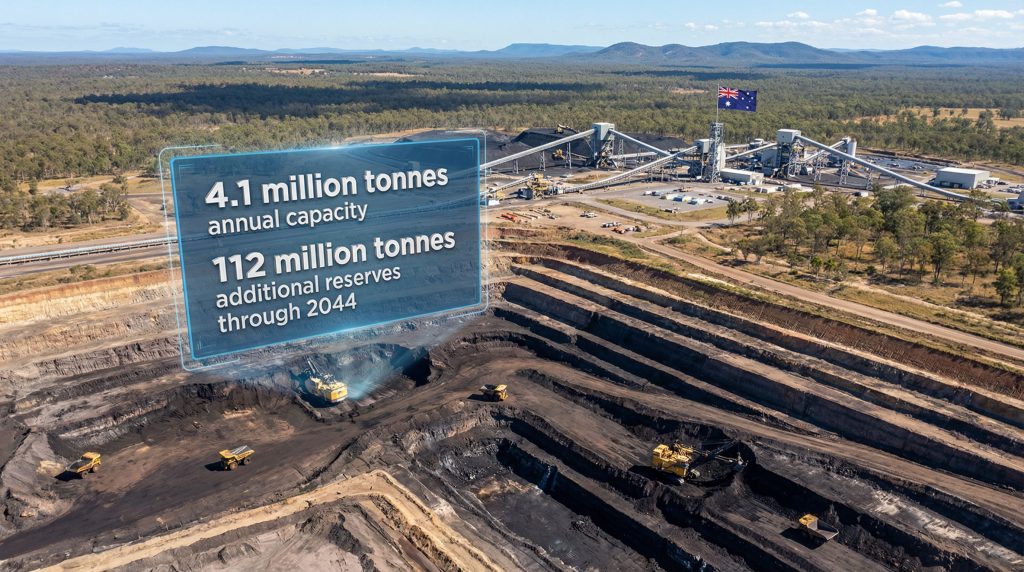
The Middlemount operation represents a significant component of Queensland's Bowen Basin coal production network, with an annual capacity of 4.1 million tonnes targeting both pulverised coal injection (PCI) and coking coal markets. This joint venture structure between Peabody Energy and Yancoal demonstrates the international partnership dynamics that characterise Australia's modern mining sector.
Yancoal reported production of 2.6 million tonnes of saleable coal at Middlemount in 2025, representing a 12% increase from 2024 levels. This production trajectory reflects the operational optimisation strategies employed by major coal producers to maximise resource extraction efficiency within existing regulatory frameworks.
The mine's strategic positioning within Queensland's established infrastructure network provides critical advantages for export logistics and supply chain integration. Connection to the Central Queensland Coal Network enables efficient transport to major export terminals, positioning Middlemount coal competitively in key Asian markets.
When big ASX news breaks, our subscribers know first
Production Forecasting and Reserve Management Through 2044
Long-term resource extraction planning requires sophisticated modelling of geological reserves, market demand patterns, and operational capabilities. The Australia approves Middlemount coal mine extension encompassing 112 million tonnes of additional extractable reserves, extending operational viability through 2044 and providing significant supply certainty for international customers.
Reserve Optimisation and Extraction Timelines
The approved extension represents approximately 20 years of production at current capacity levels, providing substantial operational flexibility for market-responsive production planning. This extended timeline enables the joint venture partners to implement advanced extraction technologies and optimise resource recovery rates across the expanded mining areas.
Geological assessments indicate consistent coal quality characteristics across the extension areas, maintaining the operational advantages that position Middlemount coal competitively in metallurgical markets. The reserve expansion incorporates both shallow open-pit areas and deeper underground deposits, requiring phased development strategies that optimise capital investment timing.
Integration with Regional Production Networks
Queensland's Bowen Basin produces approximately 200 million tonnes of coal annually, representing roughly 60% of Australia's total coal production. Furthermore, the mining industry evolution strengthens this regional production base at a time when several major operations face closure pressures due to cost and regulatory challenges.
Recent mine closures by BHP and QCoal in Queensland highlight the importance of maintaining viable production capacity amid challenging market conditions. The Middlemount extension provides production stability that supports regional employment and maintains Australia's competitive position in global seaborne coal markets.
Infrastructure integration advantages include shared rail access, port allocation arrangements, and coordinated logistics planning that optimise transportation costs and delivery reliability for international customers.
Market Timing and Strategic Considerations
The approval timing coincides with significant volatility in global steel markets, where production adjustments in major consuming regions create both opportunities and challenges for coal exporters. Steel demand fluctuations directly impact coking coal pricing and contract negotiations, requiring Australian producers to maintain operational flexibility.
Global Steel Demand Dynamics
India's expanding steel production capacity represents a critical growth driver for Australian coal exports, with Indian steel output reaching 150.1 million tonnes over January-November 2025. India's strategic objective to double steel production to 300 million tonnes by 2030 creates substantial demand potential for premium coking coal exports from operations like Middlemount.
Indian metallurgical coal imports increased 32% to 73.53 million tonnes in 2025, with Australia maintaining its position as the dominant supplier. December imports alone climbed 97% year-over-year to 7.32 million tonnes, reflecting strong demand from expanding Indian steel capacity.
Chinese market dynamics present more complex considerations, with domestic supply preferences and Mongolian import availability reducing demand for premium Australian coking coal. However, China's long-term steel production requirements suggest potential demand recovery as domestic resources face depletion pressures.
Price Volatility and Supply Chain Resilience
Australian premium low-volatile hard coking coal prices reached $227.38 per tonne in January 2026, marking a 17-month high driven by weather-related supply disruptions and steady Asian demand. These price levels demonstrate the premium valuations achievable for high-quality Australian coking coal in tight supply conditions.
Weather disruptions continue to impact Queensland coal operations, with vessel congestion reaching 108 ships at Australian ports in January 2026. In addition, market volatility hedging strategies by multiple producers highlight the vulnerability of supply chains to weather events and the importance of operational redundancy across the regional production network.
Environmental Impact Assessment and Mitigation Frameworks
Environmental considerations represent critical components of the Middlemount extension approval, requiring comprehensive habitat impact assessments and long-term mitigation strategies. The approved project involves clearing 183 hectares of koala habitat and modifying 82 hectares of greater glider habitat, necessitating substantial offset arrangements.
Habitat Management and Biodiversity Offsetting
Australian environmental regulations require habitat offsets that provide net positive outcomes for affected species through land acquisition, restoration projects, and long-term management commitments. The Middlemount offset arrangements establish precedents for biodiversity banking approaches that support both mining development and conservation objectives.
Koala habitat protection has become increasingly critical as Queensland koala populations face significant pressures from habitat loss, disease, and climate impacts. The offset requirements for the Middlemount extension incorporate advanced habitat connectivity planning and genetic diversity preservation strategies.
Greater glider habitat modifications require specialised management approaches given the species' dependence on large, hollow-bearing trees and specific forest structures. Furthermore, mine reclamation innovation incorporates long-term forest management strategies that maintain habitat quality across extended timeframes.
Water Management and Infrastructure Modifications
The extension approval includes Roper Creek diversion requirements and comprehensive water management protocols that address both operational needs and environmental protection objectives. These water infrastructure modifications demonstrate the complex engineering solutions required for large-scale mining operations in sensitive watershed areas.
Groundwater monitoring and protection protocols establish long-term oversight mechanisms that ensure mining activities do not compromise regional water resources. Advanced monitoring technologies enable real-time assessment of water quality parameters and rapid response to any detected impacts.
Carbon Footprint Analysis and Climate Policy Implications
The Australia approves Middlemount coal mine extension carries projected emissions of 236 million tonnes CO₂-equivalent over its operational lifetime, representing approximately 40% of Australia's current annual domestic emissions. This substantial carbon footprint raises important questions about Australia's long-term climate commitments and the role of coal exports in global emissions accounting.
Emissions Accounting and International Frameworks
International climate policy frameworks create complex accounting questions regarding exported fossil fuels and their ultimate emissions impacts. While Australia accounts for production-related emissions domestically, the combustion emissions occur in importing countries, creating challenges for comprehensive climate policy coordination.
The extended operational timeline through 2044 extends well into the period when many countries have committed to achieving net-zero emissions targets. This timeline mismatch creates potential market risks if importing countries implement policies that reduce coal demand more rapidly than currently projected.
Advanced carbon capture and storage technologies may offer pathways for reducing the climate impact of coal utilisation, though commercial deployment remains limited. The long operational timeline provides opportunities for technology development and implementation that could alter the emissions profile of Middlemount coal.
Climate Policy Integration and Market Risks
Australia's net-zero commitments by 2050 create potential policy tensions with coal export operations extending through 2044. Managing these tensions requires careful policy coordination that balances economic interests with climate objectives whilst maintaining international competitiveness.
However, the mining decarbonisation benefits in major steel-producing countries could impact demand for Australian coal exports, potentially favouring lower-emission production alternatives or domestic supply sources. The Middlemount operation's extended timeline provides flexibility to adapt to evolving carbon pricing regimes.
Capital Investment Patterns and Mining Sector Dynamics
Queensland's coal mining sector faces significant capital allocation challenges as producers balance investment requirements with uncertain long-term demand prospects. Recent mine closures and production constraints reflect broader industry dynamics that influence investment decisions across the sector.
Investment Climate and Capital Strike Dynamics
Industry analysts have identified a pattern of capital restraint among major coal producers, with many companies avoiding new project investments amid regulatory uncertainty and volatile market conditions. This "capital strike" dynamic affects both exploration activities and capacity expansion projects across Queensland's coal regions.
BHP's exit from Queensland coking coal operations and QCoal's mine closures demonstrate the challenges facing marginal operations in the current cost and regulatory environment. These closures reduce regional production capacity and potentially strengthen the competitive position of remaining operations like Middlemount.
Royalty pressures from Queensland's state government add significant cost burdens that influence investment decisions and operational viability assessments. The state's royalty structure creates ongoing operational pressures that affect long-term planning and capital allocation strategies.
Joint Venture Structures and International Partnerships
The Peabody Energy-Yancoal partnership demonstrates the international collaboration required for major mining operations in Australia's regulatory and market environment. US-Chinese-Australian partnership structures navigate complex geopolitical considerations whilst accessing diverse technical expertise and capital resources.
Technology transfer arrangements within international joint ventures enable knowledge sharing that improves operational efficiency and environmental performance. These partnerships provide access to advanced mining technologies and management practices that optimise resource extraction and minimise environmental impacts.
Geopolitical considerations increasingly influence international mining partnerships, particularly in relationships involving Chinese entities. Managing these complexities requires careful attention to regulatory requirements and stakeholder expectations across multiple jurisdictions.
The next major ASX story will hit our subscribers first
Supply Chain Resilience and Operational Continuity Planning
Australian coal export operations face recurring challenges from weather disruptions, port congestion, and infrastructure constraints that impact supply reliability for international customers. Queensland's cyclone season typically extends through February, creating annual supply chain risks that require comprehensive contingency planning.
Weather-Related Disruption Patterns
The 2026 cyclone season has already generated significant supply disruptions, with multiple producers declaring force majeure due to flooding and infrastructure damage. These disruptions highlight the vulnerability of Queensland's coal supply chains to extreme weather events that are expected to increase in frequency and intensity.
Port congestion levels reaching 108 vessels in January 2026 demonstrate the cascading effects of weather disruptions on export logistics. Queue management and vessel scheduling require sophisticated coordination to minimise delays and maintain customer delivery commitments.
Rail network closures, including the Mount Isa line serving multiple mining operations, create bottlenecks that affect regional production coordination. Queensland Rail's inability to provide timeline certainty for service restoration reflects the complexity of infrastructure recovery following major weather events.
Force Majeure Management and Customer Relations
Force majeure declarations by major producers including AMCI, Stanmore, and GM3 reflect the industry-wide impact of extreme weather events on operational continuity. These declarations provide contractual protection but create customer relationship challenges that require careful management.
Supply contract flexibility becomes critical during extended disruption periods, requiring balance between producer protection and customer supply security. Long-term supply relationships often incorporate provisions for weather-related delays whilst maintaining overall delivery commitments.
Inventory management strategies enable customers to maintain operations during disruption periods, though extended outages can strain storage capacity and working capital requirements. Coordination between producers and customers optimises inventory levels and delivery scheduling.
Regulatory Innovation and Environmental Condition Evolution
The Australia approves Middlemount coal mine extension establishes important precedents for environmental condition frameworks that balance mining development with ecological protection objectives. These innovative approaches provide templates for future project assessments across Australia's mining sector.
Biodiversity Banking and Offset Innovation
Advanced biodiversity banking mechanisms enable more sophisticated offset arrangements that provide greater flexibility whilst ensuring net positive environmental outcomes. These approaches allow offset credits to be generated in advance of impact, creating more efficient environmental markets.
Habitat connectivity planning incorporates landscape-scale conservation strategies that maintain ecosystem function across mining and non-mining areas. These approaches recognise that isolated habitat patches often fail to support viable wildlife populations over extended timeframes.
Adaptive management protocols enable offset requirements to evolve based on monitoring results and ecological understanding, providing flexibility to address unexpected impacts whilst maintaining conservation commitments.
Long-term Monitoring and Compliance Frameworks
Extended monitoring requirements spanning decades create new challenges for regulatory oversight and compliance verification. These frameworks require stable institutional arrangements and funding mechanisms that persist across political and economic cycles.
Technology integration in environmental monitoring enables real-time data collection and analysis that supports more responsive management decisions. Remote sensing, automated monitoring stations, and data analytics platforms provide comprehensive oversight capabilities.
Strategic Implications for Energy Transition Planning
The Middlemount extension's timeline through 2044 occurs during the critical period of global energy transition, raising important questions about coal's role in transitional energy systems and the management of declining fossil fuel demand.
Transitional Energy Policy Considerations
Coal export revenues provide critical economic support for Australia's renewable energy transition investments, creating complex policy trade-offs between short-term economic needs and long-term climate objectives. Managing this transition requires careful sequencing of policy measures and investment priorities.
International customer dependency on Australian coal exports creates mutual interests in maintaining supply security even as demand potentially declines. These relationships may support extended coal trade even amid broader energy transition trends.
Technology development for cleaner coal utilisation, including carbon capture and storage systems, may extend the viability of coal exports beyond current projections. Australia's research and development investments in these technologies could influence global deployment patterns.
Infrastructure Investment and Alternative Land Use Planning
The 20-year operational extension timeline requires infrastructure investments that must consider post-mining land use alternatives and asset recovery strategies. Early planning for mine closure and site rehabilitation optimises both operational performance and transition outcomes.
Regional economic development strategies must account for the eventual cessation of mining operations and the transition to alternative economic activities. Diversification planning during the operational period creates foundations for post-mining economic sustainability.
Investment Community Risk Assessment Frameworks
Extended-timeline mining projects require sophisticated risk assessment approaches that incorporate climate policy evolution, market demand scenarios, and operational continuity factors across multiple decades.
ESG Compliance and Reporting Standards
Environmental, social, and governance compliance requirements continue evolving, with investors increasingly scrutinising long-term climate impacts and transition planning strategies. The Middlemount extension must demonstrate alignment with investor expectations for responsible resource development.
Scope 3 emissions reporting requirements may increasingly capture the full lifecycle carbon footprint of mining operations, including customer utilisation impacts. These reporting standards could influence investor assessment of long-term project viability and market positioning.
Social licence considerations require ongoing community engagement and benefit-sharing arrangements that maintain stakeholder support throughout the extended operational period. These relationships become critical for operational continuity and regulatory compliance.
What Are the Market Volatility Management Strategies?
Coal price volatility creates significant financial planning challenges for extended-timeline projects, requiring sophisticated hedging strategies and flexible operational approaches. The ability to adjust production levels in response to market conditions becomes critical for financial performance.
Capital allocation flexibility enables operators to optimise investment timing based on market conditions and regulatory developments. Phased development approaches provide options to accelerate or defer investments based on evolving circumstances.
Nevertheless, concerns regarding environmental impacts and climate implications continue to generate significant debate among environmental groups and policymakers about the long-term sustainability of such mining extensions.
Disclaimer: This analysis is based on publicly available information and includes forward-looking assessments that involve inherent uncertainties. Market conditions, regulatory frameworks, and environmental factors may evolve in ways that differ from current projections. Investors and stakeholders should conduct independent due diligence and seek professional advice for investment decisions.
Want to Capitalise on Mining Sector Opportunities Like Middlemount's Extension?
Discovery Alert's proprietary Discovery IQ model delivers instant notifications on significant ASX mineral discoveries, empowering subscribers to identify actionable opportunities in coal, metals, and mining before the broader market reacts. Explore how major mineral discoveries have generated substantial returns by visiting Discovery Alert's discoveries page and begin your 14-day free trial today to position yourself ahead of market-moving announcements.