May 11, 2026
Strategic Importance of Coal Mining Debt Restructuring
Coal mining companies across Australia are increasingly finding themselves at a crucial intersection where commodity cycles, capital requirements, and evolving credit markets converge. The Whitehaven Coal funding boost exemplifies how operators can leverage favorable market conditions to strengthen their balance sheets and enhance strategic positioning. Understanding these refinancing dynamics provides insight into how resource companies navigate the complex interplay between operational performance, market conditions, and strategic capital allocation.
When big ASX news breaks, our subscribers know first
What Drives Large-Scale Debt Restructuring in Australian Coal Mining?
The coal mining sector's capital-intensive nature creates recurring opportunities for debt optimisation, particularly when operational improvements align with favorable credit market conditions. Recent market activity demonstrates how successful asset integrations can serve as catalysts for comprehensive refinancing strategies. Furthermore, companies achieving the Whitehaven Coal funding boost demonstrate the value of timing these strategic initiatives during optimal market windows.
Market Conditions Favoring Mining Sector Refinancing
Current lending environments for resource companies reflect a nuanced approach where operational metrics increasingly drive credit decisions. The approximately 6 percent headline rate achieved in recent syndicated facilities suggests competitive pricing for companies demonstrating strong cash flow generation and disciplined capital management.
Key financing drivers include:
• Operational synergy realisation from recent acquisitions
• Enhanced credit profiles through asset quality improvements
• Extended maturity profiles providing strategic flexibility
• Competitive lender appetite for well-managed resource portfolios
Moreover, the connection between successful refinancing and broader debt market dynamics influences how companies approach their capital structure optimisation strategies.
Strategic Timing Considerations for Capital Structure Optimisation
The timing of debt restructuring initiatives often correlates with post-acquisition integration milestones. Companies demonstrating successful operational improvements following major asset acquisitions typically experience enhanced access to capital markets with improved terms.
Recent industry patterns reveal that mining companies achieving integration success within 12-18 months of acquisition completion frequently secure refinancing facilities with materially reduced funding costs. This timeline alignment reflects lender confidence in management's ability to realise projected synergies.
Why Are Metallurgical Coal Assets Attracting Premium Financing?
The distinction between thermal and metallurgical coal assets has become increasingly pronounced in financing markets. Metallurgical coal operations, essential for steel production, continue attracting institutional capital despite broader ESG considerations affecting the coal sector.
The Shift from Thermal to Met Coal Portfolio Composition
Mining companies with diversified portfolios emphasising metallurgical coal operations report enhanced access to traditional banking facilities. The strategic value of steelmaking coal assets provides operational resilience that lenders recognise through improved pricing and terms.
Financial institutions increasingly view metallurgical coal assets as strategic commodities with long-term demand fundamentals, particularly given:
• Limited substitute materials for steel production
• Geographic concentration of high-quality reserves
• Infrastructure barriers to entry for new producers
• Stable industrial demand from construction and manufacturing sectors
Consequently, understanding industry evolution trends becomes crucial for companies positioning themselves within this refined financing landscape.
Integration Success Stories Driving Lender Confidence
Post-acquisition performance improvements serve as key validation points for credit committees evaluating coal sector exposures. Companies successfully integrating recently acquired metallurgical coal operations, such as the Daunia and Blackwater assets, demonstrate operational competency that translates directly into enhanced financing access.
The integration process typically involves optimising production efficiency, consolidating supply chain networks, and implementing best practices across combined operations. Lenders monitor these integration metrics closely as indicators of management capability and long-term cash flow stability.
How Do Australian Mining Companies Structure Multi-Facility Debt Packages?
Modern mining finance structures reflect sophisticated approaches to matching facility types with specific operational requirements. The strategic allocation between term loans and revolving credit facilities enables companies to optimise both cost of capital and operational flexibility.
Term Loan vs. Revolving Credit Facility Allocation
Contemporary coal mining debt packages typically feature multi-facility structures designed to address distinct capital raising methods:
| Facility Component | Typical Size | Primary Function | Tenor Range |
|---|---|---|---|
| Term Loan | $400-500 million | Acquisition refinancing | 4-5 years |
| Revolving Credit | $100-150 million | Working capital flexibility | 3-4 years |
| Additional Capacity | $100-200 million | Growth opportunities | Variable |
The $600 million facility recently secured by major coal producers demonstrates this balanced approach, with approximately 79 percent allocated to term loan structures and 21 percent designated for revolving credit. This allocation reflects industry best practices for maintaining liquidity whilst optimising debt service obligations.
Syndication Strategies for Large-Scale Mining Facilities
Large mining facilities require sophisticated syndication approaches to distribute credit exposure across multiple institutional lenders. The strong syndicate support observed in recent coal sector refinancing transactions indicates continued institutional appetite for well-structured mining credit exposures.
Successful syndication typically involves:
• Lead arranger selection based on sector expertise and distribution capability
• Risk-sharing mechanisms across regional and international banking partners
• Pricing optimisation through competitive syndication processes
• Documentation standardisation reducing execution complexity
What Financial Metrics Drive Coal Mining Credit Assessments?
Credit evaluation frameworks for coal mining operations emphasise cash flow stability, operational efficiency, and strategic positioning within commodity cycles. Lenders increasingly focus on companies demonstrating consistent performance across volatile market conditions.
Cash Flow Generation Patterns in Cyclical Commodities
The ability to generate stable cash flows despite commodity price volatility represents the primary credit strength for mining operations. Companies achieving integration success with recently acquired assets often demonstrate improved EBITDA stability that directly enhances credit profiles.
Key financial performance indicators include:
• Debt service coverage ratios exceeding industry benchmarks
• Free cash flow conversion rates demonstrating operational efficiency
• Working capital management optimising cash generation cycles
• Capital allocation discipline maintaining financial flexibility
In addition, effective capital allocation strategy implementation becomes crucial for maintaining financial flexibility during commodity cycles.
Credit Rating Improvements and Cost of Capital Impact
The refinancing process often coincides with credit rating improvements as companies demonstrate enhanced operational performance and strengthened balance sheets. These rating improvements translate directly into reduced funding costs and expanded financing options.
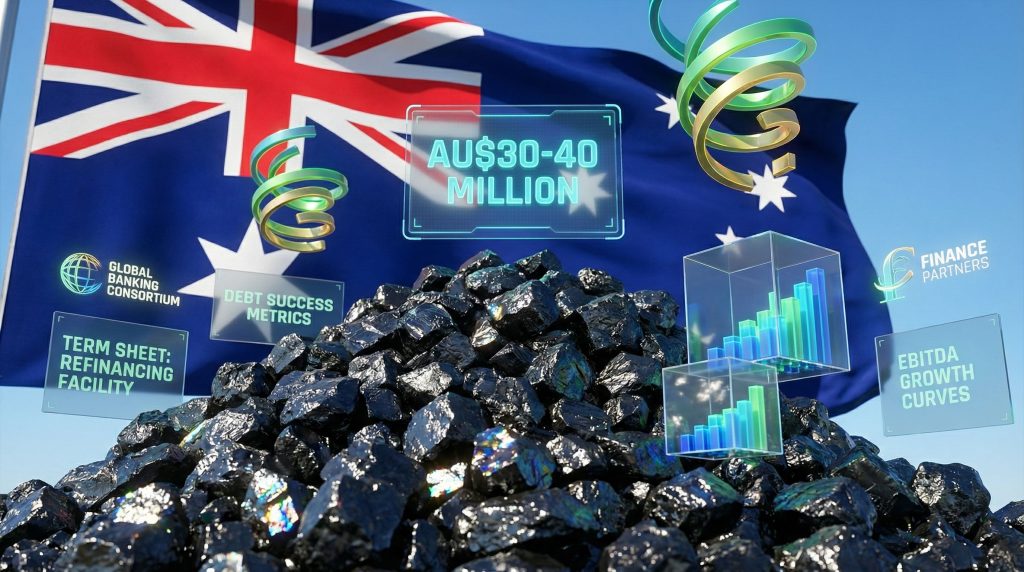
Financial Impact Analysis: Companies achieving investment-grade credit ratings typically secure annual funding cost reductions of $30-40 million on facilities exceeding $500 million, representing meaningful shareholder value creation through capital structure optimisation.
How Do ESG Considerations Affect Coal Sector Financing?
Environmental, social, and governance factors increasingly influence coal sector financing availability and pricing. However, metallurgical coal operations continue accessing traditional banking facilities due to their essential role in steel production and limited substitution alternatives.
Lender Restrictions and Portfolio Allocation Limits
Financial institutions implement varying approaches to coal sector exposure management. Many differentiate between thermal coal (power generation) and metallurgical coal (steelmaking), with more restrictive policies typically applied to thermal coal operations.
The evolution of ESG lending criteria creates opportunities for companies with predominantly metallurgical coal portfolios to access competitive financing whilst others face increased restrictions or higher pricing.
Transition Strategies for Coal-Dependent Operations
Mining companies increasingly develop portfolio diversification strategies addressing long-term ESG considerations whilst maintaining operational focus on existing assets. These transition approaches often influence facility structuring and covenant frameworks.
Successful transition strategies typically include:
• Portfolio optimisation toward higher-value metallurgical coal assets
• Operational efficiency improvements reducing environmental impact
• Strategic partnerships exploring alternative energy investments
• Technology adoption enhancing sustainability metrics
The next major ASX story will hit our subscribers first
What Role Do Acquisition Integrations Play in Refinancing Strategies?
The successful integration of acquired assets serves as a primary catalyst for comprehensive debt restructuring in the coal mining sector. Companies demonstrating operational improvements following major acquisitions typically secure enhanced financing terms reflecting their strengthened competitive positions.
Post-Merger Debt Consolidation Approaches
Integration success creates opportunities for legacy debt consolidation, enabling companies to replace acquisition facilities with longer-tenor, lower-cost permanent financing. The recent $1.1 billion acquisition facility refinancing through new syndicated structures exemplifies this strategic approach.
The consolidation process typically involves:
• Legacy facility replacement with improved terms and conditions
• Maturity profile extension enhancing financial flexibility
• Cost reduction achievement through competitive market processes
• Covenant optimisation reflecting improved operational metrics
Furthermore, companies can leverage different market perspectives to time their refinancing initiatives optimally.
Asset Quality Improvements Through Strategic Acquisitions
Strategic acquisitions of high-quality metallurgical coal assets enhance overall portfolio creditworthiness through reserve base expansion and operational diversification. The integration of premium assets like Daunia and Blackwater operations demonstrates how strategic transactions create value through enhanced financing access.
Asset quality improvements typically generate:
• Reserve life extension supporting long-term cash flow projections
• Production efficiency gains through scale optimisation
• Geographic diversification reducing operational concentration risk
• Market positioning enhancement strengthening competitive advantages
How Do Market Conditions Influence Coal Sector Debt Pricing?
Current market conditions reflect a complex interplay between benchmark interest rates, credit spreads, and sector-specific considerations. The ability to secure facilities at approximately 6 percent headline rates suggests favorable conditions for creditworthy coal mining operations.
Benchmark Rate Environment and Margin Compression
Contemporary coal mining debt pricing reflects both broader credit market dynamics and sector-specific risk assessments. Companies with strong operational metrics and diversified asset portfolios continue accessing competitive pricing despite broader coal sector challenges.
Pricing optimisation strategies include:
• Competitive syndication processes driving margin compression
• Relationship banking leverage securing preferential terms
• Operational metric improvements supporting credit spread tightening
• Market timing optimisation capturing favorable rate environments
Covenant Structures and Operational Flexibility
Modern mining facility documentation incorporates sophisticated covenant frameworks balancing lender protection with operational flexibility requirements. These structures recognise commodity price volatility whilst ensuring appropriate financial discipline.
Covenant frameworks typically address:
• Financial ratio maintenance calibrated for commodity cycles
• Capital expenditure flexibility supporting operational requirements
• Dividend distribution parameters balancing shareholder returns with debt protection
• Amendment mechanisms enabling covenant adjustments as conditions evolve
What Are the Strategic Implications of Successful Debt Refinancing?
Successful debt refinancing creates strategic optionality extending beyond immediate cost savings. Enhanced liquidity, extended maturities, and reduced funding costs enable companies to pursue value-creating opportunities across commodity cycles.
Capital Allocation Flexibility Enhancement
Improved financing structures provide management teams with enhanced flexibility for strategic capital allocation decisions. The additional $150 million in approved credit capacity demonstrates how successful refinancing creates options for opportunistic investments and operational expansion.
Strategic capital allocation options include:
• Dividend policy optimisation supporting shareholder returns
• Growth capital investment in high-return operational improvements
• Acquisition financing capacity for strategic asset additions
• Counter-cyclical investment opportunities during market downturns
Competitive Positioning Through Financial Strength
Companies achieving successful refinancing often gain competitive advantages through enhanced financial flexibility and reduced funding costs. This positioning enables strategic responses to market opportunities and operational challenges.
Competitive advantages typically manifest through:
• Market consolidation participation during industry cycle lows
• Operational expansion financing supporting production optimisation
• Technology investment capacity driving efficiency improvements
• Strategic partnership development leveraging enhanced credit profiles
According to recent market analysis, the Whitehaven Coal funding boost demonstrates how strategic refinancing can unlock significant value for shareholders.
How Do Investors Evaluate Coal Mining Refinancing Success?
Investment community evaluation of refinancing transactions focuses on both immediate financial benefits and long-term strategic positioning improvements. Successful refinancing typically generates positive market reactions reflecting reduced financial risk and enhanced operational flexibility.
Market Reaction Patterns to Financing Announcements
Equity markets typically respond favourably to well-structured refinancing announcements that demonstrate improved financial positioning and strategic optionality. The market recognition of enhanced liquidity and reduced funding costs often translates into improved valuation multiples.
Investment evaluation criteria include:
• Cost of capital reduction impact on enterprise valuations
• Financial flexibility enhancement supporting strategic option values
• Credit risk mitigation through improved maturity profiles
• Management capability demonstration through successful execution
However, as highlighted by industry analysts, market reactions can sometimes be mixed despite fundamentally positive refinancing outcomes.
Long-term Value Creation Through Capital Structure Optimisation
The strategic value of successful refinancing extends beyond immediate cost savings to encompass enhanced strategic positioning and competitive advantage development. Companies demonstrating disciplined capital structure management often achieve premium valuations reflecting reduced financial risk.
Value creation mechanisms include:
• Return on equity improvements through lower cost of capital
• Enterprise value enhancement via reduced financial risk premiums
• Strategic option value creation through enhanced liquidity
• Dividend capacity expansion supporting shareholder returns
What Future Trends Will Shape Coal Mining Finance?
The evolution of coal mining finance reflects broader industry trends toward operational efficiency, environmental responsibility, and strategic positioning for long-term sustainability. Future financing structures will likely incorporate increasingly sophisticated approaches to balancing traditional credit metrics with emerging ESG considerations.
Evolution of ESG-Compliant Financing Solutions
Financial institutions continue developing nuanced approaches to coal sector financing that recognise the essential role of metallurgical coal in steel production whilst addressing broader environmental considerations. These evolving frameworks create opportunities for innovative financing solutions.
Emerging financing mechanisms include:
• Sustainability-linked facilities with performance-based pricing adjustments
• Transition financing supporting portfolio diversification initiatives
• Carbon offset integration addressing environmental impact concerns
• Technology investment incentives promoting operational efficiency improvements
Technology and Operational Excellence as Credit Differentiators
Mining companies increasingly leverage technology investments and operational excellence initiatives as credit differentiators. Lenders recognise the value of automation, safety improvements, and environmental compliance in reducing operational risk and enhancing long-term competitiveness.
Future credit evaluation frameworks will likely emphasise:
• Automation implementation reducing operational risk and improving efficiency
• Safety performance metrics demonstrating operational excellence
• Environmental compliance leadership supporting long-term licence to operate
• Innovation adoption driving competitive advantage development
The successful navigation of debt refinancing processes represents a critical capability for coal mining companies operating in dynamic market conditions. The combination of operational excellence, strategic timing, and sophisticated capital structure optimisation continues creating value for stakeholders across the coal mining value chain.
This analysis is based on publicly available information and should not be considered investment advice. Readers should conduct their own due diligence and consult qualified financial advisors before making investment decisions. Past performance does not guarantee future results, and commodity investments carry inherent risks including price volatility and regulatory changes.
Ready to Invest in the Next Major Mining Discovery?
Discovery Alert instantly alerts investors to significant ASX mineral discoveries using its proprietary Discovery IQ model, turning complex mining data into actionable insights for both seasoned commodity investors and those exploring coal sector opportunities. Begin your 14-day free trial today to position yourself ahead of the market and discover why major mineral discoveries can generate substantial returns by exploring our dedicated discoveries page.