
May 11, 2026
The Long Goodbye: Why Coal Mine Closures Are Becoming as Complex as the Mines Themselves
Across the global mining industry, a quiet but consequential shift is underway. The question facing major coal operators is no longer simply when production will wind down, but how that wind-down will be structured, who will govern it, and whether corporate timelines align with the social and economic realities of the communities left behind. This tension between operational interests and territorial obligations has never been more visible than in northern Colombia, where the Glencore Cerrejon mine closure talks are emerging as a defining case study in sovereign-corporate negotiation during the energy transition era.
When big ASX news breaks, our subscribers know first
Colombia's Energy Transition Agenda and What It Means for Coal
President Gustavo Petro's administration has positioned Colombia's energy future around a decisive break from fossil fuel dependency. The government has formally prohibited the issuance of new exploration contracts for hydrocarbons and minerals, including coal, signalling that the country's long-term economic architecture will not be built around extractive industries. This is not merely symbolic policy language. It represents a structural reconfiguration of how Colombia intends to generate employment, attract investment, and fulfil its climate commitments in the decades ahead.
The implications for the coal sector are profound. Colombia has historically ranked among the world's top ten coal exporters, and the northern department of La Guajira has been central to that identity. The Cerrejon operation, which has been functioning for more than four decades, sits at the geographic and economic heart of this region. Any credible energy transition strategy for Colombia must therefore reckon with La Guajira's particular vulnerability, where coal is not simply an industry but the foundation of an entire regional economy.
What makes this situation politically and economically distinct is the intersection of energy transition pressures with social equity. La Guajira is home to significant indigenous populations, including the Wayuu people, whose communities have lived alongside and been affected by large-scale coal mining operations for generations. The region also carries persistent development challenges, including infrastructure deficits and poverty rates that exceed national averages. Any discussion of mine closure that fails to address these realities is, by definition, incomplete.
Understanding the Cerrejon Operation: Scale, Infrastructure, and Strategic Significance
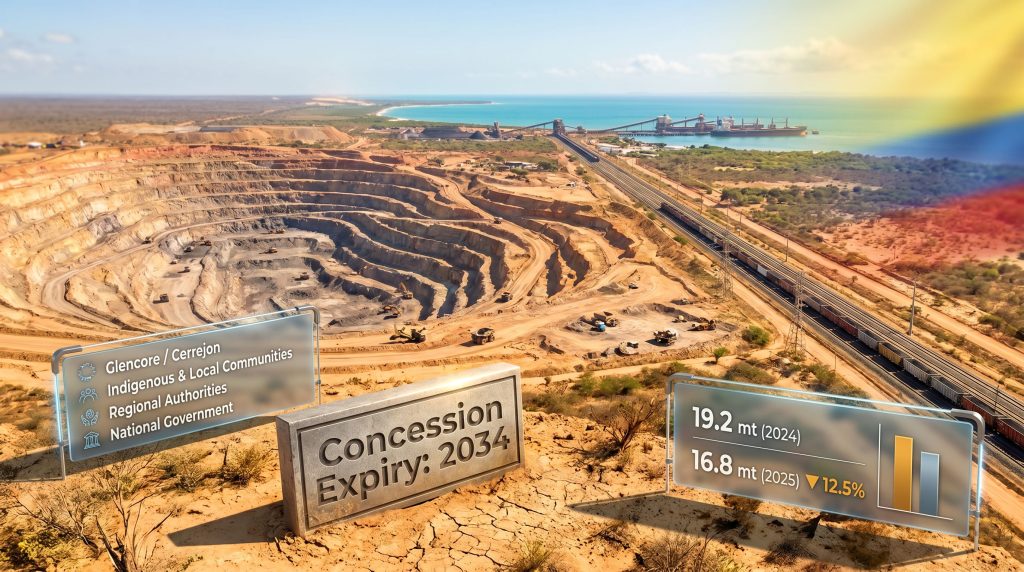
To appreciate the complexity of the Glencore Cerrejon mine closure talks, it is essential to understand the sheer scale and integration of the operation itself. Cerrejon is not a single pit or a modest extraction facility. It is one of the largest open-pit coal export operations in the world, encompassing a vast mining area, a 150-kilometre railway corridor, and a dedicated export port on Colombia's Caribbean coast. This integrated logistics chain, spanning extraction, inland transportation, and maritime export, makes Cerrejon one of the most self-contained coal supply systems in the Western Hemisphere.
The mine's ownership history also matters for understanding the current negotiating dynamic. Before 2021, Cerrejon operated as an equal-share joint venture between three of the world's largest mining companies. Furthermore, the coal market transformation that followed has reshaped how these assets are valued and governed globally.
| Ownership Period | Structure | Key Details |
|---|---|---|
| Pre-2021 | Joint venture | Glencore, BHP, and Anglo American each held 33.3% |
| 2021 | Full acquisition | BHP and Anglo American divested; Glencore assumed 100% ownership |
| Post-2021 Strategy | Managed decline | Glencore cited its coal wind-down framework as rationale |
| Concession Expiry | 2034 | Operating permit held under concession agreement |
The decision by BHP and Anglo American to exit Cerrejon reflected a broader trend of major diversified miners divesting thermal coal assets in response to ESG pressure, institutional investor policy, and climate commitments. Glencore's countermove, acquiring full ownership rather than divesting, was framed through its stated corporate philosophy of managed decline. Rather than selling coal assets to operators with potentially weaker environmental standards, Glencore's position has been that responsible stewardship through a controlled wind-down delivers better outcomes than market divestment.
Whether that philosophy survives political pressure in Colombia is now a central question.
Production Trajectory: Reading the Output Decline
Cerrejon's production figures tell their own story about the operation's directional trajectory.
| Year | Coal Production | Year-on-Year Change |
|---|---|---|
| 2024 | 19.2 million tonnes | – |
| 2025 | 16.8 million tonnes | ▼ 12.5% |
A decline of 12.5% in a single year is not trivial for an asset of this scale. It may reflect deliberate production management consistent with a managed decline strategy, reduced market demand, operational adjustments, or some combination of all three. What it communicates to external observers is that Cerrejon is not being positioned for expansion or long-term production growth. The asset is winding down, whether the timetable is formally acknowledged or not.
Why the Colombian Government Is Demanding Closure Talks Now, Not in 2034
The Colombian government's central argument in calling for immediate closure discussions is rooted in the logic of transition planning. Minister of Mines and Energy Edwin Palma has made clear that the social and economic strategy for La Guajira in a post-Cerrejon era needs to be designed and implemented well before the concession's natural expiry, not assembled in haste during the mine's final years of operation. With the permit expiring in 2034, the government's view is that nine years is barely sufficient time to build the institutional capacity, investment pipelines, and workforce programs required for a genuine transition.
This position reflects hard lessons from mine closures elsewhere in the world. Regions that have attempted transition planning after operational shutdown, rather than before, have frequently experienced prolonged economic decline, elevated unemployment, social fragmentation, and the erosion of community infrastructure. The Colombian government's preemptive approach is therefore not unusual from a global best-practice perspective. It is unusual only in the degree of political directness with which it is being pursued.
The Israel Export Dispute: A Template for Political Leverage
An important but underappreciated dimension of this situation is the precedent established by a 2025 dispute over Cerrejon's coal exports to Israel. During that episode, President Petro communicated that Glencore's concession agreement could be unilaterally modified if coal shipments to Israel continued. Glencore ultimately complied with the Colombian government's position.
The significance of this episode extends well beyond the specific export dispute. It demonstrated three things simultaneously:
- The Colombian executive is prepared to use concession modification as a lever in disputes with Glencore.
- Glencore has shown a willingness to comply with government directives rather than escalate to international arbitration.
- The political relationship between Bogotá and Cerrejon is governed as much by power dynamics as by contractual frameworks.
For analysts and investors monitoring the Glencore Cerrejon mine closure talks, this precedent is critical context. It suggests the Colombian government has both the appetite and the demonstrated ability to exert operational influence over the mine ahead of the formal 2034 concession expiry.
The Tripartite Transition Committee: Structure, Scope, and Stakes
The mechanism Colombia has proposed for managing the closure process is a formal multi-stakeholder dialogue structure. As reported by Mining Weekly, Minister Palma has specifically called on Glencore to engage with what the government describes as a tripartite committee — a framework designed to bring together four distinct participant groups and coordinate transition planning across all affected dimensions of La Guajira society.
Who Sits at the Table
The proposed committee structure includes:
- Glencore and Cerrejon as the operating concessionaire and primary corporate stakeholder
- Indigenous and local communities representing the populations most directly affected by both the mine's existence and its eventual closure
- Regional and municipal authorities from La Guajira with responsibility for governance and service delivery
- The national government coordinated through the Ministry of Mines and Energy
What the Committee Is Expected to Deliver
The government's stated agenda for this forum is broad and ambitious. Key areas of focus are expected to include:
- Development of workforce retraining programs for Cerrejon's direct employees and the broader supply chain workforce dependent on the operation
- Creation of clean energy investment pipelines to redirect economic activity toward renewable energy sectors
- Design of new venture development pathways focused on industries with long-term viability in a decarbonising economy
- Formulation of comprehensive social and economic transition strategies for communities whose livelihoods are currently organised around coal
The architecture of this committee mirrors frameworks that have been applied in other coal-dependent regions globally. Germany's managed transition away from coal in the Rhineland and Ruhr regions involved multi-decade planning, substantial federal investment, and structured engagement with affected communities. Australia's coal transition programs in Queensland and New South Wales have similarly required years of preparation before workforce and community impacts could be adequately addressed.
The lesson from comparable global transitions is that the timeline between announcing a mine closure and the moment a regional economy genuinely recovers is almost always longer than initially projected. Governance structures that begin transition planning early consistently outperform those that engage only reactively.
Colombia's push for immediate dialogue, viewed through this international lens, reflects genuine institutional learning rather than simply political posturing. In addition, the principles of mine reclamation that have evolved globally underscore just how critical early planning frameworks truly are.
What Glencore's Silence Communicates
As of mid-May 2026, neither Glencore nor Cerrejon had issued any public response to the Colombian government's request for formal closure negotiations. This silence is itself analytically significant, and it can be read through several interpretive frameworks.
From a corporate communications perspective, the absence of an immediate public statement is a common strategy when a company faces a politically sensitive demand requiring internal deliberation. Responding too quickly risks committing to a position before legal, financial, and operational implications have been fully assessed. Staying silent preserves optionality.
From a strategic standpoint, Glencore faces a genuinely complex calculus. Its managed decline position is already directionally aligned with what Colombia is requesting, yet accepting a government-structured transition committee means accepting external governance of a process the company might prefer to control internally. There is a meaningful difference between a company choosing the pace and mechanics of its own wind-down and a government committee co-determining that process.
The sovereign risk dimension is also significant. Cerrejon represents a substantial asset operating under a contractual arrangement with a government that has demonstrated willingness to modify that arrangement under political pressure. For investors assessing Glencore's portfolio risk profile, the Cerrejon situation adds a layer of regulatory unpredictability that has not previously featured prominently in equity analyst models.
The next major ASX story will hit our subscribers first
The Socioeconomic Stakes in La Guajira
Four decades of large-scale coal mining have shaped La Guajira in ways that extend far beyond employment statistics. The Cerrejon operation has been central to the region's fiscal base, its physical infrastructure, and the economic expectations of communities that grew up alongside it. A closure without a credible transition plan does not simply remove an industry. It removes the organising logic of an entire regional economy.
The particular complexity introduced by indigenous community representation cannot be overstated. Colombia's constitutional and legal framework, reinforced by its ratification of ILO Convention 169 on indigenous and tribal peoples, requires that indigenous communities receive meaningful consultation and participation rights in decisions affecting their territories and livelihoods. Any closure framework that sidelines or tokenises indigenous voices does not simply risk political backlash. It risks legal challenge and international scrutiny.
The Wayuu people, who have lived in La Guajira for centuries and have experienced both the benefits and the disruptions of decades of industrial mining activity, represent a stakeholder group whose interests cannot be adequately addressed through a top-down corporate or government process alone. The tripartite committee framework, if implemented with genuine inclusion, offers a mechanism to address this. Whether it does so in practice remains to be seen.
Regulatory Dimensions: Can Colombia Compel Early Negotiations?
One of the less-discussed but critically important questions surrounding the Glencore Cerrejon mine closure talks is the legal basis on which Colombia can compel early discussions. The concession agreement sets out rights and obligations for both parties, and a formal request to begin closure planning before the permit expiry is not necessarily the same as a legal requirement to do so.
The 2025 Israel export episode established that the Colombian executive is prepared to threaten unilateral contract modification as a policy instrument. Whether such modifications would survive challenge under international investment law, including bilateral investment treaty protections and rules-based arbitration frameworks, is a separate question entirely. Colombia has faced international arbitration in mining-related disputes previously, and the legal landscape for unilateral contract modification is complex.
What the government appears to be pursuing at this stage is dialogue rather than compulsion. The tripartite committee invitation is precisely that: an invitation. However, the challenge will come if Glencore declines to engage substantively, at which point the political and legal options available to Bogotá will come under sharper scrutiny.
From Production Asset to Transition Liability: The Broader Investment Picture
The Glencore Cerrejon mine closure talks are unfolding against a backdrop of fundamental repositioning in global coal markets. Institutional investors, particularly those bound by ESG mandates or net-zero commitments, have been reducing coal exposure across portfolios for years. The practical result is that coal assets which once attracted sovereign wealth funds, pension managers, and diversified commodity investors are increasingly held only by specialist operators or firms like Glencore that have explicitly committed to responsible wind-down.
Consequently, considerations around natural capital in mining are increasingly influencing how transition costs and environmental rehabilitation obligations are factored into asset valuations. Furthermore, the evolving mining geopolitical risk landscape means that sovereign interventions such as Colombia's are no longer isolated events but part of a recognisable global pattern.
Key investor considerations in the Cerrejon situation include:
- Stranded asset risk: If Colombian regulatory pressure accelerates the effective closure timeline beyond what Glencore's internal models project, the asset's net present value calculations could shift materially
- Sovereign risk premium: The demonstrated willingness of the Petro administration to intervene in concession terms represents a political risk factor that may not be fully priced into Glencore's equity valuation
- Transition cost exposure: Workforce retraining, environmental rehabilitation, community investment, and infrastructure decommissioning involve costs whose ultimate scale and allocation between Glencore and the Colombian government remain unresolved
- Reputational signalling: How Glencore responds to the tripartite committee invitation will be closely watched by ESG-focused analysts as a signal of whether the managed decline philosophy translates into constructive engagement or defensive corporate behaviour
Disclaimer: This article is for informational purposes only and does not constitute financial advice. Readers should conduct their own due diligence before making investment decisions related to any companies or assets discussed.
Frequently Asked Questions: Glencore Cerrejon Mine Closure Talks
When Does Glencore's Cerrejon Concession Expire?
Glencore operates the Cerrejon mine under a concession agreement set to expire in 2034. The Colombian government is pushing for formal closure and transition discussions to begin significantly in advance of that date, arguing that nine years is the minimum planning horizon required to design and implement an effective transition strategy for La Guajira.
Why Is Colombia Requesting Closure Talks Now?
Minister of Mines and Energy Edwin Palma has articulated the government's view that designing effective social and economic transition strategies for La Guajira requires years of preparation. Beginning those discussions immediately, rather than in the mine's final years, is treated by the government as a policy necessity rather than an option.
What Is the Tripartite Transition Committee?
It is a proposed multi-stakeholder dialogue forum that the government has asked Glencore to engage with. The committee is intended to bring together Glencore and Cerrejon, indigenous and local communities, regional authorities, and the national government to coordinate workforce retraining, clean energy investment, and economic diversification planning for La Guajira.
How Much Coal Does Cerrejon Produce?
Cerrejon's output has been on a declining trajectory. The mine produced 16.8 million tonnes of coal in 2025, down 12.5% from the 19.2 million tonnes recorded in 2024, according to available production data reported by Mining Technology.
Has Glencore Responded to the Colombian Government's Request?
As of May 2026, neither Glencore nor Cerrejon had issued a public statement in response to the government's call for formal closure negotiations.
What Is Glencore's Stated Strategy for Coal Assets?
Glencore has publicly adopted a managed decline of coal approach, which was cited as part of the corporate rationale for acquiring full ownership of Cerrejon in 2021. This framework positions coal assets for gradual wind-down rather than long-term expansion or abrupt divestment.
Readers seeking additional context on this developing situation can find ongoing reporting through Mining Technology's coverage at mining-technology.com.
Want To Position Yourself Ahead of the Next Major Mineral Discovery?
Discovery Alert's proprietary Discovery IQ model delivers real-time alerts on significant ASX mineral discoveries, turning complex mineral data into actionable insights for both short-term traders and long-term investors. Explore Discovery Alert's dedicated discoveries page to understand how historic discoveries have generated substantial market returns, and begin your 14-day free trial today to secure a genuine market-leading advantage.