June 25, 2026
What Is South Africa's Coal Reimagined Programme and Why Does It Matter?
The transition from fossil fuel dependency toward sustainable resource utilisation represents one of the most complex challenges facing resource-dependent economies today. South Africa's approach to this transformation demonstrates how traditional mining nations can leverage existing infrastructure and expertise to create entirely new value propositions from what were previously considered waste products. Furthermore, this strategic shift aligns with global mining industry evolution trends.
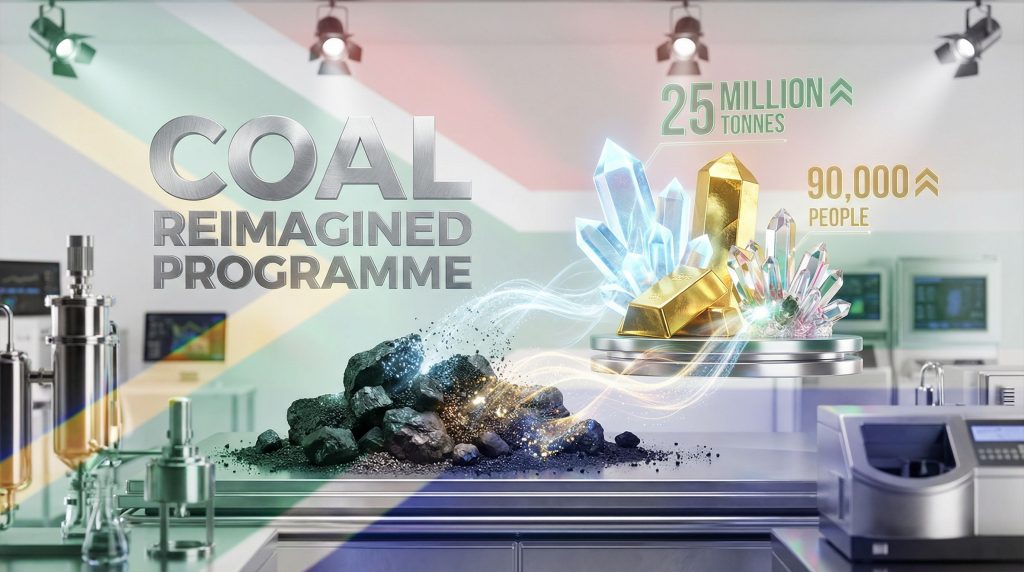
The Coal Reimagined Programme emerges from a strategic recognition that coal's value extends far beyond electricity generation. This initiative, spearheaded by Mintek, South Africa's minerals beneficiation and technology research agency, addresses the fundamental challenge of transforming approximately 25 million tonnes of annual coal fly ash production into economically viable secondary resource streams.
Strategic Context: From Energy Liability to Critical Mineral Asset
The programme's strategic framework centres on repositioning coal byproducts as sources of critical minerals essential for modern industrial applications. Target materials include rare earth elements, alumina, gallium, silica, and vanadium, all embedded within complex matrices that require sophisticated extraction methodologies. This transformation is particularly relevant given the growing importance of critical minerals and energy transition in global markets.
Current utilisation rates for South Africa's coal fly ash remain below 10%, representing a massive underutilised resource base. Minister Gwede Mantashe emphasised during the Southern African Coal Conference that this presents South Africa with a unique opportunity to meet global demand using secondary resources that are already mined, processed, and stockpiled within national borders.
Core Strategic Objectives and Value Proposition
The programme's institutional foundation builds upon Mintek's established expertise in characterising coal chemistry, mineralogy, environmental risk profiles, and processing behaviour. This accumulated knowledge base provides a significant competitive advantage, reducing technology development timelines compared to building capability from baseline.
The strategic repositioning emphasises coal as a dynamic rather than static resource, emphasising adaptability and innovation rather than traditional combustion-focused applications. This perspective aligns with global trends toward resource efficiency and circular economy principles whilst maintaining South Africa's existing industrial competencies.
When big ASX news breaks, our subscribers know first
How Does Coal Waste Valorisation Create New Economic Opportunities?
The embedded nature of critical minerals within coal fly ash creates both technical challenges and significant economic opportunities. These materials are embedded within complex alumina, iron, and silica-rich matrices, requiring advanced characterisation and integrated extraction processes that go far beyond traditional mineral processing approaches.
Advanced Materials Extraction: Technical and Economic Scenarios
The technical complexity of extracting valuable materials from coal waste requires sophisticated mining waste management solutions. Unlike simple gravity separation or flotation methods used in conventional mining, coal fly ash valorisation demands hydrometallurgical or pyrometallurgical pathways specifically developed for South African coal byproduct compositions.
Table: Coal Byproduct Valorisation Potential
| Material Category | Annual Availability | Current Utilisation | Market Demand Growth |
|---|---|---|---|
| Coal Fly Ash | 25+ million tonnes | <10% | Accelerating globally |
| Rare Earth Elements | Embedded in waste | Minimal extraction | Critical for tech sectors |
| Alumina | Matrix component | Limited recovery | Construction/manufacturing |
| Vanadium | Trace quantities | Underexploited | Battery storage applications |
| Gallium | Semiconductor applications | Minimal extraction | Electronics industry growth |
| Silica | Construction materials | Traditional uses only | Advanced applications emerging |
The scale of opportunity becomes evident when considering that 25 million tonnes of annual fly ash production translates to approximately 68,493 tonnes per day, establishing continuous feedstock availability that could support multiple processing facilities across different regions.
Investment Mobilisation and Industrial Deployment Pathways
The progression from research and piloting phases toward full industrial deployment requires strategic investment mobilisation across multiple dimensions. The programme must develop integrated value chains that convert historical environmental liabilities into economic growth engines whilst creating employment opportunities and enabling environmental rehabilitation.
Minister Mantashe's articulation that coal contains numerous by-products that can be used in the economy reflects a fundamental shift from waste management to value creation. The programme aims to transform historical liabilities into engines of economic opportunity, provided appropriate investment enables progression through development phases.
The economic logic centres on South Africa's unique positioning: the country possesses substantial existing coal infrastructure, established processing capabilities, and significant waste stockpiles. This combination eliminates the environmental and capital costs associated with primary extraction whilst leveraging existing logistics and processing infrastructure.
What Role Does Carbon Capture Technology Play in Coal's Future?
Carbon Capture, Utilisation, Storage and Use (CCUS) technology represents a critical component of extending coal industry viability whilst reducing carbon intensity. The Leandra project in Mpumalanga province serves as a demonstration of how CCUS can be integrated within South Africa's existing coal infrastructure.
CCUS Integration: Extending Industry Lifecycle Through Innovation
The strategic framework positions CCUS as one of several technological interventions rather than a singular solution. Minister Mantashe's emphasis on moving from high-carbon power to low-carbon power, rather than abandoning coal entirely, reflects recognition that energy transitions require diversified technological approaches.
The economic incentive structure for CCUS adoption centres on coal mining companies' operational sustainability concerns. These companies possess inherent interests in carbon intensity reduction technologies because regulatory pressure and market evolution directly impact their long-term viability.
Industry Investment Scenarios in Clean Coal Technologies
CCUS technology encompasses capture, utilisation, storage, and use components, distinguishing it from simple carbon capture and storage approaches. The utilisation emphasis suggests opportunities for converting captured CO₂ into industrial feedstocks rather than purely geological sequestration.
Clean Coal technologies, including CCUS, offer pathways for extending coal industry lifecycle whilst addressing environmental concerns. The technological bridge approach maintains existing industrial capacity whilst developing lower-carbon operational methods.
Coal mining companies' vested interest in CCUS technologies reflects economic rationality: investment in carbon reduction directly correlates with operational longevity under increasingly stringent environmental regulations. This creates market-driven incentives for technology adoption beyond regulatory compliance requirements.
How Does This Programme Position South Africa in Global Markets?
South Africa's unique positioning in global critical minerals markets stems from the combination of substantial waste material inventory, established mineral processing expertise, and existing infrastructure. This convergence creates competitive advantages inaccessible to nations without established coal sectors or those requiring greenfield development.
Competitive Advantage Through Waste-to-Value Innovation
The Coal Reimagined Programme aims to establish South Africa as a global leader in coal beneficiation, waste valorisation, and circular economy innovation. This positioning emphasises three competitive dimensions: technical leadership in coal waste processing, circular economy innovation through secondary resource extraction, and integrated value creation combining economic, employment, and environmental outcomes.
Key Strategic Advantages:
• Existing mineral processing expertise through Mintek – Institutional capability reducing technology development timelines
• Substantial waste material inventory already processed and stockpiled – Eliminates primary extraction requirements
• Established mining and logistics infrastructure – Foundation for scaling valorisation operations
• 25+ million tonnes annual fly ash feedstock – Continuous material availability supporting multiple processing facilities
• Trained workforce with coal sector experience – Human capital foundation for skills transition initiatives
Export Diversification and Value Chain Development
The strategic framework emphasises developing new industrial value chains that complement South Africa's existing position as a major coal exporter. This diversification approach maintains the sector's contribution to export earnings whilst reducing dependency on traditional energy markets.
Global demand for critical minerals is rapidly accelerating worldwide, according to government assessments. These materials prove crucial for modern applications including advanced manufacturing, batteries, electronics, and construction materials. South Africa's coal endowment presents unique opportunities to meet this demand using secondary resources rather than primary extraction.
The competitive differentiation mechanism operates through raw material advantage: 25 million tonnes of annual fly ash provides feedstock cost structures inaccessible to nations without established coal sectors. Processing existing waste requires capital investment in extraction technology but eliminates primary mining environmental and capital costs.
What Are the Employment and Economic Implications?
The coal sector's current employment of 90,000 people provides a substantial foundation for workforce transition initiatives. This employment base represents significant human capital that can be redirected toward advanced materials processing rather than eliminated through sector abandonment.
Workforce Transition and Skills Development Scenarios
The programme creates opportunities for skills development across three distinct domains: advanced materials processing, environmental rehabilitation, and technology deployment. This represents significant skills transition from extraction-focused coal mining toward manufacturing-oriented materials processing.
Advanced materials processing requires hydrometallurgical and pyrometallurgical expertise beyond traditional coal mining capabilities. Environmental rehabilitation encompasses remediation science and ecological restoration. Technology deployment involves process engineering and industrial automation skills.
Regional Economic Impact Modelling
Coal sector employment concentrates in Mpumalanga province, particularly around Witbank/eMalahleni and Secunda, and Limpopo, establishing regional transformation impact zones. Workforce transition initiatives require geographic targeting toward these communities where coal dependency creates both economic vulnerability and transformation opportunity.
The programme's emphasis on converting legacy waste streams into economic drivers aligns with broader regional development objectives. Furthermore, the integration of mine reclamation innovation approaches creates additional value through environmental restoration initiatives.
Coal represents both a major source of export earnings and a critical mineral within South African economic strategy. The dynamic nature of coal, as opposed to static resource conceptualisation, enables adaptation to changing global demand patterns whilst maintaining industrial relevance.
How Does This Align with Global Critical Minerals Strategies?
The programme addresses growing global concerns about critical mineral supply chain security by developing alternative sources from secondary materials. This approach reduces dependency on primary mining whilst creating strategic value from existing waste streams.
Supply Chain Security and Geopolitical Positioning
Global supply chain diversification demands create opportunities for South African positioning as an alternative source for critical minerals. The embedded nature of rare earth elements, vanadium, gallium, and other strategic materials within coal waste provides pathways for market entry without competing directly with established primary producers.
The geopolitical dimension of critical mineral supply chains emphasises reliability and diversification. South Africa's established mining regulatory framework, existing infrastructure, and political stability create advantages for long-term supply partnerships with developed economies seeking alternatives to concentrated supply sources.
Technology Transfer and Innovation Ecosystem Development
Advanced characterisation and processing technologies developed through the programme create potential for technology transfer opportunities and innovation ecosystem development. The complex nature of alumina, iron, and silica-rich matrices requires sophisticated processing solutions applicable globally.
South Africa's institutional capacity through Mintek, combined with university research capabilities and industrial infrastructure, provides foundation for technology development that extends beyond domestic applications. Innovation ecosystem development could position the country as a technology provider for similar coal waste valorisation initiatives globally.
The next major ASX story will hit our subscribers first
What Implementation Challenges and Opportunities Exist?
The embedded nature of critical minerals within complex matrices presents significant technical challenges requiring advanced characterisation and integrated extraction methodologies. Success depends on developing economically viable processing routes that can handle diverse material compositions.
Technical Complexity and Processing Innovation Requirements
Coal fly ash composition varies across different coal sources and processing methods, requiring flexible extraction technologies capable of handling compositional variability. The matrix complexity demands integrated approaches combining physical beneficiation, chemical extraction, and potentially pyrometallurgical processing.
Development of economically viable processing routes requires optimisation across multiple variables: extraction efficiency, operating costs, environmental compliance, and product quality. The technical challenge involves creating processing pathways that maximise value recovery whilst minimising environmental impact.
Regulatory Framework and Environmental Compliance
Implementation scenarios must address comprehensive regulatory frameworks governing waste processing, environmental rehabilitation, and critical mineral extraction. The programme's environmental rehabilitation component creates additional value through land restoration and ecosystem improvement.
The transition from waste storage to active processing requires regulatory adaptation addressing environmental standards, worker safety, and community impact. Regulatory frameworks must balance environmental protection with economic development objectives whilst ensuring sustainable operational practices.
Environmental compliance extends beyond immediate processing requirements to encompass legacy remediation. Moreover, the decarbonisation benefits of this approach contribute to broader climate objectives whilst maintaining economic viability.
What Does Success Look Like for Coal Reimagined?
Success metrics encompass multiple dimensions: increased beneficiation rates, job creation, export diversification, environmental rehabilitation, and technology development. The programme's ultimate objective involves establishing South Africa as a recognised leader in coal waste valorisation and critical mineral production.
Performance Metrics and Strategic Outcomes
Quantitative success indicators include increasing fly ash utilisation from below 10% toward international benchmarks, creating employment opportunities across advanced materials processing value chains, and developing export capacity for critical minerals derived from secondary sources.
Qualitative success measures encompass technology leadership recognition, environmental remediation achievements, and institutional capability development. The Coal Reimagined Programme aims to demonstrate that resource-dependent economies can adapt to changing global demands whilst maintaining industrial competitiveness.
Long-term Strategic Vision and Industry Evolution
The strategic vision positions coal as a dynamic resource capable of adaptation rather than static commodity facing obsolescence. This perspective emphasises innovation and flexibility rather than traditional applications, aligning with global trends toward resource efficiency and circular economy principles.
Industry evolution under the Coal Reimagined framework involves fundamental repositioning from energy commodity to critical mineral source. This transformation demonstrates how traditional industries can adapt to changing global demands whilst maintaining economic relevance and employment levels.
"The transformation of coal from energy commodity to critical mineral source represents a fundamental shift in strategic thinking about resource utilisation and industrial development pathways, creating new possibilities for sustainable economic growth in resource-dependent regions."
The programme's broader implications extend beyond the coal sector, providing a framework for how resource-dependent economies can navigate energy transitions whilst maintaining industrial competitiveness. The initiative exemplifies strategic innovation in resource utilisation, demonstrating adaptability in traditional industries facing global transformation pressures.
Strategic Implications for South Africa's Mining Future
The Coal Reimagined Programme represents strategic innovation in resource utilisation, demonstrating how traditional industries can adapt to changing global demands whilst maintaining economic relevance. The programme's success depends on effective investment mobilisation, technology development, and stakeholder coordination to realise the full potential of South Africa's coal-derived critical mineral resources.
The initiative's framework addresses multiple challenges simultaneously: environmental remediation, economic diversification, employment transition, and technological innovation. This integrated approach creates sustainable pathways for industrial transformation that maintain rather than abandon existing capabilities.
The programme's implementation will serve as a model for resource-dependent economies globally, demonstrating how waste streams can become economic drivers through strategic innovation and investment. Success in South Africa could establish template approaches for similar initiatives in coal-producing regions worldwide.
Looking to Invest in Critical Minerals and Resource Innovation?
Discovery Alert's proprietary Discovery IQ model delivers real-time alerts on significant ASX mineral discoveries, instantly empowering subscribers to identify actionable opportunities in critical minerals and resource transformation companies ahead of the broader market. Explore why major mineral discoveries can lead to substantial market returns by visiting Discovery Alert's discoveries page, showcasing historic examples of exceptional outcomes from resource sector breakthroughs.