June 13, 2026
The complexity of modern coal supply logistics extends far beyond simple point-to-point delivery systems. As global energy markets face unprecedented disruption from geopolitical tensions, understanding the intricate web of transportation infrastructure becomes critical for energy security planning. The recent West Asia conflict has demonstrated how quickly international supply chains can fragment, forcing nations to reassess their domestic coal distribution capabilities and transportation network resilience.
Coal supply logistics operates through an interconnected system where multiple transportation modes work in concert to move over 8 billion tonnes of coal annually worldwide. This massive undertaking requires sophisticated coordination between mining operations, transportation providers, and end-users across distances that can span continents.
Multi-Modal Transportation Framework Overview
Modern coal distribution relies on a hierarchical transportation system where each mode serves specific operational parameters. Rail networks handle the majority of long-distance coal movements, typically managing loads exceeding 10,000 tonnes per train consist over distances ranging from 500 to 2,000 kilometers. Water transportation dominates international trade routes, with vessels capable of carrying between 20,000 and 200,000 deadweight tonnes depending on classification.
Road transportation fills critical gaps in the supply chain, particularly for regional distribution and last-mile delivery to smaller industrial consumers. While limited by payload restrictions of approximately 25-30 tonnes per vehicle, trucks provide essential flexibility for direct delivery scenarios where rail or water access is unavailable.
| Transportation Mode | Typical Capacity | Optimal Distance | Cost per Ton-Mile |
|---|---|---|---|
| Heavy-haul rail | 10,000-15,000 tonnes | 500-2,000 km | $0.03-0.05 |
| Barge systems | 1,200-1,800 tonnes | 200-1,500 km | $0.02-0.04 |
| Road transport | 25-30 tonnes | 50-300 km | $0.08-0.15 |
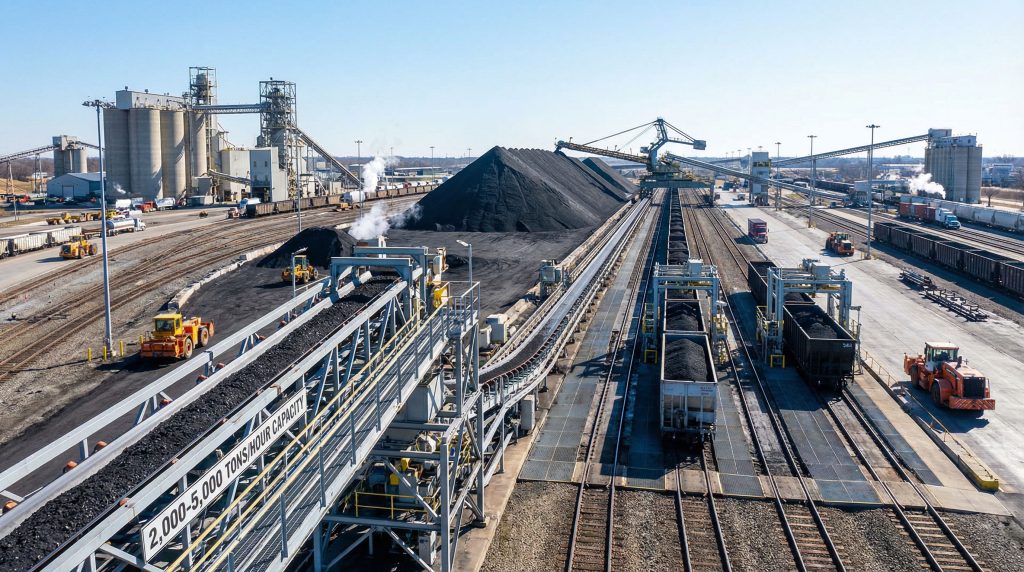
| Conveyor systems | 2,000-5,000 t/hour | 5-50 km | $0.01-0.02 |
Transportation costs often represent 30-60% of delivered coal prices, making modal selection a critical economic decision that directly impacts energy affordability for end consumers.
When big ASX news breaks, our subscribers know first
Infrastructure Capacity and Throughput Metrics
The scale of coal movement through transportation networks requires infrastructure designed for extreme throughput demands. Major coal corridors utilize dedicated heavy-haul rail lines engineered to handle axle loads of 25-32 tonnes, significantly higher than conventional freight railways. These specialized networks feature reinforced track structures, extended passing loops, and automated signalling systems optimised for coal train operations.
Conveyor systems represent the most efficient transportation method for shorter distances, with modern installations capable of moving 5,000 tonnes per hour across distances up to 50 kilometers. These systems achieve remarkable operational efficiency, with availability rates exceeding 95% when properly maintained.
- High-capacity belt conveyors: 3,000-6,000 tonnes per hour throughput
- Overland conveyor systems: Capable of traversing terrain gradients up to 18 degrees
- Enclosed conveyor designs: Minimise environmental impact and weather-related disruptions
- Automated monitoring systems: Real-time tracking of material flow and equipment performance
What Are the Critical Components of Rail-Based Coal Distribution Systems?
Railway infrastructure serves as the backbone of coal distribution in most major coal-producing nations, handling approximately 70% of all coal movements over distances exceeding 200 kilometers. The technical requirements for coal rail transportation differ significantly from general freight operations, necessitating specialised equipment and infrastructure designed for high-volume, repetitive loading patterns.
South Eastern Coalfields Ltd exemplifies this integration approach, maintaining enhanced rake loading protocols and close coordination with Indian Railways to achieve dispatch volumes exceeding 169 million tonnes annually. This level of throughput requires sophisticated scheduling systems that coordinate mine production cycles with railway capacity availability.
Railway Infrastructure Requirements and Specifications
Coal railways operate under extreme loading conditions that demand robust infrastructure specifications. Track structures must accommodate repeated heavy axle loads while maintaining geometric stability over extended service periods. Modern coal rail corridors feature concrete tie construction, continuously welded rail, and ballast depths exceeding standard freight requirements by 30-40%.
Loading and unloading terminals represent critical bottlenecks in the rail distribution system. Efficient terminals can load a 100-car coal train in under two hours using rotary dumper systems or rapid-loading conveyor interfaces. These facilities require substantial capital investment but provide essential capacity for maintaining rail system throughput.
| Rail Car Type | Capacity (tonnes) | Operational Characteristics |
|---|---|---|
| Aluminium gondola cars | 125-130 | Lightweight, high payload efficiency |
| Steel gondola cars | 110-120 | Robust construction, lower maintenance |
| Rotary dump cars | 115-125 | Specialised for rapid unloading |
| Unit train sets | 10,000-15,000 total | Dedicated routing, high efficiency |
Operational Coordination Between Mining and Transportation
The synchronisation between mining operations and rail transportation requires sophisticated planning systems that balance production variability with transportation capacity constraints. Mining operations must coordinate extraction schedules with rail car availability, while transportation providers must optimise train scheduling to minimise empty car movements and maximise asset utilisation.
Advanced coal producers utilise integrated planning systems that forecast production output 72-96 hours in advance, allowing railway operators to position empty cars and schedule loaded train departures. This coordination becomes increasingly complex when serving multiple destinations with varying coal specifications and delivery requirements.
How Do Water Transportation Routes Impact Global Coal Supply Chains?
Maritime transportation dominates international coal trade, handling over 1.2 billion tonnes annually across major shipping routes connecting producing regions with consumer markets. The scale and efficiency of water-based transportation makes it indispensable for global energy security, despite vulnerability to geopolitical disruptions such as the current tensions affecting the Strait of Hormuz.
The recent West Asia conflict has highlighted the fragility of maritime coal supply chains, with route disruptions increasing imported coal costs and creating pressure on domestic coal supply logistics. This situation demonstrates how quickly international transportation networks can fragment, forcing energy planners to reassess supply chain diversification strategies.
Vessel Categories and Maritime Logistics
Coal shipping utilises specialised vessel designs optimised for bulk cargo handling and storage. Handymax vessels (40,000-60,000 DWT) serve smaller ports and regional trade routes, while Capesize vessels (150,000-200,000 DWT) handle major international movements between large-scale export terminals and industrial import facilities.
Port infrastructure requirements for coal handling include deep-water berths capable of accommodating vessel drafts up to 18-20 metres, high-capacity unloading equipment rated for 2,000-4,000 tonnes per hour, and extensive storage facilities for inventory management and quality segregation.
| Vessel Classification | Capacity Range (DWT) | Typical Routes | Cargo Handling Rate |
|---|---|---|---|
| Handymax | 40,000-60,000 | Regional, smaller ports | 1,000-2,000 t/hour |
| Supramax | 50,000-70,000 | Medium-distance trades | 1,500-2,500 t/hour |
| Panamax | 70,000-90,000 | Trans-Pacific routes | 2,000-3,000 t/hour |
| Capesize | 150,000-200,000 | Major trade lanes | 3,000-4,000 t/hour |
Inland Waterway Systems and Barge Operations
River and inland waterway systems provide cost-effective transportation for coal movements between inland mining regions and coastal export facilities or power generation sites. Barge transportation typically achieves costs 40-50% lower than equivalent rail movements over comparable distances, making it highly attractive for bulk coal shipments.
Modern coal barges range from 1,200 to 1,800 tonnes capacity, with multiple barge tows capable of moving 15,000-25,000 tonnes in a single convoy. These systems require specialised terminals with barge-handling cranes and transfer conveyors for efficient loading and unloading operations.
- Economic advantages: 50-70% lower cost per tonne-kilometre compared to rail transport
- Environmental benefits: Lower emissions per tonne transported compared to road or rail alternatives
- Seasonal considerations: Ice conditions and low water levels can restrict operations 2-4 months annually
- Infrastructure requirements: Specialised terminals, navigation channel maintenance, lock systems
What Role Does Road Transportation Play in Coal Supply Logistics?
While road transportation represents the smallest share of total coal movements by volume, it provides essential flexibility for direct delivery to industrial consumers and serves as a critical backup option when rail or water transportation faces disruptions. The higher cost per tonne-kilometre of road transport limits its use to specialised applications and shorter distribution routes.
Regional coal markets rely heavily on truck transportation for serving dispersed industrial customers who lack direct rail connections or require smaller, more frequent deliveries. This market segment includes cement plants, steel mills, and industrial boilers that consume 10,000-50,000 tonnes annually.
Truck-Based Distribution for Regional Markets
Coal hauling vehicles operate under strict regulatory frameworks governing vehicle weight limits, driver qualification requirements, and environmental compliance standards. Standard highway trucks are limited to gross vehicle weights of 36-40 tonnes depending on jurisdiction, resulting in typical coal payloads of 25-30 tonnes per vehicle.
The flexibility advantages of truck transportation become apparent in scenarios requiring rapid delivery schedule changes or direct plant delivery capabilities. Trucks can adjust routes in real-time, serve multiple delivery points from a single load, and operate independently of fixed infrastructure constraints that affect rail and water transportation.
- Payload limitations: 25-30 tonnes typical capacity due to weight regulations
- Route flexibility: Direct point-to-point delivery without transloading requirements
- Schedule responsiveness: Same-day delivery and emergency supply capabilities
- Infrastructure independence: No requirement for specialised loading/unloading facilities
Specialised Equipment and Safety Protocols
Coal transportation by road requires specialised equipment designed for bulk material handling and environmental compliance. Modern coal hauling trucks utilise enclosed trailer designs with pneumatic unloading systems or hydraulic dump mechanisms engineered to minimise dust emissions during transport and delivery.
Safety considerations for coal dust management during transport include vehicle sealing systems, load covering requirements, and specialised driver training for hazardous material handling procedures.
Driver qualification programs for coal hauling operations typically exceed standard commercial driver licensing requirements, incorporating specialised training for bulk material handling, emergency response procedures, and environmental compliance protocols.
How Do Conveyor Systems Enhance Mine-to-Plant Coal Movement?
Conveyor transportation represents the most efficient method for coal movement over short to medium distances, particularly in applications where mines operate in close proximity to power generation facilities or processing plants. The operational efficiency and environmental advantages of conveyor systems make them increasingly attractive for new mining developments.
South Eastern Coalfields Ltd's mega mining operations demonstrate the scale at which conveyor systems operate effectively. The Dipka Mega Mine achieved over 35 million tonnes production, while Gevra mine exceeded 50 million tonnes, and Kusmunda mine approached 30 million tonnes annually. These production levels require sophisticated material handling systems capable of continuous high-volume throughput.
Short-Distance Transportation Technology
Modern conveyor systems utilise advanced belt materials and drive technologies to achieve remarkable reliability and throughput performance. High-capacity installations can operate continuously at 5,000-6,000 tonnes per hour over distances exceeding 20 kilometres, providing lower cost per tonne than any alternative transportation method.
Terrain adaptability represents a significant advantage of conveyor technology, with modern systems capable of traversing elevation changes exceeding 400 metres and following complex routing paths around geographical obstacles. Enclosed conveyor designs minimise environmental impact while protecting material from weather exposure.
| Conveyor Type | Capacity (tonnes/hour) | Optimal Distance | Terrain Capability |
|---|---|---|---|
| Overland belt systems | 3,000-6,000 | 5-30 km | Up to 18° gradient |
| Underground conveyors | 1,000-3,000 | 2-10 km | Variable routing |
| Ship-loading conveyors | 2,000-4,000 | 1-3 km | Specialised applications |
| Stacker-reclaimer systems | 1,500-2,500 | 0.5-2 km | Storage yard operations |
Power Plant Integration and Stockpile Management
Direct delivery systems connecting mines to adjacent power generation facilities eliminate multiple handling stages and associated costs while providing enhanced supply security. These integrated operations can maintain coal inventories of 15-30 days consumption, providing buffer capacity for plant operational requirements.
Stockpile rotation and quality control procedures become critical in conveyor-fed power plants, where automated stacker-reclaimer systems manage inventory turnover to prevent coal degradation and maintain fuel quality specifications. Advanced facilities utilise coal supply optimization software that tracks coal age, quality parameters, and optimal blending ratios.
The next major ASX story will hit our subscribers first
What Are the Economic Factors Driving Coal Transportation Decisions?
Transportation economics fundamentally shape coal supply chain configuration, with modal selection decisions directly impacting delivered coal costs and energy affordability. The recent disruption of global energy routes has intensified focus on transportation cost optimisation as imported coal and LNG prices increase due to supply chain uncertainties.
South Eastern Coalfields Ltd maintains approximately 23 million tonnes of coal inventory specifically to provide economic buffer capacity against market volatility and transportation disruptions. This strategic approach demonstrates how transportation economics influence inventory management decisions and global coal reserves planning.
Cost Analysis Across Transportation Modes
Transportation cost structures vary dramatically between different modes, with distance, volume, and infrastructure availability serving as primary determining factors. Rail transportation typically achieves the lowest cost per tonne-kilometre for medium to long-distance movements, while conveyor systems dominate short-distance economics despite high capital requirements.
The economic crossover points between transportation modes depend on specific route characteristics, volume requirements, and infrastructure availability. Rail transportation generally becomes cost-effective for movements exceeding 200-300 kilometres, while water transportation dominates international routes despite higher port handling costs.
| Transportation Mode | Capital Investment | Operating Cost/tonne-km | Break-even Distance |
|---|---|---|---|
| Heavy-haul rail | High ($2-5M per km) | $0.03-0.05 | 200-500 km |
| Water transport | Medium ($500K-2M per facility) | $0.02-0.04 | 300-1000 km |
| Road transport | Low ($150-300K per vehicle) | $0.08-0.15 | 50-200 km |
| Conveyor systems | Very high ($5-15M per km) | $0.01-0.02 | 5-30 km |
Strategic Location Planning for Cost Optimisation
Power plant siting decisions increasingly incorporate transportation cost analysis as a primary factor, with delivered fuel costs representing 30-70% of total generation costs for coal-fired facilities. Strategic positioning near coal production centres or transportation hubs can reduce delivered coal costs by $10-25 per tonne compared to less advantageous locations.
Regional pricing variations reflect transportation cost differentials, with coal prices typically increasing $1-3 per tonne for each 100 kilometres of additional transportation distance. This relationship creates economic incentives for power plant operators to secure long-term coal supply contracts from nearby sources rather than distant alternatives.
- Geographic optimisation: Plant location within 200-500 km of major coal sources
- Transportation infrastructure access: Direct rail connections or barge terminal proximity
- Supply diversification: Multiple transportation mode availability for supply security
- Contract optimisation: Long-term arrangements to stabilise transportation costs
How Do Transloading Operations Improve Supply Chain Flexibility?
Transloading facilities enable coal supply chains to utilise sequential transportation modes, optimising cost and operational efficiency across different segments of the distribution network. These operations become particularly valuable when single transportation modes cannot economically serve entire supply routes or when infrastructure constraints require modal transitions.
Multi-modal flexibility provides critical risk mitigation capabilities, allowing supply chains to adapt to transportation disruptions, seasonal capacity constraints, or emergency supply requirements. This adaptability proves essential during periods of geopolitical tension or natural disasters that can disrupt specific transportation corridors.
Multi-Modal Transfer Facilities and Operations
Modern transloading facilities incorporate automated handling equipment capable of transferring 1,000-2,000 tonnes per hour between different transportation modes. These installations require sophisticated inventory management systems to track coal quality, ownership, and destination routing through the transfer process.
The operational efficiency of transloading facilities depends heavily on equipment reliability and scheduling coordination between different transportation modes. Furthermore, effective facilities maintain buffer storage capacity equivalent to 2-5 days of throughput volume to accommodate scheduling variations and equipment maintenance requirements.
- Operational flexibility: Ability to switch between transportation modes based on cost or availability
- Risk diversification: Reduced dependence on single transportation mode reliability
- Cost optimisation: Selection of most economical mode for each route segment
- Capacity management: Ability to handle seasonal demand variations through modal flexibility
Technology Integration in Transloading Systems
Advanced transloading facilities utilise digital tracking systems that provide real-time visibility of coal movements through the facility and coordination with upstream and downstream transportation providers. These systems enable precise scheduling and inventory optimisation while maintaining coal quality segregation requirements.
Automated sampling and quality testing equipment ensures that coal specifications are maintained through the transloading process, with computerised systems tracking quality parameters and blending requirements for different destination facilities.
What Are the Key Challenges in Coal Supply Chain Management?
Coal supply chain management faces increasing complexity from infrastructure capacity constraints, environmental regulations, and geopolitical uncertainties that can disrupt established transportation routes. The current West Asia conflict demonstrates how quickly international supply chains can fragment, creating ripple effects throughout global energy markets.
South Eastern Coalfields Ltd's strategic approach to coal supply challenges includes maintaining 23 million tonnes of coal inventory and identifying 12 million tonnes of additional coal exposure that can rapidly convert to operational output. These contingency measures reflect industry recognition of supply chain vulnerabilities and the need for operational flexibility.
Infrastructure Bottlenecks and Capacity Constraints
Transportation infrastructure capacity limitations create persistent bottlenecks that constrain coal supply chain efficiency and reliability. Rail network capacity constraints often limit mine production potential, while port congestion can create delays that propagate throughout international supply chains.
Seasonal demand variations compound infrastructure challenges, with winter heating demand and summer cooling requirements creating predictable but intense capacity demands that strain transportation systems. Peak demand periods can exceed normal transportation capacity by 20-40%, requiring careful capacity planning and inventory management.
| Bottleneck Type | Impact on Capacity | Typical Duration | Mitigation Strategies |
|---|---|---|---|
| Rail network congestion | 15-25% capacity reduction | 2-8 weeks | Alternative routing, inventory buffers |
| Port capacity limits | 10-20% throughput reduction | 1-4 weeks | Off-peak scheduling, storage expansion |
| Weather disruptions | 30-50% temporary capacity loss | 1-7 days | Emergency protocols, redundant routing |
| Equipment maintenance | 5-15% periodic capacity reduction | Scheduled downtime | Preventive maintenance, spare capacity |
Quality Control and Environmental Compliance
Coal quality maintenance during transportation and handling requires sophisticated monitoring and control systems to prevent degradation, contamination, or segregation issues that can affect end-user operations. Quality control becomes particularly challenging in multi-modal transportation systems where coal undergoes multiple handling stages.
Environmental regulations affecting coal transportation continue to evolve, with increasing emphasis on dust suppression, emission control, and community impact mitigation. These requirements often increase transportation costs while demanding specialised equipment and operational procedures.
Environmental compliance costs for coal transportation can add $2-8 per tonne depending on regulatory requirements and transportation mode selection, significantly impacting delivered coal economics.
- Dust suppression systems: Water spraying, chemical binding agents, enclosed handling equipment
- Emission monitoring: Real-time measurement of particulate releases during transport and handling
- Community impact mitigation: Noise reduction, visual screening, traffic management protocols
- Water quality protection: Runoff control, groundwater monitoring, spillage prevention systems
How Do Emergency Response Protocols Ensure Supply Continuity?
Emergency response capabilities become critical during supply disruptions caused by natural disasters, equipment failures, or geopolitical events that affect transportation infrastructure. South Eastern Coalfields Ltd's maintenance of 12 million tonnes of readily convertible coal exposure demonstrates proactive contingency planning for supply continuity.
Power plants associated with SECL maintain comfortable coal stocks as part of coordinated supply security protocols, ensuring that temporary transportation disruptions do not immediately affect power generation reliability. This collaborative approach reflects industry-wide recognition of commodity trade volatility and supply chain interdependencies.
Contingency Planning for Supply Disruptions
Effective contingency planning requires identification of alternative transportation routes and modes that can activate rapidly during primary supply chain disruptions. This planning process involves pre-negotiated contracts, equipment pre-positioning, and coordination protocols between multiple transportation providers.
Alternative route identification must consider capacity limitations, quality control requirements, and cost implications of emergency transportation modes. Emergency routing often involves higher costs but provides essential supply continuity during critical periods.
- Alternative transportation modes: Pre-arranged contracts for backup rail, road, or water transport
- Emergency inventory protocols: Accelerated stockpile drawdown and replenishment procedures
- Supply chain communication: Real-time coordination between mines, transporters, and consumers
- Regulatory coordination: Expedited permitting and priority routing during declared emergencies
Technology Solutions for Real-Time Supply Monitoring
Digital tracking systems provide essential visibility for emergency response coordination, enabling supply chain managers to assess disruption impacts and activate alternative supply protocols rapidly. These systems integrate GPS tracking, automated reporting, and predictive analytics to support decision-making during crisis situations.
Predictive analytics capabilities help forecast potential supply disruptions and recommend proactive measures to maintain supply continuity. Advanced systems can simulate alternative routing scenarios and calculate cost implications of different emergency response options.
What Future Developments Will Transform Coal Supply Logistics?
The future of coal supply logistics will likely emphasise automation, digital integration, and infrastructure optimisation to improve efficiency and reduce environmental impact. South Eastern Coalfields Ltd's achievement of 165 million tonnes production and 169 million tonnes dispatch demonstrates that existing systems can operate at high efficiency levels while providing foundation for future improvements.
SECL's focus on enhanced rake loading and close coordination with Indian Railways reflects current operational priorities while suggesting that railway logistics optimisation remains a near-term focus for efficiency improvements through data-driven mining operations.
Emerging Technologies in Coal Transportation
Automation technologies offer significant potential for improving coal transportation efficiency and safety while reducing operational costs. Automated train operations, autonomous vehicle systems, and robotic handling equipment can operate continuously while maintaining precise operational parameters.
Digital twin modelling enables supply chain optimisation through simulation of different operational scenarios, allowing managers to test transportation alternatives and capacity modifications before implementing physical changes. These systems can optimise routing, scheduling, and inventory management decisions based on real-time operational data.
| Technology Category | Implementation Timeline | Efficiency Impact | Investment Requirement |
|---|---|---|---|
| Automated rail operations | 5-10 years | 15-25% efficiency gain | High ($100M+ per corridor) |
| Autonomous trucks | 10-15 years | 20-30% cost reduction | Medium ($50-100M per fleet) |
| Digital twin systems | 2-5 years | 10-20% optimisation | Medium ($10-50M per system) |
| Predictive maintenance | 1-3 years | 5-15% reliability improvement | Low ($1-10M per facility) |
Infrastructure Investment Trends and Capacity Expansion
Infrastructure investment priorities focus on capacity expansion, efficiency improvement, and environmental compliance rather than fundamental technological transformation. Rail network upgrades emphasise increased axle loads, extended train lengths, and improved terminal capacity to handle growing coal transportation demands.
Industry experts anticipate that infrastructure investments of $200-500 billion globally will be required over the next decade to maintain coal supply chain capacity and meet evolving environmental standards.
Port facility enhancements target increased automation, larger vessel accommodation, and enhanced environmental controls. These improvements aim to reduce handling costs while meeting stricter environmental regulations affecting coal logistics operations and transfer operations.
- Rail infrastructure modernisation: Track upgrades, signalling improvements, terminal automation
- Port capacity expansion: Deeper berths, higher-capacity handling equipment, automated systems
- Digital integration: Real-time tracking, predictive analytics, automated scheduling systems
- Environmental compliance: Dust suppression, emission monitoring, water quality protection
Disclaimer: This analysis contains forward-looking statements and industry projections that involve inherent uncertainties. Coal supply logistics systems are subject to regulatory changes, technological developments, and market conditions that may differ materially from current expectations. Investment decisions should consider multiple factors including regulatory compliance, environmental requirements, and long-term market trends.
Ready to Capitalise on Australia's Next Major Mining Discovery?
Discovery Alert's proprietary Discovery IQ model delivers instant notifications on significant ASX mineral discoveries, transforming complex geological data into actionable investment insights for both short-term traders and long-term investors. Discover why major mineral discoveries have historically generated substantial returns by exploring Discovery Alert's dedicated discoveries page, then begin your 14-day free trial to position yourself ahead of the market.