July 19, 2026
Battery technology evolution demands increasingly sophisticated raw material processing capabilities, with production facilities worldwide adapting their operations to meet stringent quality requirements for electric vehicle manufacturing. The industrial transformation from traditional metal refining toward specialized chemical compounds represents a fundamental shift in how mineral resources are converted into battery-ready materials.
This technological progression extends beyond simple product format changes, encompassing comprehensive modifications to processing infrastructure, quality control systems, and supply chain integration strategies. Mining operations must now balance traditional metallurgical outputs with advanced chemical processing capabilities to capture emerging market opportunities in the rapidly expanding battery sector. Furthermore, the energy transition strategy continues to drive demand for higher-grade battery materials.
Understanding the Strategic Shift from Cobalt Metal to Cobalt Sulfate Manufacturing
The switch to cobalt sulfate production involves comprehensive reconfiguration of existing metallurgical facilities to accommodate specialized chemical processing requirements. Traditional cobalt metal production focuses on pyrometallurgical and basic hydrometallurgical processes that yield refined metallic cobalt, while sulfate production demands advanced purification systems and crystallization technologies.
Industrial Process Fundamentals of Cobalt Sulfate Production
Battery-grade cobalt sulfate requires precise chemical specifications that differ significantly from standard metallurgical products. The target compound, cobalt sulfate heptahydrate (CoSO₄·7H₂O), must achieve 20.5% cobalt content basis to meet battery cell manufacturer requirements. This specification demands sophisticated purification processes that remove trace elements and achieve consistent crystalline structure.
Modern sulfate production facilities incorporate multi-stage solvent extraction systems, advanced precipitation controls, and specialized crystallization equipment. The processing route typically involves dissolving cobalt-bearing feedstock in sulfuric acid solutions, followed by selective purification steps that eliminate impurities such as nickel, iron, and manganese to parts-per-million levels.
Key Differences Between Metal and Sulfate Processing Routes
The fundamental distinction between metal and sulfate production lies in the final processing stages and quality control requirements. Metal production concludes with reduction processes that yield elemental cobalt, while sulfate production maintains the material in oxidized chemical form with strict hydration control.
Temperature management becomes critical in sulfate production, as crystallization must occur within narrow parameters to achieve proper heptahydrate formation. Storage and handling requirements also differ substantially, with sulfate requiring moisture control and specialized packaging to prevent degradation.
Energy consumption profiles vary significantly between the two processing routes. While metal production requires high-temperature reduction processes, sulfate production operates at moderate temperatures but demands precise environmental controls throughout extended processing sequences.
Capital Investment Requirements for Production Line Conversion
Facility conversion to switch to cobalt sulfate production requires substantial capital expenditure for specialized equipment installation. Key infrastructure additions include:
- Advanced solvent extraction circuits with automated pH control
- Crystallization vessels with precise temperature regulation
- High-efficiency filtration systems for crystal separation
- Specialized drying equipment for moisture content control
- Enhanced analytical laboratories for quality verification
The conversion timeline typically spans 12-18 months, depending on existing facility configuration and local regulatory approval processes. Engineering studies indicate that complete facility conversion costs range from $15-25 million for medium-scale operations, with additional working capital requirements for inventory management during transition periods.
When big ASX news breaks, our subscribers know first
What Drives Mining Companies to Prioritize Cobalt Sulfate Over Metal Production?
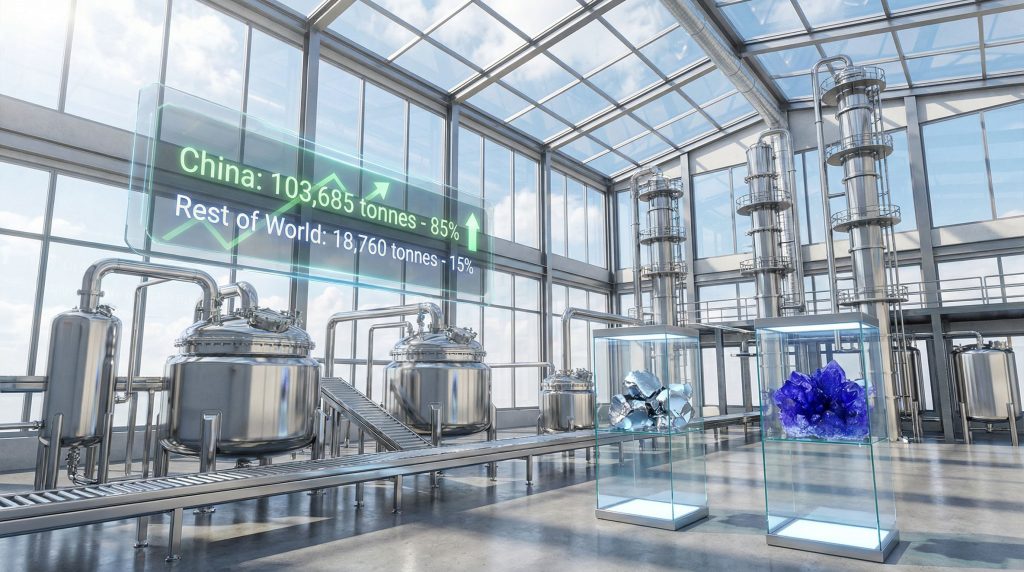
Market dynamics have fundamentally shifted toward direct battery material supply as automotive manufacturers streamline their procurement strategies. The global production landscape reveals significant regional concentration, with China controlling 85% of cobalt sulfate production capacity at 103,685 tonnes annually, while the rest of the world accounts for only 18,760 tonnes. In addition, projects such as the cobalt project expansion demonstrate how companies are adapting to meet this growing demand.
Battery Industry Demand Patterns and Market Signals
Battery cell manufacturers increasingly prefer sulfate as their primary feedstock because it eliminates intermediate processing steps in cathode precursor production. This preference has created pricing premiums for battery-grade sulfate over equivalent cobalt content in metal form, particularly in regions seeking supply chain diversification away from Chinese processing facilities.
The automotive industry's procurement evolution reflects a strategic shift away from upstream material involvement. Early 2020s practices emphasised securing offtake agreements with primary producers and developing in-house battery capabilities. Contemporary strategies focus on purchasing assembled battery systems or near-complete modules, potentially due to reputational risk concerns associated with primary material sourcing.
Downstream markets welcome diversified sulfate supply options as regulatory frameworks in the United States and European Union actively promote reduced dependence on Chinese-processed materials. This policy environment creates competitive advantages for Western-origin sulfate producers.
Price Differential Analysis: Metal vs. Sulfate Revenue Streams
Current market pricing demonstrates the economic incentive for production format switching. Recent assessments show cobalt standard grade in Rotterdam at $24.75-25.65 per pound, while cobalt sulfate in China trades at 92,000-94,000 yuan ($13,157-13,443) per tonne on a 20.5% cobalt basis, according to metal market analysis.
Converting these prices to equivalent cobalt content reveals that sulfate commands premium pricing in certain market conditions, particularly when factoring in transportation costs and regional supply constraints. The pricing structure also reflects processing complexity, with battery-grade specifications requiring additional purification steps that justify higher margins.
Long-term contract structures for sulfate typically include quality guarantees and delivery scheduling that differs from traditional metal trading arrangements. Battery manufacturers often prefer multi-year agreements with guaranteed specifications rather than spot market purchases.
Downstream Integration Opportunities in EV Supply Chains
The switch to cobalt sulfate production enables mining companies to participate directly in battery supply chains rather than selling intermediate products to chemical processors. This integration captures additional value-added processing margins and establishes relationships with end-use customers.
Regional supply chain development initiatives, such as Morocco's $6.5 billion Gotion Power gigafactory investment planned for third-quarter 2026 production startup, demonstrate how sulfate production can anchor broader industrial development programs. These facilities create demand clusters that support local processing infrastructure.
| Region | Cobalt Sulfate Capacity (tonnes) | Market Share | Strategic Focus |
|---|---|---|---|
| China | 103,685 | 85% | Integrated EV manufacturing |
| Rest of World | 18,760 | 15% | Supply chain diversification |
| Morocco (planned) | 1,200* | Emerging | Regional hub development |
*Annual cobalt content in sulfate form
Technical Challenges in Converting Existing Cobalt Metal Facilities
Facility conversion requires comprehensive modifications to existing hydrometallurgical processing infrastructure. The technical complexity extends beyond equipment installation to encompass process control systems, analytical capabilities, and operational procedures that ensure consistent battery-grade product quality.
Hydrometallurgical Process Modifications Required
The switch to cobalt sulfate production necessitates fundamental changes to solution chemistry and processing parameters. Existing metal production circuits typically operate with different pH ranges and temperature profiles than those required for sulfate crystallization.
Key process modifications include:
- Installation of multi-stage counter-current washing systems
- Implementation of advanced pH control with automated reagent addition
- Modification of solution circulation pumps for different viscosity requirements
- Addition of seed crystal recycling systems for consistent nucleation
- Integration of real-time analytical monitoring for quality control
The transition period requires careful management of solution inventories and gradual process parameter adjustment to achieve stable operations. Experienced operators must receive additional training on crystallization chemistry and quality control procedures specific to battery-grade materials.
Equipment Upgrades and Solvent Extraction Systems
Solvent extraction circuits require significant enhancement to achieve the purification levels demanded by battery manufacturers. Standard metal production systems may achieve 99% purity, while battery-grade sulfate requires 99.95% purity or higher for critical impurities.
Enhanced extraction systems typically incorporate:
- Additional extraction stages for improved separation efficiency
- High-performance organic extractants with greater selectivity
- Advanced strip solution recycling to minimise reagent consumption
- Automated phase separation monitoring with density controls
- Emergency containment systems for environmental protection
The capital investment for extraction system upgrades ranges from $3-8 million depending on capacity and existing infrastructure. Operating costs increase due to higher reagent consumption and increased analytical requirements for process control.
Quality Control Standards for Battery-Grade Sulfate Production
Battery-grade cobalt sulfate must meet stringent specifications that exceed traditional metallurgical standards. Critical parameters include moisture content, particle size distribution, and trace element concentrations measured in parts-per-million levels.
Quality control laboratories require sophisticated analytical equipment including inductively coupled plasma mass spectrometry, X-ray diffraction systems, and automated moisture analysers to verify product specifications.
Acceptable impurity limits for battery-grade materials typically restrict nickel content below 50 ppm, iron below 10 ppm, and sulfur compounds within narrow ranges. Achieving these specifications requires continuous monitoring and immediate corrective action when parameters drift outside acceptable ranges.
Statistical process control becomes essential for maintaining consistent product quality. Modern facilities implement real-time data collection systems that track multiple process variables and trigger automatic adjustments when trends indicate potential quality issues. However, these technological advances align with broader mining trends innovation across the sector.
Global Supply Chain Implications of Production Format Switching
The geographical distribution of cobalt processing capabilities significantly influences global supply chain dynamics. Traditional export patterns for Moroccan cobalt metal have historically served Europe, Japan, Taiwan, and the United States, creating established trade relationships that must adapt to changing product formats.
Regional Distribution Patterns for Cobalt Sulfate vs. Metal
Production format switching affects transportation logistics and inventory management throughout the supply chain. Cobalt sulfate requires different handling procedures compared to metal, including moisture protection, temperature control during transport, and specialised storage facilities at destination ports.
The shift creates supply constraints for certain market segments. Industrial applications that specifically require metallic cobalt must source material from alternative suppliers or modify their processes to accommodate sulfate feedstock. This transition period can create temporary supply tightness and price volatility for Western-brand metal products.
Market participants have expressed concern about declining availability of non-Chinese cobalt metal brands, as certain consumers and speculators specifically prefer Western-origin materials for inventory purposes. This preference creates premium pricing opportunities for remaining Western metal producers.
Impact on Non-Chinese Supply Chain Diversification Efforts
Government initiatives in the United States and European Union actively promote supply chain diversification away from Chinese-dominated processing. The switch to cobalt sulfate production in Western regions supports these strategic objectives by creating alternative supply sources for critical battery materials.
Morocco's emergence as a battery materials processing hub demonstrates how regional supply chain development can benefit from integrated approaches. The combination of primary mining operations, processing facilities, and downstream battery manufacturing creates synergistic advantages that reduce transportation costs and improve supply security.
Investment patterns reflect this strategic focus, with substantial capital deployment in regions that offer political stability and favourable regulatory environments. The $6.5 billion Gotion Power Morocco investment exemplifies how battery manufacturers seek to establish operations outside traditional Chinese supply chains.
Transportation and Storage Considerations for Different Product Forms
Cobalt sulfate transport requires specialised containers and handling procedures that differ significantly from metal shipments. Key considerations include:
- Moisture barrier packaging to prevent hydration changes
- Temperature-controlled storage during extended transport periods
- Specialised loading equipment for bulk powder handling
- Enhanced documentation for chemical transport regulations
- Emergency response procedures for potential spill incidents
Storage infrastructure at destination facilities must accommodate different space requirements and environmental controls. Sulfate storage typically requires larger volume capacity due to lower bulk density compared to metal, necessitating warehouse expansion or reconfiguration at customer facilities.
How Does Cobalt Sulfate Production Affect Market Dynamics?
The transformation of production capacity from metal to sulfate format creates fundamental changes in market structure and pricing behaviour. Recent market assessments demonstrate the pricing relationships between different product forms and their impact on supply availability.
Western vs. Chinese Production Capacity Comparisons
The global production landscape reveals significant capacity concentration that influences pricing power and supply security. Chinese facilities benefit from integrated supply chains and established processing expertise, while Western operations focus on supply chain diversification value.
Capacity utilisation patterns differ substantially between regions. Chinese facilities typically operate at high capacity factors due to established downstream demand, while Western facilities may operate conservatively during market transition periods to maintain product quality and manage inventory levels.
The competitive dynamics create opportunities for Western producers to capture market premiums through supply chain positioning and quality differentiation. Battery manufacturers increasingly value supply source diversity and may accept higher pricing for non-Chinese materials, particularly as Chinese battery recycling breakthrough technologies continue to advance the market.
Price Volatility Patterns Between Product Categories
Historical price data reveals different volatility characteristics between metal and sulfate markets. Metal prices typically respond to industrial demand cycles and speculative trading, while sulfate prices correlate more closely with battery production schedules and EV market growth.
The switch to cobalt sulfate production can reduce price volatility exposure for mining companies by accessing more stable long-term contract markets. Battery manufacturers prefer predictable supply arrangements that support production planning and inventory management.
Forward pricing curves demonstrate different risk profiles for metal versus sulfate sales. Sulfate contracts typically include quality guarantees and delivery scheduling that provide revenue stability, while metal sales may offer higher spot price upside but greater volatility exposure.
Long-term Contract Structures and Offtake Agreements
Battery industry procurement practices favour multi-year supply agreements with guaranteed specifications and delivery schedules. These contracts typically include:
- Minimum and maximum volume commitments
- Quality specifications with penalty clauses
- Price adjustment mechanisms linked to market indices
- Force majeure provisions for supply disruptions
- Technology upgrade requirements for specification changes
Recent contract conclusion timing, such as BMW's December 2025 agreement termination with Managem, demonstrates how supply agreements align with production format transitions. This coordination suggests advance planning between producers and customers to manage supply continuity during facility conversion periods.
Environmental and Sustainability Factors in Production Switching
Sustainability considerations increasingly influence procurement decisions throughout the battery supply chain. The switch to cobalt sulfate production affects environmental profiles through energy consumption changes, waste stream modification, and carbon footprint variations between processing routes.
Energy Consumption Profiles: Metal vs. Sulfate Processing
Energy requirements differ substantially between metal and sulfate production pathways. Metal production typically requires high-temperature pyrometallurgical processes that consume significant electrical energy for reduction reactions. Sulfate production operates at moderate temperatures but requires extended processing time and environmental controls.
Comparative energy analysis indicates that sulfate production may offer lower total energy consumption per unit of cobalt content, particularly when accounting for elimination of reduction processes. However, the energy profile shifts toward electrical consumption for pumps, controls, and analytical equipment rather than thermal energy for high-temperature operations.
Renewable energy integration becomes more feasible with sulfate production due to more consistent power demand patterns. Unlike metal production that requires continuous high-temperature operations, sulfate processing can accommodate intermittent renewable energy sources through intelligent process scheduling. Consequently, these efficiency improvements deliver significant decarbonisation benefits across mining operations.
Waste Stream Management and By-product Utilisation
Production format switching creates different waste stream compositions that require modified management approaches. Sulfate production typically generates aqueous waste streams that require neutralisation and metal recovery, while metal production creates slag and other solid waste materials.
Advanced sulfate facilities implement closed-loop water systems that minimise environmental discharge and maximise resource recovery. By-product recovery systems can extract valuable metals from process solutions, creating additional revenue streams that improve overall project economics.
Waste minimisation strategies become more sophisticated with sulfate production, including:
- Solvent recovery and recycling systems
- Crystallisation mother liquor processing
- Acid regeneration from neutralisation operations
- Solid waste consolidation and metal recovery
Carbon Footprint Considerations for Different Processing Routes
Life cycle assessments reveal different carbon footprint profiles for metal versus sulfate production. While sulfate processing eliminates high-temperature reduction reactions that generate CO2 emissions, it may increase indirect emissions through extended processing sequences and increased chemical reagent consumption.
Transportation considerations also affect carbon footprint calculations. Sulfate production closer to battery manufacturing facilities can reduce transportation emissions compared to shipping metal to intermediate chemical processors. Regional production clusters that minimise transportation distances offer carbon footprint advantages.
The next major ASX story will hit our subscribers first
Investment and Financial Analysis of Production Format Changes
Financial analysis of production format switching requires comprehensive evaluation of capital expenditure, operating cost structures, and revenue optimisation potential. The investment decision involves multiple risk factors and market timing considerations that affect project returns.
Capital Expenditure Requirements for Facility Conversion
Conversion to sulfate production involves substantial capital investment across multiple facility systems. Primary expenditure categories include:
| Investment Category | Estimated Cost Range | Percentage of Total |
|---|---|---|
| Process equipment upgrades | $8-12 million | 40-50% |
| Analytical and control systems | $2-4 million | 10-20% |
| Infrastructure modifications | $3-6 million | 15-25% |
| Commissioning and startup | $1-3 million | 5-15% |
| Contingency allowance | $2-5 million | 10-20% |
The total investment typically ranges from $15-30 million for medium-scale facilities, depending on existing infrastructure and local construction costs. Engineering studies and permitting requirements can extend project timelines and increase total capital requirements.
Operating Cost Structures and Margin Optimisation
Operating cost profiles differ significantly between metal and sulfate production. Key cost structure changes include:
- Increased reagent consumption for purification processes
- Higher analytical and quality control expenses
- Enhanced maintenance requirements for specialised equipment
- Additional skilled operator training and certification
- Expanded inventory carrying costs for longer processing cycles
Revenue optimisation strategies focus on product quality premiums and customer relationship development. Battery-grade specifications typically command 15-25% price premiums over standard metallurgical products, while long-term contracts provide revenue stability that reduces working capital requirements.
Payback Period Calculations for Process Switching
Investment payback analysis considers multiple financial scenarios based on market conditions and operational performance. Conservative projections typically assume 4-6 year payback periods for conversion investments, while optimistic scenarios project 2-3 year payback under favourable pricing conditions.
Financial modelling must account for production flexibility that allows reverting to metal production if market conditions change, adding option value to conversion investments that pure-play sulfate facilities cannot provide.
Risk assessment includes market volatility, technology changes, and regulatory modifications that could affect project returns. Sensitivity analysis typically evaluates price differential scenarios, capacity utilisation rates, and operating cost variations to determine investment robustness.
Future Outlook for Cobalt Processing Technology Selection
Technology selection for cobalt processing increasingly depends on market positioning and supply chain integration rather than purely technical factors. The evolution toward battery chemistry optimisation and recycling integration will influence processing format decisions throughout the next decade.
Battery Chemistry Evolution and Raw Material Requirements
Next-generation battery chemistries may modify cobalt specification requirements, potentially affecting the optimal processing route selection. Lithium iron phosphate (LFP) battery growth reduces total cobalt demand, while high-nickel cathode development increases quality requirements for remaining cobalt applications.
Advanced battery designs incorporating solid-state electrolytes or alternative cathode chemistries may require different cobalt compound specifications. Processing facilities must maintain flexibility to adapt to evolving technical requirements whilst maximising current market opportunities.
Research and development initiatives focus on reducing cobalt content in battery applications, but complete elimination remains technically challenging for high-performance applications. This trend suggests sustained demand for high-quality cobalt compounds while total volume growth may moderate.
Recycling Integration and Secondary Feedstock Processing
Battery recycling integration offers opportunities to supplement primary ore feedstock with recovered materials. Secondary feedstock processing requires modified purification approaches due to different impurity profiles compared to primary ores.
The switch to cobalt sulfate production facilitates recycling integration because recycled materials often arrive in oxidised chemical forms that align with sulfate processing chemistry. Metal production requires additional reduction and reoxidation steps when processing recycled feedstock.
Circular economy strategies emphasise closed-loop material flows that minimise primary resource consumption. Processing facilities positioned to handle both primary and secondary feedstock gain competitive advantages as recycling volumes increase throughout the 2030s.
Emerging Markets and Production Capacity Expansion Plans
Regional capacity expansion focuses on supply chain diversification and proximity to battery manufacturing clusters. Planned facilities in Morocco, Australia, and Canada aim to reduce dependence on Chinese processing while serving regional market demand.
Technology transfer and partnership agreements enable rapid capacity development in emerging markets. Joint ventures between mining companies and battery manufacturers create integrated supply chains that optimise processing format selection for specific market requirements.
Investment patterns indicate sustained growth in non-Chinese processing capacity, with projected addition of 25,000-40,000 tonnes annual sulfate capacity outside China by 2030. This expansion will rebalance global supply chain geography and increase competition for Chinese processors. Furthermore, this capacity growth benefits from cobalt sulfate market developments expected throughout the decade.
Strategic Considerations for Mining Companies Evaluating Production Switches
Strategic decision-making for production format switching requires comprehensive analysis of market timing, customer relationship development, and risk management considerations. The decision involves long-term competitive positioning rather than short-term profit optimisation.
Market Timing and Price Cycle Analysis
Market entry timing significantly affects investment returns and competitive positioning. Early adopters of sulfate production captured market premiums during supply-constrained periods, while later entrants face increased competition and margin pressure.
Price cycle analysis reveals different timing patterns for metal versus sulfate markets. Metal prices typically follow industrial commodity cycles with 3-5 year periodicity, while sulfate prices correlate more closely with EV adoption rates and battery manufacturing capacity growth.
Strategic timing considerations include:
- Customer qualification timelines that require 12-24 months for product approval
- Competitive capacity additions that may affect market share
- Technology development cycles in battery chemistry evolution
- Regulatory changes affecting supply chain requirements
Customer Base Development and Supply Agreement Strategies
Successful market entry requires systematic customer relationship development and technical qualification processes. Battery manufacturers evaluate suppliers based on quality consistency, supply reliability, and strategic alignment with sustainability objectives.
Customer diversification strategies balance market access with relationship management complexity. Serving multiple customer segments reduces concentration risk but requires additional technical support and inventory management capabilities.
Partnership opportunities include joint development agreements, technology sharing arrangements, and equity investments that strengthen customer relationships. These strategic alliances can provide market access advantages and technical expertise for process optimisation.
Risk Management in Production Format Decisions
Risk assessment must consider multiple factors that could affect investment returns and operational performance. Key risk categories include:
Market Risks:
- Price volatility between metal and sulfate products
- Customer demand fluctuations and qualification changes
- Competitive capacity additions affecting market share
- Technology substitution reducing cobalt demand
Operational Risks:
- Process technology performance below design specifications
- Quality control failures affecting customer relationships
- Environmental compliance requirements and costs
- Skilled workforce availability for specialised operations
Financial Risks:
- Currency fluctuation affecting international sales
- Working capital requirements during market transitions
- Capital cost overruns during facility conversion
- Interest rate changes affecting project financing
Risk mitigation strategies include maintaining production flexibility, developing diversified customer bases, implementing comprehensive insurance coverage, and establishing contingency funding arrangements. Successful companies balance risk management with growth opportunity capture.
Disclaimer: This analysis is based on publicly available information and industry research. Investment decisions should be based on comprehensive due diligence and professional financial advice. Market conditions and pricing can change rapidly, affecting the viability of production format switching decisions.
Ready to Capitalise on the Next Major Mining Discovery?
Discovery Alert delivers instant notifications on significant ASX mineral discoveries using its proprietary Discovery IQ model, transforming complex mineral data into actionable insights for both short-term trading and long-term investment opportunities. Explore Discovery Alert's dedicated discoveries page to understand why historic discoveries can generate substantial returns, then begin your 30-day free trial to position yourself ahead of the market.