June 11, 2026
Panama's copper mining landscape faces unprecedented scrutiny as the Cobre Panamá mining decision approaches its crucial June 2026 deadline. This high-stakes arbitration proceeding will determine the fate of one of Latin America's most significant copper operations, with implications extending far beyond national borders. The decision carries substantial weight for global copper supply chains, regional investment patterns, and the broader framework governing mining operations in emerging markets. Furthermore, this case represents a critical test of how modern mining disputes balance economic development objectives with environmental protection and community rights.
Contemporary copper markets rely heavily on concentrated production centers, with Chile commanding approximately 28% of global supply and Peru contributing roughly 11%, according to International Copper Study Group data. This concentration creates inherent risks when alternative production sources face operational challenges or regulatory uncertainties. The interconnected nature of modern copper supply chains means that disruptions in one region necessitate rapid adjustments in procurement strategies and inventory management across downstream industries. Additionally, record high copper prices have heightened attention to supply security across industrial sectors.
Economic Significance in Panama's National Context
Mining sector contributions to national economies in emerging markets extend far beyond direct revenue generation. In Panama's case, the mining sector contributed approximately 1.8-2.1% of gross domestic product during operational periods, based on National Institute of Statistics and Census data. This figure represents substantial economic activity in a country where diversified revenue streams support national development programs and infrastructure investment.
The employment multiplier effects demonstrate the sector's broader economic integration. Direct employment of approximately 4,700 workers supported an estimated 8,000-10,000 indirect positions across supply chains, logistics services, and contractor networks. These employment patterns create economic dependencies that extend beyond mining operations into port activities, transportation networks, and service industries.
Foreign exchange earnings from copper concentrate exports generated estimated annual revenues of $1.2-1.8 billion during operational periods, representing significant foreign currency inflows for Panama's balance of payments. These earnings support import capacity and contribute to currency stability in an economy that relies on the US dollar as its official currency. However, the Panama copper mine update reveals ongoing challenges that continue to impact these economic contributions.
Strategic Production Capacity and Reserve Analysis
| Production Metric | Cobre Panamá Specifications | Global Context |
|---|---|---|
| Annual Production Capacity | 375,000-435,000 tonnes | ~1.7-2% of global supply |
| Mineable Reserves | 4.4 billion tonnes of ore | Major porphyry deposit |
| Operational Method | Open-pit extraction | Conventional processing |
| Processing Capability | On-site concentrate production | Integrated operations |
The technical specifications of Cobre Panamá reflect modern porphyry copper mining methodologies, utilising open-pit extraction techniques with integrated ore processing facilities. The mine's designed capacity positioned it among significant copper producers in the Western Hemisphere, though below the scale of Chile's largest operations such as Escondida or Collahuasi.
Reserve quality and mining methodology influence both operational costs and production longevity. Porphyry copper deposits typically offer consistent ore grades over extended mine lives, making them attractive to long-term investment strategies despite higher initial capital requirements compared to smaller deposit types. Moreover, copper mineral exploration continues to identify similar high-quality deposits throughout the region.
When big ASX news breaks, our subscribers know first
International Arbitration Framework and Investment Protection Mechanisms
Investment disputes in the mining sector have increased substantially since 2010, reflecting growing tensions between investor rights under bilateral investment treaties and host country regulatory sovereignty. The International Chamber of Commerce manages approximately 800-1,000 arbitration cases annually across all industries, with mining and extractive industries representing 12-15% of total caseload.
The complexity of mining investment arbitration stems from multiple intersecting legal frameworks: international investment law, domestic mining codes, environmental regulations, and community rights provisions. These overlapping jurisdictions require specialised expertise in arbitral tribunals and extended procedural timelines for comprehensive case resolution. Consequently, the Cobre Panamá mining decision has become a closely watched precedent for similar disputes across Latin America.
Procedural Timeline and Cost Considerations
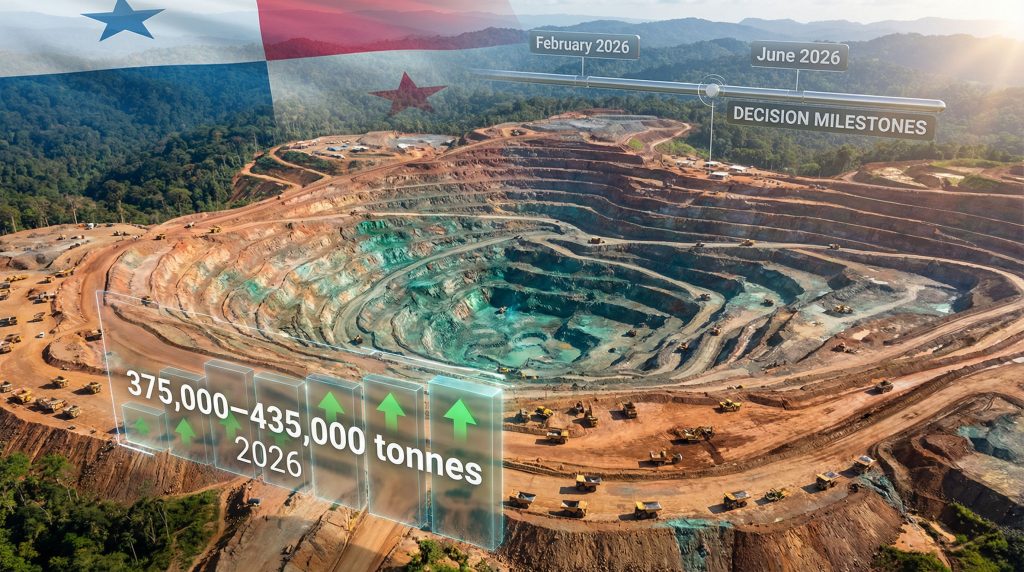
ICC arbitration proceedings scheduled for February 2026 represent one milestone in a process that typically requires 3-5 years from initial filing to final award. The extended timeline reflects the complexity of evidence gathering in multi-billion dollar disputes involving technical mining operations, environmental assessments, and financial valuations.
Arbitration costs in comparable mining disputes typically range from $5-20 million in combined legal fees, expert witness costs, and tribunal expenses. These costs are distributed between disputing parties based on arbitral decisions and can represent significant financial exposure beyond the underlying dispute value. Mining.com reports that Panama aims to reach a definitive resolution by June 2026.
"Critical Investment Consideration: Arbitral awards under ICC procedures are enforceable in over 160 countries through the New York Convention on the Recognition and Enforcement of Foreign Arbitral Awards, providing strong legal mechanisms for award collection regardless of geographic location."
Risk Assessment Evolution in Mining Investment
Political risk evaluation frameworks have evolved significantly following high-profile mining disputes across Latin America. The World Bank's Worldwide Governance Indicators show Panama's political stability score of -0.42 on a scale from -2.5 to +2.5, indicating elevated political risk relative to OECD averages but comparable performance among regional peers.
Modern risk assessment incorporates multiple quantitative indicators:
- Contract Stability Index (CSI): Measuring probability of adverse contract modifications
- Regulatory Volatility Index (RVI): Tracking frequency and magnitude of regulatory changes
- Currency Risk Premium (CRP): Quantifying foreign exchange exposure
- Social License Risk (SLR): Assessing community opposition probability
The Fraser Institute's Annual Survey of Mining Companies rated Panama's investment climate at 64.43 out of 100 in 2023, with particular concerns regarding environmental regulation uncertainty and social license challenges. This rating influences capital allocation decisions and insurance premium calculations for political risk coverage. Furthermore, Reuters coverage emphasises the regional implications of Panama's approach to mining investment disputes.
Operational Restart Scenarios and Technical Feasibility
Reactivating suspended mining operations involves complex technical and logistical challenges that extend well beyond financial considerations. Industry standard maintenance costs for major open-pit copper operations during suspension periods range from $150-250 million annually, with care-and-maintenance requirements consuming 12-15% of full operational costs.
Stockpile Processing Alternatives
Accumulated ore stockpiles of approximately 85-120 million tonnes during the suspension period represent immediate processing opportunities that could generate revenue without resuming active mining operations. Stockpile processing typically yields 60-75% of normal concentrate production at equivalent throughput rates, providing partial revenue recovery while negotiations proceed.
Technical considerations for stockpile utilisation include:
- Ore grade degradation: Extended storage can reduce recoverable copper content
- Processing facility readiness: Equipment condition after extended shutdown periods
- Environmental compliance: Monitoring and treatment system functionality
- Workforce availability: Skilled personnel retention and retraining requirements
Infrastructure Preservation and Reactivation Costs
Suspended mining operations require continuous investment in critical infrastructure systems to maintain operational readiness. Essential preservation activities include:
- Groundwater management systems: Preventing pit flooding and contamination
- Tailings facility monitoring: Ensuring structural stability and environmental compliance
- Equipment preservation: Maintaining machinery condition through controlled storage
- Environmental monitoring: Continuing air quality, water quality, and ecological assessments
Reactivation timelines typically require 12-24 months for comprehensive equipment testing, workforce rebuilding, supplier contract reestablishment, and regulatory recommissioning processes. The duration depends significantly on suspension length and the effectiveness of preservation programs during idle periods. In addition, the broader context of energy transition and critical minerals adds urgency to these reactivation considerations.
Regional Investment Flow Implications and Capital Allocation Patterns
The broader implications of the Cobre Panamá mining decision extend across Latin American investment markets, influencing capital allocation strategies and project development timelines throughout the region. Mining exploration spending in Latin America declined from approximately $3.8 billion in 2022 to $3.1 billion in 2023, with regulatory uncertainty cited as a primary constraint by industry participants.
Investment Postponement and Portfolio Reallocation
Approximately 23% of planned Latin American mining projects were placed under review or deferred pending regulatory clarification, according to Fraser Institute survey data. This postponement pattern reflects risk-averse capital allocation strategies as investors await clarity on regulatory frameworks and contract stability.
The concentration of deferred investments creates opportunities for jurisdictions with stable regulatory environments to attract diverted capital. Countries with established mining codes and consistent policy implementation benefit from comparative advantages in attracting exploration and development investment. However, copper-uranium investment outlook suggests that investors are increasingly looking toward more stable jurisdictions like Australia and Canada.
Competitive Positioning Among Copper Producers
First Quantum's production guidance adjustments of 375,000-435,000 tonnes for 2026 demonstrate how operational uncertainties influence corporate planning and market positioning. The gap in planned production requires supply chain adjustments among copper consumers and creates opportunities for competing producers to capture market share.
Alternative copper projects across Latin America may experience accelerated development timelines as investors and consumers seek supply diversification. This acceleration could benefit established mining jurisdictions with available projects and expedited permitting processes.
Negotiation Framework Components and Stakeholder Alignment
Successful mine resumption negotiations in Latin America increasingly incorporate comprehensive stakeholder engagement frameworks that address environmental performance, community benefits, and fiscal arrangements simultaneously. Contemporary negotiation structures reflect lessons learned from previous mining disputes and evolving expectations regarding corporate social responsibility.
Revenue Sharing and Fiscal Arrangements
Modern copper mining royalty rates in Latin America range from 2-5% of gross revenues, with Peru implementing 3% baseline rates and Chile utilising progressive structures of 5-14% based on profitability metrics. These arrangements balance government revenue objectives with investment return requirements for mining companies.
Environmental compliance costs represent approximately 2-4% of operational revenues for comprehensive monitoring and treatment systems. These costs encompass tailings management, water treatment facilities, air quality monitoring, and ecological impact mitigation programs required by contemporary environmental standards.
Community Engagement and Social License Requirements
Successful negotiation frameworks increasingly incorporate formal Community Consultation and Consent protocols that exceed minimum legal requirements. These enhanced engagement processes reflect heightened social license expectations and community rights recognition in mining project governance.
Essential components of community engagement include:
- Free, Prior, and Informed Consent (FPIC) processes for indigenous communities
- Local Economic Development (LED) programs with measurable employment and training commitments
- Benefit-Sharing Agreements (BSAs) defining procurement preferences and social investment obligations
- Environmental monitoring partnerships with community participation in data collection and assessment
Strategic Implications for Critical Minerals Security
The Cobre Panamá mining decision carries broader implications for Western Hemisphere critical minerals strategy and supply chain resilience planning. Copper's essential role in renewable energy infrastructure, electric vehicle production, and electrical grid modernisation makes supply security a strategic priority for industrial economies.
Western Hemisphere Supply Diversification
Reduced copper availability from Panama increases supply chain dependencies on concentrated South American production centers, potentially reducing diversification objectives pursued by copper-intensive industries. This concentration creates vulnerabilities to regional disruptions, transportation challenges, or coordinated policy changes among major producing countries.
Alternative copper sources in North America, including existing operations in the United States and Canada, face their own development challenges related to environmental permitting, community acceptance, and infrastructure requirements. The lengthy development timelines for new copper projects limit short-term supply diversification options.
Economic Diplomacy and Resource Partnership Frameworks
Bilateral investment treaties between the United States and Latin American countries increasingly incorporate specific provisions addressing mining investment protection and dispute resolution. These agreements aim to balance investor protection with host country regulatory sovereignty, though their effectiveness depends on consistent implementation and enforcement.
Regional trade agreements, including the United States-Mexico-Canada Agreement (USMCA), contain provisions addressing critical minerals supply chains and investment protection in extractive industries. These frameworks could influence future mining investment patterns and dispute resolution approaches.
The next major ASX story will hit our subscribers first
What Are the Potential Outcomes for June 2026?
The anticipated June 2026 decision presents multiple potential outcomes with varying implications for stakeholders across the copper supply chain. Scenario modelling helps quantify potential impacts and inform strategic planning for different resolution pathways.
Full Operation Resumption Scenario
Complete operational restart would restore approximately 375,000-435,000 tonnes of annual copper production capacity, representing meaningful supply addition to global markets. Economic benefits for Panama would include:
- GDP contribution restoration: Return to 1.8-2.1% mining sector contribution
- Employment generation: Reinstatement of 4,700 direct jobs and associated multiplier effects
- Foreign exchange earnings: Resume $1.2-1.8 billion annual copper export revenues
- Government revenues: Restoration of royalty payments and corporate tax contributions
Operational restart requires estimated 12-24 month ramp-up period for equipment recommissioning, workforce rebuilding, and regulatory compliance verification. Initial production levels would likely operate below full capacity during the transition period.
Limited Processing Operations Scenario
Partial resumption focusing on stockpile processing offers intermediate benefits while negotiations continue. This approach could generate:
- Reduced capacity production: 60-75% of normal output from existing stockpiles
- Limited employment restoration: Estimated 2,000-3,000 positions during processing operations
- Partial revenue recovery: Approximately 40-60% of full operational cash generation
- Continued negotiation opportunity: Maintaining dialogue while generating immediate economic activity
Permanent Closure Confirmation Scenario
Definitive closure would create permanent economic impacts requiring alternative development strategies:
- Asset write-down implications: Significant financial losses for First Quantum stakeholders
- Permanent employment displacement: Need for worker retraining and alternative employment programs
- Economic diversification imperative: Requirement for Panama to develop alternative revenue sources
- Supply chain permanent adjustment: Global copper markets adapting to reduced Western Hemisphere capacity
Investment Risk Management Framework for Mining Sector Participants
The Cobre Panamá situation provides important lessons for risk management strategies in mining investment and related industries. Enhanced due diligence frameworks must address evolving political, environmental, and social risk factors that traditional financial analysis may underweight.
Enhanced Due Diligence Components
Comprehensive mining investment evaluation now requires assessment of:
Political Risk Factors:
- Government stability indicators and policy continuity assessment
- Regulatory change frequency and magnitude analysis
- Contract modification history and legal precedent evaluation
- Bilateral investment treaty coverage and enforceability verification
Social License Risk Assessment:
- Community consultation history and relationship quality
- Indigenous rights recognition and FPIC implementation
- Local employment and economic development commitments
- Environmental impact mitigation and monitoring programs
Technical and Operational Risk Analysis:
- Reserve quality verification and mining method optimisation
- Infrastructure dependency and supply chain resilience
- Environmental compliance cost estimation and regulatory trajectory
- Workforce availability and skills development requirements
Portfolio Diversification Strategy Implications
Mining investment portfolios increasingly require geographic diversification across multiple jurisdictions to manage regulatory and political risks. Concentration in single countries or regions creates vulnerability to coordinated policy changes or regional economic disruptions.
Effective diversification strategies consider:
- Jurisdiction risk correlation: Avoiding concentration in countries with similar political or regulatory profiles
- Commodity diversification: Balancing exposure across different metals and industrial minerals
- Development stage distribution: Combining exploration, development, and production assets
- Partnership structure optimisation: Utilising joint ventures and strategic alliances to share risks
Future Investment Strategy Considerations and Industry Evolution
The evolving landscape of mining investment requires adaptive strategies that anticipate regulatory changes, community expectations, and environmental standards. Successful mining companies increasingly invest in comprehensive stakeholder engagement and environmental stewardship as core business capabilities rather than compliance obligations.
Enhanced Community Engagement Investment
Leading mining companies now allocate 3-5% of project capital expenditure to community engagement and social development programs during project development phases. These investments include:
- Skills development programs: Technical training aligned with mining operation requirements
- Infrastructure investment: Healthcare, education, and transportation improvements
- Local business development: Supplier development and procurement preference programs
- Cultural preservation: Programs protecting indigenous heritage and traditional practices
Environmental Technology Integration
Advanced environmental technologies represent growing investment requirements for mining operations, particularly in water management, tailings treatment, and air quality control. Innovation in these areas creates competitive advantages and reduces regulatory compliance risks.
Emerging technologies include:
- Advanced water treatment systems: Real-time monitoring and automated treatment adjustment
- Tailings management innovation: Dry stacking and paste tailings technologies
- Renewable energy integration: Solar and wind power for mining operations
- Carbon capture and utilisation: Technologies reducing mining's carbon footprint
The resolution of the Cobre Panamá mining decision will provide important precedents for balancing economic development, environmental protection, and community rights in contemporary mining governance. The outcome will influence investment strategies, regulatory approaches, and stakeholder engagement practices across Latin America's extractive industries.
Disclaimer: This analysis contains forward-looking statements and projections based on currently available information. Actual outcomes may differ materially from projected scenarios due to political, economic, technical, or regulatory developments. Readers should conduct independent due diligence and consult qualified professionals before making investment decisions.
Looking to capitalise on major copper discoveries before they hit mainstream markets?
Discovery Alert's proprietary Discovery IQ model delivers instant notifications on significant ASX mineral discoveries, empowering subscribers to identify actionable trading opportunities ahead of the broader market. With copper demand surging and supply uncertainties mounting globally, explore how historic discoveries have generated substantial returns and begin your 30-day free trial today to position yourself for the next breakthrough.