May 12, 2026
Why International Quality Certification Has Become Non-Negotiable for Chilean Copper
The global copper market has never been more demanding. As the energy transition demand accelerates and industrial buyers across Europe, Asia, and North America tighten their supplier qualification criteria, the standards governing how copper is produced, tracked, and delivered have evolved from administrative formalities into genuine commercial prerequisites. For Chilean producers competing in this environment, the question is no longer whether to pursue international quality certification, but how consistently and completely they can maintain it across complex, large-scale operations.
Within this context, the Codelco Gabriela Mistral recertificación ISO 9001 cátodos de cobre achievement represents more than a procedural milestone. It illustrates how a hydrometallurgical operation can translate internal management discipline into internationally recognised product credibility, and why that translation increasingly determines market access.
When big ASX news breaks, our subscribers know first
What ISO 9001:2015 Actually Demands of a Mining Operation
The Substance Behind the Standard
ISO 9001:2015 is the world's most widely adopted quality management system standard, but its application in mining contexts is considerably more rigorous than in service industries. For a copper cathode producer, meeting its requirements means demonstrating systematic control over every stage of production: from the chemical parameters governing the leaching circuit, through the solvent extraction stage, into electrowinning cell management, and finally across shipping, labelling, and dispatch.
The standard's core architecture rests on several interconnected principles:
- Risk-based thinking: Organisations must identify potential failure points before they occur and demonstrate how preventive controls are structured
- Process approach: All production activities must be mapped, documented, and managed as interconnected processes rather than isolated tasks
- Continuous improvement: The system must produce verifiable evidence of performance enhancement over time, not merely maintenance of the status quo
- Customer focus: Product specifications and buyer expectations must be formally embedded in operational planning
- Leadership engagement: Management commitment must be demonstrable through documented review cycles and resource allocation decisions
In a hydrometallurgical setting, these principles translate into highly specific operational requirements. Solvent extraction stages must be governed by documented chemical control protocols. Electrowinning cells must be monitored against established current density benchmarks. Cathode quality must be verified against grade specifications before shipment. None of these activities can exist as informal practices; they must be formalised, auditable, and consistently executable.
Market Access and Exchange Registration
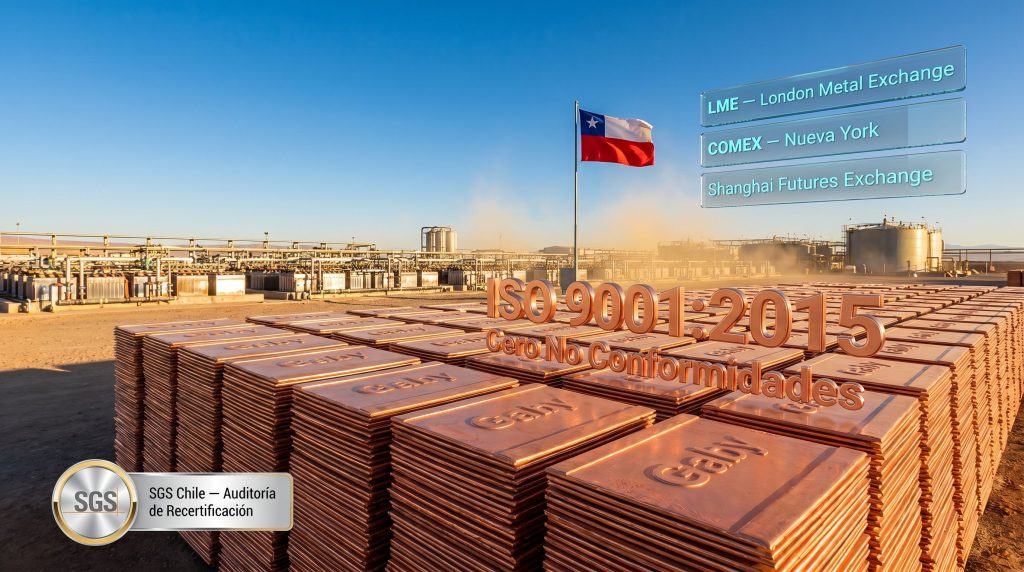
For producers of Grade A copper cathodes, ISO 9001 certification connects directly to the ability to trade on the world's major metal exchanges. Furthermore, the requirements these platforms impose on registered brands are demanding:
| Exchange | Quality Requirement | Commercial Relevance |
|---|---|---|
| London Metal Exchange (LME) | Brand registration with third-party quality audit | Essential for global spot and forward trading |
| COMEX (New York) | Purity and traceability documentation | Access to North American physical delivery market |
| Shanghai Futures Exchange | Origin certification and quality verification | Critical for Asian demand exposure |
Grade A cathodes must achieve a minimum copper purity of 99.99%, compliant with the EN 1978 standard. Without active, current certification from an accredited body, maintaining exchange brand registration becomes untenable, which effectively closes access to the most liquid copper markets in the world.
Zero Non-Conformities: What That Designation Actually Means
Technical Interpretation of the Audit Result
In ISO terminology, a non-conformity is a specific, documented failure to meet an established requirement, either within the standard itself or within the organisation's own quality management documentation. Non-conformities are classified along two severity dimensions:
- Major non-conformity: A systemic failure that fundamentally undermines the quality management system's ability to achieve its intended outcomes. This typically triggers a mandatory corrective action plan and can result in suspension of certification.
- Minor non-conformity: An isolated incidence of non-compliance that does not compromise the overall system but requires documented corrective action before the next audit cycle.
Achieving zero non-conformities in a full recertification audit, rather than a routine annual follow-up, carries particular significance. Recertification involves a comprehensive reassessment of the entire quality management system, conducted after the conclusion of the three-year certification cycle. It is inherently more thorough and wide-ranging than the annual surveillance audits that occur between recertification events.
A recertification audit with zero non-conformities does not indicate the absence of all observations. Auditors routinely identify Opportunities for Improvement (OFIs), which are positive, forward-looking observations about areas where performance could be further optimised. These carry no punitive designation and do not affect certification status. Their presence alongside zero non-conformities actually reflects system maturity, demonstrating that the organisation has moved beyond mere compliance into active self-improvement.
What a Clean Audit Reveals About Operational Reality
When SGS Chile's auditor Luis González assessed Division Gabriela Mistral's quality management system, the absence of non-conformities confirmed several specific operational realities:
- Documented procedures accurately reflect actual operational practice, eliminating the common gap between what is written and what is done
- Personnel across operational roles understand and can demonstrate their responsibilities within the quality management system
- Preventive control mechanisms are functioning as designed, catching potential deviations before they become incumpliances
- Management review processes are active and evidenced, not nominal
- The organisation has moved beyond compliance-driven behaviour into a self-sustaining culture of operational excellence
González confirmed that the assessment revealed a level of quality management maturity paired with consistent pursuit of excellence and innovation. This language from an accredited third-party auditor carries weight precisely because it is not promotional; it reflects what the evidence presented during the audit actually demonstrated.
Division Gabriela Mistral: Operational Profile and Competitive Positioning
The SX-EW Advantage in Modern Copper Production
Division Gabriela Mistral operates using the SX-EW process: solvent extraction combined with electrowinning. This hydrometallurgical pathway distinguishes the operation from conventional pyrometallurgical producers in several commercially relevant ways.
The production sequence moves through three principal stages:
- Heap leaching: Copper-bearing ore is irrigated with an acidic solution that dissolves the copper content into a pregnant leach solution (PLS)
- Solvent extraction (SX): The PLS passes through organic extractant circuits that selectively concentrate and purify the copper ions, producing a high-purity electrolyte
- Electrowinning (EW): Direct electrical current is applied across cathode blanks submerged in the purified electrolyte, depositing copper at 99.99% purity without requiring smelting or refining
The absence of conventional smelting from this pathway offers meaningful environmental advantages, including lower direct carbon emissions and reduced sulphur dioxide output relative to traditional concentrate-and-smelt operations. In an era where buyers in the electric vehicle and renewable energy sectors are beginning to differentiate copper sources by emissions profile, this characteristic carries growing commercial relevance, particularly given broader global copper market trends towards responsible sourcing.
The Cátodos Gaby Brand and Traceability Leadership
The division's commercial product, marketed under the Cátodos Gaby brand, is registered across major international metal exchanges. The brand's recognition rests not only on consistent purity but on documented traceability, a capability that DGM pioneered within the Chilean industry.
In 2019, Division Gabriela Mistral became the first operation in Chile to produce 100% traceable copper cathodes, embedding verified socio-environmental variables into the product's documented history. This initiative positioned the division ahead of the market trend toward responsible sourcing credentials, anticipating requirements that have since become central to supplier qualification processes in European and Asian markets.
Recertification Analysis: Reading the System Maturity Indicators
Certification History as a Performance Signal
The value of a single clean audit is meaningful. However, the value of multiple consecutive clean audits, across both the three-year recertification cycle and the intervening annual surveillance audits, across both quality management (ISO 9001) and environmental management (ISO 14001), is substantially greater. It signals that performance is structural rather than episodic.
| Certification Event | Auditing Body | Result | Contextual Note |
|---|---|---|---|
| ISO 9001:2015 recertification (May 2026) | SGS Chile | Zero non-conformities | Full system reassessment |
| ISO 14001:2015 renewal (October 2025) | Bureau Veritas | Zero non-conformities | Four days of on-site audit |
| Annual surveillance audits (intervening) | Various accredited bodies | System maintained | Periodic verification |
The fact that both the quality management and environmental management systems were assessed by different accredited bodies, SGS Chile and Bureau Veritas respectively, and both returned zero non-conformities, adds a layer of independent verification that a single auditor relationship could not provide. Each organisation applies its own interpretation of standard requirements, its own audit methodology, and its own evidence thresholds.
Three Pillars Identified by the SGS Chile Assessment
The audit conducted by SGS Chile highlighted three specific areas of operational strength that distinguished DGM's performance:
Process Consistency
The alignment between documented procedures and actual operational execution is one of the most commonly cited failure points in large-scale industrial quality audits. Procedure drift, where written standards gradually diverge from daily practice through informal adaptations, represents a persistent risk in complex operations. DGM's audit confirmed that this gap had been effectively managed, with procedures reflecting operational reality rather than theoretical ideals.
Demonstrable Continuous Improvement
ISO 9001:2015 does not merely require that an organisation have improvement processes; it requires evidence of completed improvement cycles. The division demonstrated active mechanisms for identifying, acting upon, and closing improvement opportunities, with records confirming that corrective and preventive action cycles had been completed rather than merely initiated.
Operational Team Maturity
Rodrigo Gallegos, Head of Maintenance Planning for the Wet Area at DGM, underscored that the certification validates an operational reality in which all processes, from extraction through to cathode production, are governed by internationally recognised standards. This observation reflects not just documentation quality but the degree to which frontline personnel understand their role within the broader quality system.
From Certification to Commercial Outcome: The Quality Value Chain
How ISO 9001 Creates Market Value for Copper Cathodes
The commercial impact of maintaining active ISO 9001:2015 certification extends across multiple layers of the copper cathode value chain:
Certified Process > Verified Traceability > Exchange Brand Registration > Premium Buyer Access > Competitive Pricing Position
Each stage in this progression depends on the integrity of the preceding one. Without the certified process, traceability claims lack the third-party backing required by institutional buyers. Without verified traceability, exchange registration cannot be maintained. Without exchange registration, access to the most liquid global markets is compromised.
The practical implications include:
- Regulatory market access: Exchange brand registration for products like Cátodos Gaby requires current, active certification from an accredited body
- Buyer homologation: European and Asian importers operating under procurement policies that require certified suppliers use certification status as a gatekeeping criterion during vendor qualification
- Price differentiation: Cathodes with documented traceability and active quality certification can attract market premiums above spot copper prices from buyers with specific sourcing requirements
- Shipment rejection risk reduction: Consistent certification significantly reduces the probability of product rejection at destination due to specification non-compliance
Alignment with ESG-Driven Procurement Trends
The convergence of ISO 9001:2015 quality certification, ISO 14001:2015 environmental management certification, and the Copper Mark responsible production framework creates an interconnected credentialing system that responds directly to the sourcing requirements of industrial copper consumers. Buyers in electric vehicle manufacturing, utility-scale renewable energy installation, and precision electronics increasingly treat this combination of certifications as a supplier selection criterion rather than a bonus attribute.
The Copper Mark framework evaluates responsible practices across social, environmental, and governance dimensions. While it operates independently of ISO standards, the two systems are architecturally complementary: ISO 9001 validates the quality management system, ISO 14001 validates environmental management, and Copper Mark assesses the broader operational responsibility profile. Producers maintaining all three present a substantially more complete credentials package to buyers with ESG-aligned procurement policies. Consequently, understanding these copper market opportunities is increasingly vital for producers and investors alike.
The next major ASX story will hit our subscribers first
The Human Dimension: Organisational Capacity as the Foundation of Sustainable Certification
Why Documented Procedures Are Never Enough on Their Own
A quality management system's resilience depends fundamentally on the people who operate it. Procedures that exist only in documentation folders do not produce consistent results in practice. The sustained achievement of zero non-conformities across multiple audit cycles requires that personnel at every operational level understand not just what the procedures require but why those requirements exist and how their individual contribution connects to the system's overall integrity.
Daniela Núñez, a Metallurgical Balance specialist at Division Gabriela Mistral, highlighted that the division's quality achievement is inseparable from deliberate investment in workforce capability. Beyond the current certification cycle, the operation is actively preparing personnel to meet the requirements of the next version of the ISO 9001 standard, an approach that reflects anticipatory strategy rather than reactive compliance management.
This forward orientation is significant. ISO standards evolve through periodic revision cycles, and organisations that wait for new requirements to be published before beginning preparation typically find themselves scrambling to close compliance gaps. Those that begin building capability ahead of publication are positioned to absorb new requirements without operational disruption.
The Metallurgical Balance Specialist's Role in Quality Assurance
In SX-EW operations, metallurgical balance tracking is among the most technically demanding and operationally critical quality assurance functions. This discipline involves monitoring the mass flow of copper through each stage of the production circuit, identifying discrepancies between theoretical and actual copper recovery, and diagnosing the operational variables responsible for any variance.
Within the ISO 9001 framework, metallurgical balance data serves multiple functions:
- It provides quantitative evidence of process consistency, a direct requirement of the standard
- It feeds into management review processes as a key performance indicator
- It creates the traceability documentation trail that connects raw material inputs to finished cathode output
- It enables early identification of process deviations before they affect product quality or certification compliance
The specialist role in this area sits at the intersection of technical metallurgical expertise and quality system management, making it a critical capability for any SX-EW operation seeking to sustain international certification.
Codelco's Corporate Certification Strategy: A Systems-Level View
Divisional Consistency as a Corporate Asset
Division Gabriela Mistral's recertification does not occur in isolation. Indeed, the broader Codelco copper strategy applies quality and environmental management certification systematically across its principal producing divisions, creating organisational consistency that translates into a coherent market-facing identity.
| Division | Active Certifications | Relevance |
|---|---|---|
| Gabriela Mistral | ISO 9001:2015 + ISO 14001:2015 | Current, zero non-conformities |
| Chuquicamata | ISO 9001 (refinery operations) | Grade A cathode production |
| Andina | ISO 9001 | Concentrate quality management |
| El Teniente | ISO 9001 + ISO 14001 | Periodic renewal cycle |
When multiple divisions of a single corporation maintain the same internationally recognised management system standards, the corporation can present a homogeneous quality profile to global buyers rather than a fragmented one where product reliability varies by source operation. For institutional buyers purchasing copper across multiple Chilean origins, this consistency reduces procurement risk and simplifies supplier qualification processes.
Positioning for the Green Copper Premium
Division Gabriela Mistral's combination of SX-EW production technology, 100% traceable cathode capability, ISO 9001 and ISO 14001 certification, and progressive workforce development positions it as a strong candidate for participation in the emerging market for green copper. This designation applies to copper produced with verified low carbon intensity and responsible supply chain documentation, a trend closely linked to broader green metals pricing dynamics shaping global commodities markets.
While the green copper premium remains a developing commercial construct rather than a fully standardised market mechanism, the directional trend in major consumption markets is unambiguous. European and Asian industrial buyers, particularly those with public net-zero commitments, are increasingly seeking copper sourced from operations that can provide verified emissions and social responsibility data alongside standard quality documentation.
Operations that have already built the foundational systems, traceability infrastructure, certified management frameworks, and trained personnel will be better positioned to respond when formal green copper procurement criteria become standard requirements rather than preferences.
Frequently Asked Questions: ISO 9001 and Copper Cathode Certification
What is ISO 9001:2015 and why does it matter specifically for copper producers?
ISO 9001:2015 is the internationally recognised framework for quality management systems. For copper cathode producers, it establishes requirements that ensure production processes operate under verifiable, consistent, and improvement-oriented controls from extraction through to final product delivery. It is a prerequisite for maintaining brand registration on major metal exchanges and a standard qualification requirement for institutional buyers in regulated markets.
How does the three-year certification cycle work in practice?
Following initial certification or recertification, an organisation undergoes annual surveillance audits in years one and two of the cycle. These verify that the system continues to meet standard requirements between full assessments. In year three, a complete recertification audit reassesses the entire quality management system. Division Gabriela Mistral's recent audit represented this full recertification assessment.
What distinguishes Grade A copper cathodes from other copper products?
Grade A cathodes achieve a minimum purity of 99.99% copper, meeting the EN 1978 specification. This purity level is the benchmark required for physical delivery contracts on the LME, COMEX, and the Shanghai Futures Exchange. Lower purity copper products trade at a discount to the Grade A benchmark and are not eligible for exchange delivery.
What is the practical difference between a non-conformity and an opportunity for improvement?
A non-conformity is a documented failure to meet a specific requirement. An opportunity for improvement is a positive auditor observation identifying areas where the system could be further optimised, without any compliance failure implied. The presence of improvement opportunities alongside zero non-conformities is a sign of system health, not a weakness.
How does ISO 9001 relate to the Copper Mark standard?
The Copper Mark is a responsible production assurance framework specific to the copper industry, evaluating social, environmental, and governance practices across the full operation. ISO 9001 addresses the quality management system. The two standards are architecturally independent but complementary. Furthermore, ISO 9001 certification compliance together with Copper Mark provides buyers with a more complete picture of an operation's management maturity than either framework offers alone.
Disclaimer: This article contains forward-looking observations regarding market trends, commercial positioning, and certification frameworks. These reflect current industry dynamics and publicly available information as of the date of publication and should not be interpreted as financial advice or investment guidance. Market conditions, certification standards, and buyer requirements are subject to change.
Want to Stay Ahead of the Next Major Copper Discovery on the ASX?
Discovery Alert's proprietary Discovery IQ model scans ASX announcements in real time, instantly identifying significant mineral discoveries — including copper — and delivering actionable insights directly to subscribers before the broader market reacts. Explore how historic discoveries have generated substantial returns on Discovery Alert's dedicated discoveries page, and begin your 14-day free trial today to secure your market-leading edge.