June 26, 2026
The Governance Reckoning Facing the World's Largest Copper Producer
Every decade or so, the relationship between a sovereign state and its most valuable industrial asset reaches an inflection point. For Chile, that moment has arrived in 2026, as Corporación Nacional del Cobre de Chile, known globally as Codelco, faces the most consequential period of parliamentary scrutiny in its modern history. Codelco priorities before the Chilean Congress are now centre stage, as a state-owned enterprise that accounts for a meaningful share of Chile's national fiscal revenues has appeared before the Chamber of Deputies not merely to report, but to defend its institutional credibility and articulate a forward strategy under conditions of genuine political pressure.
Understanding what Codelco's congressional engagement actually means requires looking well beyond the headlines. At stake is not just a production accounting discrepancy, but a fundamental debate about how the Chilean state should structure, govern, and capitalise its most strategically important industrial asset in an era defined by the global energy transition, rising copper demand, and intensifying competition from privately capitalised mining majors.
When big ASX news breaks, our subscribers know first
A Production Discrepancy That Triggered Parliamentary Action
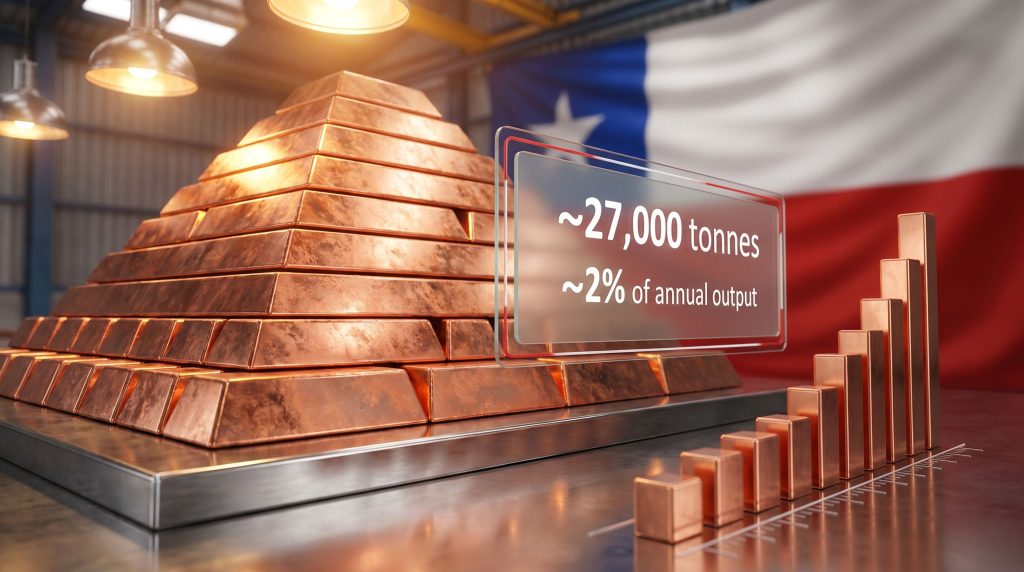
The immediate catalyst for heightened legislative oversight was a reporting irregularity identified in Codelco's 2025 production data. The company's output figures were found to have overstated copper production by approximately 27,000 tonnes, a volume representing roughly 2% of total annual output. While 2% may sound modest in percentage terms, the absolute volume is significant in a market where supply and demand balances are often measured in tens of thousands of tonnes.
| Metric | Detail |
|---|---|
| Overestimated Production Volume | ~27,000 tonnes of copper |
| Share of Annual Output | ~2% |
| Production Cycle Affected | 2025 reporting period |
| Legislative Response | Special investigative commission established by the Chamber of Deputies |
The Chilean Chamber of Deputies responded by establishing a special investigative commission, specifically tasked with examining Codelco's operational reporting practices and internal data governance. This is not a routine oversight exercise. The commission signals a shift in how Chilean legislators are choosing to engage with the state mining enterprise, moving from periodic review toward active scrutiny of management systems.
For a company of Codelco's scale, production measurement errors of this magnitude can arise through several technical pathways. Large, multi-site underground and open-pit operations rely on complex ore reconciliation systems that track material from the rock face through crushing, milling, and refining. Discrepancies can emerge at multiple points: between geological block models and actual ore extracted, between mill feed estimates and plant throughput records, or in the integration of data from different mine sites operating under separate control systems. The absence of robust third-party verification protocols at each stage makes overstatement possible without any deliberate misreporting.
Regardless of the mechanism, a production overestimation of this scale at a state-owned entity with direct fiscal implications for sovereign revenue creates both reputational and regulatory exposure that demands a structural governance response, not just a technical correction.
Codelco's Three Declared Priorities Before Congress
When Codelco's leadership addressed the Chamber's Mining and Energy Commission, the framing was deliberate. Rather than a purely defensive posture, the company's representatives used the congressional platform to articulate a forward-looking agenda built around three core priorities.
Maximising State Contributions While Avoiding Further Debt
The first and most politically visible priority is increasing financial transfers to the Chilean state without accumulating additional corporate debt. This dual constraint is more complex than it appears. Codelco already carries a debt load exceeding US$17 billion, a figure that reflects decades of capital-intensive infrastructure investment across its aging asset portfolio. Servicing that debt while simultaneously maximising dividend-equivalent transfers to the treasury leaves limited room for reinvestment.
This tension is not unique to Codelco. State mining enterprises worldwide have historically struggled to balance their role as fiscal instruments against the capital requirements of sustaining long-lived, technically demanding operations. When fiscal transfers crowd out reinvestment, the result is a gradual deterioration of productive capacity that eventually undermines the very revenue stream the state depends on. Furthermore, Chile's Congress has previously attempted to address this through capitalisation legislation, though structural tensions have persisted.
Operational Profitability Over Volume
The second priority reflects a meaningful cultural shift in how Codelco intends to measure its own performance. Historically, the company's internal metrics have leaned heavily toward production volume, a natural orientation for an organisation whose output is directly linked to national fiscal receipts. The new framework emphasises margin efficiency and cost discipline over raw tonnage.
Codelco's cost position is a persistent concern. The company's all-in sustaining costs have trended upward over the past decade as ore grades at its legacy operations have declined. Chile's copper ore grades have fallen from roughly 1.5% copper in the early 2000s to below 0.7% at many operations today, a structural deterioration that increases energy and water consumption per tonne of metal produced. This places Codelco at a cost disadvantage relative to newer, higher-grade operations elsewhere. Shifting the performance culture toward margins rather than volumes is a necessary adaptation to this geological reality.
Enhanced management control systems, developed specifically in response to the 2025 reporting irregularity, are embedded within this priority. Stronger reconciliation protocols and independent production verification serve dual purposes: they restore congressional confidence in the company's data, and they provide the management layer with more reliable information for operational decision-making.
Safety as the Foundational Non-Negotiable
Board Chairman Bernardo Fontaine positioned worker safety as the apex organisational priority in testimony before Congress, a framing that carries strategic weight beyond its obvious humanitarian dimension. In copper mining, safety performance is directly connected to operational continuity. A serious incident or fatality at a major operation can trigger mandatory stoppages, regulatory investigations, and union action that may suspend production for weeks or months.
Chile's large copper operations have historically experienced fatal accident rates that, while improved significantly over the past two decades, remain a persistent concern. The global mining industry benchmark for fatal injury frequency rates has tightened considerably, with leading private operators achieving rates well below one fatality per 200 million hours worked. Aligning Codelco's safety standards with global best practice is therefore both an ethical obligation and a productivity strategy.
The Four Structural Pillars of Codelco's Operational Roadmap
Beyond its immediate congressional priorities, Codelco presented four structural pillars that define its medium-to-long-term operational direction.
-
Structural Project Development – Advancing the capital-intensive underground expansions required to replace depleting reserves at legacy operations, including the Chuquicamata Underground project and the expansion of El Teniente, the world's largest underground copper mine. These projects are critical to sustaining output through the 2030s but require sustained capital investment under constrained financial conditions.
-
Strategic Partnerships With Global Mining Leaders – Pursuing joint ventures and co-investment arrangements with major international mining companies as a mechanism to access capital, technology, and operational expertise without increasing sovereign debt exposure. This model distributes financial risk while preserving Chilean state ownership of the underlying mineral assets. In addition, Codelco's loan arrangement with Japan demonstrates how these international financing strategies are already taking shape.
-
Responsible and Sustainable Mining Practices – Embedding ESG obligations into operational planning, including water stewardship in Chile's water-stressed northern Atacama region, tailings management in compliance with the Global Industry Standard on Tailings Management, and decarbonisation commitments aligned with Chile's national climate targets.
-
Strengthening the Social Compact With Workers – Managing labour relations in a company where union power has historically shaped operational continuity. Codelco operates across multiple major mine sites, each with its own union structures. Strike action at any single site can materially impact quarterly production figures and, by extension, fiscal transfers to the state.
The Ley Reservada del Cobre: An Institutional Barrier to Competitiveness
One of the most consequential and least publicly understood dimensions of Codelco's congressional engagement concerns the Ley Reservada del Cobre, a Chilean law that for decades directed a fixed percentage of copper export revenues to the armed forces. While this law has undergone modifications over the years, its legacy provisions continue to constrain how Codelco can deploy capital for strategic purposes, including international acquisitions and expansion into copper assets outside Chile.
Codelco's leadership has argued that this legislative constraint is structurally incompatible with the ambition to compete as a genuinely global mining enterprise. The comparison is stark when placed against global peers. Consequently, geopolitical pressures on state mining operators have made this debate even more urgent in recent years.
| Company | Country | Governance Model | Capital Flexibility |
|---|---|---|---|
| BHP | Australia | Fully private, listed | Unrestricted global capital deployment |
| Freeport-McMoRan | USA | Private, with government partnerships | High flexibility for acquisitions |
| Vale | Brazil | Privatised from state | Operational agility post-reform |
| Saudi Aramco | Saudi Arabia | Partial IPO, hybrid model | Access to global capital markets |
| Codelco (current) | Chile | State enterprise | Constrained by legislative provisions |
Reforming or eliminating the Ley Reservada del Cobre would be politically complex, given its deep roots in Chilean civil-military relations. However, without addressing this constraint, Codelco's capacity to pursue the international partnerships and acquisitions that its own leadership has identified as essential to competitiveness remains structurally limited.
What This Means for Global Copper Markets
The stakes of Codelco's institutional reform debate extend far beyond Santiago. Chile holds approximately 23% of the world's known copper reserves and produces around 27% of global mined copper supply, according to data from the U.S. Geological Survey. Codelco alone accounts for roughly 10% of global copper production. Indeed, understanding copper market supply dynamics helps contextualise just how consequential any sustained underperformance by Codelco would be.
Copper's centrality to the global energy transition amplifies these numbers considerably. A single electric vehicle requires approximately 83 kilograms of copper, compared to roughly 23 kilograms in a conventional internal combustion engine vehicle. Offshore wind turbines require between 8 and 15 tonnes of copper per megawatt of installed capacity. Grid infrastructure upgrades alone are projected to require millions of additional tonnes of copper annually through 2040.
If Codelco's underinvestment risk materialises, the consequences would not be contained to Chile's fiscal accounts. A structural production shortfall at the world's largest copper producer would create supply constraints with direct implications for the cost and pace of the global energy transition.
The fiscal dependency paradox is real and historically documented. State mining companies that have consistently prioritised short-term fiscal transfers over reinvestment, including examples from Zambia's ZCCM in the 1980s and 1990s, experienced structural production declines that proved difficult and expensive to reverse. Codelco's leadership appears to understand this risk, which is precisely why the dual mandate of maximising state contributions without increasing debt is so difficult to execute cleanly.
The next major ASX story will hit our subscribers first
Investor and Industry Implications
For international mining companies, engineering firms, and institutional investors monitoring Codelco priorities before the Chilean Congress, several signals are worth parsing carefully.
-
Codelco's openness to strategic alliances and joint ventures represents a genuine commercial opportunity for well-capitalised global miners seeking exposure to Tier 1 Chilean copper assets without the political complexity of full ownership.
-
The emphasis on management control system reform suggests Codelco will be a more rigorous partner and counterparty going forward, with greater transparency in operational data. Furthermore, Codelco's broader 2025 strategy outlines how the company is positioning itself amid global trade pressures.
-
The Ley Reservada del Cobre reform debate is a legislative process that will unfold over years, not months, introducing political risk into any timeline-dependent partnership or investment thesis.
-
Codelco's structural project pipeline, including Chuquicamata Underground and El Teniente expansion, represents billions of dollars in procurement, engineering, and equipment supply opportunities for contractors willing to navigate the company's public-sector procurement framework.
Disclaimer: This article is intended for informational purposes only and does not constitute financial or investment advice. Forecasts, projections, and forward-looking statements involve inherent uncertainty. Readers should conduct independent due diligence before making any investment decisions.
Key Takeaways
-
The ~27,000-tonne production overestimation in 2025 catalysed unprecedented parliamentary scrutiny, forcing Codelco to reframe its governance narrative before the Chamber of Deputies. However, Codelco's path to reclaiming its position as the world's top producer remains a live and consequential story.
-
Codelco's dual mandate — maximising state fiscal contributions while avoiding further debt accumulation — creates a structural tension that will define capital allocation strategy through the decade.
-
Declining ore grades across Chilean copper operations, falling from above 1.5% to below 0.7% at many sites, represent a geological reality that makes the shift toward margin-based performance metrics not just strategic but necessary.
-
The Ley Reservada del Cobre remains a significant institutional barrier to the international competitiveness Codelco's leadership says the company needs.
-
Strategic partnerships with global mining majors are emerging as the primary mechanism to access capital and technology without sovereign debt exposure.
-
Safety, ESG compliance, and labour relations are positioned as core operational pillars, not peripheral obligations, reflecting their direct connection to productivity and long-term output continuity.
-
Given that Codelco accounts for roughly 10% of global copper supply, any sustained underperformance carries implications for global copper availability and the cost trajectory of the energy transition. In this context, Codelco's 2025 production decline and its industry-wide ramifications deserve close attention from market participants worldwide.
Want to Know When the Next Major Copper Discovery Hits the ASX?
Discovery Alert's proprietary Discovery IQ model scans ASX announcements in real time, instantly identifying significant mineral discoveries across copper and 30+ other commodities — turning complex geological data into actionable investment insights before the broader market reacts. Explore historic discoveries and their remarkable returns, then begin your 14-day free trial at Discovery Alert to position yourself ahead of the next major find.