May 22, 2026
Codelco Sandvik loaders represent a critical investment in underground copper extraction, where sophisticated machinery must handle extreme operational challenges while maintaining safety standards and productivity benchmarks. As global copper demand intensifies, mining companies face mounting pressure to optimise equipment selection for maximum throughput and operational efficiency. The strategic procurement of specialised load-haul-dump (LHD) equipment represents a critical decision point that can determine the success or failure of underground mining operations.
Modern underground loaders must navigate complex operational requirements including confined space manoeuvrability, environmental compliance, and integration with existing fleet management systems. The selection process involves evaluating capacity optimisation, technological capabilities, and long-term operational sustainability.
Understanding Codelco Sandvik Loaders Strategic Equipment Procurement
Codelco's recent acquisition of 13 Toro LH515i load-haul-dump loaders from Sandvik represents a significant investment in underground mining infrastructure at the Chuquicamata operation in Chile. This procurement decision reflects the complex evaluation process that major mining operations undertake when selecting critical underground equipment.
The Chilean state-owned copper producer's equipment selection demonstrates the importance of balancing immediate operational needs with long-term strategic goals. Furthermore, this acquisition aligns with broader Codelco copper strategy initiatives aimed at modernising operations and enhancing productivity.
Key Performance Requirements for Underground Operations
Modern underground loaders must meet stringent performance criteria to justify their substantial capital investment:
• High-capacity material handling – Typically ranging from 10-25 metric tons per loading cycle
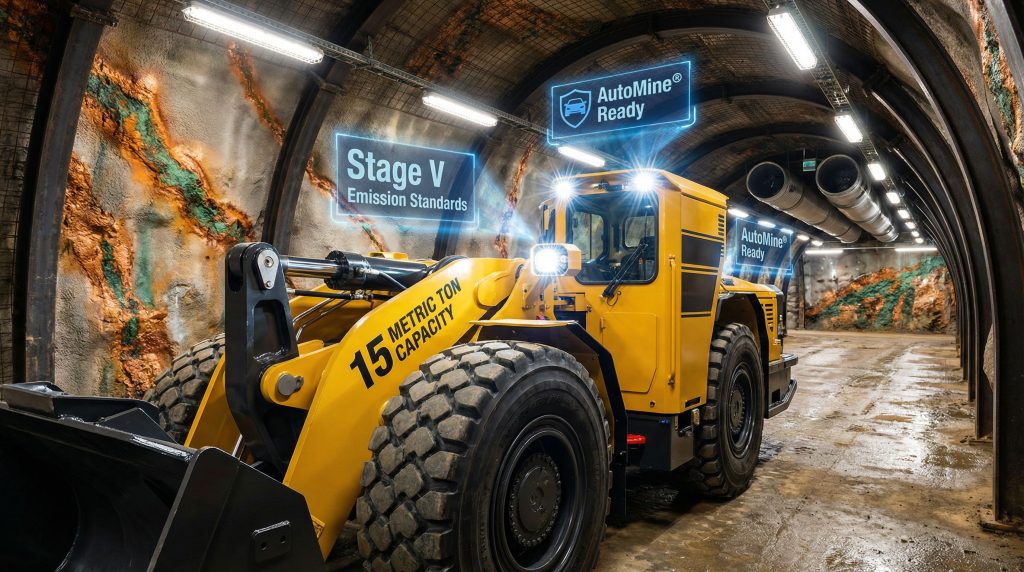
• Advanced emissions compliance – Meeting Stage V environmental standards for underground air quality
• Automation-ready architecture – Preparation for future autonomous fleet integration
• Robust hydraulic systems – Designed for continuous operation in demanding conditions
• Enhanced operator safety features – Including reinforced cabin structures and visibility systems
The operational environment in underground copper mines presents unique challenges that distinguish equipment requirements from surface mining applications. In addition to these challenges, underground mining innovations continue to drive technological advancement in equipment design and operational capabilities.
Equipment Specification Analysis
| Equipment Category | Typical Capacity Range | Primary Applications | Operational Advantages |
|---|---|---|---|
| Mid-Range Loaders | 12-15 metric tons | Development drifts, production areas | Optimal balance of capacity and manoeuvrability |
| Heavy-Duty Units | 18-25 metric tons | Main haulage routes, bulk extraction | Maximum material movement efficiency |
| Compact Loaders | 8-12 metric tons | Narrow vein access, exploration drives | Enhanced access to restricted areas |
When big ASX news breaks, our subscribers know first
How Advanced Capacity Loaders Transform Underground Productivity
The implementation of advanced underground loaders significantly impacts operational efficiency through improved cycle times, enhanced material handling capabilities, and reduced operational bottlenecks. However, understanding the productivity transformation requires analysing both theoretical performance metrics and real-world operational constraints.
Productivity Calculation Framework
Underground loader productivity depends on multiple interconnected factors that influence overall operational efficiency:
Theoretical Hourly Output Calculations:
• 15-metric-ton loader capacity: 180-225 tons per hour (12-15 cycles)
• Loading phase duration: 2-3 minutes per cycle
• Hauling distance variables: 3-5 minutes depending on drift layout
• Dumping and positioning: 1-2 minutes per cycle
• Operational efficiency factor: 0.75-0.85 accounting for delays and maintenance
The efficiency multiplier reflects real-world operational constraints including equipment maintenance, operator shift changes, and unavoidable operational delays that impact theoretical maximum productivity.
Cycle Time Optimisation Strategies
Maximising loader productivity requires systematic analysis of each operational phase:
-
Loading Phase Optimisation
- Proper bucket positioning techniques
- Material pile preparation and staging
- Hydraulic system pressure optimisation
-
Haul Route Efficiency
- Traffic management coordination
- Ventilation system integration
- Surface condition maintenance
-
Dumping Operation Coordination
- Dump point accessibility design
- Material flow management
- Return route optimisation
What Advanced Features Define Next-Generation Underground Loaders
Contemporary underground loaders incorporate sophisticated technological systems that enhance operational capability, environmental compliance, and safety performance. Consequently, these advanced features represent significant technological evolution from previous generation equipment.
Engine Technology and Emissions Management
Stage V emission compliance represents the most stringent diesel engine requirements globally, delivering substantial environmental and operational benefits:
Environmental Performance Improvements:
• Particulate matter reduction: Up to 95% decrease compared to older standards
• Advanced after-treatment systems designed specifically for underground air quality management
• Fuel efficiency optimisation through precision combustion control systems
• Enhanced reliability via sophisticated engine management integration
The implementation of Stage V compliant engines addresses critical underground air quality concerns while maintaining operational performance requirements. These systems incorporate selective catalytic reduction (SCR) technology and diesel particulate filters (DPF) optimised for underground operational conditions.
Automation-Ready Architecture Integration
Modern underground loaders feature comprehensive automation preparation systems:
• Pre-installed sensor arrays for autonomous navigation capability
• Communication systems enabling fleet coordination and management
• Safety protocols supporting mixed manual and automated operations
• Scalable deployment options allowing phased automation implementation
The AI-driven mining efficiency capabilities provide mining operations with flexibility to implement automation systems gradually, allowing workforce adaptation and operational optimisation before full autonomous deployment.
How Equipment Procurement Supports Mine Development Phases
Strategic equipment procurement timing aligns with specific mine development milestones to maximise operational efficiency and capital investment returns. For instance, the phased approach to equipment deployment enables systematic capacity building and workforce development.
Development Phase Coordination
Phase 1: Infrastructure Foundation
• Access tunnel completion and ventilation system installation
• Power distribution network establishment
• Communication and safety system implementation
Phase 2: Production Preparation
• Panel development initiation and equipment integration testing
• Workforce training and certification programs
• Operational system optimisation and performance validation
Phase 3: Full Operational Capacity
• Maximum throughput achievement and automation system integration
• Continuous improvement implementation and performance monitoring
• Maintenance infrastructure optimisation
Multi-Year Delivery Timeline Benefits
Extended delivery schedules, such as the March 2026 through November 2027 timeline referenced in major equipment orders, provide several strategic advantages:
- Gradual workforce adaptation allowing comprehensive training and skill development
- Phased operational capacity increases enabling systematic performance optimisation
- Equipment integration testing ensuring compatibility with existing systems
- Maintenance infrastructure development supporting long-term operational sustainability
What Role Do Capital Spares and Support Services Play in Mining Operations
Comprehensive support packages extend beyond initial equipment delivery to encompass long-term operational sustainability and performance optimisation. Moreover, the strategic management of capital spares and support services directly impacts operational availability and total cost of ownership.
Capital Spares Strategic Management
Critical Component Inventory Planning:
• Backup systems for mission-critical components
• Extended availability assurance through strategic parts positioning
• Reduced unplanned downtime via proactive maintenance scheduling
• Rapid response capability through optimised inventory management
The establishment of comprehensive spare parts inventory requires careful analysis of component failure rates, lead times for replacement parts, and the operational impact of equipment downtime.
Training and Development Programs
Operator Certification Components:
• Equipment-specific training covering operational procedures and safety protocols
• Maintenance technician development focusing on advanced diagnostic and repair techniques
• Operational optimisation consulting providing performance improvement strategies
• Performance monitoring systems enabling data-driven operational decisions
Total Cost of Ownership Analysis
| Cost Category | Initial Investment | Operational Expenses | Long-term Considerations |
|---|---|---|---|
| Equipment Purchase | Capital expenditure | Financing costs | Depreciation schedules |
| Fuel and Maintenance | Initial setup | Ongoing operational costs | Efficiency improvements |
| Spare Parts Inventory | Initial stock investment | Replenishment costs | Obsolescence management |
| Training Programs | Initial certification | Ongoing skill development | Workforce retention benefits |
How Do Modern Loaders Address Underground Safety Requirements
Underground mining safety requirements demand comprehensive equipment design approaches that protect operators while maintaining operational efficiency. Furthermore, modern loader safety systems integrate multiple protection layers to address the unique hazards of underground mining environments.
Operator Protection Systems
Enhanced Cabin Design Elements:
• Reinforced protection structures meeting ROPS (Rollover Protective Structures) and FOPS (Falling Object Protective Structures) certification standards
• Advanced visibility systems incorporating camera integration and blind spot monitoring
• Ergonomic control configurations reducing operator fatigue during extended operational shifts
• Climate control systems maintaining optimal operator comfort in extreme underground conditions
Environmental Safety Integration
Air Quality Management Systems:
• Low-emission engine technology minimising underground air contamination
• Exhaust after-treatment systems optimised for confined space operations
• Ventilation system compatibility supporting overall mine air quality management
• Real-time emission monitoring enabling immediate response to air quality concerns
The integration of advanced safety systems requires careful consideration of underground operational constraints while maintaining equipment performance standards.
The next major ASX story will hit our subscribers first
What Market Dynamics Drive Underground Equipment Selection
Global copper market dynamics significantly influence underground equipment procurement decisions, with mining companies evaluating equipment selection against long-term commodity demand projections and operational efficiency requirements. Additionally, broader copper & uranium investments trends shape strategic equipment decisions across the industry.
Supply Chain Considerations
Market Pressure Factors:
• Increasing global copper consumption driven by electrification and renewable energy demand
• Underground mine development acceleration as surface deposits become depleted
• Equipment availability constraints creating extended delivery timelines
• Technology advancement requirements necessitating modern equipment capabilities
Competitive Equipment Evaluation
Major Manufacturer Analysis:
• Sandvik Toro series – Advanced automation integration and proven underground performance
• Caterpillar R-series – Robust design and comprehensive service network
• Epiroc Scooptram line – Specialised underground applications and automation capabilities
• Atlas Copco solutions – Comprehensive load and haul equipment portfolio
Equipment selection requires detailed comparison of technical specifications, service support capabilities, and long-term operational costs across manufacturer options.
How Does Fleet Automation Transform Underground Mining Operations
The implementation of automated fleet systems represents a fundamental shift in underground mining operations, requiring careful integration of manual and autonomous equipment while maintaining operational safety and productivity standards. This transformation aligns with broader mining industry evolution trends towards increased digitalisation and automation.
Mixed Fleet Operation Coordination
Integration Strategy Components:
• Coordinated traffic management enabling safe interaction between manual and automated equipment
• Safety protocol standardisation ensuring consistent operational procedures across equipment types
• Productivity optimisation algorithms maximising overall fleet efficiency through intelligent coordination
• Operational flexibility maintenance preserving the ability to adapt to changing operational requirements
Scalable Implementation Framework
Phased Automation Deployment:
- Individual machine capabilities – Initial automation features for specific operational tasks
- Fleet coordination systems – Integration of multiple units for coordinated operations
- Remote operation integration – Centralised monitoring and control capabilities
- Predictive maintenance implementation – Advanced analytics for optimal equipment availability
The gradual implementation of automation systems allows mining operations to maintain productivity while systematically building automation capabilities and workforce expertise.
What Technical Specifications Define Premium Underground Loaders
Advanced underground loaders incorporate sophisticated engineering systems that optimise performance, reliability, and operational efficiency. However, understanding these technical specifications enables informed equipment selection and operational planning.
Hydraulic System Performance
Advanced Hydraulic Features:
• High-flow hydraulic pumps enabling rapid cycle times and improved productivity
• Load-sensing systems optimising energy efficiency through intelligent pressure management
• Precision control capabilities enhancing material handling accuracy and operational safety
• Redundant system design improving reliability through backup operational capabilities
Transmission and Drivetrain Optimisation
Power Delivery Systems:
• Advanced transmission technology providing optimal power transfer efficiency
• Traction control systems maintaining operational capability in challenging underground conditions
• Differential lock capabilities enhancing mobility in confined operational spaces
• Fuel efficiency optimisation reducing operational costs through intelligent power management
The integration of advanced transmission and hydraulic systems enables underground loaders to maintain consistent performance while minimising fuel consumption and maintenance requirements. Subsequently, these technological advances position Codelco Sandvik loaders as industry-leading solutions for modern underground mining operations.
For additional insights into underground equipment automation, mining companies continue investing in comprehensive fleet management systems that enhance operational efficiency and safety standards.
Disclaimer: This analysis is based on industry standards and general equipment specifications. Specific performance metrics and operational outcomes may vary based on individual mine conditions, operational procedures, and equipment maintenance practices. Readers should consult with equipment manufacturers and mining engineers for detailed technical specifications and operational planning guidance.
Ready to Capitalise on Mining Equipment Investment Opportunities?
Discovery Alert's proprietary Discovery IQ model delivers real-time alerts on significant ASX mineral discoveries, instantly identifying companies that benefit from major mining equipment investments and operational expansions. Explore why historic mining discoveries have generated substantial returns and begin your 14-day free trial today to position yourself ahead of the market.