
May 12, 2026
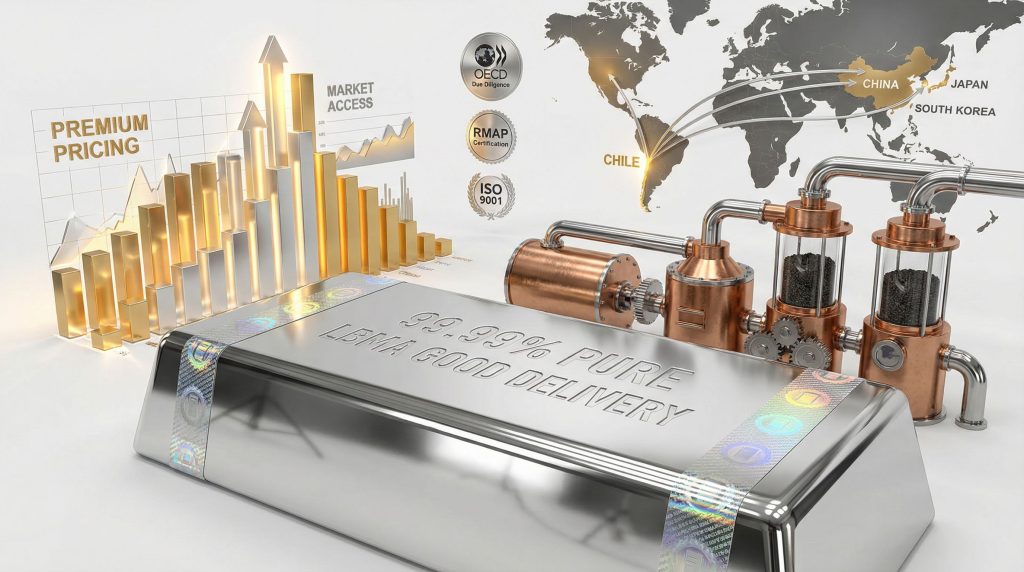
Codelco silver ingots global certification represents a pivotal development in precious metals markets, where traditional mining operations must navigate increasingly sophisticated certification requirements to maintain competitive positioning. As institutional investors demand greater transparency and supply chain verification, mining companies face mounting pressure to achieve internationally recognised quality standards that go far beyond basic metallurgical specifications. This transformation reflects broader industry consolidation around certified trading platforms, where access to premium pricing and institutional liquidity depends entirely on meeting stringent documentation and processing requirements.
Furthermore, the current gold market surge has intensified focus on precious metals certification as investors seek reliable supply chains. Moreover, record high gold prices have created additional incentives for mining companies to pursue comprehensive certification programmes that unlock premium market segments.
Understanding LBMA Good Delivery Standards
The London Bullion Market Association maintains rigorous specifications that determine eligibility for precious metals trading across major international markets. These requirements encompass chemical purity thresholds of 99.9% for silver products, alongside comprehensive documentation protocols that track material provenance from extraction through final delivery.
Physical specifications extend beyond simple purity measurements to include surface finish standards, dimensional tolerances, and weight accuracy parameters. Standard silver bars must maintain weight tolerance within ±50 grams of specified targets, while meeting strict appearance criteria that eliminate surface defects or contamination visible during routine inspection processes.
The certification framework requires documented chain-of-custody protocols that establish verifiable links between source materials and finished products. This traceability system supports compliance with conflict minerals regulations while enabling rapid verification during trading settlement processes.
Key Documentation Requirements:
• Source verification certificates linking material to specific mining operations
• Processing records documenting all refining stages and quality control checkpoints
• Transportation logs tracking custody transfers throughout the supply chain
• Independent assay results from accredited testing laboratories
• Environmental compliance certificates for all processing facilities
Refineries seeking LBMA approval typically require 12-24 months for initial certification processes, including comprehensive facility audits and sample testing protocols. Ongoing compliance mandates annual verification procedures and continuous documentation maintenance to preserve approved status.
The certification process involves multiple verification stages, starting with facility inspection by LBMA representatives who assess technical capabilities and quality control systems. Prospective refineries must demonstrate consistent production capacity while maintaining documentation standards that satisfy international banking requirements for collateral acceptance.
When big ASX news breaks, our subscribers know first
The Economic Impact of Precious Metals Certification
Certified precious metals command measurable pricing premiums in institutional markets, where buyers prioritise supply chain transparency and settlement reliability over marginal cost savings. Industry analysis indicates certified silver products typically achieve 1-3% pricing premiums compared to non-certified alternatives, though these differentials fluctuate based on market conditions and buyer-specific requirements.
LBMA-approved refiners gain direct access to London Bullion Market trading infrastructure, where daily silver trading volumes reach 50-100 million ounces monthly in certified products. This market access provides liquidity advantages that smaller, non-certified producers cannot replicate through alternative trading channels.
Premium Pricing Factors:
| Factor | Certified Products | Non-Certified Products |
|---|---|---|
| Settlement Speed | 2-3 business days | 5-10 business days |
| Bank Financing | Prime + 0.5-1.5% | Limited availability |
| Insurance Rates | 0.08-0.12% annually | 0.15-0.25% annually |
| Market Access | Global platforms | Regional/spot markets |
Institutional investors including pension funds, sovereign wealth funds, and central banks increasingly mandate LBMA certification as prerequisite for precious metals procurement. These requirements effectively reduce the eligible supplier base while creating sustainable competitive advantages for certified producers who can access these premium market segments.
Financing advantages extend beyond simple interest rate improvements to encompass credit facility availability and collateral acceptance policies. Major bullion banks typically restrict lending against precious metals inventory to LBMA-certified products, while non-certified materials face financing restrictions or elevated borrowing costs that erode operational margins.
Insurance premiums for certified precious metals storage reflect reduced counterparty risk and standardised handling procedures. In addition, current trading platform dynamics demonstrate how certification requirements increasingly influence market access and pricing structures.
Byproduct Revenue Optimisation Through Secondary Metal Recovery
Copper anodic slime represents a critical revenue stream for integrated mining operations, containing 20-40% silver content alongside gold and platinum group metals that justify sophisticated recovery investments. Modern electrolytic refining methodologies achieve 95-99% recovery rates for silver and gold from these waste streams, transforming disposal costs into profitable secondary operations.
Codelco's position as the world's largest copper producer, generating approximately 1.6-1.7 million tonnes annually, creates substantial opportunities for precious metals recovery through integrated smelting operations. According to Codelco's certification for silver bullion production, the company's Chuquicamata and Ventanas complexes demonstrate how co-located facilities reduce transportation costs while enabling real-time quality control across multiple processing stages.
Anodic Slime Processing Economics:
• Initial copper electrorefining generates slime containing concentrated precious metals
• Secondary leaching operations dissolve precious metals while leaving copper behind
• Selective precipitation isolates individual metals for separate refining processes
• Final purification achieves LBMA-grade purity specifications for market delivery
The economic threshold for integrated precious metals recovery typically occurs when copper production exceeds 200,000-300,000 tonnes annually. Below this level, selling unprocessed slime to specialised refineries often provides superior returns compared to capital investment in dedicated processing infrastructure.
Capital requirements for integrated refining capacity range from USD 50-150 million depending on throughput targets and automation levels. These investments become economically attractive when precious metals content justifies dedicated processing infrastructure rather than third-party refining arrangements.
Technology transfer opportunities emerge through partnerships with specialised refineries who provide process expertise while mining companies contribute feedstock consistency and scale advantages. However, the mining industry evolution indicates these arrangements enable smaller producers to access advanced recovery methodologies without prohibitive capital commitments.
Partnership Models in Precious Metals Processing
Joint venture structures between mining operators and specialised refineries distribute capital requirements while optimising processing expertise across complementary operational capabilities. These partnerships typically allocate processing capacity based on ownership stakes and throughput commitments, with excess capacity available for spot market processing at negotiated fee structures.
Common Partnership Frameworks:
• Equity Joint Ventures: Equal or proportional ownership with dedicated management structures
• Cost-Plus Processing: Fixed fees plus variable charges based on throughput volumes
• Strategic Alliances: Capacity sharing agreements without equity investments
• Technology Licensing: Access to proprietary processing methodologies through royalty arrangements
Risk distribution mechanisms in precious metals partnerships address commodity price volatility through revenue sharing models that align incentives between mining and refining partners. These structures enable smaller operators to achieve LBMA certification through shared infrastructure while larger partners benefit from increased facility utilisation rates.
Regulatory compliance sharing represents a critical partnership benefit, particularly for environmental permits and responsible sourcing certification requirements. Partners can distribute expertise costs while maintaining unified quality standards that often exceed individual operators' capabilities.
Chilean mining operations increasingly leverage partnership models to access international certification standards without developing independent refining capabilities. These arrangements enable rapid market access while preserving capital for core mining operations and exploration activities.
Processing capacity sharing through joint ventures improves facility utilisation rates by combining throughput from multiple feedstock sources. Partners typically negotiate capacity allocation formulas that guarantee minimum processing volumes while providing flexibility for market opportunity response.
Strategic Value Creation Through Certification Integration
Furthermore, recent mining conference insights reveal how certification programmes create measurable competitive advantages beyond immediate pricing benefits. Companies pursuing integrated certification strategies demonstrate superior stakeholder confidence and operational resilience compared to non-certified competitors.
International Standards Integration Framework
Multiple certification standards interact to create comprehensive compliance frameworks that address quality specifications, environmental management, and responsible sourcing requirements across integrated mining operations.
| Standard | Implementation Timeline | Primary Focus | Business Impact |
|---|---|---|---|
| LBMA Good Delivery | 12-24 months | Product quality & traceability | Global market access |
| OECD Due Diligence | Ongoing compliance | Supply chain transparency | Institutional buyer requirements |
| RMAP Certification | 6-12 months | Responsible sourcing | ESG investment compatibility |
| ISO 14001 | 18-24 months | Environmental management | Operational efficiency gains |
OECD due diligence guidelines for conflict-free mineral sourcing require ongoing documentation that tracks material origins and processing chains. These requirements increasingly influence procurement decisions by institutional investors who face regulatory pressure to demonstrate responsible sourcing across investment portfolios.
The Responsible Minerals Assurance Process provides certification pathways that complement LBMA standards while addressing broader ESG requirements. Companies achieving RMAP certification demonstrate systematic approaches to responsible sourcing that satisfy institutional investor mandates for sustainable supply chain management.
Environmental management system certifications through ISO 14001 create operational synergies with precious metals processing requirements. These standards improve process efficiency while providing documentation frameworks that support multiple certification objectives through unified management systems.
Integration timelines require careful coordination to minimise duplication whilst maximising certification benefits across multiple standard requirements. Companies typically prioritise LBMA certification for immediate market access, followed by complementary standards that enhance institutional buyer appeal and operational efficiency.
Chile's Emergence as a Certified Precious Metals Hub
Chile's achievement of LBMA Good Delivery certification for Codelco silver ingots global certification represents a strategic milestone that positions the country as a regional leader in certified precious metals production. This certification provides first-mover advantages in Pacific Rim markets while demonstrating integration capabilities between copper mining and precious metals refining operations.
Geographic proximity to major Asian trading centres creates logistics advantages for Chilean precious metals exports, while established copper trade relationships provide distribution infrastructure that supports precious metals marketing efforts. These synergies enable cost-effective market penetration across multiple commodity categories.
Codelco's integrated operations demonstrate how state-owned mining enterprises can achieve international certification standards through systematic investment in quality control systems and documentation protocols. The company's success provides a template for other regional producers seeking similar market positioning benefits.
Chilean Competitive Advantages:
• Established copper mining expertise applicable to precious metals recovery
• Existing trade relationships with major Pacific Rim economies
• Regulatory environment supporting international certification standards
• Infrastructure development supporting integrated smelting and refining operations
The certification achievement enables premium pricing strategies that differentiate Chilean silver products in competitive global markets. This positioning supports value-added export strategies that move beyond commodity pricing toward processed product premiums.
Regional mining operators monitor Codelco's certification success as potential validation for similar investment strategies. The demonstration effect could accelerate certification adoption across Chilean mining operations, creating a national competitive advantage in certified precious metals production.
What Makes Codelco's Certification Achievement Significant?
According to Codelco's global certification status, this achievement positions the company among the world's leading silver producers with full market access. Consequently, the Codelco silver ingots global certification creates sustainable competitive advantages that extend beyond immediate pricing benefits.
The next major ASX story will hit our subscribers first
Building Comprehensive Certification Portfolios
Mining companies increasingly pursue multiple certification standards simultaneously to maximise market access while optimising operational efficiency across integrated facilities. The Copper Mark certification across mining, smelting, and refining operations complements precious metals standards while demonstrating comprehensive commitment to responsible production practices.
Multi-Standard Implementation Strategy:
• Phase 1: LBMA certification for immediate market access and premium pricing
• Phase 2: Environmental management systems (ISO 14001) for operational efficiency
• Phase 3: Occupational safety standards (ISO 45001) for workforce protection
• Phase 4: Responsible sourcing certifications for institutional investor requirements
Process standardisation benefits emerge through certification integration, where unified quality control systems satisfy multiple standard requirements through consolidated documentation and monitoring protocols. These efficiencies reduce compliance costs while improving operational consistency across facility operations.
Stakeholder confidence building through third-party verification creates measurable benefits in financing costs, insurance premiums, and customer relationship development. Independent certification provides credible verification of operational capabilities that supports business development efforts across multiple market segments.
Continuous improvement frameworks embedded in certification maintenance requirements drive ongoing operational optimisation that extends beyond compliance obligations. Companies achieving multiple certifications typically experience productivity improvements and cost reductions that justify certification investment through operational returns.
Investment Implications of Precious Metals Certification
Market pricing differentials for certified precious metals create quantifiable revenue enhancement opportunities that justify certification investments through measurable return calculations. Premium pricing typically ranges from 1-3% above spot pricing for certified products, with additional benefits from improved settlement terms and reduced transaction costs.
Financial Impact Analysis:
| Investment Component | Typical Range | Return Timeline |
|---|---|---|
| Certification Costs | USD 100,000-500,000 | 12-18 months payback |
| Process Upgrades | USD 1-5 million | 24-36 months payback |
| Documentation Systems | USD 50,000-200,000 | 6-12 months payback |
| Ongoing Compliance | USD 25,000-75,000 annually | Immediate operational benefits |
Institutional buyer requirements for certified precious metals create sustainable competitive advantages that protect market share against lower-cost, non-certified competitors. These requirements effectively create market segmentation that supports premium pricing strategies over extended timeframes.
Revenue enhancement potential extends beyond simple pricing premiums to include improved financing terms, reduced insurance costs, and expanded market access that supports volume growth alongside margin improvement. These combined benefits often justify certification investments through multiple return pathways.
Trading platform eligibility improvements provide liquidity advantages that reduce settlement risk whilst enabling more efficient inventory management. Access to major trading platforms supports more sophisticated hedging strategies and market timing flexibility that enhance overall profitability.
Future Trends Shaping Precious Metals Certification
Regulatory requirements continue evolving toward enhanced traceability and responsible sourcing documentation that will likely tighten existing standards whilst introducing new compliance obligations. European Union regulations on conflict minerals and environmental impact assessments signal broader regulatory trends affecting global precious metals markets.
Technology adoption for blockchain-based tracking systems and automated quality control monitoring represents emerging opportunities to reduce certification costs while improving compliance reliability. These innovations could lower barriers to certification whilst enhancing verification capabilities across supply chains.
Emerging Technology Applications:
• Blockchain tracking systems for immutable supply chain documentation
• Automated quality control systems reducing manual testing requirements
• Digital certification platforms streamlining audit and verification processes
• Real-time monitoring systems providing continuous compliance verification
Market structure evolution toward certified-only trading platforms reflects institutional investor preferences for verified products over cost-optimised alternatives. This trend suggests continued market segmentation that favours certified producers whilst marginalising non-compliant operators.
ESG integration requirements increasingly influence institutional investment decisions, creating additional incentives for comprehensive certification beyond basic quality standards. Companies achieving multiple certifications benefit from improved access to ESG-focused investment capital and customer relationships.
Supply chain resilience requirements emerging from recent global disruptions emphasise certification's role in maintaining operational continuity and customer confidence during market volatility. Certified operations typically demonstrate superior adaptability and stakeholder trust during challenging market conditions.
How Will Certification Requirements Evolve?
The trajectory toward enhanced Codelco silver ingots global certification standards reflects broader industry transformation toward comprehensive verification systems. Consequently, companies pursuing certification today position themselves advantageously for future regulatory developments and market requirements.
Disclaimer: This analysis contains forward-looking statements and market projections that involve inherent uncertainties. Precious metals markets are subject to significant volatility, and certification benefits may vary based on market conditions, regulatory changes, and individual company circumstances. Investment decisions should consider comprehensive risk assessments and professional financial advice appropriate to specific situations.
Looking to Capitalise on Precious Metals Market Opportunities?
Discovery Alert's proprietary Discovery IQ model delivers real-time alerts on significant ASX mineral discoveries, instantly empowering subscribers to identify actionable opportunities ahead of the broader market. Understand why major mineral discoveries can lead to substantial market returns by exploring Discovery Alert's dedicated discoveries page, showcasing historic examples of exceptional outcomes, and begin your 30-day free trial today to position yourself ahead of the market.