August 21, 2026
The Technology That Could Unlock the World's Most Critical Mineral Frontier
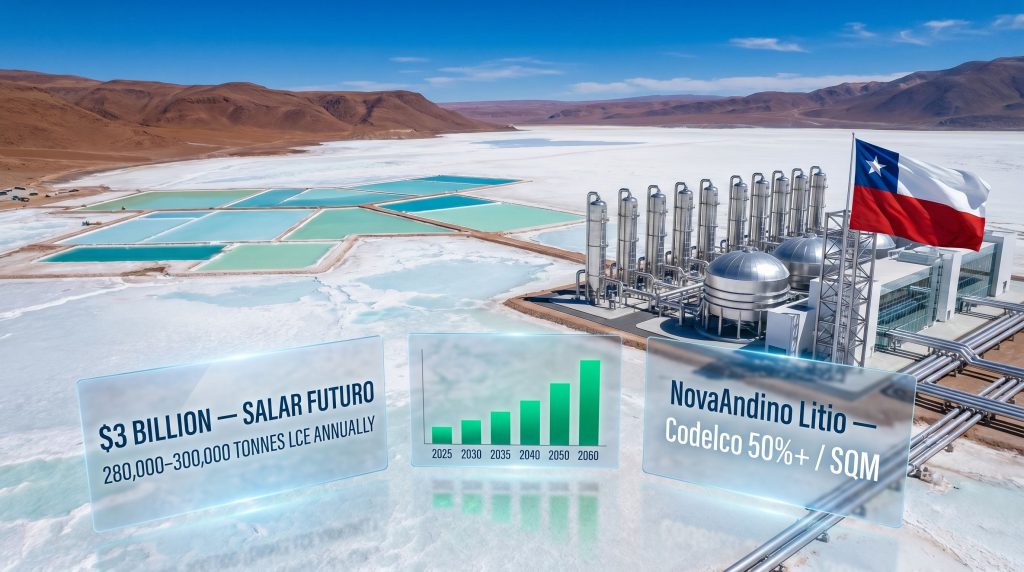
Across the global energy transition, one industrial challenge has quietly become as consequential as any geopolitical rivalry: how do you extract lithium at scale without destroying the very ecosystems that sit above the world's richest deposits? The answer being tested in Chile's Atacama Desert could determine not only the future of that country's mining economy, but also the pace at which battery supply chains become genuinely sustainable. The Codelco and SQM lithium project in Chile, operating under the joint venture name Novandino Litio, is now at the centre of that question, with a $3 billion capital commitment and a technology deployment timeline stretching into the mid-2030s.
What makes this moment particularly significant is not just the size of the investment, but what it represents technically and politically. The Salar de Atacama hosts brine with some of the highest lithium concentrations found anywhere on Earth, making it both the most valuable and the most environmentally sensitive proving ground for direct lithium extraction technology. If the commercial deployment succeeds here, under some of the most demanding hydrological and ecological conditions imaginable, it fundamentally changes the risk calculus for DLE adoption across the broader Lithium Triangle.
When big ASX news breaks, our subscribers know first
What Is the Novandino Litio Joint Venture and How Is It Structured?
Novandino Litio emerged from a landmark agreement in which SQM, one of the world's largest private lithium producers, transferred a majority stake in its Chilean brine operations to Codelco, Chile's state-owned mining giant, in exchange for an extension of its operating rights across the Salar de Atacama. The resulting structure is neither a straightforward nationalisation nor a conventional commercial partnership. Instead, it represents a carefully engineered hybrid model where state economic control is combined with private sector technical expertise.
Codelco holds a controlling position in the venture, with SQM retaining a minority stake. The operating mandate covers exploration, production, and commercialisation of lithium across the Salar de Atacama through 2060, giving the venture an extraordinarily long operational horizon that shapes how capital allocation decisions are made. This extended timeline is itself strategically significant: it allows infrastructure investments with multi-decade payback periods, such as large-scale DLE systems, to be economically justified in ways that shorter licence cycles would not permit.
The Novandino structure reflects a broader shift in how resource-rich nations are approaching critical mineral governance. Rather than choosing between full state control, which risks losing operational efficiency and technical capability, and fully private models, which prioritise shareholder returns over national economic sovereignty, the joint venture attempts to capture advantages from both approaches. Furthermore, Chile's lithium reserves position the country as a foundational node in global battery supply chains, making governance decisions here consequential well beyond national borders.
Inside the $3 Billion Salar Futuro Project Budget
The capital commitment underpinning the Codelco and SQM lithium project in Chile has grown materially as engineering work has progressed. The Salar Futuro project, which represents the technical centrepiece of the Novandino venture, now carries a $3 billion budget, revised upward from prior guidance that had indicated costs in excess of $2 billion. According to Novandino's environment manager Julio Garcia, this updated figure reflects the completion of years of design and engineering work on the technologies required for commercial-scale direct lithium extraction in the Atacama environment.
| Project Parameter | Detail |
|---|---|
| Capital Budget (Current) | $3 billion USD |
| Previous Cost Guidance | $2 billion-plus |
| Environmental Study Submission | June 2026 |
| Construction Start Target | Late 2020s |
| Full Implementation | Mid-2030s |
| Final Investment Decision | Pending |
The budget revision reflects a set of engineering realities that become apparent only through detailed design work. Among the primary cost drivers are:
- Integration of nano-filtration membrane systems capable of selectively capturing lithium ions from brine at commercial volumes
- Installation of mechanical evaporation infrastructure to replace the passive solar evaporation process that traditional operations rely upon
- Development of brine reinjection systems that return lithium-depleted brine to the salt flat to preserve hydrological and geochemical equilibrium
- Adaptation of existing refinery processing modules to accommodate the higher-purity concentrate streams produced by DLE methods
- Scale-up engineering required to transition from pilot-phase testing to full commercial production rates
It is worth emphasising that Novandino has not yet made a final investment decision on the project. The submission of an environmental impact study to Chilean regulators in June 2026 represents the next formal milestone before construction commitments can be locked in. Subject to environmental and other permitting processes, construction is targeted to begin toward the end of the decade, with complete implementation extending into the mid-2030s.
The revised $3 billion figure is not simply cost inflation. It reflects what the engineering community often refers to as the gap between conceptual estimation and bankable feasibility. The Atacama's unique geochemical conditions add layers of complexity that generic DLE cost models do not fully capture.
Direct Lithium Extraction Explained: Why the Atacama Is the Ultimate Test
To appreciate what is at stake with the Salar Futuro project, it is necessary to understand what direct lithium extraction actually does differently, and why operating it successfully in the Atacama would matter so far beyond Chile's borders.
Traditional Evaporation: The Method Being Replaced
For decades, lithium brine extraction has relied on a simple but environmentally intensive process. Brine is pumped from subsurface reservoirs to the surface and spread across enormous evaporation ponds. Solar radiation then concentrates the lithium-rich solution over periods of 12 to 18 months, after which the concentrated brine is processed into lithium carbonate or lithium hydroxide. The simplicity of this approach made it commercially viable, but it consumes vast quantities of water in one of the driest places on Earth and has raised documented concerns about disruption to microbial ecosystems unique to the Atacama salt flat environment.
How Direct Lithium Extraction Works: A Step-by-Step Breakdown
- Brine is drawn from subsurface reservoirs beneath the salt flat using extraction wells
- Selective capture of lithium ions occurs through nano-filtration membranes or ion-exchange materials that physically separate lithium from other dissolved minerals including potassium, magnesium, and sodium
- Lithium-depleted brine is reinjected back into the salt flat aquifer system, restoring the hydrological and geochemical balance that would otherwise be disrupted by net water removal
- Concentrated lithium solution proceeds through mechanical evaporation and refinery processing to produce battery-grade lithium compounds
- Quality verification and environmental monitoring confirm both recovery performance and ecosystem impact metrics across reinjection zones
The critical distinction from traditional methods is that DLE operates as a closed-loop system with respect to brine management. The water removed from the aquifer is returned, rather than evaporated into the atmosphere. This addresses the primary environmental criticism of conventional Atacama lithium production and enables the operational covenant embedded in the Novandino structure: no increase in freshwater extraction and no increase in brine drawdown volumes.
Why the Atacama Matters as a Global Proving Ground
The Atacama's brines are chemically complex. The high magnesium-to-lithium ratios found in some zones of the salt flat present significant challenges for ion-selective DLE systems, which must distinguish between chemically similar species. Successfully operating nano-filtration systems at commercial scale in this environment, where brine chemistry varies spatially across the aquifer, would demonstrate that DLE can function under conditions considerably more demanding than the relatively straightforward brines found in some other deposits.
Large-scale commercial success for direct lithium extraction remains largely unproven globally. The Atacama is a high-stakes proving ground: if DLE achieves commercial viability there, it materially reduces the technological risk perception for deployment across Argentina, Bolivia, and other Lithium Triangle nations.
This de-risking effect would not be trivial. The Lithium Triangle as a whole is estimated to contain the majority of the world's known lithium brine resources, yet substantial portions of that potential remain undeveloped precisely because investors and operators view DLE's commercial scalability with scepticism. A validated commercial deployment at Novandino would consequently shift that calculus significantly, influencing the global lithium market for decades to come.
Production Targets and Environmental Covenants: The Output Roadmap
The Novandino Litio structure includes binding environmental covenants that make DLE not merely a preferred technology choice but a structural operational requirement. The venture's production growth mandate cannot be satisfied through increased brine drawdown or expanded freshwater consumption. Every tonne of additional lithium carbonate equivalent must come from efficiency gains and technological advancement, not volumetric expansion.
| Production Period | Target Output |
|---|---|
| 2025 to 2030 | Additional 300,000 tonnes LCE (cumulative) |
| 2031 to 2060 | 280,000 to 300,000 tonnes LCE annually |
| Brine Extraction | No increase permitted |
| Continental Water Use | No increase permitted |
The project's transition plan also includes a measured phase-out of traditional evaporation pond operations. Rather than an abrupt decommissioning of existing infrastructure, the Salar Futuro approach would gradually replace portions of the conventional evaporation system whilst retaining some pond capacity for potassium production and brine pre-concentration. Freshwater extraction from continental sources is planned to cease entirely as DLE infrastructure reaches full operational capacity.
This phased approach reflects pragmatic operational management. It allows production continuity while DLE systems are commissioned and validated, reducing the financial risk associated with an abrupt technology transition at commercial scale. In addition, the lithium carbonate market will be watching these output trajectories closely, as Novandino's ramp-up timing has direct implications for global supply balances through the 2030s.
Regulatory Milestones: What the Approval Timeline Looks Like
The Codelco and SQM lithium project in Chile has navigated a complex multi-jurisdictional regulatory environment given the global strategic significance of Chilean lithium supply. China's competition authority granted conditional approval for the underlying joint venture structure in November 2025, representing the final major international antitrust hurdle that had been pending across key lithium-consuming markets. The conditional nature of that approval suggests that supply continuity assurances were likely central to the review, though the specific conditions attached have not been fully disclosed publicly.
Within Chile itself, the environmental impact study submission planned for June 2026 will initiate a formal regulatory assessment process that typically involves:
- Technical review by Chilean environmental assessment authorities
- Consultation with indigenous communities whose territories overlap with the operational footprint
- Hydrological impact modelling to verify that reinjection systems achieve genuine aquifer equilibrium
- Public comment periods and potential supplementary information requests from regulators
- Final permit issuance or conditional approval, which may require project design modifications
This domestic regulatory process represents the most significant near-term variable in the project timeline. Environmental permitting for complex mining operations in ecologically sensitive areas can extend substantially beyond initial estimates, particularly where indigenous community consultation requirements create additional procedural obligations.
The next major ASX story will hit our subscribers first
Three Scenarios for the Salar Futuro Project
Given the combination of technological uncertainty, regulatory complexity, and market dynamics at play, a scenario-based framework provides the most useful analytical lens for evaluating the project's trajectory.
Scenario One: DLE Succeeds at Scale
In the optimistic scenario, the years of pilot testing translate effectively to commercial operations. Nano-filtration systems achieve projected lithium recovery rates at target throughput volumes, and reinjection infrastructure successfully maintains aquifer equilibrium as verified by independent monitoring. Construction commences toward the end of the decade on schedule, and the production ramp positions Chile to capture a dominant share of mid-2030s lithium supply growth. Battery manufacturers actively seek offtake agreements with Novandino as a demonstrably sustainable supply source, potentially commanding pricing premiums in markets where supply chain environmental credentials carry purchasing weight.
Scenario Two: Technology Delays Compress the Timeline
The base case acknowledges that scaling any novel industrial process from pilot to commercial volumes introduces engineering challenges that laboratory and small-scale testing cannot fully anticipate. Magnesium-lithium separation at the Atacama's brine chemistry profiles may require additional membrane formulation iterations. Reinjection system performance may show spatial variability requiring well field reconfiguration. In this scenario, construction start slips into the early 2030s, the $3 billion budget faces further upward revision pressure, and traditional evaporation pond operations continue longer than planned, sustaining environmental scrutiny from regulators and community stakeholders.
Scenario Three: Regulatory or Environmental Setbacks
The downside scenario involves material complications arising from either the Chilean environmental permitting process or indigenous community consultation requirements. Hydrological impact studies might reveal aquifer connectivity patterns that require project redesign to avoid unintended drawdown effects on water resources used by Atacama communities. Simultaneously, an extended period of lithium price weakness would reduce the economic urgency driving the $3 billion capital commitment, potentially prompting Novandino to defer the final investment decision beyond 2030.
State Control vs. Private-Led Development: A Structural Comparison
The Novandino model exists within a broader global debate about how governments should manage critical mineral endowments. Chile's approach differs meaningfully from both the fully nationalised models seen in some resource economies and the royalty-based frameworks common in Australia and parts of Latin America. However, understanding Chile's lithium reserves in their full strategic context helps explain why this hybrid model was pursued so deliberately.
| Governance Dimension | Novandino Litio (Chile) | Private-Led Models |
|---|---|---|
| State Ownership Share | Controlling majority via Codelco | Typically royalty structures only |
| Technology Selection | DLE mandated by environmental covenant | Market-driven technology choice |
| Environmental Obligations | Legally binding, no water increase | Jurisdiction-variable requirements |
| Revenue Distribution | Majority retained within state framework | Shareholder-driven returns |
| Operational Horizon | Contractual through 2060 | Subject to licence renewal cycles |
| Antitrust Complexity | Multi-jurisdictional review required | Generally lower complexity |
The key structural innovation in the Chilean model is the alignment of state economic interests with long-term environmental covenants enforced through the joint venture agreement itself. In purely private models, environmental standards are typically externally imposed regulatory constraints that operators seek to manage. In the Novandino structure, the environmental covenant and the production mandate are architecturally integrated: you cannot meet the production targets without succeeding technically on the environmental requirements.
This integration creates an unusual incentive alignment. Both partners have commercial reasons to solve the DLE scaling challenge, because the alternative — expanding conventional operations — is contractually prohibited.
Frequently Asked Questions: Codelco and SQM Lithium Project in Chile
What is Novandino Litio?
Novandino Litio is the joint venture formed between Chile's state-owned Codelco and private lithium producer SQM to manage lithium extraction operations across the Salar de Atacama. Codelco holds a controlling stake, with SQM retaining a minority position in exchange for an extension of operating rights through 2060.
What is the Salar Futuro project?
Salar Futuro is the capital project within the Novandino Litio venture focused on deploying direct lithium extraction technology at commercial scale in the Atacama Desert. It carries a current budget of $3 billion, with a construction target toward the end of the 2020s and full implementation extending into the mid-2030s.
What makes direct lithium extraction different from traditional methods?
DLE selectively removes lithium ions from brine using nano-filtration or ion-exchange processes, then reinjects the lithium-depleted brine back into the aquifer. This eliminates the need for large solar evaporation ponds, dramatically reduces land footprint, and addresses the water consumption concerns associated with conventional Atacama lithium production.
Why is the Atacama Desert significant for global lithium supply?
The Salar de Atacama contains some of the world's highest-grade lithium brine deposits. Chile holds the largest known lithium reserves globally, making the Atacama a foundational node in international battery supply chains for electric vehicles and large-scale energy storage. Furthermore, the global lithium market increasingly looks to the Atacama as the bellwether for next-generation extraction technology viability.
What regulatory approvals has the project received?
China's antitrust authority granted conditional approval for the joint venture structure in November 2025. Within Chile, an environmental impact study is planned for submission to regulators in June 2026, representing the next major domestic permitting milestone before construction can proceed.
What are the project's production targets?
The venture targets an additional 300,000 tonnes of lithium carbonate equivalent between 2025 and 2030, followed by annual production of 280,000 to 300,000 tonnes LCE from 2031 through 2060, with binding commitments preventing any increase in brine extraction or freshwater consumption.
What the Novandino Venture Signals for Lithium Markets
Several strategic implications emerge from the structure and ambition of the Codelco and SQM lithium project in Chile that extend beyond the immediate commercial significance of the $3 billion commitment:
- The budget revision from $2 billion to $3 billion signals genuine engineering maturity in the project's design, reflecting detailed feasibility work rather than preliminary estimation
- The environmental covenant prohibiting any increase in brine or water extraction makes DLE a structural operational requirement, creating a commercially motivated driver for solving the technology's scaling challenges
- The absence of a final investment decision as of mid-2026 means the project remains at a genuine inflection point where regulatory, technical, and commodity market variables will collectively shape its trajectory
- Success or failure at the Atacama will carry disproportionate global influence on DLE adoption timelines across the Lithium Triangle, affecting investment decisions in Argentina, Bolivia, and beyond
- Chile's hybrid public-private model is emerging as a potential template for resource nationalism that preserves private sector operational expertise whilst asserting sovereign economic control over strategically critical deposits
Disclaimer: This article contains forward-looking statements and scenario projections based on publicly available information. Production targets, timelines, and budget figures are subject to change pending regulatory approvals, engineering outcomes, and final investment decisions. Nothing in this article constitutes financial advice. Readers should conduct independent research before making investment decisions related to companies or projects mentioned herein.
Want to Stay Ahead of the Next Major Lithium Discovery on the ASX?
Discovery Alert's proprietary Discovery IQ model scans ASX announcements in real time, instantly identifying significant mineral discoveries — including lithium — and translating complex data into actionable insights for both short-term traders and long-term investors. Explore why major mineral discoveries can generate substantial returns and begin your 14-day free trial today to position yourself ahead of the broader market.