June 19, 2026
Understanding Coking Coal Washery Operations and Infrastructure
Modern coking coal washeries represent a complex interplay of engineering precision, economic strategy, and metallurgical necessity. The transformation of raw coal through sophisticated washery operations involves multiple technological systems operating in concert to achieve specific quality parameters essential for steel production. Furthermore, these industry evolution trends provide crucial insights into how processing infrastructure addresses fundamental challenges in industrial coal utilisation.
Technical Processing Methods in Modern Coal Washing Facilities
Dense medium separation forms the cornerstone of contemporary coal washing technology, utilising heavy media with specific gravity calibration to separate coal particles based on density differentials. This process operates alongside flotation systems that target fine coal particles through surface chemistry modifications and bubble attachment mechanisms.
Particle size classification systems employ screening technologies that segregate incoming coal into distinct size fractions, typically ranging from coarse (+50mm) to fine (-0.5mm) categories. Each size fraction requires specialised treatment protocols to optimise recovery rates and quality parameters.
Water management in modern washery operations involves sophisticated recycling systems that minimise fresh water consumption while maintaining process efficiency. Contemporary facilities implement closed-loop water circuits with clarification and treatment stages to reduce environmental impact.
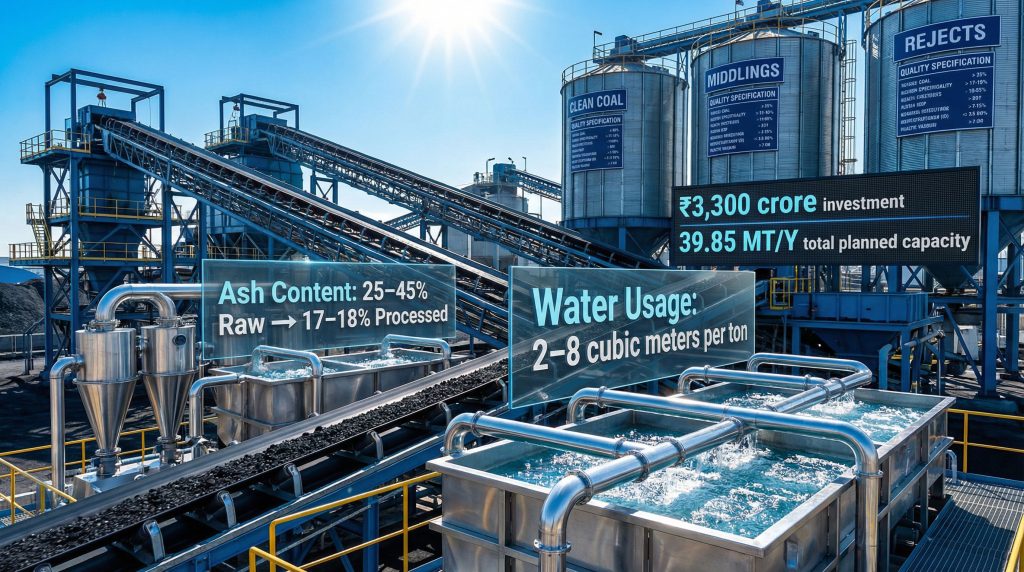
The quality transformation achievable through modern washing processes addresses the fundamental challenge of domestic coking coal. According to the Coal Controller's Organisation, domestic coking coal typically contains ash content ranging between 25 and 45 percent. This high ash content creates significant limitations for steelmaking applications without processing interventions.
Equipment Configuration and Plant Design Specifications
Crushing and screening infrastructure requires precise engineering to handle varying coal characteristics whilst maintaining consistent particle size distribution. Primary crushers typically reduce incoming coal to 150-200mm, followed by secondary crushing to achieve optimal liberation of impurities from clean coal.
Modern density separation equipment incorporates automated control systems that continuously monitor and adjust heavy media characteristics, ensuring consistent separation efficiency across varying feed conditions. These systems integrate real-time quality monitoring with process optimisation algorithms.
Three-product output streams represent the fundamental design philosophy of contemporary coking coal washeries:
- Clean coal: Premium quality product suitable for metallurgical applications
- Middlings: Intermediate quality material requiring further processing or blending
- Reject material: High-ash waste requiring disposal or alternative utilisation
Capacity planning considerations for washery installations must account for throughput variability, maintenance requirements, and seasonal demand fluctuations. Design specifications typically incorporate 20-30% capacity margins above nominal rated throughput to accommodate operational flexibility.
When big ASX news breaks, our subscribers know first
How Do Coking Coal Washeries Transform Raw Coal Quality?
Impurity Removal Efficiency Metrics
Modern washery operations achieve substantial impurity reduction through multiple processing stages. Ash reduction capabilities vary based on coal characteristics and processing intensity, with well-designed facilities achieving significant improvement in coal quality parameters.
Sulphur content reduction represents another critical aspect of coal washing, particularly important for environmental compliance in steel production. Modern flotation processes can effectively remove pyritic sulphur whilst organic sulphur remains largely unchanged through physical processing methods.
Moisture content optimisation involves controlled dewatering processes using mechanical equipment such as centrifuges and screens. Optimal moisture levels enhance combustion characteristics whilst reducing transportation costs per unit of energy content.
Calorific value enhancement occurs indirectly through ash reduction, as removing inert mineral matter increases the energy density of the processed coal. This improvement translates directly into improved combustion efficiency and reduced handling costs for steel producers.
Steel Industry Quality Requirements vs. Raw Coal Properties
The steel industry demands specific coal quality parameters that domestic raw coking coal frequently fails to meet without processing. Moreover, data-driven operations have identified this quality gap as a primary driver for washery expansion, noting that high ash content makes domestic coking coal less suitable for steelmaking without processing.
Coal Quality Transformation Through Processing
| Parameter | Raw Domestic Coal | Processing Target | Typical Washery Output |
|---|---|---|---|
| Ash Content | 25-45% | <18% | 17-20% |
| Volatile Matter | Variable | Optimised | Controlled |
| Moisture | 8-12% | 6-10% | 6-8% |
| Size Consistency | Irregular | Standardised | Uniform |
Metallurgical coal specifications require consistent quality parameters to ensure predictable performance in coke oven operations. Washery processing enables domestic coal to meet these specifications through systematic impurity removal and quality standardisation.
The transformation process addresses multiple quality dimensions simultaneously, creating coal products that can substitute for imported coking coal in many applications whilst supporting India's steel industry self-reliance objectives.
What Are the Economic Benefits of Coal Washing Infrastructure?
Operational Cost Reduction for Steel Manufacturers
Steel producers utilising washed coal experience reduced maintenance expenses through cleaner fuel input, which minimises wear on handling equipment and reduces cleaning requirements in coke ovens. This improvement extends equipment lifespan and reduces operational downtime.
Enhanced combustion efficiency results from reduced ash content, improving flame stability and heat transfer characteristics in metallurgical applications. These improvements translate into reduced fuel consumption per unit of steel produced and improved process control.
Environmental compliance costs decrease significantly when using processed coal, as lower sulphur and ash content reduces emissions control requirements and waste disposal obligations. Consequently, this sustainability transformation cost reduction becomes increasingly important as environmental regulations intensify.
Import Substitution and Foreign Exchange Savings
The economic rationale for domestic processing becomes clear when considering India's substantial coking coal import requirements. By improving domestic coal quality through washing, India can reduce dependence on international markets and achieve greater supply security for its steel sector.
Investment Economics of Washery Development
- Total Capital Investment: ₹3,600 crore (₹3,300 crore new construction + ₹300 crore modernisation)
- Capacity Addition: 21.5 million tonnes per year
- Investment per Tonne Capacity: ₹153 per annual tonne
- Timeline: Operationalisation by FY30
Supply chain security enhancement through domestic processing capability reduces exposure to international price volatility and supply disruptions. This strategic benefit provides long-term economic stability for India's steel industry.
Current Coking Coal Washery Capacity and Distribution Analysis
Existing Infrastructure Assessment
India's current coking coal washeries landscape reflects the concentration of processing capacity in coal-rich Eastern regions. Coal India Limited operates 10 existing washeries with cumulative capacity of 18.35 million tonnes per year, forming the foundation for expanded processing capability.
India's Coking Coal Washery Infrastructure Expansion (2026-2030)
| Category | Capacity (MT/Y) | Number of Units | Operational Status |
|---|---|---|---|
| Existing Washeries | 18.35 | 10 | Currently Operational |
| Planned Expansion | 21.5 | 8 | Under Development |
| Combined Capacity | 39.85 | 18 | Target by FY30 |
The planned expansion represents more than doubling of existing washing capacity, demonstrating the scale of infrastructure development required to meet India's coking coal processing objectives.
Regional Concentration and Logistics Considerations
Central Coalfields Limited will host five new washeries with combined capacity of 14.5 million tonnes per year, representing the largest share of planned expansion. This concentration reflects the proximity to major coking coal reserves and existing mining infrastructure.
Bharat Coking Coal Limited will develop three additional washeries with 7 million tonnes per year capacity, complementing the CCL expansion and providing geographic distribution of processing capability.
Transportation infrastructure plays a crucial role in washery effectiveness, as processed coal must reach steel manufacturing centres efficiently. The Eastern India concentration of both coal reserves and processing facilities provides natural logistics advantages for domestic steel producers.
Railway connectivity and port access become critical factors for washeries serving both domestic and potential export markets. Modern washery design incorporates efficient loading and evacuation systems to minimise transportation costs.
Investment Strategies and Financial Planning for Washery Development
Capital Expenditure Breakdown and ROI Analysis
Coal India Limited's ₹3,300 crore investment in new washery construction represents a substantial commitment to expanding domestic coking coal processing capability. This investment, combined with ₹300 crore for existing facility modernisation, totals ₹3,600 crore in washery-related capital expenditure.
The per-tonne annual capacity investment of approximately ₹153 provides a benchmark for evaluating washery economics. This figure reflects the capital intensity of modern coal processing technology whilst remaining economically viable given expected returns from improved coal quality and import substitution.
Return on investment analysis must consider multiple benefit streams including reduced import costs, improved coal utilisation efficiency, and enhanced supply security. Additionally, the strategic value of domestic processing capability extends beyond direct financial returns to include economic security benefits.
Timeline planning targets FY30 operationalisation, providing a five-year development window that allows for comprehensive engineering, environmental clearance, and construction activities whilst maintaining quality standards.
Public-Private Partnership Models and Monetisation Strategies
Coal India Limited is leveraging public-private partnerships, including specific collaboration with Tata Steel, to augment washing capacity and technical capabilities. This approach combines public sector infrastructure development with private sector operational expertise and market knowledge.
Asset monetisation opportunities emerge from Coal India's exploration of monetising older, non-operational washeries in line with the National Monetisation Policy. This strategy provides capital recycling opportunities whilst transferring operational responsibilities to specialised private operators.
Strategic Partnership Benefits:
- Technology transfer and capability enhancement
- Risk sharing between public and private sectors
- Accelerated implementation through private sector efficiency
- Market-driven operational optimisation
Revenue sharing models for joint venture washeries create sustainable partnerships that align public policy objectives with private sector profitability requirements, ensuring long-term operational success.
Technology Modernisation and Efficiency Optimisation
Upgrading Legacy Washery Infrastructure
The ₹300 crore modernisation budget for existing washeries reflects the importance of upgrading legacy infrastructure to meet contemporary efficiency standards. Modern automation systems integration improves recovery rates whilst reducing operational costs through enhanced process control.
Advanced separation technologies implementation involves upgrading existing equipment with state-of-the-art dense medium systems and flotation cells that achieve superior separation efficiency. These upgrades can significantly improve the quality of processed coal from existing facilities.
Energy efficiency improvements in processing operations become increasingly important as energy costs rise and environmental regulations tighten. Furthermore, mining decarbonisation benefits include energy recovery systems and optimised process flows to minimise power consumption per tonne processed.
Digital monitoring systems for quality control enable real-time adjustment of processing parameters to maintain consistent output quality. These systems reduce quality variation and improve customer satisfaction whilst optimising resource utilisation.
Environmental Compliance and Sustainability Measures
Water recycling systems in modern washery operations achieve closure rates exceeding 90%, substantially reducing fresh water consumption and environmental impact. Advanced clarification and treatment systems enable continuous reuse of process water.
Tailings management and waste minimisation strategies address the environmental challenge of processing rejects and fine coal wastes. Modern approaches include reject utilisation for power generation and land reclamation applications.
Environmental Performance Metrics:
- Water recycling efficiency: >90% closure rate
- Dust emission control through enclosed handling systems
- Noise reduction through equipment design and installation
- Land use optimisation through compact plant layouts
Air quality control measures for dust suppression utilise spray systems, enclosed conveyor systems, and bag filters to minimise particulate emissions from coal handling and processing operations.
The next major ASX story will hit our subscribers first
Strategic Impact on India's Steel Industry Supply Chain
Domestic Coal Quality Enhancement and Steel Production
Enhanced washing capacity directly supports India's steel production expansion by providing higher quality domestic coking coal. This quality improvement reduces the technical barriers to using domestic coal in metallurgical applications whilst maintaining steel quality standards.
Coking coal washeries output growth demonstrates the strategic importance of processing capability, with Coal India Limited targeting substantial capacity expansion to meet growing steel industry demand. This growth trajectory aligns with India's broader industrial development objectives.
Processing capacity alignment with steel industry demand requires careful planning to ensure adequate supply security whilst avoiding overcapacity. The planned expansion to 39.85 million tonnes per year processing capacity reflects detailed demand analysis and growth projections.
Supply security enhancement for domestic steel manufacturers reduces vulnerability to international market disruptions and price volatility. This security enables more predictable production planning and cost management for steel producers.
Mission Coking Coal Initiative and Policy Framework
The August 2021 launch of Mission Coking Coal established a comprehensive framework for reducing India's dependence on imported coking coal. This initiative recognises processing infrastructure as essential to achieving coal self-reliance objectives.
Import dependence reduction targets require coordinated development of mining, processing, and utilisation capabilities. For instance, AI in mining technology represents a crucial component of this broader strategy to enhance domestic coal value chains.
Strategic Policy Alignment:
- Integration with national steel production targets
- Coordination with coal mining expansion plans
- Environmental compliance with processing standards
- Technology development and capability building
Government support mechanisms for washery development include policy frameworks that encourage private sector participation whilst maintaining strategic control over critical infrastructure development.
Future Expansion Plans and Industry Outlook
Capacity Scaling Projections Through 2030
Combined washing capacity targets of 39.85 million tonnes per year by FY30 represent more than doubling current processing capability. This expansion scale demonstrates the commitment required to achieve meaningful import substitution in coking coal.
Processing capability expansion must align with coal production growth and steel industry demand projections. The integrated approach ensures efficient utilisation of processing capacity whilst avoiding market imbalances.
Technology adoption roadmap for next-generation facilities incorporates advances in automation, process control, and environmental compliance. These improvements enhance processing efficiency whilst reducing operational costs and environmental impact.
Regional development priorities for washery infrastructure consider coal reserve locations, transportation networks, and steel industry clusters. Strategic placement of processing facilities optimises overall supply chain efficiency.
Market Dynamics and Competitive Positioning
Global coking coal market trends influence the economic viability of domestic processing investments. Understanding international price dynamics and quality requirements helps optimise domestic processing strategies for both domestic consumption and potential exports.
Domestic processing advantages over imported alternatives include supply security, quality control, and reduced transportation costs. These advantages become more significant as international markets experience volatility and supply constraints.
Market Positioning Factors:
- Cost competitiveness with imported coking coal
- Quality consistency and reliability
- Supply chain flexibility and responsiveness
- Environmental compliance and sustainability credentials
Steel industry growth projections indicate continued strong demand for quality coking coal, supporting the economic justification for substantial processing infrastructure investments. This demand growth provides confidence in capacity utilisation and return on investment.
Strategic positioning in international metallurgical coal markets requires achieving quality standards that enable export opportunities whilst serving domestic demand. This dual market approach provides flexibility and revenue optimisation opportunities.
Disclaimer: This analysis is based on publicly available information and industry assessments. Investment decisions should consider comprehensive due diligence including technical, financial, and regulatory factors. Market conditions and policy frameworks may change, affecting project outcomes and investment returns.
Ready to Capitalise on Australia's Next Major Coal Discovery?
Discovery Alert's proprietary Discovery IQ model delivers real-time alerts on significant ASX mineral discoveries, instantly empowering subscribers to identify actionable opportunities ahead of the broader market. Understand why major mineral discoveries can lead to substantial market returns and begin your 14-day free trial today to position yourself ahead of the competition.