June 22, 2026
Understanding Concessional Climate Financing Mechanisms in Emerging Markets
The global energy transition presents unique challenges for developing economies seeking to modernise their infrastructure while maintaining economic stability. The South Africa and Germany climate loan agreement exemplifies how concessional financing instruments have emerged as critical tools for bridging the gap between ambitious climate commitments and financial realities facing industrial nations across the Global South. These mechanisms typically offer below-market interest rates, extended repayment periods, and risk-sharing arrangements that make large-scale renewable energy investments financially viable for countries with constrained fiscal space.
In the context of Africa's largest industrial economy, such financing structures become particularly significant when considering the continent's vast renewable energy potential alongside existing infrastructure constraints. The Just Energy Transition Partnership (JETP) framework has established precedents for international cooperation in coal-dependent economies, creating templates for bilateral agreements that balance environmental objectives with economic development needs.
Germany's role as a leading climate finance provider stems from its position as Europe's largest economy and its commitment to global decarbonisation targets. Through institutions like KfW Development Bank, German climate finance has supported renewable energy transitions across multiple continents, with particular emphasis on countries possessing strategic mineral resources essential for clean energy technologies.
When big ASX news breaks, our subscribers know first
Strategic Investment Focus Areas in Power Grid Modernisation
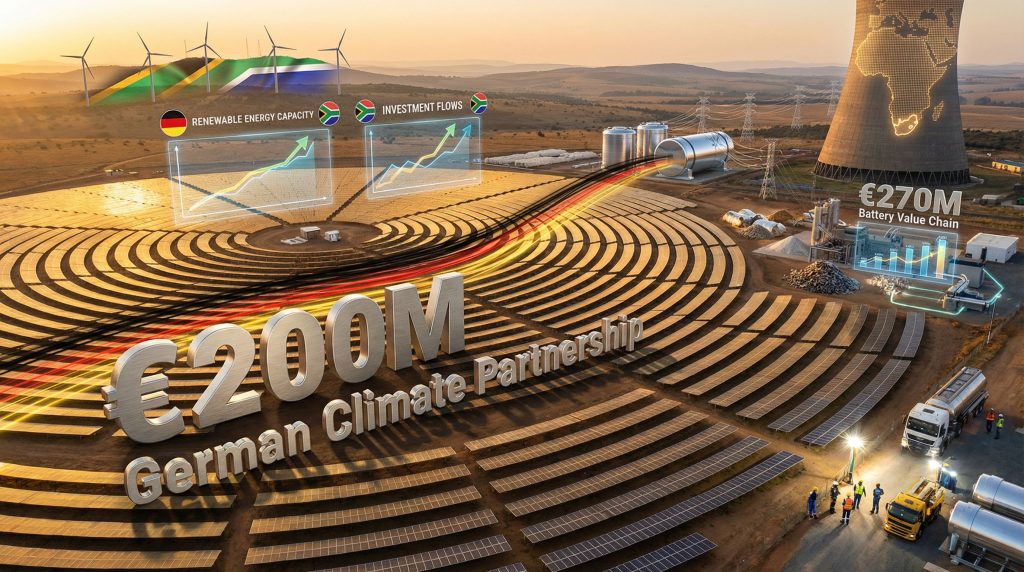
The €200 million concessional climate loan recently agreed between South Africa and Germany targets three critical infrastructure components essential for energy transition success. Power grid modernisation represents the foundational element of this investment strategy, addressing transmission capacity limitations that currently constrain renewable energy integration across South Africa's national electricity system.
Grid infrastructure improvements encompass several technical dimensions:
- Transmission line upgrades to accommodate variable renewable energy sources
- Smart grid technologies for improved demand response and grid stability
- Substation modernisation to handle bidirectional power flows from distributed generation
- Energy storage integration at both utility and distributed scales
Renewable energy project development focuses primarily on solar photovoltaic and wind generation facilities, leveraging South Africa's exceptional solar irradiation levels and coastal wind resources. The country's renewable energy procurement programmes have demonstrated significant cost reductions, with recent solar PV bids achieving tariffs below R0.35 per kWh, making renewable generation increasingly competitive with coal-fired power.
Furthermore, the critical minerals energy transition remains a key consideration for long-term energy security planning. Battery storage infrastructure development addresses one of the most significant technical challenges in high-renewable energy systems. Large-scale battery installations provide grid stability services while enabling increased renewable energy penetration by storing excess generation during peak production periods.
The €270 million extension for battery value chain cooperation suggests German recognition of South Africa's potential role in global battery supply chains. Moreover, lithium industry innovations continue to shape the landscape of energy storage technologies worldwide.
German Strategic Investment Rationale in South African Markets
Germany's commitment to South Africa extends far beyond climate cooperation, reflecting deep economic interdependencies that have developed over decades of bilateral trade and investment. Over 600 German companies currently operate across South African markets, representing sectors from automotive manufacturing to chemical processing, with bilateral trade volumes exceeding €10 billion annually.
This economic foundation provides strategic context for expanded climate finance. German industrial sectors, particularly automotive and renewable energy manufacturing, require reliable access to critical minerals abundant in South African geological formations. The partnership addresses German strategic material security concerns while offering South Africa opportunities for value-added mineral processing rather than raw material exports.
Technology transfer opportunities in clean energy sectors create mutual benefits for both economies. German engineering expertise in renewable energy systems, combined with South African manufacturing capabilities and mineral resources, establishes conditions for developing regional clean energy technology hubs. Additionally, the battery recycling breakthrough demonstrates how innovation in this sector continues to evolve globally.
Geopolitical Considerations and Strategic Positioning
The timing of this expanded German-South African partnership occurs against the backdrop of strained US-South Africa relations during the current Trump administration. South Africa's exclusion from G20 meetings and criticism of its foreign policy positions have created diplomatic tensions that potentially affect development finance availability from traditional Western partners.
German strategic response to these geopolitical dynamics demonstrates European willingness to maintain engagement with African partners despite broader diplomatic challenges. Minister Ronald Lamola's statement that South Africa feels supported by Germany and other G20 members suggests this partnership serves partially compensatory functions for reduced American engagement.
China's growing influence in African energy markets provides additional context for German strategic calculations. Enhanced bilateral cooperation with South Africa potentially creates alternatives to Chinese-dominated supply chains whilst strengthening democratic institutional frameworks through economic partnerships that emphasise governance standards and transparency requirements. However, the ongoing trade war strategies continue to shape global supply chain decisions.
Battery Value Chain Development and Regional Market Transformation
The €270 million battery value chain extension represents one of the most significant aspects of this partnership, with implications extending far beyond bilateral cooperation. This investment framework addresses multiple components of battery manufacturing ecosystems, from raw material processing through advanced manufacturing capabilities.
Critical Minerals Processing and Value Addition
South Africa possesses exceptional mineral wealth relevant to battery technologies, including:
- World's largest platinum group metals reserves (approximately 88% of global proven reserves)
- Significant manganese deposits (world's largest manganese producer)
- Substantial chromium resources (among global top producers)
- Emerging lithium exploration potential in pegmatite formations
Local processing of these critical minerals offers opportunities to capture greater value from South Africa's mineral endowments while supporting German industrial supply chain security. Traditional raw material export models provide limited economic benefits compared to value-added processing that creates employment and technological capabilities within South African industrial sectors.
Green Hydrogen Development Potential
Industrial-scale hydrogen production facilities represent a cornerstone of the expanded cooperation framework. South Africa's renewable energy resources, particularly solar and wind potential, provide competitive advantages for electrolytic hydrogen production. Export potential to European markets facing energy security challenges creates additional revenue streams while supporting German industrial decarbonisation objectives.
Integration with existing petrochemical infrastructure, particularly facilities operated by Sasol and other chemical companies, could accelerate hydrogen production scaling while leveraging established industrial capabilities. This approach minimises capital requirements whilst maximising utilisation of existing assets during the energy transition period. Consequently, the mining decarbonisation benefits become increasingly evident across various industrial sectors.
Implementation Challenges and Risk Assessment Framework
Technical infrastructure constraints present immediate challenges for successful programme implementation. South Africa's electricity grid currently experiences significant stability issues, with load-shedding events affecting economic productivity and investor confidence. Renewable energy integration during this transition period requires careful management to avoid exacerbating grid reliability problems.
Skills Development and Technical Capacity
The renewable energy sector faces substantial skills shortages across multiple technical disciplines:
- Specialised maintenance technicians for wind and solar installations
- Grid integration engineers familiar with variable renewable energy sources
- Project management professionals experienced with large-scale infrastructure development
- Regulatory specialists understanding evolving energy market frameworks
Addressing these capacity constraints requires coordinated education and training programmes involving South African universities, vocational institutions, and German technical expertise. The partnership's success depends partially on developing local technical capabilities rather than relying exclusively on imported expertise.
Political Economy Considerations and Labour Transition
Coal-dependent regions face significant economic disruption as energy transition accelerates. Labour unions representing mining communities express concerns about employment impacts from coal plant decommissioning and reduced coal demand. Successful implementation requires just transition strategies that provide alternative employment opportunities for affected workers and communities.
State-owned enterprise reform represents another implementation challenge, particularly regarding Eskom's role in the electricity sector. The utility's financial constraints and operational difficulties affect renewable energy integration capabilities, requiring institutional reforms alongside infrastructure investments.
Performance Monitoring and Success Measurement Frameworks
Effective monitoring systems ensure accountability and demonstrate progress toward shared objectives. Key performance indicators for this partnership include quantifiable metrics across multiple dimensions. According to recent climate finance developments, these frameworks are becoming increasingly sophisticated.
Technical Performance Metrics
- Renewable energy capacity additions measured in MW installed and grid-connected
- Grid reliability improvements tracked through reduced load-shedding hours and frequency
- Battery storage deployment measured in GWh capacity and grid stability services provided
- Critical minerals processing capacity tracked through value-added production volumes
Economic Impact Indicators
- Private sector investment mobilisation ratios comparing public climate finance to private capital attracted
- Employment creation in renewable energy and battery manufacturing sectors
- Export revenue generation from processed critical minerals and hydrogen production
- Technology transfer effectiveness measured through local capability development
Joint German-South African oversight committees provide governance frameworks for monitoring progress and addressing implementation challenges. Third-party verification of environmental outcomes ensures credibility with international climate finance stakeholders whilst maintaining transparency standards expected by both German taxpayers and South African civil society organisations.
The next major ASX story will hit our subscribers first
Regional Spillover Effects and Continental Energy Transition
Success in South Africa could catalyse broader energy transitions across the Southern African Development Community (SADC) region. Regional power pool integration opportunities exist for sharing renewable energy resources across national boundaries, potentially improving energy security for landlocked countries whilst maximising utilisation of South Africa's renewable energy investments.
Technology transfer to neighbouring countries represents another significant spillover opportunity. Industrial development corridor creation linking South African renewable energy manufacturing capabilities with regional markets could establish integrated supply chains supporting continental energy transitions.
Investment climate improvements resulting from successful German-South African cooperation may encourage other international partners to increase climate finance commitments to African countries. Demonstration effects from effective project implementation could reduce perceived risks associated with large-scale renewable energy investments in emerging markets.
Strategic Scenario Analysis: Three Potential Outcomes
What happens with accelerated decarbonisation success?
Rapid implementation of renewable energy projects ahead of scheduled timelines could position South Africa as a regional clean energy hub. Coal plant decommissioning progressing faster than planned would demonstrate successful just transition strategies whilst creating additional capacity for renewable energy integration.
Emergence as a renewable energy exporter to neighbouring countries would generate foreign exchange earnings while supporting regional energy security. Industrial competitiveness gains from abundant clean energy could attract energy-intensive manufacturing investments, creating employment opportunities that offset coal sector job losses.
What would gradual transition with mixed results look like?
Steady progress with periodic implementation delays represents a more conservative but realistic outcome. Partial achievement of decarbonisation targets whilst maintaining grid stability would demonstrate viable pathways for other coal-dependent economies considering energy transitions.
Continued reliance on coal for baseload power during extended transition periods could limit renewable energy integration whilst maintaining energy security. This scenario requires careful balancing of environmental objectives with economic stability requirements.
How might implementation challenges affect outcomes?
Political instability affecting project continuity represents the highest-risk scenario for this partnership. Changes in government priorities or policy frameworks could disrupt long-term investment planning whilst reducing international confidence in South African partnerships.
Technical difficulties in grid integration, particularly if renewable energy additions exacerbate electricity supply reliability problems, could generate public opposition to energy transition policies. Such setbacks might require revised implementation strategies with extended timelines and modified technical approaches. As highlighted in energy security assessments, robust contingency planning becomes essential for project success.
Conclusion: Building Foundations for Long-term Partnership
The South Africa and Germany climate loan agreement establishes a comprehensive framework for sustainable development cooperation that extends well beyond immediate financial transfers. This partnership demonstrates how bilateral climate finance can address multiple strategic objectives simultaneously, from energy security to industrial competitiveness and geopolitical positioning.
Success in implementing this ambitious programme will require sustained commitment from both governments, effective coordination between public and private sector stakeholders, and adaptive management approaches that respond to evolving technical and economic conditions. Furthermore, the agreement sets important precedents for international climate cooperation that could influence similar partnerships across the developing world.
Investment decisions should consider the inherent uncertainties in large-scale infrastructure projects and evolving geopolitical circumstances. This analysis presents multiple scenarios for illustrative purposes and should not constitute investment advice.
Considering Strategic Investment Opportunities in Energy Transition Metals?
Discovery Alert's proprietary Discovery IQ model delivers real-time alerts on significant mineral discoveries across critical battery metals, renewable energy infrastructure materials, and energy transition commodities, instantly empowering subscribers to identify actionable opportunities ahead of the broader market. Explore Discovery Alert's dedicated discoveries page to understand how major mineral discoveries have generated substantial returns, then begin your 14-day free trial today to position yourself ahead of the energy transition investment wave.