
July 15, 2026
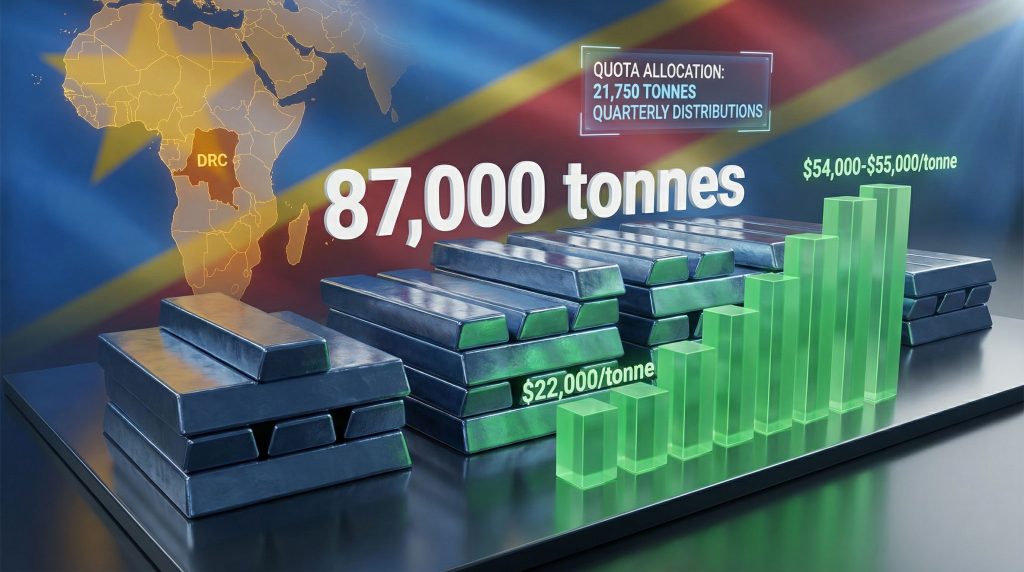
Global supply chains face unprecedented disruption as traditional resource extraction models give way to state-controlled allocation systems. The Democratic Republic of Congo's implementation of Congo cobalt export quotas represents a fundamental shift in how critical minerals reach international markets, moving beyond simple extraction economics toward strategic resource management frameworks that prioritise national control over global market dynamics.
This transformation reflects broader geopolitical trends where resource-rich nations are asserting greater influence over strategic mineral flows, creating new paradigms for supply chain security and pricing mechanisms in essential battery materials.
Understanding Congo's Strategic Cobalt Quota Framework
The Democratic Republic of Congo has established a comprehensive quota system that fundamentally alters how the world's primary cobalt supply reaches global markets. Through the Authority in charge of the Regulation of the Mining Sector (ARECOMS), under the leadership of Patrick Luabeya, the DRC now manages cobalt exports through carefully structured allocation mechanisms rather than open market access.
The current framework operates on multiple tiers of allocation. The annual base allocation totals 87,000 tonnes, distributed at approximately 7,250 tonnes monthly to qualified exporters. This represents a significant reduction from historical export volumes, with industry estimates suggesting the quotas represent roughly half of previous annual export levels.
Beyond the base allocation, ARECOMS maintains a strategic reserve quota of 9,600 tonnes designated specifically for nationally important projects. This reserve mechanism allows the DRC government to respond to critical supply needs while maintaining overall market control.
Regulatory Authority and Implementation Structure
ARECOMS operates as the central regulatory body managing all aspects of the quota system. The organisation has established clear enforcement mechanisms, including automatic forfeiture and reallocation procedures for companies that fail to meet utilisation deadlines.
The regulatory framework includes several key components:
• Quarterly quota allocation reviews
• Compliance monitoring systems
• Strategic reserve deployment protocols
• Enhanced reporting requirements for all exporters
Congo's position as the source of approximately 70% of global cobalt supply gives ARECOMS significant influence over worldwide pricing and availability. This market dominance enables the DRC to implement comprehensive supply management strategies that directly impact battery manufacturers, electric vehicle producers, and renewable energy storage companies globally. Furthermore, these developments align with broader critical minerals regulation trends worldwide.
When big ASX news breaks, our subscribers know first
Compliance Timeline and Enforcement Mechanisms
The quota system operates under strict temporal constraints designed to ensure efficient utilisation while maintaining government oversight. ARECOMS has established a cascading deadline structure that addresses different quota periods with varying enforcement timelines.
Q4 2025 quotas must be fully utilised by April 30, 2026. Companies that received allocations during the fourth quarter of 2025 face automatic forfeiture of unused volumes after this deadline, with those volumes transferred to the strategic reserve for future deployment.
Congo regulators have confirmed that Q1 2026 quotas received an extended deadline, with utilisation required by June 30, 2026. This extension also applies to Q2 2026 allocations, creating a consolidated timeline for the first half of 2026.
| Quota Period | Volume Allocation | Utilisation Deadline | Non-Compliance Consequence |
|---|---|---|---|
| Q4 2025 | Remaining unused quotas | April 30, 2026 | Forfeiture to strategic reserve |
| Q1 2026 | 21,750 tonnes | June 30, 2026 | Reallocation to compliant exporters |
| Q2 2026 | 21,750 tonnes | June 30, 2026 | Subject to quarterly review |
Enforcement and Penalty Structure
The regulatory framework includes automatic reallocation mechanisms that prevent quota waste while rewarding compliant exporters. Unused allocations don't simply expire but are systematically redistributed through established procedures.
ARECOMS confirmed that total quotas allocated for 2026 remain valid, providing regulatory certainty for companies managing long-term supply contracts. However, individual quota utilisation failures result in immediate forfeiture, with volumes transferred to either the strategic reserve or redistributed to exporters demonstrating consistent compliance.
This enforcement approach creates competitive pressure among exporters to maintain operational efficiency and regulatory compliance, as failure to meet deadlines can result in reduced future allocations.
Major Producer Adaptation Strategies
Leading cobalt producers have developed varied approaches to navigating the quota-constrained environment, with operational efficiency and regulatory compliance becoming critical competitive advantages.
CMOC's Operational Excellence: The company has demonstrated superior quota management capabilities, with sources indicating they had already loaded their entire fourth-quarter quota well ahead of the April 30 deadline. This operational readiness positioned CMOC advantageously, as they had yet to begin drawing on first-quarter allocations when deadline extensions were announced.
IXM Trading's Timeline Concerns: CMOC's trading arm expressed measured optimism about the deadline extensions while highlighting ongoing challenges. Company sources characterised the April 30 extension as potentially sufficient but noted persistent concerns about regulatory timeline clarity, suggesting that operational planning remains complicated by evolving regulatory communications.
Huayou Cobalt's Market Position: Representatives from China's Huayou Cobalt characterised the regulatory decisions as positive developments, indicating that the deadline extensions provided necessary operational flexibility for complex international shipping logistics.
Operational Constraints and Market Reality
The transition to quota-based exports has created practical challenges beyond simple regulatory compliance. Industry reports confirm that operational and logistical constraints under the new quota system have slowed execution of allocated volumes, even after companies resumed shipments following the initial export ban.
These constraints include:
• Port capacity limitations for concentrated shipping windows
• Enhanced documentation requirements for quota compliance
• Complex coordination between mining operations and export logistics
• Increased administrative overhead for regulatory reporting
The gap between quota allocation and actual shipment execution demonstrates that regulatory compliance involves substantial operational adjustments rather than simple paperwork modifications. In addition, these challenges mirror broader industry trends where cobalt project expansion faces increasing regulatory complexity.
Economic Impact and Market Transformation
Congo's quota system has fundamentally altered global cobalt market dynamics, demonstrating how supply-side controls can influence worldwide pricing and procurement strategies. The implementation of Congo cobalt export quotas, following the earlier export ban, has successfully achieved the DRC's objective of curbing global supply and lifting commodity prices.
The economic mechanism operates through artificial supply constraints that create several market effects:
• Price Support: Limited supply availability maintains elevated pricing levels
• Revenue Enhancement: Government captures increased value through controlled allocation
• Market Leverage: Congo's dominant position enables favourable negotiating terms
• Supply Security Premium: Buyers pay additional costs for guaranteed access
Strategic Resource Value Capture
The quota system represents a sophisticated approach to resource value capture that goes beyond traditional taxation or royalty mechanisms. By controlling export timing and volumes, the DRC government can respond to global market conditions and optimise revenue generation.
This approach provides several economic advantages:
• Direct influence over global pricing through supply management
• Enhanced negotiating position in long-term supply contracts
• Ability to prioritise domestic strategic projects through reserve allocations
• Reduced dependency on volatile commodity markets for government revenues
The strategic reserve component allows the government to support nationally important projects while maintaining overall market control, creating a dual-purpose system that serves both economic and development objectives.
Future Evolution and Policy Adaptations
The quota system includes built-in flexibility mechanisms that allow ARECOMS to adjust allocations based on changing market conditions and strategic priorities. Quarterly review processes enable responsive policy modifications without requiring comprehensive regulatory overhauls.
Dynamic Adjustment Mechanisms
ARECOMS maintains discretionary authority to modify quota allocations through several channels:
• Market Response Protocols: Adjustments based on global supply-demand imbalances
• Strategic Priority Reviews: Allocation modifications for nationally important projects
• Compliance Performance: Quota adjustments based on exporter compliance histories
• Economic Optimisation: Revenue maximisation through timing and volume controls
The strategic reserve provides additional flexibility, allowing emergency supply releases or priority project support without disrupting base allocation systems. Furthermore, these mechanisms reflect broader global trends in state-controlled licenses impact on resource markets.
Long-term Resource Management Objectives
The quota framework supports broader DRC strategic objectives beyond immediate revenue generation. The system creates incentives for domestic processing development while maintaining international market access for Congolese cobalt producers.
Key long-term objectives include:
• Development of domestic cobalt processing capabilities
• Enhanced value-added manufacturing within DRC borders
• Strategic partnership development with international technology companies
• Sustainable resource extraction aligned with national development goals
Global Supply Chain Implications
Congo cobalt export quotas have accelerated fundamental changes in global battery supply chain strategies, forcing manufacturers and technology companies to reassess procurement approaches and supply security frameworks.
Supply Diversification Pressures
The quota system has intensified efforts to develop alternative cobalt sources and reduce dependence on DRC supplies. Battery manufacturers are increasingly investing in:
• Alternative Geographic Sources: Development projects in Indonesia, Australia, Morocco, and Canada
• Recycling Technologies: Enhanced battery recycling to recover cobalt from used products
• Chemistry Innovation: Research into cobalt-free or reduced-cobalt battery technologies
• Strategic Stockpiling: Increased inventory management to buffer against supply disruptions
Market Psychology and Investment Patterns
The implementation of Congo's quota system has created new risk assessment frameworks for companies dependent on cobalt supplies. Investment decisions now incorporate supply security premiums and regulatory risk factors that were previously considered minimal.
This shift has resulted in:
• Higher valuations for non-DRC cobalt projects
• Increased investment in cobalt recycling infrastructure
• Premium pricing for long-term supply contracts with guaranteed volumes
• Enhanced due diligence on supply chain security for battery manufacturers
These developments align with broader concerns about energy transition and security in critical mineral supply chains.
The next major ASX story will hit our subscribers first
Monitoring Framework for Implementation Success
The effectiveness of Congo cobalt export quotas requires ongoing assessment across multiple dimensions, from quota utilisation rates to broader market stability indicators.
How Will Success Be Measured?
Successful quota system implementation can be measured through several critical metrics:
• Quota Utilisation Rates: Percentage of allocated volumes actually exported
• Price Stability: Cobalt price volatility under managed supply conditions
• Compliance Levels: Exporter adherence to deadline and documentation requirements
• Strategic Reserve Deployment: Usage patterns for nationally important projects
Industry Adaptation Measures
The long-term success of the quota system depends on industry adaptation and continued market functionality. Monitoring efforts should focus on:
• Operational efficiency improvements by major exporters
• Development of alternative supply sources by global buyers
• Innovation in cobalt-reduced battery technologies
• Evolution of long-term contract structures to accommodate quota constraints
According to global market analysis, these adaptations will likely reshape international cobalt trading patterns significantly.
Disclaimer: This analysis is based on publicly available information and industry reporting. Cobalt market dynamics involve significant volatility and geopolitical risks. Investment decisions should be made with professional financial advice and comprehensive due diligence. Regulatory frameworks may change rapidly, affecting market conditions and supply chain strategies.
The transformation of Congo's cobalt export system from open access to managed quotas represents a significant shift in global resource governance that will likely influence other strategic mineral markets. Understanding these changes is essential for companies, investors, and policymakers navigating the evolving landscape of critical mineral supply chains in the global energy transition.
Want to Profit from Critical Mineral Supply Disruptions?
Discovery Alert's proprietary Discovery IQ model instantly identifies ASX mineral discoveries that could benefit from supply chain disruptions like Congo's cobalt quotas, delivering real-time alerts on companies positioned to capitalise on shifting global resource dynamics. See how major mineral discoveries have generated exceptional returns by exploring Discovery Alert's historic successes, then begin your 14-day free trial to stay ahead of critical mineral market opportunities.