
June 17, 2026
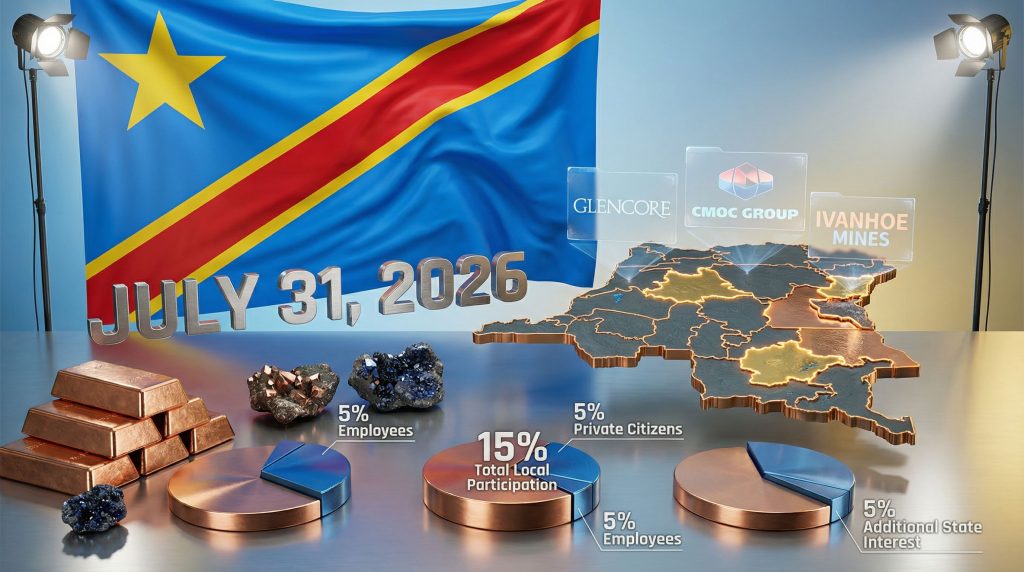
African mining jurisdictions are experiencing a fundamental restructuring of ownership dynamics, driven by decades of resource extraction that delivered minimal economic benefits to local populations. This transformation represents a strategic pivot from liberal mining frameworks toward resource nationalism, fundamentally altering the traditional foreign-dominated extraction model.
The Democratic Republic of Congo's recent activation of dormant shareholding requirements exemplifies this continental shift, where governments are leveraging regulatory mechanisms to redistribute mining wealth toward domestic stakeholders. Understanding these evolving Congo local ownership rules for mining requires examining both immediate compliance obligations and broader geopolitical implications for critical mineral supply chains.
Understanding Congo's Employee Shareholding Framework
The Democratic Republic of Congo has activated comprehensive local ownership requirements that fundamentally restructure mining sector participation. These regulations establish mandatory employee shareholding provisions alongside separate private citizen participation mechanisms.
Employee Share Allocation Requirements
Mining companies operating in Congo must now allocate 5% of total share capital to Congolese employees, representing one of the most significant ownership redistribution mandates in African mining. The regulatory framework establishes July 31, 2026 as the absolute compliance deadline, creating immediate pressure on major operators to restructure existing ownership arrangements.
This employee shareholding requirement differs substantially from traditional profit-sharing or bonus systems. Companies must transfer actual equity ownership, providing Congolese employees with proportional voting rights, dividend distributions, and long-term wealth appreciation opportunities typically reserved for external investors.
The regulation's scope encompasses all mining operations regardless of commodity focus, applying equally to copper, cobalt, gold, and alternative mineral projects. No exemptions exist based on operational scale, project development stage, or existing contractual arrangements.
Private Individual Shareholding Provisions
Beyond employee shareholding, Congo's 2018 mining code requires an additional 5% share allocation reserved for private Congolese citizens. This separate regulatory pathway operates independently from employee ownership provisions, creating dual channels for local economic participation.
The private individual shareholding framework establishes a structured mechanism for qualified Congolese investors to acquire mining company equity through designated allocation processes. Unlike employee shares distributed based on employment status, private individual shares require capital investment by participating citizens.
Companies must establish transparent valuation methodologies and allocation procedures for private individual share offerings. The regulatory structure mandates equal access opportunities while allowing market-based pricing mechanisms to determine final transaction terms.
When big ASX news breaks, our subscribers know first
State Participation and Government Equity Structures
Congo's mining sector operates under a multi-tiered ownership framework that combines employee shareholding with substantial state participation provisions. Understanding these overlapping requirements is essential for evaluating total foreign investor dilution exposure.
Free-Carried Interest Mechanics
The Congolese government claims a 10% non-dilutable state interest upon mining rights issuance, structured as free-carried equity requiring no capital contribution from government entities. This arrangement ensures proportional state participation in project revenues while companies bear 100% of development and operational costs.
State free-carried interest operates independently from local ownership requirements, creating additive dilution pressure on foreign investors. The government's equity stake includes voting rights, board representation opportunities, and dividend distribution claims proportional to ownership percentage.
Furthermore, upon mining permit renewal cycles, companies face an additional 5% state equity obligation, potentially increasing total government participation to 15% across project lifecycles. This escalating structure incentivizes permit compliance while ensuring sustained state revenue participation.
Cumulative Ownership Impact Analysis
The combined regulatory framework creates significant ownership restructuring requirements for foreign-controlled operations:
| Ownership Category | Percentage Required | Implementation Timeline |
|---|---|---|
| Employee Shareholding | 5% | July 31, 2026 |
| Private Individual Shares | 5% | Ongoing under 2018 code |
| Initial State Interest | 10% | Upon rights grant |
| Renewal State Interest | 5% | Upon permit renewal |
| Total Local Participation | 25% | Cumulative across cycles |
For a historically 100% foreign-owned operation, Congo local ownership rules for mining create a pathway toward 75% maximum foreign ownership across full compliance cycles. This represents a fundamental shift from traditional mining investment structures dominated by external capital providers.
Major Mining Companies Facing Compliance Pressure
Congo's enforcement directive creates immediate restructuring obligations for some of the world's largest mining operations, particularly given the country's dominant position in critical mineral supply chains.
Copper and Cobalt Production Giants
Glencore faces substantial compliance challenges across its integrated copper-cobalt operations in Congo. As a London-listed multinational with historical majority ownership positions, the company must navigate both Congolese regulatory requirements and international disclosure obligations while restructuring employee shareholding arrangements.
CMOC Group's Tenke Fungurume Mine operations represent one of the world's largest cobalt sources, positioning the Chinese-owned company at the intersection of Congo local ownership rules for mining and broader US‑China mining strategies. The company's state-linked ownership structure adds complexity to compliance planning as both Chinese and Congolese governments assert participation rights.
Ivanhoe Mines confronts unique compliance timing challenges as its Kamoa-Kakula copper project transitions from development to production phases. The Canadian-listed company, with significant backing from Soros Fund Management, must integrate employee shareholding requirements into project financing and operational planning from early production stages.
Gold and Diversified Mineral Operators
Barrick Gold operates one of Africa's largest gold mining complexes in Congo, requiring comprehensive ownership restructuring across substantial production assets. The company's global operational experience provides potential advantages in implementing employee shareholding governance mechanisms compared to smaller regional operators.
Congo's mineral diversification beyond copper and cobalt creates compliance obligations across lithium, tantalum, tin, and zinc operations. These alternative mineral projects, increasingly critical to battery technology and electronics manufacturing, face identical shareholding requirements despite varying operational scales and market dynamics.
Eurasian Resources Group and Zijin Mining Group represent the broader international operator community requiring immediate compliance assessment. Both companies maintain diversified Congo operations spanning multiple commodity categories, necessitating comprehensive ownership restructuring trends across their entire in-country portfolios.
Historical Context of Mining Regulatory Evolution
The activation of Congo local ownership rules for mining reflects broader African resource nationalism trends that have accelerated significantly since 2020. Understanding this historical progression provides essential context for evaluating long-term investment implications.
The 2018 Mining Code Foundation
Congo's current shareholding requirements originated in the country's 2018 mining code revision, which established comprehensive local ownership provisions that remained largely dormant until February 2026 enforcement activation. This eight-year implementation gap reflects common patterns across African mining jurisdictions where regulatory frameworks exist but lack consistent enforcement mechanisms.
The 2018 code represented a philosophical shift toward resource nationalism, establishing state participation rights, employee shareholding requirements, and private citizen equity allocation provisions. However, political will and administrative capacity limitations prevented active implementation during the 2018-2025 period.
Mines Minister Louis Watum's February 2026 enforcement directive marked a decisive turn toward active regulatory implementation. This timing coincides with both regional peer pressure and emerging US mining regulatory shifts that prioritise domestic critical mineral security.
Regional Mining Nationalism Acceleration
Congo's ownership reforms align with broader West and Southern African regulatory tightening across multiple jurisdictions:
- Burkina Faso achieved record 94 tonnes of gold output in 2025 following mining code revisions that expanded state participation and raised royalty rates
- Niger introduced revised mining code provisions emphasising local ownership requirements
- Guinea modified mining regulations as part of comprehensive resource sector restructuring
- Zimbabwe tightened mining regulations through expanded state participation and adjusted royalty frameworks
This regional trend reflects a philosophical argument that decades of liberal mining regimes delivered limited benefits to local economies, driving governments toward increased state and citizen participation in resource extraction revenues.
Foreign Exchange and Revenue Control Evolution
Beyond ownership restructuring, regional governments have simultaneously tightened foreign exchange controls and royalty rate structures to maximise domestic revenue capture from mining operations. These complementary policies create comprehensive frameworks for increasing local economic benefits from mineral extraction.
The coordination of ownership rules with broader fiscal policy demonstrates sophisticated government approaches to resource wealth optimisation. In addition, this strategy moves beyond simple taxation toward direct equity participation in mining project economics.
Investment Economics and Capital Structure Implications
Congo local ownership rules for mining create fundamental changes to project financing, valuation methodologies, and investor return calculations across the country's mining sector.
Project Financing Restructuring Requirements
Mining companies must reconfigure capital structures to accommodate mandatory equity dilution while maintaining sufficient debt service capacity and operational flexibility. The 5% employee shareholding requirement reduces available cash flow for debt obligations unless compensated through operational efficiency improvements or commodity price increases.
Senior lenders typically require minimum equity ownership percentages from project sponsors to ensure adequate borrower commitment and risk alignment. Reduced foreign ownership stakes may trigger financing covenant violations, necessitating comprehensive refinancing arrangements or lender consent processes.
Development-stage projects face particular complexity as employee shareholding requirements must be integrated into initial project financing rather than retrofitted into existing operational structures. This timing dynamic affects everything from construction financing to production cash flow projections.
Operational Cost and Compliance Implementation
Companies face immediate compliance expenses including:
- Legal restructuring costs for corporate governance modifications and shareholding documentation
- Employee share administration systems requiring ongoing governance, valuation, and distribution mechanisms
- Regulatory compliance documentation including ministry submission requirements and ongoing reporting obligations
- Due diligence expenses for employee eligibility verification and share allocation processes
Critical Compliance Insight: Mining operators must establish sustainable employee shareholding governance frameworks that balance regulatory compliance with operational efficiency, requiring sophisticated systems for share valuation, dividend distribution, and employee rights administration.
Foreign Investment Attractiveness Assessment
The cumulative 25% local participation requirement significantly alters Congo's mining investment attractiveness relative to alternative African jurisdictions with less restrictive ownership frameworks. International mining companies increasingly evaluate regulatory risk alongside geological and operational factors when making capital allocation decisions.
Chinese investment strategies may adapt more readily to state participation requirements given Chinese companies' experience with government equity participation in domestic operations. Western investors traditionally favour majority ownership structures, potentially requiring fundamental investment approach modifications.
However, these changes coincide with evolving mining trends across global markets, where strategic resource access often outweighs traditional ownership preferences.
Geopolitical and Supply Chain Security Implications
Congo's position as the source of 70% of global cobalt supply and the world's second-largest copper producer transforms domestic ownership regulations into international supply chain security considerations for major consuming economies.
Critical Mineral Strategic Positioning
The implementation of Congo local ownership rules for mining occurs amid intensifying global competition for critical mineral access, particularly driven by electric vehicle battery demand growth and renewable energy infrastructure requirements.
Electric vehicle manufacturers increasingly recognise supply chain vulnerability risks associated with Congo's cobalt dominance. Ownership restructuring requirements add additional complexity to long-term supply agreement negotiations and strategic partnership development.
Battery technology companies must evaluate whether reduced foreign ownership percentages in Congo operations affect supply chain reliability and strategic resource access. Furthermore, the intersection of ownership regulations with geopolitical tensions creates multiple risk layers for downstream industrial users.
US-China Mining Competition Dynamics
Congo's regulatory changes coincide with potential increased US investment under the Trump administration, creating opportunities for Western companies to gain strategic mineral access while Chinese competitors navigate ownership restructuring requirements.
Chinese companies' historical dominance in Congolese mining faces new challenges as both regulatory compliance costs and geopolitical pressures intensify. State-owned Chinese mining enterprises must balance Congolese local ownership requirements with Beijing's strategic resource security objectives.
The timing of Congo's enforcement directive during early Trump administration engagement suggests potential coordination between regulatory implementation and broader diplomatic relationship development with the United States. Consequently, this alignment may reflect a broader critical minerals pivot toward Western partnerships in strategic resource sectors.
The next major ASX story will hit our subscribers first
Compliance Implementation Strategies and Timelines
Mining companies face complex operational and legal challenges in achieving full compliance with Congo local ownership rules for mining by the July 31, 2026 deadline.
Employee Shareholding Implementation Framework
Step 1: Corporate Structure Assessment
Companies must comprehensively review existing shareholding arrangements, corporate governance structures, and legal entity configurations to identify optimal implementation pathways. This assessment includes evaluating parent company obligations, subsidiary relationships, and existing shareholder agreement provisions that may require modification.
Step 2: Employee Eligibility and Selection Criteria
Establishing clear definitions of eligible Congolese employees requires comprehensive workforce analysis including citizenship verification, employment category classification, and tenure requirements. Companies must develop transparent selection criteria that ensure regulatory compliance while maintaining operational fairness.
Step 3: Share Valuation and Allocation Mechanisms
Mining companies must establish market-based valuation methodologies for employee share allocation that reflect actual company value while meeting regulatory approval requirements. This process typically involves independent valuation professionals and regulatory consultation to ensure acceptable pricing frameworks.
Step 4: Governance Structure Development
Employee shareholders require representation mechanisms including potential board positions, voting rights procedures, and dividend distribution systems. Companies must design governance structures that accommodate employee participation while maintaining operational efficiency and decision-making effectiveness.
Step 5: Regulatory Documentation and Submission
Final compliance requires comprehensive documentation submission to Congo's Ministry of Mines demonstrating full implementation of employee shareholding requirements. This process includes legal verification, regulatory approval, and ongoing compliance monitoring establishment.
Private Individual Share Allocation Processes
The separate 5% private individual shareholding requirement operates through distinct regulatory pathways requiring qualified Congolese investor identification, share pricing mechanisms, and transfer procedures. Companies must establish transparent allocation processes while ensuring compliance with both mining regulations and securities law requirements.
Qualified investor identification involves determining eligible private Congolese citizens through citizenship verification, financial capacity assessment, and investment interest evaluation. This process requires extensive due diligence and regulatory coordination.
Share pricing and transfer mechanisms must balance market-based valuation with accessibility objectives, ensuring qualified individuals can participate while maintaining company value integrity. Transfer procedures require legal documentation, regulatory approval, and ongoing compliance monitoring.
Strategic Implications for Congo's Mining Competitiveness
The implementation of comprehensive local ownership requirements positions Congo within evolving African mining investment frameworks while balancing local economic development objectives with foreign capital attraction needs.
Local Economic Development and Wealth Distribution
Employee shareholding creates direct wealth-building opportunities for Congolese citizens through mining sector participation, potentially generating substantial long-term financial returns as commodity prices appreciate and production volumes expand.
Community development integration through private individual shareholding extends mining benefits beyond direct employees toward broader local populations. This approach addresses historical concerns about limited local economic impact from large-scale resource extraction operations.
Skills development acceleration may result from increased employee ownership stakes, as worker-shareholders have enhanced incentives to pursue technical training and operational excellence that directly impacts their investment returns.
Long-Term Mining Sector Positioning
Congo's ownership reforms aim to balance local participation requirements with continued foreign investment attraction, recognising that international capital and technical expertise remain essential for large-scale mining development.
The regulatory framework's implementation success depends on maintaining mining sector competitiveness relative to alternative African jurisdictions while ensuring meaningful local economic participation. This balance requires ongoing policy refinement based on practical implementation experience.
Technology transfer acceleration may result from increased local stakeholder engagement, as employee and private shareholders have enhanced incentives to support operational improvements and technical advancement that benefit both company performance and local capacity development.
Compliance Questions and Enforcement Mechanisms
Understanding practical implementation details remains essential for mining companies evaluating compliance strategies and risk management approaches under Congo local ownership rules for mining.
Universal Application and Operational Scope
The shareholding requirements apply comprehensively across all mining operations regardless of commodity focus, operational scale, or development stage. No exemptions exist for exploration-phase projects, small-scale operations, or specific mineral categories.
Industrial mining operations face identical compliance obligations whether they focus on copper, cobalt, gold, or alternative minerals. This universal application ensures regulatory consistency while creating standardised implementation requirements across the sector.
Artisanal and small-scale mining treatment remains unclear in current regulatory guidance, creating potential compliance uncertainty for companies operating across multiple scales or supporting artisanal mining communities.
Employee Share Valuation and Distribution Mechanisms
Market valuation methodologies for employee share allocation must reflect genuine company value while ensuring accessibility for Congolese employees. Independent valuation professionals typically provide market-based assessments acceptable to regulatory authorities.
Distribution criteria require transparent employee selection processes based on objective factors including citizenship status, employment tenure, and role categories. Companies must develop fair allocation frameworks that prevent discrimination while meeting regulatory requirements.
Share transfer restrictions may limit employee shareholders' ability to sell or transfer shares, ensuring long-term local ownership while preventing immediate monetisation that could undermine regulatory objectives.
Non-Compliance Consequences and Remediation Pathways
Companies failing to meet the July 31, 2026 compliance deadline face potential enforcement actions including mining permit suspension, operational restrictions, or permit revocation procedures. The severity of consequences depends on compliance gap magnitude and company cooperation with remediation efforts.
Enforcement mechanisms include regulatory oversight, operational audits, and financial penalties designed to ensure comprehensive compliance rather than purely punitive measures. Companies demonstrating good faith compliance efforts may receive extended implementation timelines or modified requirements.
Negotiation and remediation opportunities exist for companies experiencing genuine implementation challenges, provided they demonstrate commitment to achieving full compliance and maintaining positive relationships with regulatory authorities.
This analysis of Congo local ownership rules for mining reflects current regulatory requirements and industry trends. Mining companies should consult qualified legal and regulatory professionals for specific compliance guidance. Investment decisions should consider multiple risk factors including regulatory, operational, and market dynamics that may affect project economics and returns.
Looking for Opportunities in African Mining Jurisdictions?
Discovery Alert's proprietary Discovery IQ model delivers real-time alerts on significant ASX mineral discoveries, instantly empowering subscribers to identify actionable opportunities ahead of the broader market. Understand why major mineral discoveries can lead to significant market returns by exploring Discovery Alert's dedicated discoveries page, showcasing historic examples of exceptional outcomes, and begin your 14-day free trial today to position yourself ahead of the market.