May 11, 2026
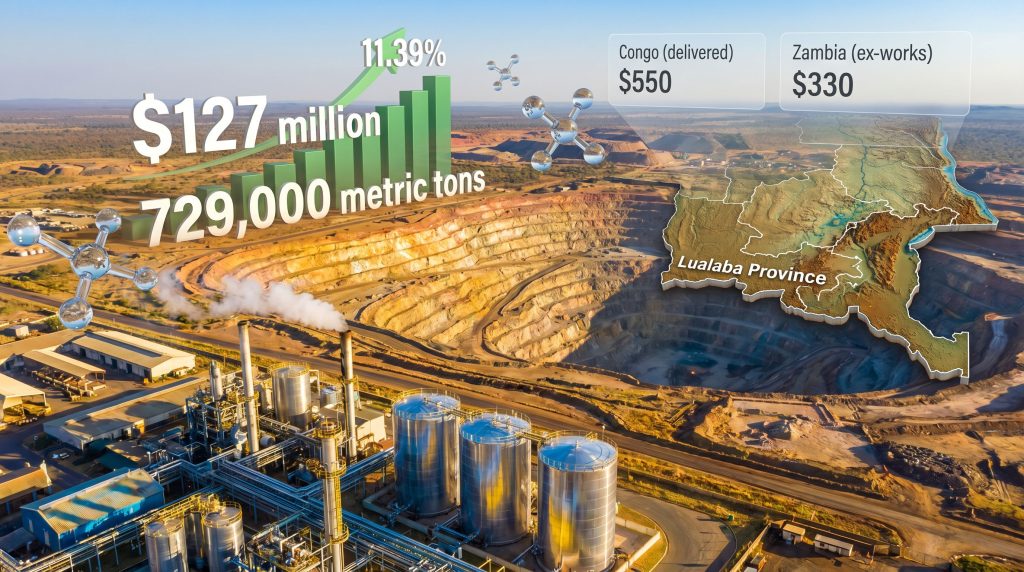
The Congo sulphuric acid market faces a fundamental shift in its chemical supply infrastructure, driven by global supply chain disruptions and the emergence of locally integrated production systems. Market forces across multiple continents are reshaping how mining operations source the sulphuric acid essential for copper extraction processes, creating opportunities for companies positioned within regional production networks rather than dependent on international logistics chains.
Strategic positioning in commodity markets often depends less on production scale than on proximity to end users and resilience against external disruptions. The Democratic Republic of Congo's sulphuric acid sector exemplifies this principle, where geopolitical tensions thousands of miles away have transformed local competitive dynamics and created premium pricing opportunities for domestic producers.
Market Scale and Economic Fundamentals
The scope of Congo's sulphuric acid market represents a substantial regional opportunity, with industry sources indicating annual demand of approximately 2 million metric tons across the country's mining operations. This figure positions the DRC as one of Africa's most significant acid consuming markets, driven primarily by copper and cobalt processing requirements in the southeastern provinces.
Current production capacity from local sources remains well below total market demand. Ivanhoe Mines' Kamoa-Kakula facility produced just over 100,000 tons during the first quarter of 2026, with projections indicating full capacity could reach 600,000 to 700,000 tons annually once smelting operations achieve maximum throughput. This represents approximately 35% of total market demand at peak production levels.
Pricing dynamics reflect the premium that proximity commands in this market. High-strength sulphuric acid traded at approximately $500 per ton during the first quarter of 2026, with spot prices trending upward throughout the period. This pricing level incorporates both the cost advantages of local production and the premium associated with supply security during periods of international market disruption.
Regional Market Context
The Congo sulphuric acid market operates within broader African consumption patterns that span multiple countries and supply sources. Traditional import dependencies have created vulnerabilities that recent global events have exposed, leading to supply shortages and price volatility across the continent.
Regional consumption patterns show significant variation in import dependency levels. While some countries maintain domestic production capabilities, others rely entirely on international suppliers for their acid requirements. The DRC's position within this regional framework has shifted as local production capacity has expanded and external supply chains have faced disruption.
Furthermore, import logistics across Sub-Saharan Africa typically involve complex transportation networks spanning multiple countries and transit points. These extended supply chains create multiple points of potential failure, from port congestion to cross-border regulatory changes, making locally produced alternatives increasingly attractive to mining operations seeking supply security.
When big ASX news breaks, our subscribers know first
Geographic Concentration and Infrastructure Advantages
The spatial distribution of acid demand within the DRC concentrates heavily in the southeastern copper belt region, particularly around major mining districts in Lualaba Province. This geographic clustering creates opportunities for efficient distribution networks and reduces transportation costs for suppliers positioned within the region.
Kolwezi serves as the primary hub for copper mining operations, hosting facilities operated by major international mining companies including Glencore and Eurasian Resources Group. These companies require consistent, high-volume acid supplies for their leaching operations, creating a stable customer base for local producers who can demonstrate reliable delivery capabilities.
Infrastructure Development Patterns
The development of acid production facilities within the copper belt follows the broader pattern of mining industry evolution, where companies seek to control multiple stages of their supply chains. Ivanhoe's approach of producing acid as a byproduct of copper smelting operations represents a particularly efficient model, as it eliminates the need for dedicated acid manufacturing infrastructure while utilizing sulfur dioxide emissions that would otherwise require environmental management.
Transportation infrastructure within the region has evolved to support the movement of liquid chemicals and other mining inputs. Specialized handling facilities, storage tanks, and distribution networks have been developed to manage the logistics requirements of acid distribution to multiple mine sites across the copper belt.
In addition, power generation capabilities represent a critical constraint on regional acid production capacity. Smelting operations require substantial electricity inputs, and the availability of reliable power supplies directly affects the ability to scale acid production. Integrated facilities that include their own power generation capacity hold significant advantages in this environment.
Supply Chain Disruptions and Market Opportunities
Global geopolitical tensions have fundamentally altered the competitive landscape for sulphuric acid suppliers serving Central African markets. The Iran conflict, which escalated in early 2026, has disrupted traditional supply routes from Middle Eastern producers who historically supplied significant volumes to international markets including Africa.
Middle Eastern production facilities have struggled to maintain export operations due to shipping constraints and security concerns affecting the Strait of Hormuz, a critical chokepoint for maritime trade. This disruption has created shortages in global acid markets and driven prices upward across multiple regions, including Central Africa, highlighting the importance of supply chain crisis insights for regional market stability.
Regional Policy Constraints
Neighbouring countries have implemented policy changes that further constrain supply options for DRC mining operations. Zambian restrictions on sulfur exports have eliminated the possibility for DRC companies to import raw materials and produce acid domestically, channelling additional demand toward existing local production sources.
These policy changes create what industry analysts describe as a "captive market" environment, where demand is concentrated among a limited number of suppliers who can demonstrate consistent delivery capabilities. For companies with established production facilities and distribution networks, this environment provides significant competitive advantages.
However, alternative sourcing through South African corridors remains possible but involves longer transportation distances and higher logistics costs. The economics of these alternative supply routes become less attractive as local production capacity expands and international shipping costs remain elevated due to global supply chain pressures.
Price Dynamics and Market Premiums
Regional pricing differentials reflect the combined impact of supply constraints and transportation costs across different sourcing options available to Congo-based mining operations:
| Supply Source | Approximate Price | Key Constraints |
|---|---|---|
| Local Production | $500/ton | Limited capacity |
| Zambian Sources | Restricted | Export limitations |
| South African Routes | $420/ton + transport | Distance premiums |
| Middle East (Historical) | $330/ton + logistics | Geopolitical disruption |
The premium for locally produced acid reflects both the elimination of international transportation costs and the security value associated with supply sources that remain unaffected by external geopolitical events. Mining operations requiring consistent acid supplies for continuous processing operations place significant value on this supply security.
Strategic Market Positioning
Companies positioned within the DRC acid market hold several structural advantages that extend beyond simple production capacity metrics. Proximity to end users eliminates many of the logistics challenges that affect international suppliers, while integrated production models create cost advantages that become more pronounced during periods of external market disruption.
Customer relationships within this market tend to be characterised by long-term supply agreements rather than spot market transactions. Major mining operations require predictable acid supplies to maintain processing schedules, creating opportunities for local producers to establish stable revenue streams through multi-year contracts.
Production Integration Models
The most successful acid producers in this market have adopted integration strategies that link acid production to other mining or smelting operations. This approach provides multiple advantages: lower capital requirements compared to standalone acid plants, utilisation of waste sulfur dioxide streams, and diversified revenue sources that reduce dependence on acid pricing alone.
Ivanhoe's model exemplifies this integrated approach. The company produces acid as a byproduct of copper smelting operations, selling the output to other copper producers in the region while maintaining its primary focus on copper production and sales. This integration allows the company to optimise both copper recovery and acid production simultaneously.
Consequently, technical specifications for acid quality remain critical in this market. Copper leaching operations require high-strength sulphuric acid meeting specific purity standards, and producers must demonstrate consistent quality control to maintain customer relationships with major mining operations.
Investment Opportunities and Market Growth
The combination of substantial unmet demand, supply chain disruptions affecting alternative sources, and limited existing production capacity creates multiple investment opportunities within the Congo sulphuric acid sector. These opportunities span production facility development, infrastructure expansion, and distribution network optimisation.
Production Capacity Development
Current local production capacity serves approximately 35% of total market demand, leaving substantial opportunity for additional production facilities. However, successful capacity development requires integration with either copper smelting operations or access to alternative sulfur sources, given the policy constraints on sulfur imports from neighbouring countries.
New facility development must account for several technical requirements:
• Power supply reliability – Acid production requires consistent electricity inputs
• Concentrate feed availability – For smelter-integrated facilities
• Storage and handling infrastructure – Liquid acid requires specialised facilities
• Transportation access – Distribution to multiple mine sites across the copper belt
• Environmental compliance – Sulfur dioxide emissions management
The economics of new facility development benefit from current pricing levels, which provide substantial premiums over historical international acid prices. However, investment decisions must account for the potential for pricing normalisation if global supply chains stabilise and Middle Eastern production returns to international markets.
Regional Distribution Infrastructure
Distribution network development represents a lower-capital opportunity compared to production facility construction while providing strategic positioning advantages. Companies that establish efficient distribution capabilities can potentially serve as intermediaries between regional production sources and end users, capturing margins while providing value through logistics expertise.
Furthermore, storage facility development at strategic locations throughout the copper belt could provide buffer capacity that helps mining operations manage supply variability. Tank farms positioned near major mining districts could store acid during periods of high production and release supplies during maintenance periods or production constraints at source facilities.
Global Market Context and Future Dynamics
The Congo sulphuric acid market operates within global dynamics that extend far beyond regional supply and demand fundamentals. Worldwide acid consumption patterns, driven primarily by fertiliser production and metals processing, create the broader context within which regional markets function.
Global sulphuric acid demand growth averages approximately 5.1% annually, driven by expanding agricultural fertiliser requirements and increased metals production in developing economies. This global growth trajectory provides long-term support for regional capacity development, particularly in markets where local production can displace imports.
Supply Chain Resilience Considerations
The 2026 supply disruptions have highlighted the vulnerabilities inherent in extended international supply chains for critical industrial inputs. Mining operations increasingly prioritise supply security alongside cost optimisation, creating opportunities for regional suppliers who can demonstrate reliability even during periods of global market stress.
Strategic stockpiling has emerged as a risk management approach adopted by major mining operations. Companies are building inventory levels above immediate operational requirements to provide buffer capacity during supply disruptions. This trend supports demand for local production sources that can replenish stockpiles without dependence on international logistics networks.
In addition, alternative supply route development remains an ongoing priority for mining companies seeking to diversify their supplier bases. However, the economics of these alternatives often favour local production sources, particularly when transportation costs and supply security considerations are factored into total cost calculations, similar to considerations in gold and copper exploration projects.
The next major ASX story will hit our subscribers first
Operational Challenges and Risk Factors
Despite favourable market conditions, companies operating in the Congo sulphuric acid sector face several operational challenges that affect both current performance and future expansion potential. These challenges span infrastructure constraints, regulatory complexity, and environmental management requirements.
Infrastructure and Logistics Constraints
Transportation fuel availability represents a persistent challenge affecting acid distribution throughout the copper belt region. Diesel fuel shortages or price volatility directly impact distribution costs and delivery reliability, creating operational risks that companies must manage through strategic planning and potentially alternative transportation methods.
Infrastructure maintenance requirements extend beyond acid production facilities to include the broader network of roads, storage facilities, and handling equipment necessary for effective distribution. The challenging environmental conditions in the region accelerate wear on equipment and infrastructure, requiring ongoing investment in maintenance and replacement.
Moreover, power supply reliability affects not only production facilities but also storage and pumping systems required for acid distribution. Backup power generation capabilities represent essential infrastructure investments for companies seeking to maintain consistent delivery capabilities regardless of grid stability.
Environmental and Regulatory Considerations
Environmental compliance requirements for acid production and distribution continue evolving as regulatory frameworks develop. Companies must demonstrate proper management of sulfur dioxide emissions, wastewater treatment, and safety protocols for acid handling and transportation.
"The regulatory environment surrounding sulfur exports from neighbouring countries demonstrates how policy changes can rapidly alter market dynamics, creating both opportunities and risks for companies operating across regional borders," notes a recent global mining landscape analysis.
Regional trade agreement provisions may affect future market access and competitive positioning. Companies must monitor potential changes to import duties, environmental standards, or safety requirements that could alter the competitive landscape between local production and international suppliers.
Market Evolution and Strategic Positioning
The trajectory of Congo's sulphuric acid market through 2027 will likely be shaped by the interaction of several key factors: global supply chain stabilisation, local capacity expansion, and continued growth in copper mining operations that drive underlying acid demand.
Capacity Expansion Scenarios
Current production capacity constraints suggest that substantial additional capacity development could be absorbed by existing market demand. However, the timing and scale of this capacity development will determine competitive dynamics and pricing levels in future periods.
Companies planning capacity expansions must consider several strategic factors:
Market timing considerations:
• Current premium pricing may normalise as global supplies stabilise
• Early capacity additions capture favourable market conditions
• Delayed development risks competitive positioning
Integration opportunities:
• Copper smelting expansion creates acid production opportunities
• Existing mining operations may seek backward integration
• Joint venture structures could optimise capital requirements
Geographic positioning:
• Proximity to major mining districts provides delivery advantages
• Transportation infrastructure access affects distribution efficiency
• Regional hub development could serve broader Central African markets
Long-term Market Development
The potential for Congo to serve as a regional acid hub extends beyond serving domestic demand to potentially supplying other Central African markets currently dependent on imports. This broader regional role would require additional capacity development and enhanced distribution infrastructure but could provide significant scale advantages.
Competitive positioning in this evolving market will likely favour companies that can demonstrate operational excellence across multiple dimensions: production reliability, product quality, delivery consistency, and cost management. Companies that establish strong positions during the current period of favourable market conditions will be well-positioned for continued success as the market matures.
Furthermore, the development of Congo's sulphuric acid sector reflects broader trends in industrial regionalisation, where companies and countries seek to reduce dependence on extended international supply chains in favour of regional production networks. This trend, accelerated by recent global disruptions, suggests that the current market dynamics may represent a permanent shift rather than a temporary deviation from historical patterns.
According to Finimize's analysis, the established customer base and regional positioning provide significant advantages for companies operating within this integrated supply chain model. Additionally, Market Research Future's comprehensive study highlights the sustained growth potential within this specialised market segment.
Disclaimer: This analysis contains forward-looking statements and projections based on current market conditions and available information. Actual market developments may differ materially from those described. Readers should conduct their own due diligence and consult with qualified professionals before making investment decisions. Market estimates and pricing information reflect conditions as of early 2026 and are subject to change based on evolving global and regional factors.
Want to Discover the Next Mining Opportunity Before the Market?
Discovery Alert provides instant notifications on significant ASX mineral discoveries, powered by its proprietary Discovery IQ model, helping investors identify actionable opportunities in mining and exploration companies before broader market recognition. Begin your 14-day free trial today and position yourself ahead of the market with real-time alerts that transform complex mineral data into clear investment insights.