May 21, 2026
## Energy supply disruptions and oversight challenges
Energy supply disruptions throughout history have demonstrated the complex interplay between geopolitical crises and domestic oversight mechanisms. In these turbulent times, effective congressional scrutiny of venezuelan oil revenue is essential, as it guides emergency financial arrangements during crisis periods. Moreover, when global oil markets face severe shocks, legislative bodies must rapidly adapt their review procedures.
## How Constitutional Framework Governs Congressional Scrutiny of Foreign Oil Revenue
The separation of powers doctrine establishes clear boundaries for reviewing executive energy decisions. Recently, developments in Venezuelan oil revenue management have tested these traditional frameworks. When the Treasury Department established offshore accounts, doubts arose about the scope of legislative review authority over executive-controlled financial arrangements. In addition, insights into the evolving situation underscore the need for congressional scrutiny of venezuelan oil revenue.
Military and diplomatic factors further complicate the picture. For instance, discussions on the
oil price rally have recently surfaced, reflecting market uncertainties. In addition, such shifts influence domestic accountability measures.
### Legal Frameworks for Emergency Economic Powers
The International Emergency Economic Powers Act provides executives with broad discretion during national emergencies. However, congressional oversight mechanisms remain intact even in crises. Venezuela's sovereign debt default, following the 2007 nationalisation of ExxonMobil and ConocoPhillips assets, created a complex creditor landscape. Furthermore, this scenario exemplifies the challenges faced during emergency energy licensing decisions.
Historical examples illustrate that while executives may act swiftly, legislators must ensure transparency. For instance, market commentators noted the
OPEC production impact on global oil output during previous crises, thereby highlighting the balance required between quick decisions and careful review.
### Federal Accountability and Offshore Arrangements
Federal accountability standards require transparency in managing foreign assets. Recently, initial proceeds of $500 million were routed through Qatar-based accounts before Treasury management took over. This technical modification addressed dual risks: international creditor attachment and domestic litigation exposure. Furthermore, analysts stress the importance of maintaining oversight even during emergency measures.
Legislative review becomes pivotal at such times. In many cases, debates have centred on the need for robust oversight frameworks to counterbalance executive emergency powers.
## Why Do Transparency Requirements Matter for Offshore Oil Revenue Accounts
Federal transparency obligations become particularly complex when managing foreign government assets during energy emergencies. By February 13, 2026, accumulated Venezuelan oil revenues exceeded $1 billion. This surge necessitated the rapid development of accountability frameworks to manage unprecedented financial flows. Additionally, the concentration of licensing decisions among Vitol and Trafigura raised deeper questions about transparency.
In parallel, market observers noted that evolving policies resulted in visible
Venezuela policy change. Consequently, both policymakers and the public seek clarity regarding corporate selection processes.
### Risk Assessment Frameworks for Congressional Review
Legislative oversight requires evaluation across multiple risk categories:
• Creditor Protection: Immediate review procedures
• Political Exposure: Ethics evaluations within 30–90 days
• Market Intervention: Supply-specific performance metrics
• Constitutional Review: Ongoing adherence to judicial standards
These frameworks create critical benchmarks for legislative assessments. For instance, the Financial Times reported that Vitol received $250 million in directed oil proceeds. Additionally, a senior company trader’s $6 million campaign donation further underscored potential policy conflicts.
### Documentation Requirements for Multi-Billion Dollar Arrangements
Federal disclosure obligations mandate extensive documentation when managing vast foreign revenues. The March 10, 2026, letter from Representative Sean Casten and Senator Chris Van Hollen demanded rigorous document production. This underscored that transparency should persist even after account restructuring. Analysts stress that effective oversight is crucial for understanding the true impact of these fiscal decisions.
Legislators noted that previous justice investigations involving Vitol and Trafigura added an extra layer of complexity to the review process. Moreover, Representative Robert Garcia’s inquiries highlighted a need for closer inspection regarding corporate selection criteria.
## How Do Energy Market Disruptions Trigger Legislative Oversight Actions
The Iran conflict that began on February 28, 2026, under Operation Epic Fury created the largest supply shock in recent history. Iran’s military action closed the Strait of Hormuz, removing approximately 4.5 to 5 million barrels per day from global markets. Analysts warned that this figure could double by mid-April 2026, prompting immediate congressional response.
Market disruptions accelerated executive responses. Consequently, there was a visible shift in policy, with debates centring on rapid measures to stabilise markets. In fact, recent commentary on trade war impact has highlighted the interconnectedness of global events and domestic oversight challenges.
### Supply Chain Security and Congressional Response Patterns
Several strategic moves marked the government’s reaction to the crisis:
• A record Strategic Petroleum Reserve release of 400 million barrels
• Temporary sanctions relief for Russian and Iranian oil
• Direct US market sales authorisation for Venezuelan PDVSA
• Active measures to manage steep price increases
Each measure reflects the challenges posed by international events. Moreover, discussions on
oil price movements emphasise that swift policy adaptation is necessary during turbulent times.
Venezuela's production capacity—although less than 1 percent of global supply—gained unexpected strategic relevance during the crisis.
### Market Intervention Analysis Through a Legislative Lens
Congressional evaluation of emergency energy interventions must balance immediate crisis responses with long-term policy precedents. The authorisation allowing PDVSA to sell crude directly to US companies was seen as a significant policy reversal. Analysts described this as a seismic shift after years of prohibitions on such transactions.
Luisa Palacios, former Citgo Petroleum chair and a Columbia University researcher, noted that Venezuela’s output fell by 1.5 million barrels per day due to mismanagement, expropriation, and sanctions. Her insights cemented the importance of robust legislative safeguards in overseeing executive actions.
## What Investigative Powers Enable Congressional Energy Revenue Scrutiny
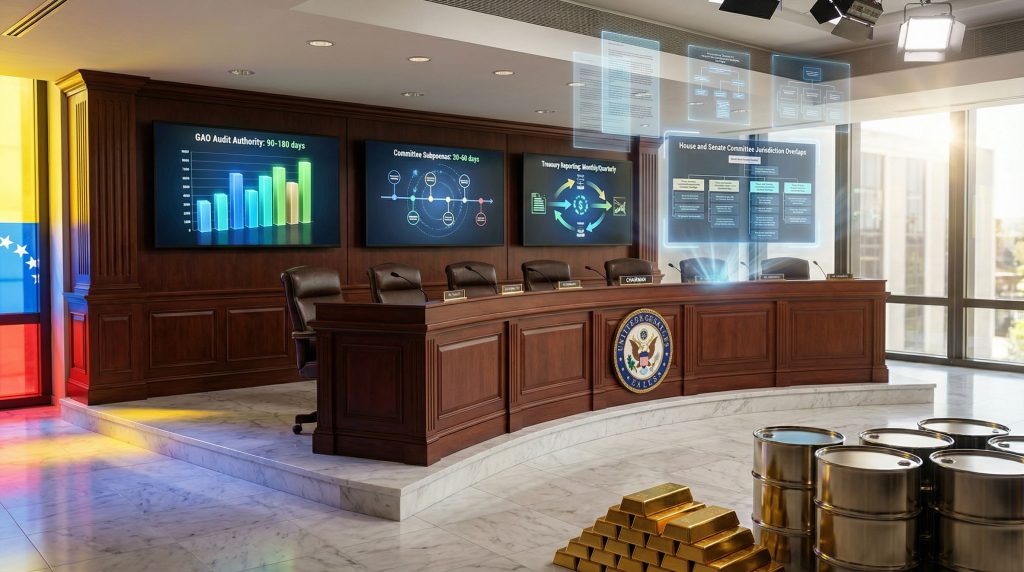
The recently introduced Venezuela Oil Proceeds Transparency Act by Senator Adam Schiff and Senate Minority Leader Chuck Schumer showcased the legislative tools available. This proposed legislation seeks to empower the Government Accountability Office to conduct independent audits of offshore arrangements. These measures would include rigorous reviews of company licensing decisions and contractual terms, reinforcing congressional scrutiny of venezuelan oil revenue.
### Document Production and Information Gathering Authority
Congressional committees employ several enforcement mechanisms for energy policy investigations:
- Subpoena powers for private sector entities
- Witness testimony requirements from cabinet-level officials
- Document production mandates across executive departments
- Information sharing protocols to enhance transparency
This range of powers ensures that all relevant details are laid bare. In addition, the rapid timeline—from initial disclosure on January 28 to a legislative response in mid-February—illustrated Congress’s capacity to mobilise swiftly.
Representative Lloyd Doggett emphasised that executive control of Venezuelan oil proceeds appeared to prioritise campaign donors over institutional obligations. This comment further solidified ongoing calls for enhanced oversight.
### Multi-Committee Coordination for Complex Investigations
Overlapping jurisdictions necessitate coordination between the House Committee on Oversight and Government Reform, Senate Foreign Relations Committee, and appropriations committees. Their combined authority enables a comprehensive review of energy revenue management. Furthermore, such coordination provides deeper insights into broader market implications and accountability challenges.
An external report by
presidential action reinforced these findings, highlighting the executive’s role during crises.
## How Do Campaign Finance Concerns Intersect with Energy Policy Oversight
Political contributions come under greater scrutiny when emergency licensing occurs under compressed review timelines. The noted $6 million campaign contribution from a senior Vitol trader offered a case study in potential conflicts of interest. Consequently, this factor has deep implications for overall policy review.
Legislators have outlined several transparency mechanisms to address these concerns:
• Disclosure requirements that mandate reporting of political donations
• Ethics review processes to assess licensing decisions
• Conflict of interest evaluations in executive energy policies
• Public accountability measures for expedited approvals
Representative Doggett criticised what he termed a refusal to honour debts owed to US institutions while favouring campaign contributors. His comments underscored the intricate links between campaign finance and energy policy.
An external analysis published on
congressional debate further examined these intersections.
## What Precedents Exist for Congressional Review of Executive Energy Asset Control
Historical analysis of congressional energy oversight reveals repeating patterns in legislative responses to executive interventions. The unprecedented release of 400 million barrels from the Strategic Petroleum Reserve set an important benchmark for future oversight. In addition, similar precedents underscore the significance of well-delineated review processes.
Comparative assessments with allied democracies reveal that many maintain a stricter separation between executive emergency powers and legislative scrutiny. This comparison offers valuable lessons. Wood Mackenzie analysis suggested that operational improvements in Venezuela's Orinoco Belt heavy oil deposits could increase output toward 2 million barrels per day within two years, provided that optimal conditions prevail.
### Comparative Analysis of Energy Asset Management
International models for legislative oversight provide instructive frameworks for the US. In allied democracies, robust separation of powers is standard. This approach contrasts with recent trends that have blurred the boundaries between executive discretion and legislative review. The lessons from these models are now prompting discussions about long-term reform in energy oversight.
## How Do Emergency Powers Affect Congressional Oversight Capabilities
The International Emergency Economic Powers Act mandates specific notification and review requirements while granting significant executive discretion during emergencies. Legislative oversight mechanisms remain active even when emergency powers are in force, though enforcement timelines are often compressed. Importantly, the rapid price increases—from $59 per barrel at the start of the year to over $100 per barrel by April—illustrate the political pressure for immediate responses.
Gasoline prices climbed to over $4 per gallon nationally, with California stations recording an average of $5.90 per gallon. These domestic impacts reinforce calls for effective oversight and careful calibration of executive action.
### Balance of Powers During Energy Security Crises
Constitutional limits on executive emergency powers remain intact even as crises demand swift decision-making. In addition, analysts emphasise that a balanced approach is critical. Through coordinated oversight and rapid policy adaptations, Congress continues its pivotal role in ensuring accountability for emergency measures. Here, the ongoing need for congressional scrutiny of venezuelan oil revenue remains evident.
## What Audit and Accountability Mechanisms Apply to Foreign Oil Revenue
Government Accountability Office review protocols facilitate independent assessments of executive-controlled financial arrangements. The proposed Venezuela Oil Proceeds Transparency Act aims to embed strict audit requirements for overseeing multi-billion dollar asset management decisions. This move underscores the broader call for sustained legislative vigilance.
### Treasury Department Oversight and Congressional Review
Congress exercises oversight over Treasury-managed accounts via several channels:
• Audit trail requirements for revenue disbursement
• Performance metrics for temporary asset management
• Accountability measures integral to State Department approvals
• Public reporting obligations detailing foreign asset outcomes
The rapid transition from Qatar-based to Treasury-managed accounts within two weeks illustrated the technical feasibility of swift restructuring while maintaining oversight. Concurrently, this underscores the importance of continued congressional scrutiny of venezuelan oil revenue.
## How Do Geopolitical Considerations Shape Congressional Energy Oversight
International relations critically shape legislative review through their diplomatic and domestic impacts. For instance, Venezuela’s acting president, Delcy Rodríguez, received temporary sanctions relief despite her party’s longstanding ties with Maduro loyalists. This move illustrated the tensions that emerge when crisis policies are crafted amid geopolitical pressures.
Legislators must balance domestic accountability with international diplomacy. Discussions often centre around the broader implications of emergency decisions on regional stability and global markets.
### Regional Stability and Long-Term Policy Implications
Congressional evaluations in this realm consider long-term geopolitical strategies alongside immediate crisis responses. Recently, industry voices, including Chevron CEO Mike Wirth, warned that legal uncertainty continues to cloud Venezuela’s oil production prospects. This private sector input further highlights the far-reaching consequences of policy decisions.
## What Future Oversight Frameworks May Emerge for Energy Revenue Management
Legislative reform proposals include enhanced transparency requirements and permanent monitoring mechanisms for managing foreign energy revenues. The Venezuela Oil Proceeds Transparency Act represents one model for institutionalising oversight. In addition, forward-looking measures will likely integrate technology to improve fiscal transparency.
### Technology and Transparency in Congressional Energy Oversight
Future frameworks may incorporate:
• Digital audit trails for energy revenue management
• Real-time reporting mechanisms for offshore accounts
• Enhanced public disclosure platforms for policy oversight
• Automated compliance monitoring systems
As these reforms evolve, the need for rigorous congressional scrutiny of venezuelan oil revenue will continue to guide policy debates and institutional practices.
Ready to Capitalise on Energy Market Volatility?
Discovery Alert's proprietary Discovery IQ model delivers real-time alerts on significant ASX mineral and energy discoveries, instantly empowering subscribers to identify actionable opportunities ahead of the broader market during times of global uncertainty. Begin your 14-day free trial today and secure your market-leading advantage whilst energy markets remain volatile.