May 22, 2026
Understanding the Constitutional Imbalance in Federal-Provincial Relations
Pakistan's federal structure operates under a constitutional framework that, while promising provincial autonomy, has systematically failed to address the fundamental power imbalances that fuel regional grievances. The recent surge in Balochistan separatist violence demonstrates how constitutional promises fail to translate into meaningful institutional practice, creating conditions where political demands escalate into armed resistance.
Historical analysis shows that Balochistan, home to approximately 15 million of Pakistan's 240 million people according to the 2023 census, remains the country's most impoverished province despite containing vast natural resource wealth. This contradiction stems from a federal system that extracts resources from provinces whilst maintaining centralised control over revenue distribution and development priorities.
The province has experienced at least five major rebellions since its 1948 annexation by Pakistan, with the current insurgency phase beginning in the early 2000s. This pattern suggests that constitutional mechanisms for addressing provincial grievances have been inadequate, creating conditions where Balochistan separatist violence continues to escalate despite government efforts.
Research indicates that federal governance structures prioritise resource extraction over local development, creating what experts describe as a structural imbalance. Furthermore, understanding the broader mineral exploration importance reveals how resource-rich regions face unique governance challenges when constitutional frameworks fail to protect local interests.
When big ASX news breaks, our subscribers know first
Resource Revenue Distribution and Legal Framework Gaps
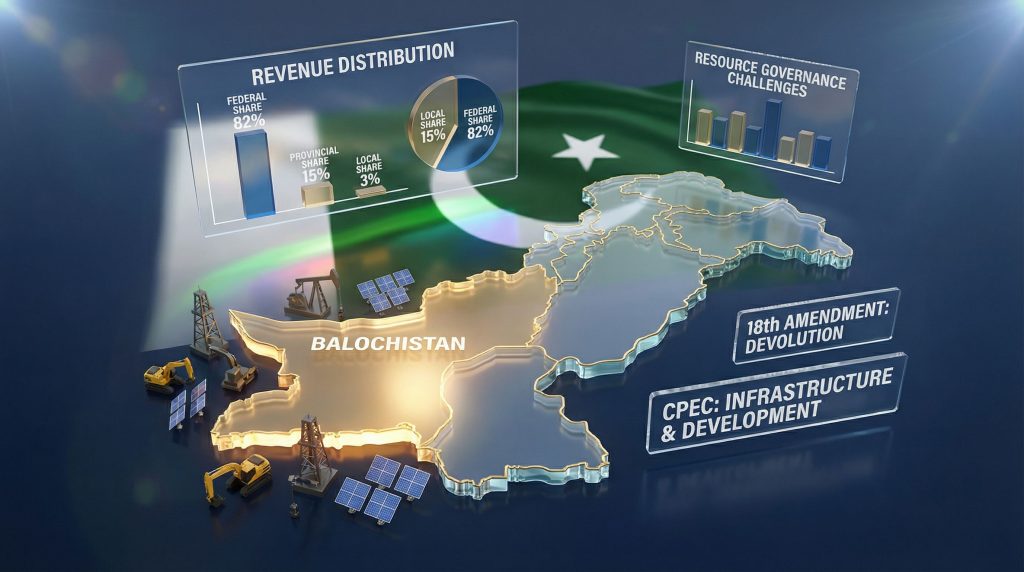
The current legal framework governing resource extraction in Pakistan creates inherent tensions between federal revenue generation and provincial development needs. Natural gas, oil, coal, gold, and copper reserves in Balochistan generate substantial income for the national treasury, yet the province receives a disproportionately small share of these revenues for local infrastructure and social programs.
Federal jurisdiction over major mineral resources means that international investment agreements, such as the $500 million memorandum of understanding signed with US-based mining firm USSM in September 2025, are negotiated at the national level without meaningful provincial input. This approach excludes local communities from decision-making processes about their own natural resources.
The China-Pakistan Economic Corridor (CPEC), valued at $60 billion, exemplifies how resource extraction laws bypass provincial consent mechanisms. Despite CPEC's heavy focus on Balochistan, particularly through the development of Gwadar port, the legal framework governing these investments prioritises federal control over provincial participation.
Current petroleum and mining regulations establish a system where the federal government retains primary authority over resource allocation decisions, whilst provinces receive limited revenue-sharing benefits. However, the mining claims framework in other jurisdictions demonstrates how indigenous and local rights can be better protected through comprehensive legal mechanisms.
Legal experts note that existing resource extraction frameworks lack adequate consultation mechanisms with affected communities, creating conditions where major projects proceed without local consent. Consequently, these mining permitting challenges become focal points for separatist movements arguing that external powers extract wealth whilst local populations remain impoverished.
Intelligence Coordination Failures in Counter-Insurgency Operations
Recent security incidents reveal critical weaknesses in Pakistan's counter-insurgency coordination mechanisms. The February 1-2, 2026 coordinated attacks across at least 12 locations in Balochistan, which resulted in 31 civilian deaths and 17 security personnel casualties, exposed significant intelligence gaps despite the military's ability to neutralise 145 fighters.
Security analysis indicates that the Baloch Liberation Army's ability to coordinate simultaneous operations across multiple locations demonstrates sophisticated planning capabilities that existing intelligence frameworks failed to detect. The Pakistan Institute for Peace Studies documented 254 attacks in Balochistan during 2025, representing a 26 percent increase from the previous year and resulting in over 400 deaths.
The March 2025 Jaffer Express train hijacking attempt further highlighted coordination failures, as over 300 passengers required rescue during an operation lasting more than a day. Despite killing at least 33 fighters, security forces could not prevent the initial attack, suggesting that early warning systems remain inadequate.
Counter-terrorism experts emphasise that effective insurgency prevention requires integrated intelligence sharing between federal agencies and provincial authorities. Furthermore, what is behind Balochistan separatist violence reveals complex factors that current protocols appear insufficient to address, particularly when insurgent groups demonstrate local knowledge and community support networks.
The designation of Baloch separatist groups as "Fitna al-Hindustan" following the March 2025 attack represents an attempt to reframe the conflict in external security terms rather than addressing internal intelligence coordination weaknesses. However, security analysts note that successful counter-insurgency requires addressing both external exploitation and internal grievances simultaneously.
Investment Protection Mechanisms Under Security Constraints
International investment agreements in Balochistan operate under unique security risk frameworks that differentiate between state-backed investors and market-driven entities. China's CPEC investments and the US minerals partnership represent different approaches to managing political risk in conflict-affected regions.
The CPEC framework includes infrastructure protection mechanisms that require Pakistan to deploy thousands of troops to secure limited infrastructure projects. This security model indicates that bilateral investment treaties anticipate ongoing violence and incorporate military protection as a standard component of project implementation.
Despite repeated attacks on Chinese projects, neither China nor the US withdrew from agreements signed with full knowledge of security risks. The September 2025 US minerals deal was concluded a year after the coordinated BLA attack known as "Herof 1.0", demonstrating that strategic investment calculations override immediate security concerns.
Foreign direct investment data reveals the broader impact of security constraints on Pakistan's investment climate. The country received only $808 million in FDI during the first half of fiscal year 2026, down from $1.425 billion in the same period previously, representing a 56.3 percent decline.
Investment protection mechanisms for resource extraction projects in conflict zones typically require significant risk premiums and government guarantees. In addition, understanding investment risk frameworks reveals how state-backed actors like China can absorb these costs as part of strategic partnerships, whilst private investors face prohibitive risk assessments that limit market participation.
The minerals summit hosted by Pakistan just days before the February 2026 attacks aimed to attract Chinese companies, suggesting that investment promotion continues despite ongoing violence. This approach indicates confidence in security frameworks' ability to protect major infrastructure investments.
Federal Crisis Response and Accountability Mechanisms
Pakistan's institutional response to Balochistan separatist violence reveals systematic weaknesses in crisis management and accountability frameworks. Interior Minister Mohsin Naqvi's immediate attribution of the February 2026 attacks to India, without providing supporting evidence, exemplifies the federal government's tendency to externalise responsibility rather than address internal governance failures.
India rejected these allegations through spokesperson Randhir Jaiswal, calling them an attempt to divert attention from Pakistan's internal failings and suggesting that addressing long-standing regional demands would prove more effective than external blame attribution.
Crisis management protocols appear to prioritise rapid military response over conflict prevention, as evidenced by the quick neutralisation of 145 fighters whilst failing to prevent coordinated attacks across multiple locations. This reactive approach addresses immediate security threats without resolving underlying grievances that sustain insurgent recruitment.
Human rights groups document thousands of enforced disappearances of ethnic Balochs suspected of supporting separatist groups, indicating that federal security operations lack adequate accountability mechanisms. These practices create additional grievances that fuel continued resistance rather than establishing sustainable peace.
Parliamentary oversight of military operations in Balochistan remains limited, with security operations conducted under emergency frameworks that bypass normal legislative scrutiny. Consequently, this governance gap prevents systematic evaluation of counter-insurgency effectiveness and civilian protection measures.
Federal institutions continue to frame Balochistan as primarily a security challenge rather than a political conflict requiring negotiated solutions. This institutional approach limits opportunities for dialogue and reconciliation whilst emphasising military solutions to structural political problems.
Economic Development Frameworks and Regional Integration Challenges
Economic development initiatives in Balochistan face fundamental challenges related to security constraints and local participation mechanisms. Special Economic Zone proposals require substantial security investments that increase project costs whilst limiting local employment opportunities due to restricted access protocols.
The province's strategic location along the Iran-Pakistan border creates additional economic complications, as regional connectivity projects must navigate complex security relationships. The Afghanistan-Pakistan Transit Trade Agreement requires enhanced border management protocols that affect traditional economic activities.
Skills development programmes face implementation barriers due to ongoing violence and community mistrust of federal initiatives. Local capacity building requires sustained engagement that current security-focused approaches make difficult to achieve.
Tax incentive structures designed to attract investment often benefit external entities rather than local businesses, creating economic grievances that separatist groups exploit in their recruitment narratives. Revenue generation from major projects typically flows to federal accounts rather than provincial development funds.
Regional security architectures limit Balochistan's potential for cross-border trade and economic cooperation, despite the province's natural geographic advantages for connecting South Asian and Middle Eastern markets. However, examining industry evolution trends shows how technological advances could create new opportunities for regional development if security conditions improve.
International development assistance faces restrictions due to security conditions, limiting the scope of alternative economic development models that might address youth unemployment and reduce recruitment into separatist organisations.
The next major ASX story will hit our subscribers first
Constitutional Reform Requirements and Long-term Solutions
What constitutional changes could address separatist grievances?
Sustainable resolution of Balochistan separatist violence requires comprehensive constitutional reforms that address fundamental power-sharing arrangements between federal and provincial authorities. Current autonomy provisions prove insufficient for managing resource-rich provinces with distinct ethnic identities and historical grievances.
Resource-sharing formula modifications could establish more equitable distribution mechanisms that provide provinces with greater control over their natural resources. Enhanced provincial autonomy over mining and petroleum policies would address core grievances about external resource extraction.
How can truth and reconciliation processes help?
Truth and reconciliation commission frameworks offer potential mechanisms for addressing historical injustices and enforced disappearances whilst creating pathways for political dialogue. International mediation models from Northern Ireland, Aceh, and Mindanao provide relevant precedents for conflict resolution in regions with separatist movements.
Constitutional protection of minority rights requires strengthening to address ethnic Baloch concerns about political marginalisation and cultural preservation. Federal systems that accommodate ethnic diversity through guaranteed representation and cultural autonomy offer alternatives to current centralised approaches.
What role can regional cooperation play?
Regional security cooperation mechanisms could transform Balochistan from a conflict zone into a trade corridor, leveraging its strategic position for economic development rather than military operations. Enhanced cooperation with Iran and Afghanistan on border management would reduce security threats whilst expanding economic opportunities.
International partnership frameworks must incorporate local consent mechanisms that ensure communities benefit from resource extraction projects. Transparent revenue-sharing and community development requirements could transform external investment from a source of grievance into a driver of local prosperity.
Disclaimer: This analysis is based on publicly available information and expert opinions. Political situations and security conditions in conflict regions remain highly volatile and subject to rapid change. Investment decisions in such regions carry significant risks that require professional risk assessment and specialised insurance coverage.
Looking to Invest in Resource-Rich Regions Despite Political Risks?
Discovery Alert's proprietary Discovery IQ model delivers real-time alerts on significant ASX mineral discoveries, helping investors identify actionable opportunities in Australia's stable mining jurisdictions whilst avoiding the political uncertainties affecting resource extraction in conflict zones. Begin your 14-day free trial today and discover why major mineral discoveries can generate substantial returns when political stability supports sustainable development.