
May 22, 2026
Continental Sovereignty in an Era of Resource Competition
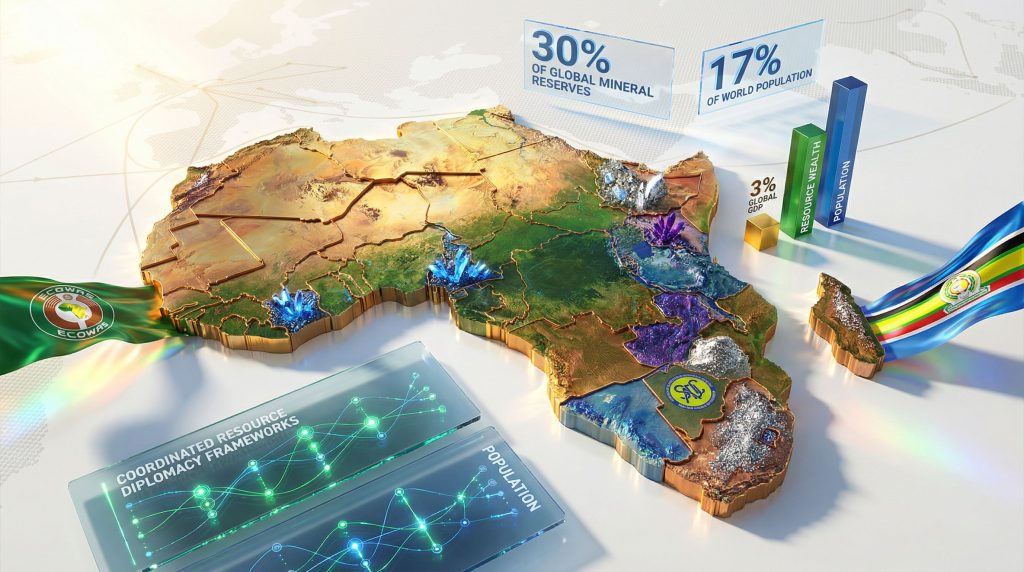
Africa's vast mineral wealth has historically attracted external powers seeking to extract value without proportionate benefit to local populations. The continent holds approximately 60% of global cobalt reserves, 70% of platinum group metals, and significant portions of lithium deposits essential for renewable energy transitions. Yet despite controlling these critical resources, African nations often negotiate from positions of individual weakness rather than collective strength.
Contemporary geopolitical dynamics demonstrate how fragmented approaches to resource governance create vulnerabilities that external actors readily exploit. When countries negotiate separately, they frequently accept suboptimal terms for mining concessions, infrastructure development, and technology transfer agreements. This pattern perpetuates economic dependency while limiting the continent's ability to capture maximum value from its natural endowments.
When big ASX news breaks, our subscribers know first
Economic Integration as Strategic Defense
The African Continental Free Trade Area represents the world's largest trade agreement by participating countries since the World Trade Organization's formation. With 54 signatory nations covering a combined GDP of approximately $3.4 trillion, the framework provides unprecedented opportunities for coordinated economic policies that strengthen negotiating positions with global powers.
Key AfCFTA Implementation Priorities:
- Harmonised customs procedures reducing trade processing times by 40-60%
- Standardised product certification systems enabling seamless market access
- Coordinated investment screening mechanisms protecting strategic sectors
- Joint procurement frameworks leveraging collective bargaining power
Regional value chains within this integrated market could transform Africa's position in global supply networks. Furthermore, rather than exporting raw materials for processing elsewhere, coordinated industrial policies could establish processing hubs spanning multiple countries, creating employment while capturing higher-margin activities.
Resource Diplomacy Through Collective Action
Individual African countries often lack sufficient leverage to negotiate favourable terms with multinational corporations or foreign governments. However, the continent's resource endowments create substantial bargaining power that remains largely untapped due to coordination challenges. In this context, understanding the broader global mining landscape becomes crucial for developing effective strategies.
Strategic Resource Coordination Framework:
- Information Sharing Systems – Centralised databases tracking all major mining concessions, terms, and performance metrics
- Pricing Coordination Mechanisms – Joint export quotas and pricing strategies for critical minerals
- Technology Transfer Requirements – Standardised provisions ensuring knowledge transfer to African institutions
- Environmental Protection Standards – Unified regulations preventing destructive extraction practices
This coordinated approach could prevent the "race to the bottom" dynamics where countries compete by offering increasingly favourable terms to foreign investors, often at the expense of long-term development objectives. Consequently, Africa must unite in an unstable world to maximise the benefits from its natural resources.
Institutional Architecture for Continental Cooperation
The African Union's existing structures provide foundational frameworks for enhanced cooperation, though significant reforms could strengthen effectiveness. Current decision-making processes often prove cumbersome when rapid responses to external pressures are required.
AU Governance Modernisation Priorities:
- Qualified Majority Voting – Streamlined decision-making on economic integration issues
- Emergency Response Protocols – Rapid coordination mechanisms for security or economic threats
- Performance-Based Funding – Resource allocation tied to measurable integration outcomes
- Citizen Engagement Platforms – Direct connections between African populations and continental governance
Regional Economic Community Optimisation
Regional bodies like ECOWAS, SADC, EAC, and others serve as crucial implementation mechanisms for continental strategies. Each community possesses unique advantages that could contribute to overall African strategic objectives. Moreover, effective mineral exploration strategies across these regions could significantly enhance their resource development capabilities.
| Region | Strategic Advantages | Priority Focus Areas |
|---|---|---|
| West Africa (ECOWAS) | Agricultural production, regional currency experience | Food security, Sahel stabilisation |
| East Africa (EAC) | Digital infrastructure, port access | Technology integration, maritime security |
| Southern Africa (SADC) | Mining expertise, industrial base | Resource beneficiation, energy cooperation |
| Central Africa | Forest resources, mineral wealth | Sustainable development, conservation |
| North Africa | Mediterranean access, renewable energy potential | European partnerships, clean energy |
Countering External Interference Mechanisms
Foreign powers increasingly employ sophisticated strategies to maintain influence over African resources and political systems. These approaches often exploit continental fragmentation while creating dependencies that limit strategic autonomy.
Common Interference Patterns:
- Bilateral agreements bypassing regional integration frameworks
- Conditional aid structures tied to political alignment rather than development needs
- Infrastructure financing arrangements creating long-term debt dependencies
- Security cooperation agreements limiting policy flexibility
Coordinated responses require early warning systems capable of identifying these patterns before they become entrenched. Continental monitoring capabilities could track foreign investment flows, debt accumulation rates, and political interference attempts across all member states. Additionally, the role of critical minerals in energy transition makes Africa's strategic position even more vital in the global economy.
Digital Sovereignty and Continental Integration
Africa's rapidly growing digital economy presents opportunities for integration that transcend traditional geographic and linguistic barriers. Continental digital infrastructure could reduce dependencies on external communication networks while facilitating intra-African trade and cooperation.
Digital Integration Initiatives:
- Continental Digital Identity Systems – Unified identification enabling seamless movement and commerce
- Pan-African Payment Networks – Reduced reliance on external financial systems
- Coordinated Data Governance – Protective frameworks for citizen privacy and national security
- Technology Hub Coordination – Resource sharing between innovation centres across the continent
Young African populations, representing 60% of the continent's demographics under age 25, possess digital literacy skills that could accelerate these integration processes. Coordinated education and training programmes could develop the human capital necessary for continental digital sovereignty.
The next major ASX story will hit our subscribers first
Leveraging Global Multipolarity
Contemporary international relations feature increased competition between established powers and emerging economies. This multipolarity creates opportunities for African countries to diversify partnerships while avoiding exclusive dependence on any single external actor.
Strategic Partnership Diversification:
- Competitive Bidding Processes – Multiple powers competing for African partnerships on improved terms
- Technology Transfer Competition – Various countries offering knowledge-sharing arrangements
- Infrastructure Financing Options – Diverse funding sources reducing dependency risks
- Market Access Diversification – Reduced vulnerability to economic coercion from any single partner
Africa must position itself to benefit from great power competition rather than becoming a proxy battleground for external conflicts.
South-South cooperation frameworks with Latin America and Asia offer particular promise, as these relationships often feature more equitable partnership structures based on shared development experiences rather than donor-recipient dynamics. For instance, the ongoing mining industry evolution presents opportunities for technology sharing with emerging economies.
Implementation Timeline and Milestones
Successful continental integration requires realistic timelines with measurable milestones that demonstrate progress while maintaining momentum for longer-term objectives. In addition, recognising that Africa must unite in an unstable world becomes increasingly urgent as global challenges intensify.
Short-term Objectives (2026-2028):
- AfCFTA Phase II protocol implementation covering services and investment
- Continental early warning system establishment
- Coordinated positions in major infrastructure negotiations
- Regional payment system pilots
Medium-term Goals (2028-2032):
- Functional continental payment and clearing systems
- Harmonised mining sector regulations and oversight
- Unified climate and trade negotiation positions
- Cross-border infrastructure project coordination
Long-term Vision (2032-2040):
- Integrated economic governance frameworks
- Continental security cooperation mechanisms
- Global South leadership in international institutions
- Sustainable development goal achievement across all regions
Performance Measurement Framework
Continental integration efforts require robust monitoring systems to track progress and identify areas requiring additional focus or resources.
Key Performance Indicators:
- Intra-African Trade Volume – Target of 25% of total trade by 2030 (currently approximately 15%)
- Foreign Investment Retention – Percentage of FDI remaining within continental value chains
- Resource Value Addition – Local processing percentages for major export commodities
- Governance Quality Metrics – Transparency and accountability improvements across member states
Diplomatic Coordination Measures:
- Unified voting patterns in international forums (UN, WTO, climate negotiations)
- Response times to continental security challenges
- Success rates in collective bargaining with external partners
- Progress toward Sustainable Development Goals across all regions
Overcoming Implementation Challenges
Continental unity initiatives face significant obstacles including linguistic diversity, varying legal systems, different levels of economic development, and competing national interests. Nevertheless, successful implementation requires acknowledging these challenges while developing pragmatic solutions.
Common Integration Obstacles:
- Sovereignty Concerns – National governments' reluctance to cede decision-making authority
- Economic Disparities – Uneven development levels creating different priorities and capabilities
- Infrastructure Gaps – Physical connectivity limitations hindering integration
- Institutional Capacity – Varying administrative capabilities across member states
Addressing these challenges requires flexible approaches that respect national differences while building toward common objectives. Subsidiary principles allow regional and national institutions to maintain autonomy in areas where continental coordination provides limited added value. However, the imperative that Africa must unite in an unstable world makes overcoming these obstacles increasingly critical.
What Are the Key Solutions to Integration Challenges?
Flexible implementation frameworks that acknowledge varying national capacities while maintaining continental objectives represent the most promising approach. For instance, different regions could implement integration measures at varying speeds based on their readiness levels, while maintaining compatibility with overall continental frameworks.
Continental Financial Architecture Development
Robust financial institutions capable of supporting integration objectives remain underdeveloped across Africa. Continental financial architecture could provide alternatives to external funding sources while promoting economic integration through coordinated monetary policies.
Financial Integration Components:
- African Monetary Cooperation Enhancement – Gradual currency coordination reducing exchange rate volatility
- Continental Development Bank Expansion – Increased lending capacity for cross-border infrastructure
- Sovereign Wealth Fund Coordination – Optimised resource revenue management across member states
- Regional Capital Markets – Integrated securities exchanges facilitating investment flows
These institutions could provide financing for continental integration projects while reducing dependence on external creditors whose political objectives may conflict with African development priorities. Furthermore, understanding that Africa must adopt comprehensive approaches to peace and development becomes essential for long-term stability and prosperity.
The Path Forward
Continental unity represents both an opportunity and a necessity for Africa in an increasingly complex global environment. The continent's demographic dividend, natural resource wealth, and growing economic integration create unprecedented potential for collective strength. However, realising this potential requires sustained commitment to coordination mechanisms that respect national sovereignty while building continental capabilities.
Africa must unite in an unstable world not merely as a defensive strategy, but as a foundation for shared prosperity and global influence. The alternative—continued fragmentation and individual vulnerability—becomes increasingly untenable as global challenges intensify and resource competition heightens.
Disclaimer: This analysis contains forward-looking assessments based on current trends and policy frameworks. Actual implementation outcomes may vary significantly due to changing political conditions, economic circumstances, and external factors beyond continental control. Readers should consider multiple scenarios when evaluating potential developments in African continental integration.
Ready to Capitalise on Africa's Resource Potential?
Discovery Alert's proprietary Discovery IQ model delivers real-time alerts on significant ASX mineral discoveries, instantly empowering subscribers to identify actionable opportunities ahead of the broader market. Understand why historic discoveries can generate substantial returns by exploring our dedicated discoveries page, then begin your 14-day free trial today to secure your market-leading advantage.