May 19, 2026
Understanding Continuous Load Energy Demands in Heavy Industry
Industrial aluminium smelting represents one of the most demanding energy consumption scenarios in modern manufacturing. Unlike variable-load operations that can adjust power draw according to operational needs, aluminium production facilities require unwavering electrical supply to maintain the electrolytic processes essential for metal extraction. This fundamental characteristic shapes every aspect of power planning for large-scale smelting operations, including South32 and Eskom power options for Hillside Aluminium.
The technical requirements for maintaining continuous aluminium production create unique challenges for both facility operators and power suppliers. A single interruption in electrical supply can result in the molten aluminium freezing within reduction cells, necessitating extensive equipment replacement and lengthy restart procedures that can cost millions of dollars and take months to complete.
Base Load Consumption Patterns and Grid Impact
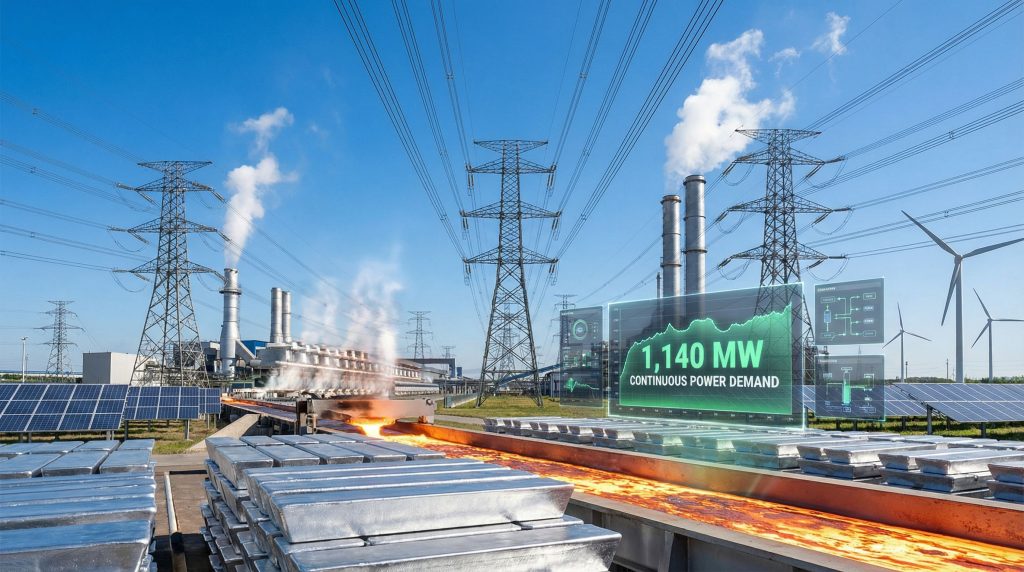
Large-scale aluminium smelting operations typically consume approximately 1,140 MW of continuous power, representing a load factor approaching unity. This consistent demand pattern contrasts sharply with mining operations, which might utilise 300 MW with significant peaks and troughs depending on operational cycles and equipment usage patterns.
The implications of this continuous consumption extend beyond the facility itself. For electrical utilities, industrial operations with high load factors provide:
• Grid stability through consistent demand patterns
• Revenue predictability from long-term power purchase agreements
• Base load balancing to complement variable renewable energy sources
• Infrastructure utilisation optimisation across transmission networks
Critical Infrastructure Dependencies
The technical constraints of aluminium smelting create cascading dependencies throughout the power supply chain. When electrical supply ceases, the electrolytic process stops immediately, causing molten aluminium to solidify within the reduction pots. This phenomenon, known as pot freezing, requires:
• Complete replacement of affected reduction cells
• Extensive reconstruction of electrolytic systems
• Months of downtime for equipment restoration
• Capital expenditures often exceeding restart economics
These factors explain why aluminium smelters typically negotiate power purchase agreements with extremely limited interruptibility provisions, unlike other industrial operations that can accommodate scheduled outages or demand response programs.
When big ASX news breaks, our subscribers know first
Power Purchase Agreement Structures for Industrial Operations
Long-term power contracts for energy-intensive industries follow specialised frameworks designed to balance utility revenue requirements with industrial competitiveness needs. These agreements often extend beyond standard commercial arrangements, incorporating unique pricing mechanisms and operational provisions.
Negotiated Agreement Components
Industrial power purchase agreements for continuous operations typically include several key elements that differentiate them from standard utility tariffs:
Duration and Pricing: Multi-year contracts provide cost certainty for both parties, with pricing often incorporating inflation adjustments and fuel cost pass-through mechanisms.
Load Factor Provisions: Recognition of consistent consumption patterns through specialised rate structures that reflect the value of base load demand to grid operations.
Limited Interruptibility: Unlike residential or commercial customers, continuous industrial operations negotiate minimal interruption rights, with substantial compensation mechanisms for any forced outages.
Grid Services: Large industrial customers often provide ancillary services to the electrical grid, including frequency regulation and voltage support, which may be reflected in contract pricing.
Comparative Contract Analysis
| Contract Type | Duration | Pricing Structure | Flexibility | Grid Benefits |
|---|---|---|---|---|
| Standard Industrial | 1-3 years | Regulated tariffs | High interruptibility | Variable contribution |
| Negotiated Base Load | 5-15 years | Discounted rates | Limited interruption | Stability provision |
| Special Economic Zone | Project duration | Incentive pricing | Moderate flexibility | Development catalyst |
| Renewable Hybrid | 10-25 years | Blended renewable/traditional | Weather-dependent | Clean energy integration |
The economic value of these arrangements extends beyond simple energy costs. For utilities, base load industrial customers provide revenue stability and grid management benefits that justify specialised pricing structures.
Renewable Energy Integration Challenges for Continuous Operations
The transition toward renewable energy sources presents unique technical and economic challenges for operations requiring uninterrupted power supply. Furthermore, whilst solar and wind technologies have achieved significant cost reductions, their intermittent nature conflicts with the requirements of continuous industrial processes.
Technical Feasibility Assessment
Current renewable energy technologies can technically supply the power requirements for large-scale aluminium smelting, but integration requires substantial supporting infrastructure. However, the commodity market volatility associated with energy prices adds another layer of complexity to these arrangements.
Solar Integration: Photovoltaic installations sized for 1,140 MW capacity would require extensive land area and substantial overcapacity to account for weather variability and seasonal changes.
Wind Power Systems: Offshore and onshore wind installations could provide significant generation capacity, but output variability necessitates backup power arrangements.
Storage Requirements: Current battery technology cannot economically store the energy volumes required to maintain continuous operations during extended periods of low renewable generation.
Alternative Storage Solutions
Beyond conventional battery storage, several emerging technologies offer potential pathways for renewable energy integration. In addition, recent developments in the battery recycling breakthrough sector may reduce overall system costs:
• Green hydrogen production during peak renewable generation periods
• Compressed air energy storage systems for grid-scale applications
• Pumped hydro storage where geographic conditions permit
• Thermal energy storage integrated with concentrated solar power systems
Current energy storage economics indicate that maintaining 1,140 MW for extended periods during renewable energy gaps remains prohibitively expensive, necessitating hybrid solutions that combine renewable sources with traditional grid backup power.
Nevertheless, these technologies require significant additional investment and may not yet provide the reliability levels required for continuous industrial operations.
Global Aluminium Industry Energy Transition Patterns
International trends in aluminium production reveal significant shifts driven by energy costs and carbon reduction pressures. These patterns provide context for understanding the strategic importance of competitive power arrangements for smelting operations.
Regional Capacity Changes
The global aluminium industry has experienced dramatic restructuring over the past two decades. Consequently, the natural gas prices forecast becomes increasingly relevant for regional competitiveness:
United States: Domestic smelting capacity has declined by approximately 75% as energy costs and environmental regulations have made many facilities uneconomical.
China: Production caps implemented for air quality and carbon reduction goals have created pressure for Chinese companies to develop smelting capacity in other jurisdictions.
Indonesia: Significant expansion in Chinese-operated smelting facilities, taking advantage of competitive energy costs and favourable regulatory environments.
Middle East: Continued capacity expansion based on abundant natural gas resources and government industrial development programs.
Market Dynamics and Competitive Positioning
Energy costs represent the largest operational expense for aluminium smelting, typically accounting for 30-40% of total production costs. This creates powerful incentives for:
• Smelter location decisions based primarily on power costs
• Care and maintenance strategies during periods of high energy prices
• Investment flows toward regions with competitive energy advantages
• Product differentiation through low-carbon production methods
The emergence of green aluminium premiums in international markets provides new opportunities for smelters operating with renewable energy sources, potentially offsetting higher power costs through premium pricing.
Strategic Planning for Post-2031 Energy Arrangements
Long-term power planning for continuous industrial operations requires comprehensive analysis of multiple scenarios and stakeholder coordination. The complexity of these arrangements necessitates early engagement between industrial users, utilities, and regulatory authorities.
Collaborative Development Approaches
Successful energy transition planning for large industrial operations typically involves collaborative development approaches. Moreover, understanding the decarbonisation benefits can help justify the necessary investments:
Public-Private Partnerships: Joint development of renewable energy infrastructure that serves both industrial requirements and broader grid decarbonisation objectives.
Grid Integration Studies: Technical analysis of how large industrial loads can support renewable energy integration through demand flexibility and grid services provision.
Technology Development: Investment in emerging energy storage and conversion technologies that could enable higher renewable energy penetration.
Regional Energy Planning: Coordination with local economic development initiatives to maximise the benefits of industrial energy investments.
Economic Impact Considerations
| Impact Category | Direct Effects | Multiplier Effects | Long-term Implications |
|---|---|---|---|
| Employment | 2,300+ direct jobs | 27,000+ indirect positions | Skills development and retention |
| Economic Output | R10 billion annual GDP contribution | Downstream manufacturing support | Export competitiveness |
| Value Chain | 30% product flow to secondary processing | Technology transfer opportunities | Industrial cluster development |
| Infrastructure | Power system investments | Transportation and logistics benefits | Regional development catalyst |
These economic impacts underscore the importance of maintaining competitive industrial operations through appropriate energy arrangements. Additionally, consideration of how tariffs impact investments becomes crucial for long-term planning.
Regulatory Framework Implications
The regulatory environment for industrial energy supply involves complex interactions between economic development policies, environmental regulations, and utility oversight. These frameworks significantly influence the viability of different energy supply options.
Special Economic Zone Considerations
Whilst special economic zones offer various incentives for industrial development, their applicability to large continuous-load operations faces several constraints:
• Power quantum requirements that exceed typical SEZ allocations
• Continuous demand patterns that conflict with grid flexibility objectives
• Infrastructure limitations within designated economic zones
• Regulatory complexity in arranging large-scale power supplies
For operations requiring 1,140 MW of continuous power, traditional SEZ arrangements may not provide adequate solutions without substantial modifications to existing frameworks.
Carbon Pricing and Emissions Reduction
Environmental regulations increasingly influence industrial energy planning through various mechanisms:
Scope 2 Emissions: Electricity consumption typically represents 94% of total emissions for aluminium smelting operations, making power source decarbonisation critical for environmental compliance.
Carbon Pricing Mechanisms: Emerging carbon tax and trading systems that create economic incentives for low-carbon energy sources.
Green Product Premiums: Market opportunities for aluminium produced with renewable energy, potentially justifying higher power costs through premium pricing.
International Trade Considerations: Border carbon adjustments and sustainability requirements in export markets that favour low-carbon production methods.
The next major ASX story will hit our subscribers first
Investment Analysis and Risk Assessment
Capital allocation decisions for industrial energy infrastructure require careful evaluation of technological, economic, and regulatory risks over extended time horizons. The scale of investments and long asset lives make these decisions particularly significant for industrial competitiveness.
Infrastructure Investment Requirements
Transitioning to renewable energy sources for large-scale industrial operations involves substantial capital commitments:
• Renewable generation capacity exceeding nameplate requirements to account for capacity factors
• Energy storage systems for supply security during low renewable generation periods
• Grid connection infrastructure to integrate distributed renewable sources
• Backup power systems to ensure operational continuity
The total capital requirements for these systems can exceed the original smelter construction costs, making careful economic analysis essential.
Risk Mitigation Strategies
Industrial energy planning must address multiple risk categories:
Technology Risk: Rapid evolution in renewable energy and storage technologies that could obsolete current investment decisions.
Economic Risk: Fluctuations in energy prices and currency exchange rates that affect operational viability.
Regulatory Risk: Changes in environmental regulations, carbon pricing, or utility oversight that alter the economics of different energy sources.
Market Risk: Shifts in global aluminium demand and pricing that affect the ability to absorb energy costs.
Effective risk management typically involves diversified energy portfolios and flexible contract arrangements that can adapt to changing circumstances.
International Case Studies and Lessons Learned
Examining similar challenges faced by aluminium smelters in other jurisdictions provides valuable insights for strategic planning. These examples illustrate both successful adaptation strategies and cautionary tales about energy transition risks.
Australian Experience: Tomago Smelter Challenges
Australia's Tomago aluminium smelter faces contract expiration in 2028, creating urgency around future power arrangements. The facility's situation demonstrates several key considerations that apply to South32 and Eskom power options for Hillside Aluminium:
• Stakeholder coordination requirements for large industrial energy transitions
• Economic impact of potential facility closure on regional communities
• Technology integration challenges for renewable energy in continuous operations
• Financial complexity of arranging competitive long-term power supplies
The rescue efforts for Tomago highlight the importance of early planning and multi-stakeholder collaboration in addressing energy transition challenges.
Regional Competitive Dynamics
Comparative analysis across different jurisdictions reveals key factors influencing smelter viability. According to recent industry reports, these patterns demonstrate the critical nature of power arrangements for facilities like South32 and Eskom power options for Hillside Aluminium:
Mozambique: Care and maintenance decisions reflect challenging power cost economics and infrastructure limitations.
Indonesia: Rapid expansion driven by competitive energy costs and favourable investment policies.
Middle East: Continued growth based on abundant natural gas resources and government support for industrial development.
China: Production caps creating incentives for offshore investment in smelting capacity.
These patterns underscore the critical importance of energy costs in determining global competitive positioning for aluminium production.
Future Scenarios and Strategic Implications
Long-term strategic planning must consider multiple potential futures for energy markets, technology development, and regulatory environments. Scenario analysis helps identify robust strategies that perform well across different possible outcomes.
Technology Evolution Pathways
Several technological developments could significantly alter the economics of renewable energy for continuous industrial operations:
• Battery cost reductions that make large-scale storage economically viable
• Hydrogen technology advancement enabling long-duration energy storage
• Grid integration improvements that enhance renewable energy reliability
• Advanced nuclear technologies providing carbon-free base load power
The pace of these developments will significantly influence optimal energy strategies for post-2031 planning horizons.
Market Development Scenarios
Green aluminium market development presents both opportunities and uncertainties. Furthermore, industry analysis suggests that the energy supply agreement negotiations for South32 and Eskom power options for Hillside Aluminium reflect these broader market trends:
Premium Pricing: Current market premiums for low-carbon aluminium could justify higher renewable energy costs.
Regulatory Requirements: Future environmental regulations may mandate low-carbon production methods.
Supply Chain Integration: Downstream manufacturers increasingly prioritise sustainable input materials.
International Trade: Carbon border adjustments could disadvantage high-carbon production methods.
These market trends suggest increasing value for renewable energy investments, even if current economics remain challenging.
Strategic Decision Framework for Industrial Energy Planning
The complexity of South32 and Eskom power options for Hillside Aluminium requires a comprehensive decision framework that weighs multiple factors against operational requirements and market conditions.
Multi-Criteria Evaluation Process
Effective energy planning for continuous industrial operations must evaluate options across several dimensions:
Technical Viability: Assessment of whether proposed solutions can meet uninterrupted power requirements without compromising operational integrity.
Economic Competitiveness: Analysis of total cost of ownership including capital expenditure, operating expenses, and risk premiums over contract duration.
Environmental Compliance: Evaluation of carbon footprint implications and alignment with emerging sustainability requirements.
Strategic Flexibility: Consideration of how different arrangements position the operation for future market and regulatory changes.
Frequently Asked Questions:
Why cannot aluminium smelters operate with intermittent renewable energy?
Aluminium production requires continuous electrolytic processes where any power interruption causes molten metal to freeze in reduction cells, requiring expensive equipment replacement and months of downtime for restart procedures.
How do large industrial loads benefit electrical grid operations?
Continuous industrial operations provide base load stability, predictable revenue streams for utilities, and help balance variable renewable energy sources whilst offering grid services like frequency regulation and voltage support.
What factors determine renewable energy viability for continuous industrial operations?
Key considerations include energy storage costs for uninterrupted supply, backup power infrastructure requirements, renewable resource availability, total system costs compared to traditional grid arrangements, and the reliability requirements of industrial processes.
How do Special Economic Zones apply to large power users?
SEZs typically cannot accommodate the power quantum requirements of large continuous-load operations like aluminium smelters, which require dedicated arrangements outside standard SEZ frameworks due to their scale and operational characteristics.
What role does carbon pricing play in industrial energy decisions?
Carbon pricing mechanisms create economic incentives for low-carbon energy sources, particularly important for aluminium smelting where electricity consumption represents 94% of total emissions, whilst green product premiums can offset higher renewable energy costs.
Want to Stay Ahead of Industrial Energy Transitions?
Discovery Alert's proprietary Discovery IQ model instantly identifies emerging opportunities in energy infrastructure and industrial commodity companies, delivering real-time alerts when significant developments impact market valuations. Whether tracking renewable energy transitions, power supply agreements, or industrial facility developments, subscribers receive actionable insights that help position portfolios ahead of major market movements.