May 10, 2026
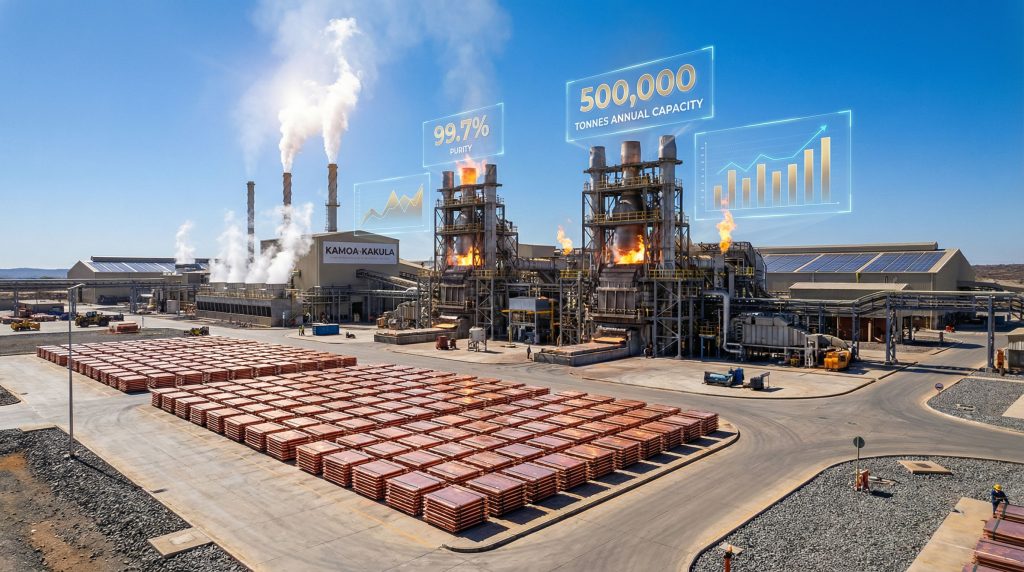
Kamoa-Kakula's copper anode production at Kamoa-Kakula smelter represents a significant milestone in African metallurgical engineering, where advanced pyrometallurgical innovations intersect with large-scale industrial processing capabilities. The facility's implementation of direct-to-blister flash smelting technology creates a fundamental shift in concentrate-to-anode conversion processes. Understanding these technological frameworks becomes essential for evaluating the operational mechanics driving contemporary copper investment strategies and their impact on regional mineral processing development.
What Makes Kamoa-Kakula's Copper Anode Production Revolutionary?
The Kamoa-Kakula facility demonstrates advanced metallurgical engineering through its implementation of direct-to-blister flash smelting technology, achieving copper anode production at Kamoa-Kakula smelter within remarkably compressed timeframes. This technological approach eliminates intermediate processing stages typical in conventional copper smelting operations, creating operational efficiencies that distinguish the facility from traditional multi-stage smelting processes.
Direct-to-Blister Flash Smelting Technology
Flash smelting technology operates through continuous pyrometallurgical processes where finely ground copper concentrate undergoes high-temperature oxidation in specialised reaction chambers. The direct-to-blister configuration at Kamoa-Kakula bypasses conventional matte smelting stages, enabling the facility to achieve first anode production within one week of initial concentrate processing.
Furthermore, the technical achievement becomes particularly significant when considering commissioning timelines. Traditional copper smelting facilities typically require extended ramp-up periods before achieving stable production parameters. However, the Ivanhoe Mines copper anode production operation achieved first anode production in December 2025, approximately five weeks after initiating facility heat-up procedures.
99.7% Purity Standards and Quality Control Metrics
Copper anode purity specifications of 99.7% represent industry-standard quality requirements for electrolytic refining applications. Achieving this specification immediately upon commissioning indicates sophisticated metallurgical control systems and feed preparation protocols. The facility's ability to maintain consistent purity levels during initial production phases demonstrates robust process engineering and quality assurance frameworks.
Quality control during copper anode production at Kamoa-Kakula smelter involves precise management of:
• Sulfur content reduction through oxidation control
• Impurity element removal via slag chemistry optimisation
• Temperature profile management throughout smelting cycles
• Feed rate balancing for optimal heat distribution
• Off-gas composition monitoring for process stability
Integration with On-Site Concentrate Production
The operational integration between three on-site concentrators and the smelting facility creates a closed-loop production system that reduces concentrate transportation costs and supply chain dependencies. This configuration allows for direct feed quality control and eliminates concentrate storage degradation issues common in operations requiring external concentrate sourcing.
In addition, processing flexibility extends beyond on-site concentrate production through arrangements with the Lualaba Copper Smelter near Kolwezi in the Democratic Republic of the Congo. This partnership provides overflow capacity management when on-site concentrate production exceeds Kamoa-Kakula's processing capabilities, ensuring optimal resource utilisation across multiple facilities.
When big ASX news breaks, our subscribers know first
How Does the Kamoa-Kakula Smelter Compare to Global Copper Processing Facilities?
The 500,000 tonnes annual capacity positions Kamoa-Kakula among the larger copper smelting facilities globally, though its significance extends beyond raw throughput numbers. The facility's designation as Africa's largest single-line copper smelter reflects both regional infrastructure development and technological implementation at continental scale, particularly relevant for understanding global copper supply dynamics.
Capacity Analysis: 500,000 Tonnes Annual Throughput
Single-line smelter configurations offer distinct operational advantages over multi-line facilities, including simplified process control, reduced maintenance complexity, and optimised thermal efficiency. The 500,000-tonne capacity represents substantial processing capability for a single production line, requiring sophisticated heat management and feed distribution systems.
Global Copper Smelter Capacity Context:
| Facility Type | Typical Capacity Range | Technology Focus | Regional Impact |
|---|---|---|---|
| Large Integrated Smelters | 300,000-800,000 tonnes | Flash/Reverberatory | Global supply chains |
| Regional Processing Centres | 150,000-400,000 tonnes | Various technologies | Continental distribution |
| Specialised Facilities | 100,000-300,000 tonnes | Custom solutions | Local market focus |
Africa's Largest Single-Line Copper Smelter Infrastructure
The continental significance of Kamoa-Kakula extends beyond capacity metrics to encompass regional copper value chain development. African copper production historically emphasised concentrate export rather than local smelting, making integrated smelting capacity strategically important for continental mineral processing capabilities.
Consequently, infrastructure requirements for large-scale copper smelting include:
• Reliable electrical power supply systems (60MW uninterruptible power at Kamoa-Kakula)
• Specialised refractory materials for high-temperature operations
• Environmental control systems for sulfur dioxide capture
• Transportation networks for raw materials and finished products
• Technical workforce with metallurgical expertise
Operational Efficiency Benchmarks
Modern copper smelting efficiency metrics encompass multiple performance indicators beyond basic throughput measurements. Energy consumption per tonne processed, metallurgical recovery rates, and environmental compliance parameters collectively define operational excellence in contemporary smelting operations.
Furthermore, the integration of renewable energy integration represents emerging efficiency optimisation, with Kamoa-Kakula's planned solar power implementation expected by Q2 2026. This development addresses energy cost management while reducing carbon footprint associated with copper processing operations.
What Are the Key Performance Indicators for Copper Anode Production?
Copper anode production performance measurement requires comprehensive evaluation frameworks that encompass metallurgical recovery, energy efficiency, and production consistency metrics. Understanding these parameters enables accurate assessment of operational effectiveness and competitive positioning within global copper processing markets.
Metallurgical Recovery Rates and Process Optimisation
Copper recovery from concentrate to anode typically ranges between 98-99.5% in modern smelting operations, though specific recovery rates for Kamoa-Kakula require verification through official technical documentation. Recovery optimisation involves precise control of smelting temperature profiles, slag chemistry, and oxidation conditions throughout the production cycle.
Process optimisation focuses on:
• Feed preparation consistency for uniform smelting conditions
• Thermal profile management across reaction zones
• Slag composition control for optimal metal recovery
• Off-gas treatment efficiency for environmental compliance
• Maintenance scheduling to minimise production interruptions
Feed Grade Requirements and Concentrate Quality Standards
Copper concentrate specifications directly impact smelting efficiency and product quality. While specific feed grade requirements for Kamoa-Kakula are not detailed in available documentation, typical copper smelters require concentrate grades ranging from 20-30% copper content with controlled impurity levels for optimal processing.
Feed quality parameters include:
• Copper content percentage and consistency
• Sulfur-to-copper ratios for heat balance optimisation
• Moisture content specifications for handling and processing
• Deleterious element concentrations (arsenic, antimony, bismuth)
• Physical characteristics affecting material flow
Energy Consumption and Thermal Efficiency Metrics
Thermal efficiency in copper smelting operations directly correlates with operational economics and environmental impact. Flash smelting technology generally demonstrates superior energy efficiency compared to reverberatory smelting methods, though specific consumption metrics require detailed process documentation for accurate assessment.
The 60MW uninterruptible power supply system at Kamoa-Kakula provides operational security for continuous smelting operations, where power interruptions can result in significant equipment damage and production delays. Planned solar power integration represents long-term energy cost management strategy.
How Does Stockpiled Concentrate Processing Impact Production Economics?
Strategic inventory management in copper operations involves complex optimisation between storage costs, market timing, and production capacity utilisation. The planned processing of 20,000 tonnes of stockpiled concentrate during 2026 demonstrates sophisticated commodity price management and working capital optimisation.
Inventory Management Strategy: 37,000 to 17,000 Tonnes
The projected reduction in unsold concentrate inventory from 37,000 tonnes to approximately 17,000 tonnes throughout 2026 represents a strategic monetisation of accumulated materials during favourable market conditions. This approach converts dormant inventory into revenue-generating production while maintaining operational buffer stocks for future processing flexibility.
Inventory management considerations include:
• Storage facility maintenance and security costs
• Concentrate degradation prevention measures
• Market timing for optimal price realisation
• Working capital optimisation through inventory reduction
• Production planning integration with market conditions
Revenue Optimisation Through Strategic Timing
The explicit strategy to process stockpiled concentrate during periods of elevated copper prices reflects sophisticated commodity marketing approach. Near-record copper price conditions at the time of facility commissioning create opportunities for enhanced revenue generation from historical inventory accumulation.
This market-timing strategy enables sales volumes to exceed concurrent production levels during 2026, providing cash flow advantages and improved return on invested capital. The approach demonstrates operational flexibility in responding to commodity price cycles.
Working Capital and Cash Flow Implications
Converting concentrate inventory to finished copper anodes accelerates cash conversion cycles and reduces carrying costs associated with stockpiled materials. The processing of 20,000 tonnes of concentrate represents significant working capital optimisation, particularly during periods of favourable copper pricing.
Strategic concentrate inventory processing demonstrates sophisticated commodity price management, converting accumulated materials into immediate revenue streams while maintaining operational flexibility for future market conditions.
What Role Does Sulfuric Acid By-Product Recovery Play in Operations?
Sulfuric acid production from copper smelting operations creates substantial additional revenue streams while addressing environmental regulations regarding sulfur dioxide emissions. The 700,000-tonne annual sulfuric acid capacity at Kamoa-Kakula represents significant byproduct value optimisation beyond primary copper production.
700,000 Tonnes Annual Sulfuric Acid Capacity
The sulfuric acid production capacity substantially exceeds typical byproduct recovery at many copper smelters, indicating dedicated infrastructure for acid production and marketing. First sulfuric acid production achievement during facility commissioning demonstrates integrated process design incorporating both primary copper recovery and secondary product optimisation.
Technical sulfuric acid production involves:
• Sulfur dioxide capture from smelting off-gas streams
• Catalytic oxidation to sulfur trioxide
• Acid formation through controlled water addition
• Concentration and purification to commercial specifications
• Storage and transportation infrastructure for product delivery
Local Market Demand and Export Opportunities
Regional market conditions for sulfuric acid have been influenced by Zambian export restrictions implemented in September 2025, creating supply gaps that Kamoa-Kakula's production can address. This timing provides advantageous market positioning for acid sales in local and regional markets.
First acid sales completion with pending deliveries indicates established customer relationships and market access before full production capacity achievement. This early commercial success demonstrates market demand validation and revenue diversification beyond copper sales.
Integrated Revenue Stream Optimisation
Byproduct revenue streams enhance overall project economics by distributing fixed costs across multiple product lines. Sulfuric acid sales provide cash flow stability and reduced dependence on copper price volatility, creating operational resilience during commodity price cycles.
The integrated approach to copper and sulfuric acid production optimises facility utilisation and environmental compliance while maximising revenue generation per tonne of concentrate processed.
How Do Power Infrastructure and Energy Security Support Smelter Operations?
Reliable electrical power supply represents critical infrastructure for continuous copper smelting operations, where power interruptions can cause significant equipment damage and production delays. The comprehensive power infrastructure at Kamoa-Kakula demonstrates sophisticated energy management planning.
60MW Uninterruptible Power Supply Systems
Uninterruptible power supply (UPS) systems for copper smelting operations require substantial capacity to maintain critical process equipment during power grid fluctuations. The 60MW capacity indicates comprehensive backup power coverage for essential smelting equipment and control systems.
Critical power requirements include:
• Process control and monitoring systems
• Material handling and feed preparation equipment
• Environmental control and emission treatment systems
• Safety systems and emergency shutdown procedures
• Communications and data management infrastructure
Solar Power Integration Timeline and Capacity
Planned solar power implementation by Q2 2026 represents long-term energy cost management and sustainability initiatives. However, the evolution of mining industry innovation in copper smelting operations addresses both operational economics and environmental impact reduction objectives.
Solar power benefits include:
• Reduced operational energy costs over facility lifetime
• Decreased dependence on grid power supply reliability
• Environmental impact mitigation for copper production
• Operational cost predictability through renewable energy
• Potential carbon credit generation opportunities
Energy Cost Management and Grid Independence
Energy costs represent significant operational expenses in copper smelting, making power supply optimisation essential for competitive production economics. Combined grid connection, backup power, and renewable energy sources create operational resilience and cost management flexibility.
Grid independence capabilities enable continued operations during regional power supply disruptions while renewable energy integration provides long-term cost stability and environmental compliance advantages.
The next major ASX story will hit our subscribers first
What Are the Technical Challenges in Copper Smelter Ramp-Up Operations?
Smelter commissioning involves complex technical challenges requiring precise coordination of multiple process systems and operational parameters. The successful achievement of anode production within five weeks of heat-up initiation demonstrates exceptional technical execution and process readiness.
Heat-Up Process Timeline and Critical Milestones
Smelter heat-up procedures involve gradual temperature increases across refractory-lined equipment to prevent thermal shock and structural damage. The five-week heat-up duration at Kamoa-Kakula reflects comprehensive preparation and systematic temperature profiling throughout the facility.
Critical heat-up phases include:
• Initial refractory drying and curing cycles
• Gradual temperature increases across reaction vessels
• Thermal expansion management for structural components
• Process equipment calibration and testing
• Control system verification and optimisation
Feed Rate Optimisation During Commissioning
Initial feed rate management during smelter commissioning requires careful balance between production targets and process stability. Achieving anode production within one week of first concentrate feed demonstrates effective feed rate optimisation and process control integration.
Feed rate considerations include:
• Heat balance maintenance throughout production cycles
• Material flow consistency for stable processing conditions
• Quality control monitoring during initial production phases
• Equipment performance verification under operational loads
• Process parameter fine-tuning for optimal efficiency
Quality Control During Initial Production Phases
Maintaining 99.7% anode purity during initial production demonstrates robust quality control implementation before full-scale operations. Early achievement of specification-grade products indicates comprehensive process preparation and metallurgical control system effectiveness.
Quality assurance during commissioning involves continuous monitoring of process parameters, product sampling and analysis, and immediate corrective action implementation when deviations occur.
How Does Concentrate Feed Flexibility Enhance Operational Resilience?
Multi-source feed strategies provide operational security and market responsiveness for large-scale smelting operations. The integration of on-site concentrate production with external processing partnerships creates supply chain flexibility and capacity optimisation opportunities.
Multi-Source Feed Strategy Implementation
Primary concentrate sourcing from three on-site concentrators ensures feed security and quality control while reducing transportation costs and supply chain dependencies. This integrated approach provides operational advantages over facilities dependent on external concentrate purchases.
Feed strategy benefits include:
• Consistent feed quality through direct production control
• Reduced concentrate transportation and handling costs
• Elimination of external supplier dependency risks
• Optimised processing schedules based on mining operations
• Enhanced profit margins through vertical integration
Lualaba Copper Smelter Partnership Benefits
Surplus concentrate processing arrangements with Lualaba Copper Smelter provide overflow capacity management when on-site production exceeds Kamoa-Kakula's processing capabilities. This partnership ensures optimal resource utilisation and revenue generation from all concentrate production.
Partnership advantages include:
• Capacity flexibility for variable concentrate production levels
• Risk mitigation through processing facility diversification
• Opportunity for bilateral processing arrangements
• Regional infrastructure utilisation optimisation
• Reduced concentrate storage requirements
Supply Chain Risk Mitigation Approaches
Diversified processing capabilities reduce operational risks associated with single-facility dependency while providing market responsiveness for commodity price optimisation. The combination of internal and external processing options creates operational resilience during equipment maintenance or unexpected operational challenges.
Supply chain security measures encompass transportation logistics, feed quality assurance, and alternative processing arrangements to ensure continuous revenue generation from concentrate production.
What Are the Long-Term Production Forecasts and Expansion Potential?
Production trajectory planning for large-scale copper smelting operations requires comprehensive capacity utilisation optimisation and market demand assessment. The projected steady-state achievement by end of 2026 indicates systematic ramp-up progression and production target realisation.
Steady-State Production Timeline Projections
Ramp-up progression through 2026 with steady-state achievement by year-end demonstrates phased capacity utilisation rather than immediate maximum throughput operations. This approach enables process optimisation, quality consistency establishment, and market development without overwhelming operational systems.
Production milestones include:
• Initial production capacity establishment during Q1-Q2 2026
• Progressive throughput increases throughout 2026
• Quality consistency achievement across production volumes
• Market customer relationship development and expansion
• Full nameplate capacity utilisation by year-end 2026
Capacity Utilisation Optimisation Strategies
Optimal capacity utilisation involves balancing production rates with market demand, quality requirements, and operational efficiency objectives. Strategic inventory processing during favourable market conditions demonstrates sophisticated capacity management beyond basic throughput maximisation.
The planned sales exceeding production strategy during 2026 creates cash flow acceleration while processing accumulated inventory, optimising working capital and market timing simultaneously.
Future Infrastructure Development Plans
Continued infrastructure development, including solar power integration and operational optimisation, indicates long-term commitment to facility enhancement and cost management. Future expansion potential requires assessment of regional copper concentrate availability and market demand growth.
Infrastructure development priorities encompass energy cost reduction, environmental compliance enhancement, and production capacity optimisation for sustained competitive operations.
How Do Mining Operations Support Smelter Feed Requirements?
Integrated mining and smelting operations create synergistic advantages through coordinated production planning and resource optimisation. Completion of Stage Two dewatering and early selective mining commencement demonstrate mining operation readiness to support smelter feed requirements through enhanced gold-copper exploration methodologies.
Stage Two Dewatering Completion Impact
Dewatering completion enables access to previously inaccessible ore zones while improving mining operational efficiency and safety conditions. This infrastructure development directly supports increased concentrate production for smelter feed requirements.
Dewatering benefits include:
• Enhanced mining safety through water management
• Access to previously restricted ore zones
• Improved equipment productivity in drier conditions
• Reduced operational delays from water-related issues
• Enhanced ore quality through improved selectivity
Higher-Grade Ore Access Through Western Side Development
Western side dewatering completion provides access to higher-grade ore areas, potentially improving concentrate quality and smelter feed economics. Higher-grade ore access enhances overall project economics through improved recovery rates and reduced processing costs per unit of copper produced.
Higher-grade ore advantages include:
• Reduced mining costs per unit of copper produced
• Improved concentrate grades for smelter feed optimisation
• Enhanced project cash flow through higher-value production
• Extended mine life through resource optimisation
• Competitive advantages in commodity pricing environments
Selective Mining Strategy Implementation
Early implementation of selective mining on the eastern side demonstrates advanced mining planning and ore body optimisation. Selective mining strategies maximise resource recovery while providing optimal feed quality for downstream processing.
Selective mining enables ore body optimisation through targeted extraction of higher-grade materials while maintaining operational efficiency and environmental compliance standards.
What Investment and Ownership Structure Supports These Operations?
The $1.1 billion infrastructure investment represents substantial capital commitment to integrated copper production capabilities. This investment level reflects comprehensive facility development including mining infrastructure, processing equipment, and supporting systems for long-term operational success.
$1.1 Billion Infrastructure Investment Analysis
Capital investment scope encompasses smelter construction, mining infrastructure development, and supporting facility implementation. The 18 million man-hours required for project completion demonstrates the complexity and scale of infrastructure development.
Investment components include:
• Smelter design, construction, and commissioning
• Mining infrastructure and equipment installation
• Power generation and distribution systems
• Environmental control and monitoring systems
• Transportation and logistics infrastructure development
Joint Venture Partnership Structure
Joint venture operations enable risk sharing and expertise combination for large-scale mining and processing operations. Partnership structures provide access to diverse technical expertise, financial resources, and market access capabilities essential for project success.
Partnership benefits encompass technical knowledge sharing, financial risk distribution, and operational expertise combination for optimal project development and management.
Return on Investment Projections
Investment return optimisation involves copper price realisation, operational cost management, and byproduct revenue maximisation. The strategic timing of production commencement during favourable copper market conditions enhances investment return potential through Kamoa-Kakula smelter operations.
Revenue diversification through copper anode sales and sulfuric acid production provides improved cash flow stability and reduced commodity price exposure compared to single-product operations.
Investment Considerations:
• Capital recovery through integrated copper and acid production
• Market timing advantages during elevated copper pricing periods
• Operational cost optimisation through energy management and efficiency
• Long-term value creation through infrastructure and resource development
• Strategic positioning for future market opportunities and expansion
The combination of substantial capital investment, technical expertise, and strategic market positioning creates comprehensive operational capabilities for sustained competitive advantage in global copper markets. Integration of mining and smelting operations provides vertical integration benefits while byproduct recovery enhances overall project economics and operational resilience.
Looking to Capitalise on the Next Major Copper Discovery?
Discovery Alert's proprietary Discovery IQ model delivers instant alerts when significant copper discoveries are announced on the ASX, empowering subscribers to identify actionable opportunities ahead of the broader market. Discover how historic copper discoveries have generated exceptional returns and begin your 30-day free trial today to secure your market-leading advantage.