June 30, 2026

Understanding the Copper Concentrate Crisis of 2026
The copper concentrate supply shortage represents a structural shift in global supply dynamics that fundamentally alters traditional mining economics. Treatment and refining charges, historically positive revenue streams for smelters, have inverted to unprecedented negative levels, creating a cascade of operational and financial pressures throughout the copper supply chain.
Defining Treatment Charges and Market Signals
Treatment charges function as the financial mechanism connecting miners and smelters in the copper concentrate market. Under normal conditions, miners pay smelters a processing fee typically ranging from $45-65 per tonne to convert concentrate into refined copper. This relationship reflects adequate concentrate supply and competitive smelting capacity.
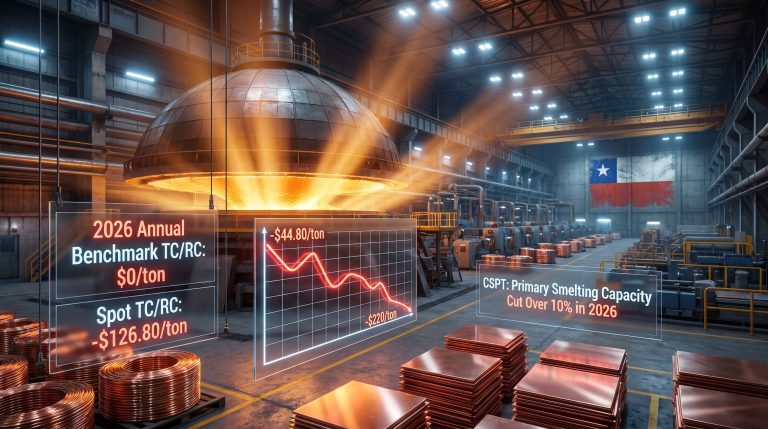
Current market conditions have completely inverted this relationship. Treatment charges reached -$66.40 per tonne in Q1 2026, meaning smelters now pay miners for concentrate access rather than receiving payment for processing services. This represents a swing of over $100 per tonne from historical norms and signals severe physical supply constraints.
The copper concentrate supply shortage manifests through multiple interconnected indicators:
• Negative treatment charges forcing smelters into loss-making operations
• Concentrate premiums escalating from $15-25/tonne to $85-120/tonne
• Regional price differentials widening as smelters compete for limited supplies
• Inventory redistribution rather than structural depletion across global warehouses
This transformation reflects fundamental changes in supply-demand balance that extend beyond cyclical mining disruptions. When smelters transition from service providers to concentrate purchasers, it indicates processing capacity substantially exceeds available feedstock supply.
Scale of the Supply-Demand Imbalance
The magnitude of current supply constraints becomes apparent when examining smelter margin compression. Industry margins have shifted from positive 8-12% in 2024 to negative 15-25% in Q1 2026, representing a deterioration of 20-37 percentage points in operational profitability. This margin compression creates self-reinforcing production curtailment incentives as smelters reduce operations to minimise losses.
Copper price records approaching US$5.96 per pound with weekly gains of 3.8% reflect structural support from concentrate constraints rather than speculative positioning. This price elevation occurs despite global visible inventories of 1.18 million tonnes, indicating the disconnect between refined copper availability and concentrate feedstock access.
The timeline for resolving these imbalances extends far beyond typical commodity cycles. Mine development requires 17-25 years from discovery to production, while concentrate shortages demand immediate supply responses. This temporal mismatch creates sustained pressure on processing economics and refined copper availability.
Regional inventory patterns reveal the complexity of current supply dynamics. Shanghai warehouses experienced marginal declines while Western markets maintained stable or increasing stocks, suggesting geographic redistribution rather than absolute shortage. However, this rebalancing occurs against a backdrop of constrained concentrate flows to Asian processing centres.
When big ASX news breaks, our subscribers know first
Which Industrial Sectors Are Intensifying Copper Concentrate Demand?
The copper concentrate supply shortage coincides with accelerating demand from multiple high-growth industrial sectors, creating compounding pressure on already constrained supplies. Electrification trends across transportation, energy infrastructure, and digital technologies fundamentally increase copper intensity throughout the global economy.
Electrification Infrastructure Requirements
Grid modernisation and renewable energy integration require substantial copper deployment per megawatt of installed capacity. Solar installations demand approximately 4-5 tonnes of copper per MW, while wind projects require 3-4 tonnes per MW for electrical components and transmission connections. These requirements multiply across global renewable deployment targets reaching hundreds of gigawatts annually.
Data centre expansion drives unprecedented industrial copper demand through:
• High-performance computing infrastructure requiring specialised copper alloys
• Cooling systems utilising extensive copper heat exchangers
• Power distribution networks with enhanced copper content for efficiency
• Backup power systems incorporating copper-intensive components
The cumulative effect of these infrastructure requirements creates sustained demand growth that exceeds traditional copper applications by substantial margins.
Transportation Sector Transformation
Electric vehicle manufacturing fundamentally alters automotive copper requirements. Traditional internal combustion vehicles contain approximately 20-25 kg of copper, while battery electric vehicles require 80-85 kg per unit. This four-fold increase in copper content per vehicle occurs alongside global EV adoption targets exceeding 30% of new vehicle sales by 2030.
Charging infrastructure development compounds automotive copper demand through:
- DC fast charging stations requiring 15-20 kg of copper per unit
- Level 2 charging equipment incorporating 8-12 kg of copper components
- Grid connection infrastructure for charging networks
- Residential charging equipment installation across millions of households
Commercial fleet electrification introduces additional demand multipliers as delivery vehicles, public transportation, and industrial equipment transition to electric powertrains with higher copper content requirements.
Emerging Technology Applications
Artificial intelligence hardware manufacturing creates new categories of copper demand through specialised cooling systems, high-frequency electrical components, and data processing infrastructure. AI training facilities require substantially more copper per computing unit than traditional data centres due to thermal management requirements.
Defence sector modernisation programmes increasingly rely on copper-intensive systems including:
• Advanced radar and communications equipment
• Electronic warfare systems requiring specialised copper alloys
• Naval vessel electrical systems with enhanced copper specifications
• Aerospace applications utilising high-purity copper components
5G telecommunications infrastructure expansion demands copper for antenna systems, base station equipment, and fibre optic network connections, creating sustained demand across multiple deployment phases.
How Are Geographic Constraints Limiting Concentrate Availability?
Geographic concentration in copper mining and processing creates systemic vulnerabilities that compound supply constraints. The global copper industry's reliance on a limited number of producing regions and processing centres amplifies disruption risks and limits supply chain flexibility.
Mining Production Concentration Risks
Six countries control approximately 75% of global copper mine production, creating geographic concentration risks that affect concentrate availability. Chile, Peru, China, Democratic Republic of Congo, United States, and Australia dominate production volumes, making global supply vulnerable to region-specific disruptions.
Infrastructure limitations in major producing regions constrain concentrate transportation and processing capacity:
• Port facility bottlenecks limiting concentrate export capacity
• Rail and road infrastructure inadequate for expanded production volumes
• Power grid constraints affecting mining operations in remote locations
• Water availability limitations impacting concentrate processing operations
Political and regulatory factors in key producing regions introduce additional supply uncertainty through permitting delays, taxation changes, and environmental compliance requirements that affect production timelines.
Processing Capacity Bottlenecks
China's dominance in global smelting capacity creates processing bottlenecks that constrain concentrate utilisation. Chinese smelters process approximately 40% of global copper concentrate, making worldwide refined copper supply dependent on Chinese operational decisions and capacity utilisation rates.
Regional processing gaps outside Asia-Pacific markets limit concentrate processing flexibility. European and North American smelting capacity remains insufficient to process regional concentrate production, creating dependency on Asian processing centres despite transportation costs and logistics complexity.
Sulphuric acid export restrictions from China introduce secondary constraints on global smelting operations. Chinese limitations on acid exports reduce smelter revenues from co-product sales, further compressing margins and creating incentives for production curtailment.
The elevated Yangshan premium reaching maximum levels since 2025 demonstrates how geographic constraints manifest in regional pricing. Asia-Pacific smelters facing acute concentrate shortages bid prices upward against Western markets, creating arbitrage pressures that reflect underlying supply imbalances.
Resource Quality Degradation Trends
Declining ore grades at existing operations worldwide increase processing complexity and reduce concentrate production efficiency. Average copper grades have decreased from 1.5-2.0% historically to 0.8-1.2% currently, requiring more ore processing to generate equivalent concentrate volumes.
Energy intensity implications for concentrate production increase substantially with lower-grade deposits:
• Higher grinding requirements for ore preparation
• Increased flotation processing time and chemical consumption
• Enhanced tailings handling and environmental management needs
• Greater water consumption per tonne of concentrate produced
These quality degradation trends compound supply constraints by reducing effective concentrate output from existing mining operations while increasing production costs and environmental compliance requirements.
What Economic Indicators Reveal About Supply Tightness?
Economic indicators across the copper supply chain provide quantitative evidence of supply tightness that extends beyond price movements alone. Treatment charge inversion, margin compression, and premium escalation create a comprehensive picture of structural supply constraints.
Treatment Charge Market Analysis
| Metric | 2024 Average | Q1 2026 Current | Forecast 2027 |
|---|---|---|---|
| TC/RC Asia Pacific | $45-65/tonne | -$66.40/tonne | -$20-40/tonne |
| Smelter Margins | Positive 8-12% | Negative 15-25% | Negative 5-15% |
| Concentrate Premium | $15-25/tonne | $85-120/tonne | $60-90/tonne |
The treatment charge inversion to -$66.40/tonne represents the most credible indicator of physical supply constraint in copper markets. Unlike price movements that can reflect financial speculation, negative treatment charges indicate genuine difficulty in securing concentrate supplies at the contract level between miners and smelters.
Forecast data for 2027 suggests partial recovery to -$20-40/tonne negative charges, but continued negative levels indicate persistent supply constraints through the medium term. This projection implies structural rather than temporary supply limitations.
Concentrate premiums escalating from $15-25/tonne to $85-120/tonne demonstrate the financial cost of supply scarcity. This 400-500% increase reflects genuine difficulty locating and securing concentrate supplies rather than temporary logistics disruptions.
Investment Capital Allocation Patterns
Mining company exploration budgets reveal industry response to supply constraints through increased capital allocation toward copper projects. Major mining companies increased exploration spending by 25-35% in 2026, with copper projects receiving disproportionate funding increases compared to other commodities.
Venture capital flows into copper project development accelerated substantially:
• Early-stage mining ventures receiving increased funding rounds
• Technology companies focused on copper extraction efficiency gaining investment
• Recycling and secondary copper recovery operations attracting capital
• Processing technology improvements receiving development funding
Major mining acquisitions increasingly target concentrate-producing assets, with acquisition premiums reaching 40-60% above historical multiples for assets with near-term production potential.
Commodity Price Correlation Analysis
Copper futures pricing relationships reveal supply constraint manifestation across multiple timeframes. Backwardation in copper futures curves indicates physical tightness, with spot prices exceeding forward contracts as immediate supply commands premium pricing.
Sulphuric acid market dynamics compound smelter economic pressure through reduced co-product revenues. Potential Chinese restrictions on acid exports create secondary margin compression beyond concentrate costs, reinforcing production curtailment incentives.
Regional price differentials widening between Asia-Pacific and Western markets indicate supply allocation inefficiencies. The Yangshan premium reaching multi-year highs demonstrates how concentrate constraints manifest through geographic pricing disparities.
Which Mining Operations Face the Greatest Production Challenges?
Mining operations worldwide encounter multiple categories of production challenges that constrain concentrate supply beyond geological factors. Operational disruptions, regulatory compliance delays, and technical processing complications create compounding pressures on concentrate availability.
Operational Disruption Categories
Weather-related production interruptions affect major concentrate-producing facilities through extreme climate events, seasonal flooding, and drought conditions that limit water availability for processing operations. These disruptions create irregular concentrate supply patterns that compound market tightness.
Labor relations challenges increasingly impact concentrate production as mining companies face:
• Skilled workforce shortages in remote mining locations
• Union negotiations affecting production schedules and capacity utilisation
• Safety compliance requirements extending maintenance downtime
• Training requirements for new technology implementation slowing operations
Equipment failures and maintenance schedule impacts intensify during periods of high capacity utilisation when operators defer maintenance to maximise production. This creates production volatility and concentrate supply unpredictability.
Permitting and Environmental Compliance Delays
New project approval timelines extend significantly beyond historical averages as environmental impact assessment requirements become more comprehensive. Permitting processes that previously required 3-5 years now extend to 7-10 years for major copper developments.
Environmental compliance costs increase substantially through:
- Enhanced tailings management requirements following high-profile failures
- Water quality monitoring and treatment system upgrades
- Biodiversity offset programmes for mining operations
- Carbon footprint reduction initiatives affecting processing operations
Community relations challenges delay production ramp-ups as mining companies navigate local opposition, land rights negotiations, and benefit-sharing agreements that affect project timelines and operational permits.
Technical Processing Complications
Metallurgical complexity increases at aging operations as ore bodies transition to lower-grade material requiring enhanced processing techniques. Flotation circuits designed for higher-grade ore require modification and additional processing stages to maintain concentrate production rates.
Water availability constraints affect concentrate production through:
• Reduced processing plant throughput during drought conditions
• Increased costs for water treatment and recycling systems
• Environmental restrictions on water usage affecting production schedules
• Competition with agricultural and municipal water users
Energy cost inflation substantially impacts processing economics, particularly for energy-intensive grinding and flotation operations. Rising electricity costs create pressure for operational efficiency improvements while maintaining concentrate production volumes.
How Are Smelters Adapting to Concentrate Scarcity?
Smelting operations implement multiple adaptation strategies to manage concentrate scarcity and maintain operational viability despite negative treatment charges and margin compression. These adaptations reshape industry structure and processing capabilities.
Alternative Feedstock Strategies
Smelters increasingly develop recycling capacity to reduce dependence on primary concentrate supplies. Secondary copper recovery from electronic waste, automotive components, and industrial scrap provides alternative feedstock sources with different economic characteristics.
Complex concentrate processing capabilities enable smelters to utilise lower-grade or difficult-to-process concentrate that other facilities cannot handle efficiently:
• Enhanced metallurgical systems for high-arsenic concentrates
• Specialised processing for concentrate with unusual mineral compositions
• Upgraded environmental systems handling complex smelting byproducts
• Increased capacity for concentrate blending to optimise processing efficiency
Scrap copper acquisition programmes expand as smelters secure alternative raw materials. These programmes include direct purchasing from industrial generators, partnerships with recycling operations, and development of collection networks for copper-bearing materials.
Operational Efficiency Improvements
Capacity utilisation optimisation becomes critical when concentrate availability constrains operations. Smelters implement:
• Production scheduling aligned with concentrate delivery patterns
• Inventory management systems minimising concentrate storage requirements
• Flexible processing parameters accommodating various concentrate qualities
• Enhanced maintenance scheduling to maximise operational uptime
Energy efficiency upgrades reduce processing costs and improve margin resilience during periods of negative treatment charges. Waste heat recovery systems, process optimisation technologies, and automated control systems enhance operational efficiency.
Maintenance coordination with other smelters minimises market disruption by scheduling downtime during periods of maximum concentrate availability, reducing competitive pressure for limited supplies.
Strategic Partnership Development
Long-term concentrate supply agreements with mining companies provide supply security in exchange for price premium payments or capacity commitments. These agreements shift risk allocation and create stable supply relationships despite market volatility.
Joint venture participation in upstream mining projects enables smelters to secure dedicated concentrate supplies from specific operations:
• Equity stakes in mining projects providing supply access rights
• Offtake agreements tied to project development financing
• Technical support partnerships improving concentrate quality and consistency
• Shared development costs reducing mining project capital requirements
Regional cooperation agreements facilitate concentrate sharing among smelters to optimise capacity utilisation and reduce transportation costs. These arrangements improve supply chain efficiency and reduce competitive pressure for individual concentrate purchases.
The next major ASX story will hit our subscribers first
What Role Does Recycling Play in Addressing Supply Gaps?
Recycling operations provide increasingly important alternative copper supplies as primary concentrate becomes scarce and expensive. Secondary copper recovery from various waste streams offers different economic characteristics and supply chain advantages compared to mining-derived concentrate.
Current Recycling Capacity Analysis
Global copper scrap processing volumes reach approximately 4.5-5.0 million tonnes annually, representing 20-25% of refined copper supply. Recycling capacity expansion accelerates as economic incentives improve with higher copper prices and concentrate constraints.
Regional recycling infrastructure development varies substantially:
• European facilities process high-quality industrial scrap with sophisticated separation technologies
• Asian operations focus on electronic waste recovery with labour-intensive processing methods
• North American recycling emphasises automotive and construction material recovery
• Developing regions increasingly implement collection networks for copper-bearing materials
Technology improvements in secondary copper recovery increase processing efficiency and material quality. Advanced sorting systems, hydrometallurgical processing, and automated separation technologies enhance recovery rates from complex waste streams.
Regulatory Environment Impacts
Export restrictions on copper scrap affect global recycling flows as countries implement policies prioritising domestic recycling capacity. These restrictions create regional supply imbalances and encourage local processing investment.
Environmental regulations drive recycling investments through:
• Extended producer responsibility programmes requiring manufacturers to fund recycling
• Landfill restrictions on copper-bearing electronic waste
• Carbon taxation favouring recycling over primary production
• Circular economy initiatives promoting material recovery and reuse
Trade policy changes influence scrap availability patterns as international agreements affect cross-border waste movement and processing facility access to raw materials.
Economic Viability Considerations
Recycling cost structures become increasingly competitive with primary concentrate processing as treatment charges turn negative. Secondary copper recovery avoids negative treatment charges while providing material at lower effective costs.
Quality differentials between recycled and primary copper affect market acceptance in specific applications:
• High-purity recycled copper suitable for electrical applications
• Lower-grade recycled material appropriate for construction and plumbing uses
• Specialised alloys recovered from industrial waste streams
• Contamination management affecting recycled copper specifications
Market acceptance factors for recycled copper in critical applications expand as quality control systems improve and supply constraints increase acceptance of secondary materials.
Which Regions Show Promise for Future Concentrate Supply?
Emerging mining jurisdictions and technological improvements offer potential solutions to concentrate supply constraints, though development timelines remain extended compared to immediate market needs. Regional opportunities vary substantially based on geological potential, infrastructure development, and investment climate factors.
Emerging Mining Jurisdictions
African copper belt expansion presents substantial potential for concentrate supply increases through:
• Democratic Republic of Congo mine development despite infrastructure challenges
• Zambian operations expanding through technology improvements and investment
• Namibian copper projects in early development phases
• Botswana exploration programmes identifying new deposit opportunities
Infrastructure requirements for African development include power generation capacity, transportation networks, and processing facility construction that require substantial capital investment and extended development timelines.
South American project pipeline development continues beyond existing major producing regions:
- Argentinian projects advancing through permitting processes
- Colombian exploration programmes identifying new deposits
- Ecuadorian mining development expanding despite environmental constraints
- Brazilian operations increasing through technological improvements
North American reshoring initiatives for copper production capacity receive policy support through:
• Critical mineral designation enhancing project financing access
• Environmental permitting process improvements for domestic projects
• Infrastructure investment programmes supporting mining development
• Trade policy changes encouraging domestic production capacity
Technology-Enabled Production Increases
Automation and digitalisation improve extraction efficiency at existing operations while reducing operational costs and environmental impact. Remote-controlled equipment, automated processing systems, and predictive maintenance technologies enhance productivity.
Advanced processing techniques increase recovery rates from lower-grade deposits:
• Improved flotation chemistry and processing parameters
• Enhanced grinding efficiency reducing energy consumption
• Optimised concentrate quality through process control systems
• Reduced waste generation through improved separation techniques
Remote sensing and exploration technologies accelerate deposit identification and resource definition. Satellite imagery analysis, geophysical survey improvements, and drilling technology advances reduce exploration timelines and increase discovery success rates.
Investment Climate Assessments
Political stability factors affect long-term project viability as mining companies evaluate development risks across multiple jurisdictions. Regulatory consistency, taxation stability, and infrastructure support influence investment allocation decisions.
Infrastructure development requirements for remote deposits include:
• Power supply systems for mining and processing operations
• Transportation networks connecting mines to processing facilities and ports
• Water supply and treatment systems for processing requirements
• Communications infrastructure supporting modern mining operations
Financing availability for capital-intensive copper projects improves as commodity price elevation and supply constraints enhance project economics. The copper investment outlook remains positive as development capital access expands through increased institutional investor interest in copper exposure.
How Will Supply Constraints Evolve Through 2030?
Supply constraint evolution depends on multiple interconnected factors including project development timelines, demand growth trajectories, and market adaptation mechanisms. Scenario analysis suggests persistent tightness through the remainder of the decade despite various supply response initiatives.
Production Ramp-Up Scenarios
Major copper projects scheduled for commissioning between 2026-2030 face realistic timeline assessments that extend beyond initial development projections. Historical analysis indicates 60-70% of mining projects experience delays averaging 18-24 months beyond planned commissioning dates.
Nameplate capacity achievement typically requires 12-18 months of operational optimisation following initial commissioning:
• Processing system optimisation and parameter adjustment
• Equipment performance improvement and maintenance schedule establishment
• Workforce training completion and operational efficiency development
• Environmental system compliance verification and permit fulfilment
Risk factors potentially delaying anticipated supply additions include:
• Equipment manufacturing and delivery delays for specialised mining machinery
• Skilled workforce availability in remote mining locations
• Environmental compliance verification and permit modifications
• Infrastructure development coordination with government agencies
Furthermore, the US copper production overview indicates that domestic production challenges mirror global constraints, reinforcing the need for alternative supply solutions.
Demand Growth Trajectory Analysis
Electrification adoption rates across major economies continue accelerating through supportive policy frameworks and technology cost reductions. Electric vehicle adoption targets reaching 30-50% of new vehicle sales by 2030 create sustained copper demand growth substantially above historical patterns.
Industrial policy impacts on copper-intensive sector growth include:
• Renewable energy deployment mandates driving infrastructure copper requirements
• Grid modernisation programmes requiring extensive copper installations
• Data centre expansion supporting digital economy transformation
• Defence spending increases emphasising copper-intensive advanced systems
Substitution potential and material efficiency improvements provide some demand moderation:
- Aluminium substitution in specific electrical applications
- Improved conductor efficiency reducing copper content per application
- Recycling rate improvements reducing primary copper requirements
- Design optimisation minimising material usage while maintaining performance
Market Rebalancing Mechanisms
Price elasticity effects on demand destruction remain limited in most copper applications due to the metal's essential role in electrical systems and infrastructure. Substitution possibilities exist but require substantial time for implementation and technology development.
Supply chain adaptation strategies include:
• Inventory management improvements reducing copper requirements
• Component design optimisation minimising material usage
• Regional supply chain development reducing transportation requirements
• Long-term supply agreement development improving supply security
Strategic reserve policies affect market dynamics as governments consider copper stockpiling for critical infrastructure security. Reserve accumulation during supply shortages would compound tightness while reserve releases could provide temporary relief.
Strategic Implications for Industry Stakeholders
The copper concentrate supply shortage creates differential impacts across industry stakeholders, requiring strategic adaptations that account for extended supply constraint timelines and structural market changes. Stakeholder responses vary based on supply chain position and exposure to copper price volatility.
Mining Company Positioning
Asset portfolio optimisation focuses concentrate production capabilities over refined copper operations as treatment charge inversion improves concentrate producer economics. Mining companies benefit from improved pricing power and reduced processing risk exposure.
Exploration strategy adjustments prioritise high-grade copper deposits that minimise processing complexity and maximise concentrate quality. Development capital allocation favours projects with superior metallurgical characteristics and lower infrastructure requirements.
Operational excellence initiatives target:
• Production consistency reducing concentrate supply volatility
• Quality control improvements enhancing concentrate specifications
• Cost management maintaining profitability through commodity cycles
• Environmental performance reducing regulatory compliance risks
Manufacturing Sector Adaptations
Supply chain diversification strategies reduce concentration risk through multiple supplier relationships, regional supply source development, and inventory management improvements. Manufacturing companies implement copper supply security as strategic priority.
Material substitution research accelerates across applications where alternatives provide acceptable performance characteristics:
• Aluminium conductors in appropriate electrical applications
• Composite materials in specialised components
• Advanced alloys reducing copper content requirements
• Design modifications optimising material efficiency
Inventory management approaches adapt to volatile copper availability through:
- Strategic stockpiling during supply availability periods
- Long-term supply contracts providing price and quantity security
- Regional supplier development reducing transportation risks
- Flexible manufacturing scheduling accommodating material availability
Investment Considerations
Risk-adjusted return profiles for copper-exposed investments improve substantially as supply constraints create pricing support and margin expansion opportunities. Investment analysis incorporates extended constraint timelines and structural demand growth.
Portfolio allocation strategies consider copper exposure through:
• Direct commodity exposure through futures and exchange-traded products
• Equity investments in copper producers benefiting from improved economics
• Infrastructure development companies supporting copper-intensive projects
• Technology investments addressing supply constraint challenges
Hedging mechanisms for copper price volatility become complex during supply shortage periods as traditional hedging instruments may not reflect physical market tightness. Risk management strategies emphasise supply security over price hedging.
Additionally, investors should consider developments in gold and copper exploration activities, as these initiatives may provide longer-term supply solutions. According to the Crux Investor, supply shortages are expected to persist through 2027, creating opportunities for advanced copper developers.
Investment Disclaimer: This analysis contains forward-looking statements and projections that involve substantial risks and uncertainties. Copper markets remain volatile and unpredictable. Investment decisions should incorporate comprehensive due diligence and professional financial advice. Past performance does not guarantee future results, and commodity investments can result in significant losses.
Further Exploration: Readers interested in learning more about copper market dynamics can explore additional educational content from industry publications and market research organisations that provide ongoing analysis of global copper supply-demand imbalances.
Looking to Capitalise on the Copper Concentrate Crisis?
Discovery Alert's proprietary Discovery IQ model delivers instant notifications on significant copper discoveries across the ASX, empowering investors to identify actionable opportunities as supply constraints intensify market dynamics. With treatment charges reaching unprecedented negative levels and concentrate shortages expected through 2027, begin your 14-day free trial today to position yourself ahead of the market in this rapidly evolving sector.