August 26, 2026
Industrial copper development in Australia faces a critical inflection point where contractor selection, operational scale, and market positioning converge to determine project viability. Advanced EPCM (Engineering, Procurement, and Construction Management) frameworks have emerged as decisive factors in transforming large-scale mineral resources into profitable mining operations, particularly within the context of evolving copper investment strategies and Australia's critical minerals landscape.
The intersection of technical expertise, financial structuring, and regulatory alignment creates complex decision matrices that mining companies must navigate to achieve successful project outcomes. Understanding these multifaceted relationships provides essential insights for stakeholders evaluating major copper developments across Australia's established mining jurisdictions.
EPCM Framework Integration in Modern Copper Development
Engineering, Procurement, and Construction Management represents a comprehensive service delivery model that extends beyond traditional construction contracting. Within Australia's copper sector, EPCM providers assume responsibility for detailed engineering design, equipment procurement coordination, construction oversight, and commissioning management through systematic project phases.
The strategic value of EPCM selection lies in risk distribution mechanisms between project owners and service providers. Unlike traditional design-build contracts, EPCM frameworks allow mining companies to maintain greater control over procurement decisions while leveraging specialised engineering expertise for complex processing infrastructure.
Critical decision points in contractor evaluation include:
- Technical competency assessment across multiple engineering disciplines
- Historical performance metrics in comparable copper concentrator projects
- Resource allocation capacity for large-scale simultaneous developments
- Quality assurance protocols ensuring operational efficiency standards
- Integration capabilities with existing site infrastructure and logistics
Advanced copper projects require sophisticated metallurgical processing circuits capable of handling complex ore characteristics while maintaining consistent concentrate quality specifications. The EPCM model facilitates this through specialised design teams with proven track records in copper flotation technology, tailings management systems, and environmental compliance frameworks.
Furthermore, modern EPCM contracts typically incorporate phased delivery approaches, beginning with definition studies and progressing through detailed engineering, procurement coordination, and construction management. This staged methodology allows project owners to optimise capital expenditure timing while maintaining flexibility for scope adjustments based on market conditions or operational requirements.
When big ASX news breaks, our subscribers know first
South Australia's Strategic Copper Development Corridor
The Yorke Peninsula represents a geologically significant copper-gold province positioned within South Australia's established mining infrastructure network. Located approximately 150 kilometres west of Adelaide, this region benefits from proximity to established port facilities, transportation networks, and skilled workforce availability.
South Australia's regulatory environment has demonstrated consistent support for major mining developments through streamlined approval processes and updated legislative frameworks. The state's Mining Act review process, initiated in 2025, specifically addresses evolving industry requirements as global copper supply continues expanding.
Key regional advantages include:
- Geological continuity supporting large-scale resource development
- Infrastructure connectivity to Adelaide's export facilities
- Regulatory stability through established approval pathways
- Workforce availability from existing mining operations
- Community acceptance of mining industry presence
The Peninsula's copper-gold mineralisation systems exhibit characteristics conducive to large-scale open-pit mining operations with associated processing infrastructure. Geological formations indicate potential for sustained production over extended mine life scenarios, supporting significant capital investment in modern processing facilities.
Additionally, South Australia's strategic positioning within Australia's critical minerals framework reflects both geological endowment and established industrial capabilities. The state's capacity to support multiple large-scale developments simultaneously provides competitive advantages for projects requiring substantial infrastructure investment and operational coordination.
Resource Evaluation and Production Capacity Analysis
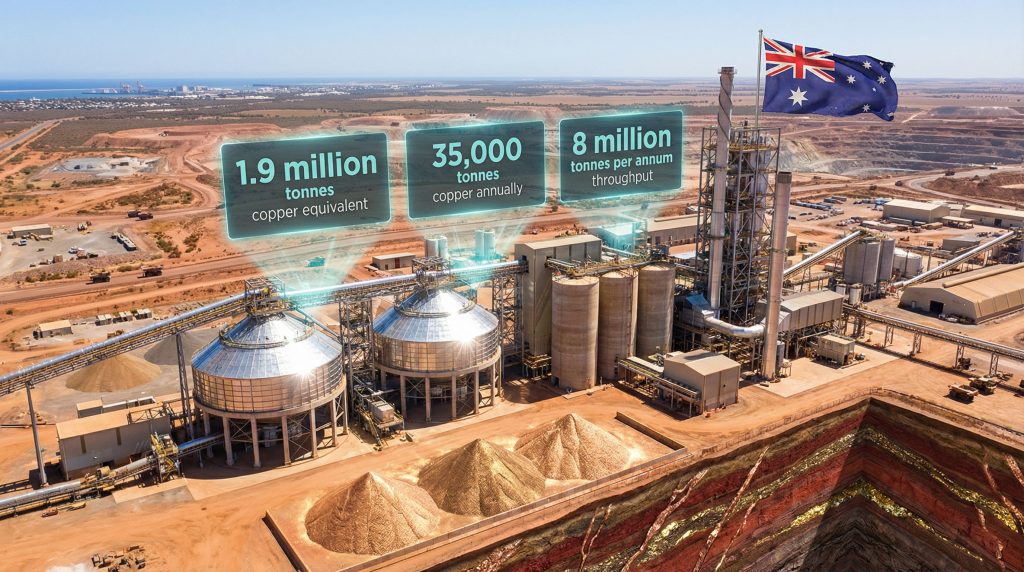
Large-scale copper developments require substantial mineral resource bases to justify significant processing infrastructure investments. The Ausenco Hillside contract South Australia exemplifies this scale requirement with 1.9 million tonnes of copper equivalent resources and 1.5 million ounces of gold reserves, positioning it among Australia's most significant undeveloped copper assets.
These resource metrics translate into projected annual production capabilities of:
| Production Parameter | Annual Capacity | Mine Life Duration |
|---|---|---|
| Processing Throughput | 8 million tonnes | 13 years |
| Copper Production | 35,000 tonnes | Sustained output |
| Gold Production | 24,000 ounces | Secondary revenue stream |
The 8 million tonnes per annum processing capacity represents substantial industrial infrastructure requiring sophisticated engineering design and construction management. Modern concentrator facilities of this scale incorporate advanced flotation circuits, automated control systems, and integrated tailings management capabilities to achieve optimal metal recovery rates.
Mine life projections of 13 years reflect conservative reserve assessments based on current geological understanding and operational parameters. However, extended exploration programs may identify additional resources capable of extending operational timelines, enhancing overall project economics and infrastructure utilisation rates.
Consequently, the combination of copper and gold production creates diversified revenue streams that provide natural hedging against commodity price volatility. This dual-commodity approach enhances project financing options and operational flexibility during varying market conditions, particularly relevant for gold and copper exploration initiatives.
Resource quality metrics, including metal grades and metallurgical characteristics, determine processing complexity and capital requirements for concentrator design. Higher-grade deposits typically support more efficient processing circuits with reduced operational costs per unit of metal produced.
Global Copper Processing Technology Trends
International copper concentrator development has accelerated significantly over recent years, driven by increasing global demand for copper across renewable energy applications, electric vehicle manufacturing, and traditional industrial uses. Advanced processing technologies have evolved to handle increasingly complex ore bodies while maintaining environmental compliance standards.
Ausenco's market position demonstrates the concentrated expertise required for large-scale copper processing infrastructure. The company's involvement in securing major EPCM contracts and delivering one-third of new copper concentrators globally over the past five years indicates both technical capability and market demand for specialised EPCM services.
Recent international project completions, including the Mantoverde copper project in Chile, provide technological precedents for Australian developments. These projects demonstrate proven methodologies for:
- Advanced flotation circuit design optimising metal recovery rates
- Automated process control systems enhancing operational consistency
- Integrated water management supporting environmental compliance
- Modular construction approaches reducing installation timelines
- Performance monitoring systems enabling predictive maintenance strategies
Technology transfer from international operations provides Australian projects with access to proven processing solutions adapted for local conditions. This knowledge sharing accelerates project development timelines while reducing technical risks associated with new processing methodologies.
Furthermore, modern concentrator designs emphasise energy efficiency, environmental performance, and operational flexibility to accommodate varying ore characteristics over extended mine life periods. These considerations influence capital expenditure requirements and operational cost structures throughout project lifecycles.
The global trend toward larger-scale processing facilities reflects economies of scale in both capital and operational expenditure. Projects exceeding 8 million tonnes annual capacity typically achieve superior unit cost performance compared to smaller operations, supporting competitive positioning in global copper markets.
Strategic Risk Management and Project Execution
Large-scale copper developments face multiple risk categories requiring systematic management approaches throughout project lifecycles. EPCM contractors play critical roles in technical risk mitigation while project owners retain responsibility for commercial and operational risk management.
Technical risk factors include:
- Metallurgical performance variations affecting metal recovery rates
- Equipment reliability impacting production consistency and maintenance costs
- Construction quality determining long-term operational efficiency
- Commissioning complexity affecting production ramp-up timelines
- Technology integration challenges in automated control systems
Commercial risk considerations encompass:
- Commodity price volatility affecting project economics and financing availability
- Capital cost escalation during construction phases impacting return profiles
- Operating cost inflation reducing operational margins over mine life periods
- Market access constraints limiting concentrate sales opportunities
- Currency fluctuation impacts on international equipment procurement and sales
Phased development approaches provide systematic risk mitigation through staged capital commitment and operational validation. Definition phase studies enable optimisation of engineering solutions before major capital expenditure commitments, reducing overall project risk profiles.
Budget integration strategies demonstrate sophisticated financial planning, with $28 million EPCM investment representing approximately 5% of total pre-production capital requirements of $585 million. This allocation reflects standard industry proportions for comprehensive engineering and construction management services.
Moreover, the 20-month construction timeline post-Final Investment Decision represents industry-standard scheduling for concentrator facilities of comparable scale. Accelerated construction schedules may increase capital costs while extended timelines delay revenue generation, requiring careful optimisation of construction sequencing and resource allocation.
Regional Economic Impact and Infrastructure Development
Major copper developments generate substantial regional economic impacts through direct employment, supplier engagement, and infrastructure development requirements. The scale of modern processing facilities necessitates significant workforce deployment during both construction and operational phases, particularly relevant for the Ausenco Hillside contract South Australia project.
Construction phase impacts include:
- Peak employment of several hundred skilled personnel during installation phases
- Local supplier engagement for construction materials, accommodation, and support services
- Skills development programs enhancing regional technical capabilities
- Infrastructure upgrades supporting long-term community benefits
Operational phase contributions encompass:
- Permanent employment for approximately 200-300 personnel across multiple disciplines
- Ongoing procurement from regional suppliers for maintenance and operational requirements
- Community investment through taxes, royalties, and social contribution programs
- Export earnings supporting Australia's trade balance and economic growth
Infrastructure development requirements extend beyond mining operations to include transportation networks, utilities integration, and environmental management systems. These investments create lasting regional benefits supporting future development opportunities and community growth.
"Large-scale mining operations serve as economic anchors for regional communities, providing stable employment and supporting service industries over extended periods. The multiplier effects of mining investment typically generate additional economic activity several times the direct operational expenditure."
Environmental management frameworks require comprehensive planning for water usage, tailings storage, and ecosystem protection throughout operational periods and post-closure phases. Modern mining operations integrate environmental considerations into operational design from project inception, ensuring sustainable development practices.
The next major ASX story will hit our subscribers first
Technology Innovation and Operational Excellence
Contemporary copper processing facilities incorporate advanced technologies designed to optimise metal recovery, minimise environmental impact, and enhance operational efficiency. These technological investments represent significant components of total project capital expenditure while providing long-term operational advantages.
Advanced processing technologies include:
- High-efficiency flotation cells maximising copper and gold recovery rates
- Automated mineral sorting systems improving concentrate quality consistency
- Real-time process monitoring enabling immediate optimisation adjustments
- Predictive maintenance systems reducing unplanned equipment downtime
- Integrated water recycling minimising freshwater consumption requirements
Digital integration capabilities encompass:
- Process control systems managing complex flotation circuits automatically
- Production monitoring providing real-time performance metrics and trending analysis
- Maintenance scheduling optimising equipment availability and lifecycle management
- Quality assurance ensuring concentrate specifications meet customer requirements
- Environmental monitoring tracking compliance with regulatory standards continuously
Energy efficiency optimisation represents both environmental and economic priorities for modern processing facilities. Advanced grinding circuits, efficient flotation systems, and integrated power management reduce operational costs while supporting corporate sustainability objectives.
Safety management systems incorporate advanced monitoring technologies, automated safety protocols, and comprehensive training programs to achieve zero-harm workplace objectives. In addition, these systems integrate with operational control systems to provide comprehensive risk management across all operational activities.
Performance optimisation strategies focus on:
- Throughput maximisation within design capacity constraints
- Recovery rate enhancement through metallurgical optimisation
- Cost management via operational efficiency improvements
- Quality consistency maintaining concentrate specification compliance
- Equipment longevity through proactive maintenance and replacement planning
Investment Strategy and Financial Framework Integration
Modern copper project financing requires sophisticated capital structure optimisation balancing development risk, return requirements, and operational flexibility. EPCM contract integration represents critical components of overall project financing strategies and risk allocation frameworks.
Capital allocation frameworks demonstrate:
| Investment Category | Allocation | Risk Profile |
|---|---|---|
| EPCM Services | $28 million | Medium technical risk |
| Total Pre-Production | $585 million | Integrated project risk |
| Construction Period | 20 months | Schedule and cost risk |
Financing structure considerations include:
- Debt capacity supported by reserve estimates and production projections
- Equity requirements for development phase funding and working capital needs
- Risk mitigation through EPCM contractor selection and performance guarantees
- Cost certainty mechanisms protecting against construction cost escalation
- Revenue protection via concentrate sales agreements and hedging strategies
Strategic partnership frameworks enable risk sharing between project developers, EPCM contractors, and operational service providers. These relationships create aligned incentives for successful project delivery while distributing risk across multiple specialised organisations, similar to emerging copper partnership ventures globally.
Investment timeline coordination requires:
- Staged capital commitment aligned with project development milestones
- Operational readiness planning ensuring workforce and systems preparation
- Market access development securing concentrate sales arrangements
- Regulatory compliance maintenance throughout development and operational phases
- Technology integration optimising operational efficiency from project commencement
Long-term value creation through copper development requires careful consideration of market positioning, operational efficiency, and growth potential. Projects achieving superior performance in these areas typically command premium valuations and enhanced financing access for future development opportunities.
Market Positioning and Future Development Potential
Australia's copper development sector faces increasing competition from international projects while benefiting from established infrastructure, regulatory stability, and technical expertise. Successful projects achieve competitive positioning through scale advantages, operational efficiency, and strategic location benefits.
Competitive advantages for large-scale Australian copper developments include:
- Resource quality supporting long-term operational planning and investment certainty
- Infrastructure access reducing capital requirements and operational complexity
- Regulatory environment providing predictable approval processes and operational frameworks
- Technical expertise available through established mining services sector
- Market access to Asian copper consumers via efficient shipping routes
Growth platform establishment enables:
- Operational optimisation through continuous improvement programs and technology upgrades
- Resource expansion via ongoing exploration and resource definition activities
- Processing capacity enhancement through debottlenecking and expansion opportunities
- Regional consolidation acquiring additional resources and operational synergies
- Technology leadership developing and implementing industry best practices
Future development opportunities depend on sustained commodity demand, continued technological advancement, and maintenance of competitive operational cost structures. Projects establishing strong initial performance typically attract additional investment for expansion and optimisation initiatives.
Market positioning strategies focus on:
- Cost competitiveness through operational efficiency and scale advantages
- Product quality ensuring premium pricing for high-grade concentrates
- Supply reliability maintaining consistent production and delivery performance
- Customer relationships developing long-term sales agreements and partnerships
- Innovation leadership implementing advanced technologies and operational practices
The integration of copper and gold production provides natural diversification benefits while creating opportunities for operational optimisation across both commodities. This approach enhances project resilience during varying market conditions while maximising resource utilisation efficiency, particularly relevant for comprehensive mining project assessments.
Furthermore, the Ausenco Hillside contract South Australia represents a significant milestone in advancing large-scale copper development within the region. This strategic partnership framework demonstrates the critical importance of specialised EPCM expertise in delivering complex mining infrastructure projects while maintaining competitive positioning in global markets.
The convergence of technical excellence, financial optimisation, and strategic market positioning creates compelling investment opportunities within Australia's copper development sector. Projects achieving successful integration across these dimensions typically deliver superior returns while contributing to regional economic development and national resource security objectives.
However, sustained success requires ongoing attention to operational excellence, technology advancement, and market responsiveness throughout extended project lifecycles. Copper-uranium investment opportunities continue expanding as global demand for critical minerals accelerates across multiple industrial applications.
Disclaimer: This analysis is provided for informational purposes only and should not be considered as investment advice. Commodity prices, project development timelines, and operational performance can vary significantly from projections. Readers should conduct independent research and consult qualified professionals before making investment decisions related to mining projects or related securities.
Looking to Capitalise on Australia's Next Major Copper Discovery?
Discovery Alert's proprietary Discovery IQ model delivers instant notifications when significant ASX copper discoveries are announced, providing subscribers with actionable insights ahead of the broader market. Explore historic examples of exceptional discovery returns and begin your 14-day free trial today to position yourself for Australia's evolving critical minerals landscape.