
May 21, 2026
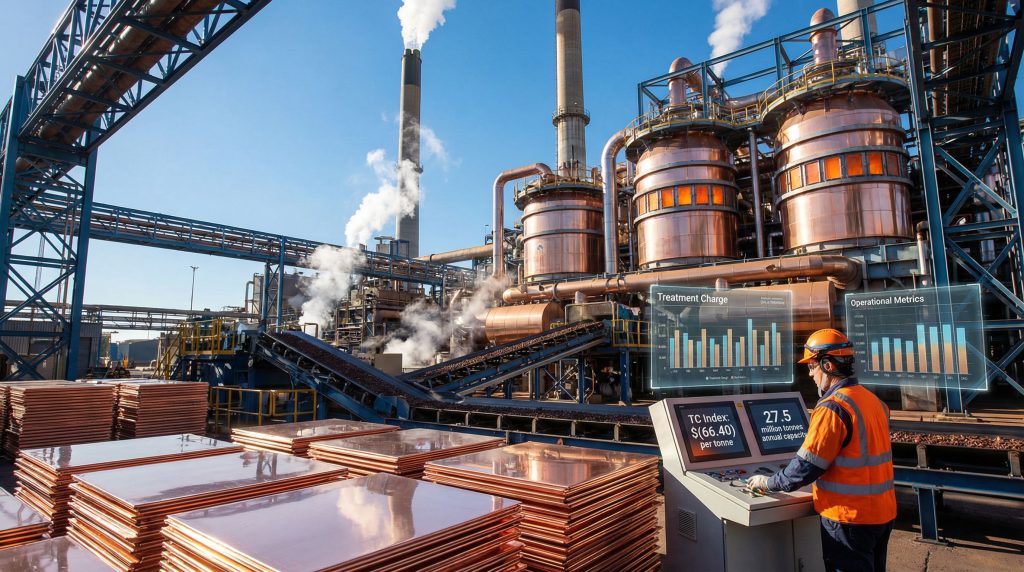
The global mining industry faces unprecedented copper smelter supply challenges as processing facilities worldwide grapple with feedstock shortages, escalating energy costs, and technological constraints. Current market conditions reflect structural imbalances between concentrate availability and smelting capacity that extend far beyond traditional supply-demand dynamics.
Understanding the Mechanics of Copper Processing Bottlenecks
Global copper refining industry operates within an intricate framework of technical constraints that extend far beyond traditional supply-demand equations. Modern processing facilities face systematic limitations rooted in feedstock chemistry, energy availability, and operational complexity rather than simple capacity shortfalls.
Global copper smelting operations process approximately 27.5 million tonnes of refined copper annually whilst handling concentrate inputs totaling around 23 million tonnes from mining operations. This apparent mathematical impossibility resolves through secondary production streams, which contribute 17-18% of total refined output through recycling and scrap processing operations.
The technical reality underlying current market stress involves multiple interdependent systems operating at maximum sustainable capacity. Processing facilities must balance concentrate chemistry, energy consumption patterns, environmental compliance requirements, and skilled workforce availability simultaneously, creating operational constraints that cannot be resolved through simple capacity additions.
Modern smelting operations require 13-15 GJ per tonne of refined copper output, with electricity consumption accounting for 60-70% of total energy costs during electrolytic refining stages. This energy intensity creates vulnerability to regional power pricing volatility and availability constraints, particularly as facilities compete with industrial users for grid capacity during peak demand periods.
Complex metallurgical processing involves multiple sequential stages where bottlenecks in any single operation cascade through the entire production chain. Flash smelting, conversion to blister copper, fire refining, and final electrolytic purification each demand specific technical conditions, making optimisation a multi-variable challenge requiring sophisticated process control systems.
When big ASX news breaks, our subscribers know first
Decoding Treatment Charge Dynamics and Market Stress Indicators
Treatment charge mechanisms function as the copper industry's primary real-time indicator of structural supply-demand imbalances within concentrate markets. Current Asia Pacific TC index levels of $(66.40) per tonne as of November 28, 2025, represent a fundamental inversion of traditional smelting economics.
Historical TC ranges typically operate between $80-120 per tonne during balanced market conditions, providing smelters with adequate compensation for processing services. The progression into negative territory indicates severe concentrate scarcity relative to available smelting capacity, forcing operators to compete aggressively for feedstock access.
| TC Range ($/tonne) | Market Condition | Smelter Response | Processing Utilisation |
|---|---|---|---|
| $80-120 | Balanced supply | Standard operations | 85-95% capacity |
| $20-80 | Moderate stress | Selective sourcing | 75-85% capacity |
| $0-20 | Supply tightness | Cost optimisation | 70-80% capacity |
| Negative TCs | Severe shortage | Production curtailment | 60-75% capacity |
Weekly volatility exceeding $1 per tonne reflects unprecedented market uncertainty, with TC movements driven by spot concentrate availability rather than quarterly contract negotiations. This shift from contract-based to spot-driven pricing indicates fundamental structural changes in global copper concentrate distribution patterns.
Negative treatment charges effectively represent smelters paying miners for concentrate access, creating unsustainable operating economics that force strategic operational adjustments. Industry analysts project TCs will remain at current stress levels through the first and second quarters of 2026, with potential recovery dependent on new mine commissioning and expanded concentrate availability.
The sustained negative territory since December 2024, when TCs dropped from $1.20 per tonne to $(0.70) per tonne within a single week, demonstrates the rapid pace of market deterioration and structural supply constraints that cannot be addressed through short-term operational adjustments. According to recent industry analysis, the global copper shortage continues to intensify, with market fundamentals showing no immediate signs of improvement.
Critical Concentrate Supply Chain Disruptions
Global copper concentrate markets require approximately 23 million tonnes of mined copper annually to sustain current smelting operations, yet systematic supply disruptions have created availability gaps that extend beyond temporary operational issues.
Major mining operations across key producing regions have experienced significant disruptions affecting concentrate shipments to global smelting facilities. These disruptions create cascading effects through supply chains that rely on steady feedstock flows to maintain processing efficiency and equipment utilisation rates.
Primary Supply Chain Stress Points:
• Port handling capacity limitations restricting concentrate import flows
• Transportation infrastructure constraints in major mining regions
• Skilled labour shortages affecting both mining and processing operations
• Water availability challenges impacting mining output consistency
Complex concentrate processing has emerged as a strategic response to standard material scarcity. These higher-impurity materials contain arsenic levels exceeding 0.5% compared to less than 0.2% for clean concentrates, requiring specialised handling equipment and enhanced environmental controls.
Processing complex concentrates demands significant technical modifications including enhanced SO₂ capture systems for arsenic volatilisation management, lead collection equipment for materials exceeding 2,000 ppm lead content, and mercury condensation technology for concentrates containing bismuth levels above 100 ppm.
Complex Concentrate Specifications:
• Arsenic content: >0.5% (clean concentrates: <0.2%)
• Lead levels: >2,000 ppm (standard: <1,000 ppm)
• Bismuth presence: >100 ppm (requiring specialised systems)
• Mercury contamination: Necessitating enhanced environmental protocols
Despite processing challenges, complex concentrates command superior treatment and refining charges, providing economic incentives for smelters willing to invest in specialised handling capabilities. This market dynamic encourages technical innovation and operational flexibility among processing facilities.
Furthermore, examining the Argentina copper system reveals potential for increased concentrate supply, though development timelines remain extended. Secondary concentrate sources, including recycled materials and lower-grade ore processing, require different technical approaches but offer supply diversification opportunities for facilities capable of handling varied input chemistry profiles.
Energy Cost Pressures and Operational Efficiency Responses
Copper smelting operations face unprecedented energy cost pressures that have increased total processing expenses by an estimated 25-30% since 2022. This cost escalation stems from global energy supply disruptions and increased industrial demand for electricity and natural gas across major processing regions.
Electrolytic refining, the final purification stage, consumes 2,400-3,000 kWh per tonne of refined copper output, making electricity pricing and availability critical determinants of facility profitability. Advanced operations are implementing load-shifting strategies to capture off-peak pricing where regional grid structures permit demand response participation.
Energy Cost Distribution in Modern Smelting:
• Electricity (electrolytic refining): 60-70% of total energy costs
• Natural gas/fuel oil (primary smelting): 20-25% of costs
• Coal/coke (where applicable): 10-15% of costs
Waste heat recovery systems represent a significant efficiency opportunity, with modern facilities capturing thermal energy from smelting operations to generate steam for internal power generation or sale to adjacent industrial users. These systems can reduce net energy consumption by 15-20% whilst providing additional revenue streams.
Digital optimisation technologies enable real-time energy consumption monitoring and automated load management. Advanced facilities deploy AI-driven furnace temperature control systems that optimise energy input whilst maintaining processing quality standards, achieving energy savings of 8-12% compared to manual control systems.
Regional energy availability constraints increasingly influence smelter location decisions and expansion planning. Facilities in regions with abundant renewable energy resources gain competitive advantages through lower operational costs and improved environmental compliance profiles.
Renewable Energy Integration Strategies:
• Solar thermal systems for pre-heating applications
• Wind power contracts for electrolytic refining operations
• Hydroelectric power access in suitable geographic locations
• Energy storage systems for demand management optimisation
However, implementing renewable energy integration requires substantial capital investment and technical modifications to existing processing infrastructure.
Advanced Operational Strategies and Digital Transformation
Modern copper smelting facilities are implementing sophisticated digital technologies to optimise processing efficiency and maintain profitability despite challenging market conditions. These technological deployments focus on real-time process optimisation, predictive maintenance, and enhanced product customisation capabilities.
Digital Process Optimisation Applications:
• Furnace temperature control using machine learning algorithms for optimal energy utilisation
• Concentrate blending models optimising input chemistry for processing efficiency
• Predictive maintenance systems reducing unplanned downtime by 15-25%
• Smart grid integration for dynamic energy consumption management
By-product valorisation has become essential for maintaining operational economics in negative treatment charge environments. Modern facilities capture valuable secondary materials that provide critical revenue streams offsetting primary processing margin compression.
Secondary Metal Recovery Potential:
| By-Product | Recovery Rate | Revenue Impact |
|---|---|---|
| Gold | 0.5-2.0 g/tonne concentrate | $32,500-$130,000 per tonne |
| Silver | 15-50 g/tonne concentrate | $12,000-$40,000 per tonne |
| Sulfuric acid | 2.2-2.8 tonnes per tonne copper | $200-$400 per tonne copper |
| Selenium | 0.1-0.3 kg/tonne (specialised facilities) | $1,500-$4,500 per tonne |
Sulfuric acid production represents a particularly significant opportunity, as modern smelting operations must capture SO₂ emissions for environmental compliance. Converting captured sulfur dioxide into marketable sulfuric acid creates revenue streams whilst meeting regulatory requirements, with each tonne of copper processed yielding 2.2-2.8 tonnes of sulfuric acid.
Quality customisation using real-time customer plant data allows smelters to produce specialised copper grades commanding premium pricing. This approach involves continuous monitoring of customer requirements and adjustment of processing parameters to deliver products meeting specific technical specifications.
Waste Reduction Achievements:
Advanced facilities are achieving 95% waste reduction whilst targeting zero-landfill and zero-liquid-discharge operations. These environmental improvements reduce disposal costs whilst enhancing regulatory compliance and social licence to operate in increasingly environmentally conscious jurisdictions.
In addition, data-driven operations enable smelters to optimise processing parameters and reduce copper smelter supply challenges through improved efficiency and resource allocation.
Recycling Capacity Expansion and Secondary Supply Development
Secondary copper production through recycling operations represents a crucial supply augmentation strategy addressing concentrate scarcity. Major facilities are investing in sophisticated recycling infrastructure capable of processing diverse scrap streams including electronic waste and industrial copper materials.
Aurubis Richmond Facility (Georgia, USA):
• Annual processing capacity: 180,000 tonnes copper scrap and e-waste input
• Refined copper output: 70,000-80,000 tonnes annually
• Recovery efficiency: 38-44% from mixed input streams
• Commissioning status: Operational since 2025 with modular expansion capability
Hindalco Gujarat Recycling Complex:
• Total investment: ₹2,000 crore (~$240 million USD)
• Phase 1 processing: 300,000-350,000 tonnes scrap and e-waste annually
• Phase 1 copper recovery: Approximately 50,000 tonnes annually
• Full project target: 200,000 tonnes annual copper output
• Expected commissioning: End of 2026 for Phase 1 operations
US copper scrap market dynamics are experiencing significant policy-driven changes affecting global supply chain patterns. Current US scrap exports total 957,000 tonnes annually, with 40-50% historically shipped to Chinese processing facilities.
US Copper Scrap Retention Policy (Effective 2027):
• Domestic retention requirement: 25% of high-quality copper scrap
• Estimated annual retention: ~240,000 tonnes (25% of current export volume)
• Market impact: Redirection from Chinese export markets to domestic processing
• Infrastructure requirements: Additional domestic recycling capacity development
Electronic waste processing represents a particularly valuable recycling stream, containing copper concentrations of 10-15% compared to 0.5-2.0% in typical copper ores. Advanced recycling facilities employ sophisticated separation technologies including automated dismantling systems, hydrometallurgical processing, and electrorefining circuits optimised for high-purity copper recovery.
E-Waste Processing Advantages:
• Higher copper grades than traditional ores
• Consistent feedstock availability from urban sources
• Reduced environmental impact compared to primary mining
• Integration with existing smelting infrastructure
Notably, the Morenci copper recovery project demonstrates how established operations can enhance secondary copper production through improved processing techniques.
The next major ASX story will hit our subscribers first
Infrastructure Constraints and Development Challenges
Global copper smelting capacity faces systematic infrastructure limitations extending beyond processing facility constraints to encompass transportation, logistics, and skilled workforce availability across major producing regions.
Critical Infrastructure Bottlenecks:
• Port handling capacity limitations restricting concentrate import volumes
• Rail transportation constraints in major mining regions affecting shipment scheduling
• Skilled technical workforce shortages impacting operational efficiency
• Water availability challenges affecting cooling and processing systems
Environmental compliance infrastructure represents a significant capital requirement for modern smelting operations. Facilities must invest in sophisticated pollution control systems that often exceed $100 million per facility for comprehensive SO₂ emission controls, particulate matter management, and water treatment capabilities.
Environmental Compliance Investment Requirements:
• SO₂ emission controls: $50-80 million per facility installation
• Particulate matter systems: $20-40 million for advanced filtration
• Water treatment facilities: $15-30 million ongoing operational costs
• Waste management compliance: 5-8% of total operational expenses
Permitting and regulatory approval processes create significant development delays for new smelting capacity. Traditional permitting timelines require 18 months to several years in many jurisdictions, though some regions are implementing accelerated processes for critical mineral projects.
Accelerated Permitting Benefits:
• Reduced approval timelines: 5 months vs. 18+ months in participating jurisdictions
• Financial incentives for domestic processing capacity development
• Strategic stockpile considerations enhancing supply security
• Enhanced regulatory coordination between multiple approval agencies
Workforce development represents a critical constraint, with skilled smelting technicians requiring 2-3 years of specialised training to achieve operational competency. Technical roles including furnace operators, metallurgical technicians, and process control specialists demand continuous education to keep pace with technological advancement.
Regional Supply Dynamics and Market Concentration
Asia-Pacific region dominates global copper smelting operations, with Chinese facilities processing over 50% of worldwide concentrate volumes. This geographic concentration creates systemic supply chain risks and influences global pricing mechanisms across all regional markets.
Major Chinese Smelting Operations:
• Jiangxi Copper: 1.7 million tonnes annual processing capacity
• Tongling Nonferrous: 1.4 million tonnes annual capacity
• China Smelter Purchase Team: Coordinated concentrate procurement strategy
• Combined Chinese capacity: Approximately 13-14 million tonnes annually
Emerging market capacity development provides diversification opportunities but requires substantial infrastructure investment and technical capability development. New projects face extended development timelines and significant capital requirements for competitive operations.
Emerging Market Smelting Development (2025-2028):
| Region | Additional Capacity | Investment Status | Expected Timeline |
|---|---|---|---|
| India | 500,000 tonnes | Planning/Construction | 2026-2027 |
| Indonesia | 400,000 tonnes | Development phase | 2027-2028 |
| DRC | 300,000 tonnes | Feasibility studies | 2028+ |
Regional trade patterns are shifting as domestic processing policies encourage value-added production within mineral-producing countries. This trend reduces concentrate exports whilst increasing refined copper trade, affecting traditional smelter feedstock sources and creating new competitive dynamics.
Supply Chain Regionalisation Trends:
• Domestic processing requirements in major mining countries
• Value-added export policies favouring refined metal over concentrate shipments
• Regional trade agreements influencing processing location decisions
• Critical mineral designations affecting cross-border material flows
Energy infrastructure availability increasingly determines smelter competitiveness and location decisions. Regions with abundant renewable energy resources offer long-term operational advantages through lower costs and enhanced environmental profiles supporting social licence to operate.
Furthermore, Glencore copper operations exemplify how established companies are adapting to changing market conditions through strategic capacity optimisation.
Long-Term Supply Solutions and Development Challenges
New major copper mine development requires 17-25 years from initial discovery through full production capacity, creating structural supply deficits that cannot be addressed through short-term operational adjustments or capacity modifications.
Mine Development Phase Duration:
• Exploration and resource definition: 5-8 years average timeline
• Feasibility studies and permitting: 4-6 years regulatory approval
• Construction and commissioning: 3-5 years infrastructure development
• Production ramp-up: 2-3 years to achieve design capacity
Critical mineral designation provides policy support mechanisms that can accelerate development timelines and improve project economics through various governmental incentives and regulatory streamlining processes.
Critical Mineral Policy Benefits:
• Accelerated permitting processes: Reduced approval timelines
• Financial incentives: Tax credits and development support
• Strategic stockpile programmes: Government purchase agreements
• Enhanced supply chain security: National security considerations
The copper industry requires one new major mine annually to meet projected demand growth, yet current project development pipelines indicate significant gaps between requirements and planned capacity additions. This structural deficit necessitates enhanced recycling, improved processing efficiency, and demand management strategies.
Technology Development Priorities:
• Enhanced ore processing techniques for lower-grade deposits
• Improved metallurgical recovery systems increasing extraction rates
• Advanced exploration technologies accelerating resource identification
• Sustainable mining practices reducing environmental impact and permitting delays
Exploration investment patterns indicate potential future supply constraints, as global exploration spending remains below levels required to maintain adequate resource replacement rates. Discovery rates for major copper deposits have declined significantly over the past decade, indicating geological and economic challenges in identifying new world-class operations.
Additionally, recent reports highlight how copper supply remains under extreme stress globally, emphasising the urgency of addressing these long-term development challenges.
Regional Consumption Growth and Demand Projections
India represents the most significant emerging demand centre for refined copper, with consumption projected to grow from current 1.7 million tonnes annually to 4-5 million tonnes by 2035, representing an impressive 8-10% annual growth rate that will reshape global supply chain priorities.
India's Copper Demand Drivers:
• National grid expansion: 300 GW renewable power capacity planned over five years
• Electric vehicle adoption: Increasing copper intensity per vehicle manufactured
• Air conditioning demand: Expanding urban populations driving residential cooling
• Consumer electronics manufacturing: Domestic production capacity development
This consumption growth trajectory will establish India as the world's second-largest copper consumer by 2035, requiring substantial increases in both domestic smelting capacity and concentrate import infrastructure to support manufacturing and infrastructure development programmes.
Infrastructure Development Requirements:
• Smelting capacity expansion: Additional 2-3 million tonnes processing capability
• Port infrastructure: Enhanced concentrate import handling facilities
• Transportation networks: Rail and road connectivity for material distribution
• Skilled workforce: Technical training programmes for expanded operations
The scale of projected demand growth indicates that three-fourths of India's infrastructure will be built over the next 10-15 years, creating unprecedented copper consumption requirements that exceed current global spare capacity margins.
Regional supply chain development will require coordination between mining, smelting, and manufacturing sectors to ensure adequate material availability for sustained economic growth. This includes strategic partnerships with global suppliers and development of domestic recycling capabilities to supplement primary production.
Market Implications:
• Global supply reallocation toward high-growth regional markets
• Infrastructure investment requirements exceeding $100 billion for adequate capacity
• Technology transfer accelerating domestic capability development
• Trade pattern evolution affecting traditional copper flow dynamics
The combination of India's demand acceleration, China's continued industrial growth, and developed market infrastructure renewal creates unprecedented pressure on global copper supply systems that current mining and smelting capacity cannot adequately address without significant expansion and efficiency improvements. Consequently, copper smelter supply challenges will persist throughout 2025 and beyond, requiring comprehensive strategic responses across the entire value chain.
Looking to capitalise on the global copper supply crisis?
Discovery Alert's proprietary Discovery IQ model delivers instant notifications on significant ASX mineral discoveries, providing subscribers with rapid insights into actionable trading and investment opportunities during these unprecedented market conditions. Begin your 30-day free trial today to position yourself ahead of the market and capitalise on copper-related discoveries before the broader investment community reacts.