May 21, 2026
Modern copper refining networks operate through interconnected hubs that process imported concentrates into high-grade products serving global manufacturing supply chains. Within this framework, smelting capacity optimisation and utilisation efficiency determine regional competitive positioning, particularly as demand patterns shift toward technology-intensive applications requiring specialised metallurgical standards. Furthermore, recent developments in the Argentine copper system demonstrate how global supply chain interconnectedness influences regional production strategies.
Strategic Infrastructure in Global Copper Processing Networks
Japan's copper smelting infrastructure functions as a specialised processing hub within broader Asian supply chains, converting imported concentrates into refined products that serve both domestic manufacturing and export markets. The archipelago's smelting operations reflect a strategic approach emphasising technological sophistication over raw material extraction, positioning Japanese facilities as value-added processors rather than primary producers.
Japanese copper smelters output increase patterns demonstrate how geographic specialisation can create competitive advantages within global commodity networks. Rather than competing on resource availability, Japanese facilities focus on processing efficiency, quality control standards, and market access optimisation. Moreover, understanding copper investment insights provides valuable context for evaluating these operational improvements.
The country's smelting sector operates through complex ownership structures that separate material procurement, production operations, and refined metal distribution. This organisational model allows specialised focus on different supply chain functions while leveraging parent company assets across multiple business entities.
When big ASX news breaks, our subscribers know first
Japanese Copper Production Performance Metrics for H1 FY2026-27
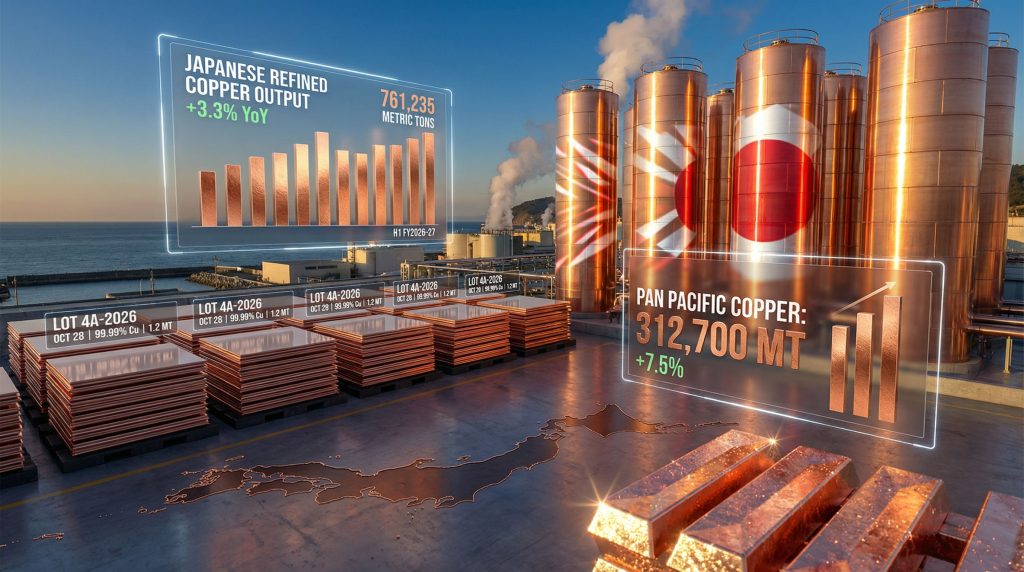
Refined copper production across Japanese facilities reached 761,235 metric tons during the first half of fiscal 2026-27 (April-September), representing a 3.3% year-over-year increase from the previous period's 737,198 metric tons. This growth trajectory indicates operational optimisation across multiple facilities despite varying individual producer performance.
Production Distribution by Major Operators:
| Producer | H1 FY2026-27 Output | YoY Change | Market Share |
|---|---|---|---|
| Pan Pacific Copper | 312,700 MT | +7.5% | 41.1% |
| Sumitomo Metal Mining | 223,000 MT | +3.7% | 29.3% |
| Mitsubishi Materials | 175,416 MT | -3.5% | 23.0% |
| Nittetsu Mining | 23,648 MT | -0.7% | 3.1% |
| Furukawa | 22,541 MT | +0.1% | 3.0% |
| Dowa Holdings | 3,930 MT | +27.9% | 0.5% |
Pan Pacific Copper's 7.5% output increase significantly exceeds industry average growth, attributed to enhanced operating rates at JX Advanced Metals' smelting facilities. This performance differential suggests that operational improvements are concentrated among leading producers rather than distributed uniformly across the sector.
Notable Performance Variations:
- Dowa Holdings achieved exceptional 27.9% growth despite maintaining only 0.5% market share
- Mitsubishi Materials experienced a 3.5% decline, contrasting with industry growth trends
- Furukawa maintained stable output with minimal 0.1% increase
The production data reveals that growth concentration among the top three producers (Pan Pacific Copper, Sumitomo Metal Mining, and Mitsubishi Materials) accounts for 93.4% of total Japanese refined copper output, indicating significant market concentration within the sector.
Demand Drivers Across Industrial Applications
Automotive Sector Transformation
The Japan Copper and Brass Association projects 1.2% growth in domestic copper alloy product demand for fiscal 2026-27, with strip products serving automotive and semiconductor applications driving expansion. This growth reflects broader industrial transformation patterns as automotive manufacturers transition toward electric propulsion systems requiring higher copper content per unit.
Electric vehicles typically contain three to four times more copper than conventional internal combustion vehicles due to battery systems, power electronics, and electric motor construction. Japanese automotive manufacturers' gradual electrification adoption creates sustained demand for specialised copper alloy products meeting stringent quality requirements.
Power Infrastructure Modernisation
The Japan Electric Wire & Cable Makers' Association forecasts 0.6% increase in copper wire shipments, driven by:
- Aging electrical infrastructure replacement programmes
- Data centre power supply expansion requirements
- Grid modernisation supporting renewable energy integration
Infrastructure Investment Context:
Japan's aging power grid infrastructure, with significant portions installed during the 1970s-1980s economic expansion, requires systematic replacement approaching end-of-service life. Data centre expansion throughout Asia-Pacific regions creates additional demand for high-quality copper wiring capable of supporting increased power densities and reliability requirements.
The disparity between 3.3% production growth and lower domestic demand increases (1.2% alloys, 0.6% wire) suggests significant export activity serving regional manufacturing hubs, particularly in automotive and electronics sectors across Asia-Pacific markets. This trend contrasts with US copper production patterns, which focus more heavily on domestic consumption.
Pan Pacific Copper's Operational Excellence Strategy
Pan Pacific Copper's market-leading 7.5% production increase stems from operational efficiency improvements at JX Advanced Metals' smelting facilities, demonstrating how specialised business models can generate competitive advantages within commodity processing sectors.
Ownership and Operational Structure
PPC operates through a tripartite ownership model:
- JX Advanced Metals: 47.8% ownership, provides smelting operations
- Mitsui Mining and Smelting: 32.2% ownership, contributes processing expertise
- Marubeni: 20% ownership, adds trading and logistics capabilities
This structure separates material sourcing from production operations, enabling specialised focus on distinct supply chain functions. PPC outsources smelting and refining operations to parent companies' facilities while concentrating on raw material procurement and refined metal distribution optimisation.
Competitive Advantages:
- Concentrate procurement optimisation through diversified sourcing relationships
- Refined copper marketing strategies leveraging parent company market access
- Supply chain risk management across multiple operational partners
The company's specialised approach allows optimisation of each supply chain component independently, potentially creating efficiency gains unavailable to vertically integrated competitors operating traditional smelting models. Furthermore, strategic copper investments highlight the importance of such operational excellence in achieving competitive positioning.
Comparative Base Metals Production Performance
Zinc Smelting Acceleration
Japanese zinc production demonstrates stronger momentum than copper, with 6.3% year-over-year growth projected for H1 FY2026-27:
| Producer | H1 Output (MT) | YoY Growth |
|---|---|---|
| Mitsui Mining | 108,200 | +3.2% |
| Dowa Holdings | 89,373 | +10.2% |
| Total Zinc | 197,573 | +6.3% |
Lead Production Expansion
Lead smelting shows robust 6.4% growth, with notable performance by:
| Producer | H1 Output (MT) | YoY Growth |
|---|---|---|
| Toho Zinc | 45,700 | +15.2% |
| Mitsui Mining | 35,600 | -3.0% |
| Mitsubishi Materials | 13,644 | +5.1% |
| Dowa Holdings | 4,596 | +10.0% |
| Total Lead | 99,540 | +6.4% |
Nickel Sector Challenges
Nickel production faces headwinds with Sumitomo Metal Mining reporting:
- Nickel: 32,300 MT (-2.1% year-over-year)
- Ferronickel: 2,200 MT (-24.7% year-over-year)
The contrasting performance across base metals reflects different market dynamics, with zinc and lead benefiting from infrastructure replacement cycles while nickel faces global oversupply conditions and battery technology substitution trends.
Industry Challenges and Strategic Adaptations
Treatment Charge Pressures
Global concentrate supply constraints combined with expanding Chinese smelting capacity continue pressuring treatment and refining charges (TC/RCs), impacting Japanese smelter profitability margins. These charges represent the fees paid by concentrate suppliers to smelters for processing services, and declining rates squeeze operational margins. Additionally, concerns about the tariff impact on copper supply create further uncertainty for international trade relationships.
As Japanese smelters plan stronger production for the first half of their fiscal year, they must navigate these challenging market conditions. However, industry experts note that smelters face mounting strategic pressures globally, requiring adaptive strategies.
Strategic Production Adjustments
Some Japanese facilities are implementing selective operational modifications:
- Reduced concentrate processing volumes at certain facilities
- Strategic shifts toward secondary smelting operations
- Increased focus on higher-margin product segments
Supply Chain Resilience Focus
Japanese producers maintain competitive positioning through:
- Advanced environmental compliance systems meeting stringent regulatory standards
- Process efficiency optimisation reducing energy consumption per unit output
- Quality control standards for high-grade applications in electronics and automotive sectors
The next major ASX story will hit our subscribers first
Market Positioning Within Regional Supply Networks
Regional Hub Function
Japanese refined copper serves multiple market segments simultaneously:
- Domestic manufacturing for automotive and electronics production
- Export markets throughout Asia-Pacific industrial centres
- Strategic inventory supporting supply security during market disruptions
Technology Integration Advantages
Japanese smelters maintain competitive differentiation through specialised capabilities including advanced process control systems, environmental management technologies, and quality assurance protocols meeting international manufacturing standards.
The 3.3% production growth occurs without major capacity additions, indicating existing facilities are improving utilisation through operational optimisation rather than capital expansion. This approach suggests the industry prioritises efficiency gains over volume growth in response to market conditions.
Long-Term Strategic Implications
Supply Chain Diversification Trends
Japan's production growth aligns with global efforts to diversify critical mineral processing capabilities and reduce geographic concentration risks. As manufacturing supply chains emphasise resilience alongside efficiency, specialised processing hubs like Japan's copper smelting sector gain strategic importance.
Demand Evolution Patterns
Projected growth reflects Japan's industrial transformation priorities:
- Semiconductor manufacturing expansion requiring ultra-high purity copper products
- Renewable energy infrastructure development demanding specialised electrical components
- Electric mobility adoption acceleration creating sustained automotive copper demand
Investment Signal Analysis
The Japanese copper smelters output increase indicates several market fundamentals:
- Stable demand conditions across key consuming sectors
- Operational efficiency improvements concentrated among leading producers
- Strategic positioning for emerging technology applications requiring specialised metallurgy
Risk Monitoring Framework
Key factors requiring ongoing assessment include:
- Global concentrate availability and pricing affecting raw material costs
- Chinese production capacity expansion influencing regional competitive dynamics
- Domestic demand evolution in automotive and power infrastructure sectors
Japan's copper smelting sector demonstrates adaptive capacity through operational optimisation and strategic market positioning. The sustained 3.3% output growth reflects both immediate demand strength and longer-term industrial transformation trends, establishing Japanese producers as critical participants in global copper supply chains serving advanced manufacturing applications requiring superior metallurgical quality and reliability standards.
Ready to Capitalise on the Next Major Copper Discovery?
With Japanese copper production reaching new heights and global demand surging across technology sectors, identifying emerging copper opportunities becomes increasingly crucial for strategic positioning. Discovery Alert's proprietary Discovery IQ model delivers real-time notifications on significant ASX mineral discoveries, transforming complex geological data into actionable investment insights that position subscribers ahead of broader market movements.