May 20, 2026
When Lithium Markets Punish and Reward: Understanding the Cycle Behind the Finniss Comeback
Few commodity sectors illustrate the brutal mathematics of supply and demand quite as vividly as lithium. Between 2021 and early 2023, spodumene concentrate prices climbed to levels that made hard-rock lithium mining appear almost unfailingly profitable. Then the correction arrived, swift and indiscriminate. Producers across Australia found themselves staring down project economics that no longer made sense, and for many mid-tier operators, the rational response was not retreat but hibernation. Care-and-maintenance decisions became the industry's quiet survival mechanism, preserving assets while waiting for the cycle to turn.
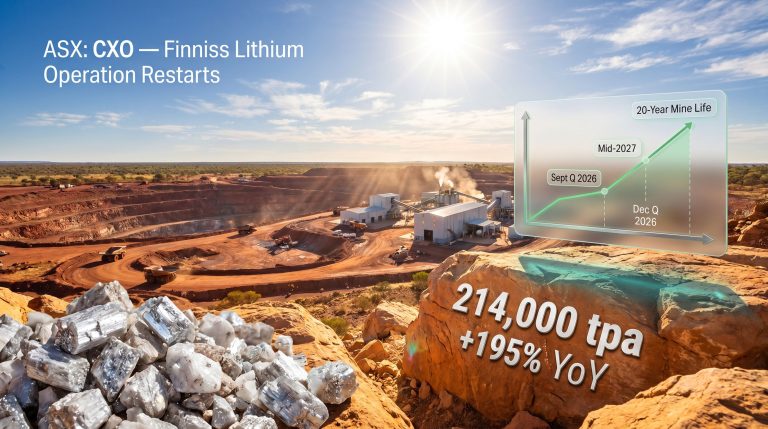
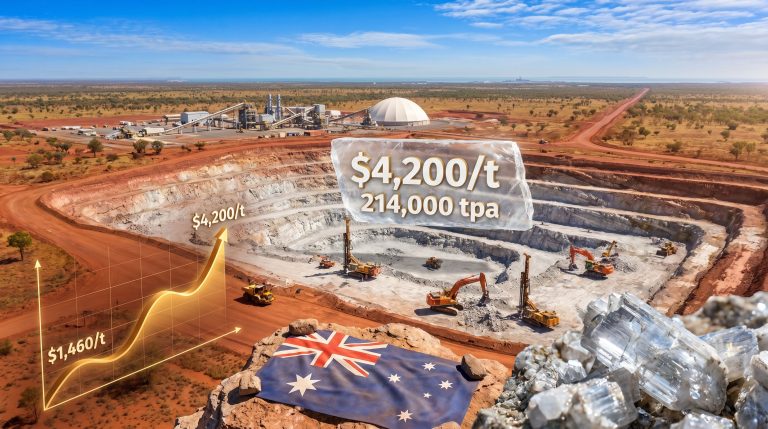
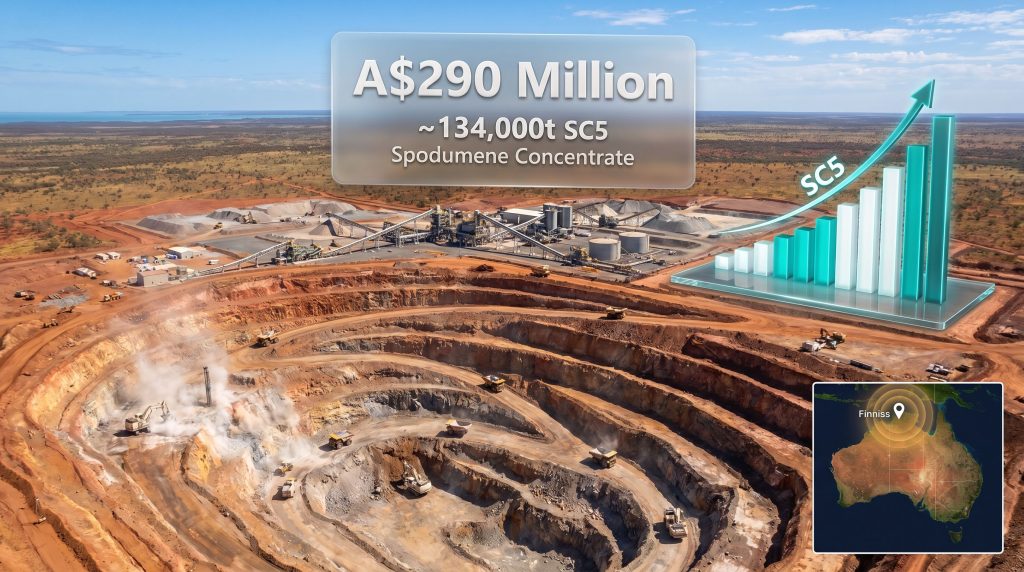
That cycle appears to be turning. Core Lithium restarts Finniss mine after two-year hiatus, backed by a fully structured A$290 million funding package, representing one of the more decisive statements of renewed producer confidence in the medium-term lithium thesis. The fact that blasting and excavation at the Grants open pit commenced in May 2026, less than three months after the financial investment decision in March 2026, adds a layer of operational credibility that distinguishes this restart from more tentative recommissioning efforts seen elsewhere in the sector.
When big ASX news breaks, our subscribers know first
The Price Collapse That Sent Finniss Into Hibernation
How Spodumene Markets Unravelled From 2023 Onward
To understand why Core Lithium restarts Finniss mine after two-year hiatus matters as a market signal, it is necessary to revisit what forced the suspension in the first place. The lithium market downturn that began in late 2023 was driven by a confluence of forces that caught many producers off-guard.
Chinese lithium chemical producers had aggressively expanded conversion capacity during the boom years, anticipating sustained demand growth. At the same time, EV adoption in key markets showed signs of near-term softness, with consumer hesitancy and policy uncertainty in Western markets contributing to inventory build-ups across battery supply chains. The result was a sharp and sustained decline in spodumene concentrate pricing.
SC5 spodumene concentrate, the benchmark product for hard-rock lithium producers like Finniss, saw its price fall dramatically from peak levels. For operations without the scale advantages of a Pilbara Minerals or the balance sheet depth of a major diversified miner, the margin compression was severe. Placing Finniss on care and maintenance in 2024 was not a signal of project failure; it was a deliberate capital preservation decision made under conditions where continuing to produce would have accelerated cash depletion rather than generated returns.
What SC5 Grade Actually Means for the Supply Chain
A point that often gets lost in broader coverage is the technical significance of SC5 as a product grade. Understanding spodumene concentrate basics is essential here — SC5, graded at roughly 5% lithium oxide (Li2O), is the standard feedstock for lithium chemical converters, primarily in China but also in South Korea and Japan. These converters process SC5 into either lithium hydroxide or lithium carbonate, the two primary lithium compounds used in battery cathode manufacturing.
The quality and consistency of SC5 product matters significantly to downstream buyers. Converters operating at scale require reliable feedstock with predictable impurity profiles, particularly regarding iron, manganese, and phosphorus content. Operations that can deliver consistently graded concentrate with low deleterious element levels command stronger offtake terms and tighter pricing relationships with converters. Furthermore, Finniss's existing processing infrastructure, already commissioned and calibrated to produce SC5 product, is a meaningful advantage in this context.
Inside the Finniss Restart: Structure, Strategy, and Speed
Unpacking the A$290 Million Funding Architecture
The scale and structure of the funding package assembled to restart Finniss deserves closer examination, because it communicates more than just a dollar figure. Securing A$290 million across multiple instrument types — including convertible notes, debt facilities, equity capital raises, and strategic partner contributions — indicates that more than one category of institutional investor has underwritten the medium-term viability of the project. You can review the Finniss funding and restart presentation for the full breakdown of the capital structure.
| Funding Component | Strategic Function |
|---|---|
| Convertible Notes | Provides flexible debt with equity conversion optionality, aligning lender returns with project upside |
| Debt Facilities | Structured drawdown capacity matched to operational cashflow requirements |
| Equity Raise | Dilutive but confidence-signalling, broadening the shareholder base at restart |
| Strategic Partner Contributions | Indicates downstream or offtake alignment with production output |
Convertible note structures are particularly notable in mine restart contexts because they signal that capital providers are willing to accept some equity risk in exchange for downside protection. This instrument type is typically favoured when the asset quality is considered sound but execution risk remains elevated. In the Finniss case, the use of convertible notes alongside structured debt suggests the funding consortium viewed the project's geological credentials favourably while acknowledging the inherent uncertainties of a recommissioning timeline.
The Grants Open Pit: Near-Term Ore, Near-Term Cashflow
The decision to begin mining at the Grants open pit reflects a carefully considered sequencing logic. Open-pit mining is inherently lower in upfront capital intensity compared to underground development. It generates ore feed more quickly, requires less complex ventilation and ground support infrastructure, and can be ramped up or down with greater flexibility in response to market conditions.
The Grants pit resource profile is defined and bounded. It provides access to approximately 784,000 tonnes of ore, which is expected to yield around 134,000 tonnes of SC5 spodumene concentrate product. That yield ratio, broadly in line with typical hard-rock lithium processing recoveries for mineralisation of this type, gives the operation a relatively predictable production envelope for the initial phase.
Critically, the Grants pit feeds an existing processing plant that was already constructed and operated during Finniss's initial production phase before care-and-maintenance suspension. Recommissioning an existing plant rather than constructing new processing capacity eliminates one of the most capital-intensive and time-consuming elements of any mine restart, and materially reduces the execution risk profile.
BP33 Underground: The Long-Term Production Engine
While the Grants open pit addresses the near-term cashflow imperative, the BP33 underground lithium mining development represents the structural production foundation that will define Finniss's operational longevity. Underground lithium mining introduces a different risk and reward dynamic compared to open-pit operations.
Underground development typically accesses higher-grade zones of mineralisation that are either too deep or geometrically unsuitable for open-pit extraction. In lithium pegmatite systems, which is the geological host type at Finniss, the highest-grade spodumene mineralisation frequently occurs in steeply dipping, structurally controlled bodies that extend to depth. Underground methods allow selective extraction of these zones with lower waste dilution, potentially improving concentrate grade and processing efficiency.
The BP33 area's development is described as progressing on schedule, running concurrently with open-pit operations. This dual-track approach is strategically significant because it avoids the production gap that would occur if the operation depended entirely on the open pit and then faced a delay in transitioning to underground mining. Indeed, Australia's underground lithium mine developments more broadly are setting important precedents for how hard-rock producers sequence their production strategies.
Reading the Market Signals That Justified the Restart
What Changed Between 2024 and 2026
The decision to commit A$290 million to a restart is not made in a vacuum. Several observable market indicators would have informed the investment committee analysis that preceded the March 2026 financial investment decision.
Spodumene concentrate pricing recovery, even if partial, changes the marginal economics of production significantly. The relationship between SC5 spot pricing and cash operating costs for Australian hard-rock operations means that relatively modest price recoveries from trough levels can shift a project from cash-negative to cash-generative territory. Battery demand forecasting had also stabilised, with longer-term EV penetration projections remaining broadly intact despite near-term variability in adoption rates across different markets.
Price recovery does not need to be complete for restarts to be economically justified. In commodity cycles, the transition from care-and-maintenance to active production is frequently made when pricing recovers sufficiently above cash operating costs to justify the mobilisation expenditure, even if prices remain well below historical peaks.
Competitive Restart Dynamics Across Australian Lithium
The Finniss restart does not occur in isolation. Several Australian lithium producers were evaluating or executing restart strategies around mid-2026, creating a competitive dynamic worth examining. However, it is also worth noting how lithium carbonate supply dynamics at the downstream conversion level will influence how quickly new spodumene volumes are absorbed into the market.
| Operation | Location | 2026 Status | Key Characteristic |
|---|---|---|---|
| Finniss (Core Lithium) | Northern Territory | Active mining from May 2026 | Dual open-pit and underground strategy |
| Pilbara Minerals (Pilgangoora) | Western Australia | Continued operations | World-scale production volume advantage |
| Liontown Resources (Kathleen Valley) | Western Australia | Ramp-up phase | First production achieved in 2024 |
The concentration of Australian hard-rock lithium restarts within a similar timeframe introduces a genuine near-term pricing risk. If multiple operations simultaneously bring incremental SC5 supply to seaborne markets, the demand absorption capacity of Asian converters may be tested. This is a dynamic that sophisticated investors in the sector will be monitoring closely as Q3 and Q4 2026 production data becomes available.
Note: Operational status comparisons are based on publicly available disclosures. Production timelines are subject to revision based on prevailing market conditions.
Darwin's Strategic Position in the Indo-Pacific Minerals Corridor
Why Geography Matters for Finniss Concentrate Flows
One dimension of the Finniss operation that receives insufficient analytical attention is its geographic positioning relative to key export corridors. The Northern Territory location places Finniss within practical logistics reach of Darwin Port, which offers connectivity into Indo-Pacific shipping lanes that serve the primary markets for spodumene concentrate — namely the lithium chemical conversion hubs in China, South Korea, and Japan.
Western Australian lithium operations, while dominant by volume, are concentrated in the Pilbara and Goldfields regions, with export flows primarily routed through Port Hedland and Fremantle. Darwin represents a geographically distinct export point, and for converters in Northeast Asia, shipping distance differentials can translate into meaningful landed cost advantages over time.
Northern Territory infrastructure development, including port capacity and logistics corridors, has been an ongoing focus of both territory and federal government planning. These are broad policy and infrastructure frameworks rather than project-specific commitments, but the regional investment context is relevant background for understanding why Finniss's location carries strategic value beyond the mine gate.
Investor Considerations: What This Restart Actually Signals
Separating Credibility Signals From Execution Risk
The sub-90-day mobilisation timeline from funding decision to active mining is, in capital markets terms, a credibility signal. It demonstrates that Core Lithium maintained the contractor relationships, regulatory standing, and operational knowledge base during the care-and-maintenance period that would enable rapid recommissioning. Operations that allow those relationships and knowledge bases to atrophy during suspensions typically face significantly longer and more costly restart trajectories.
However, investors should hold this signal alongside a clear-eyed assessment of the execution risks that persist through the ramp-up phase. The Argus Media report on Core Lithium's restart provides additional context on the timing and market conditions surrounding the recommissioning decision.
Key risk factors to monitor include:
- Production ramp-up execution: Processing plant recommissioning can surface unexpected maintenance requirements that compress initial recovery rates
- First spodumene concentrate sales pricing: The market price achieved at first delivery will be the first real-world test of whether restart economics hold under live conditions
- BP33 underground development progress: Any delays in transitioning from open-pit to underground ore feed could create production continuity risk after the Grants pit resource is exhausted
- Seaborne SC5 pricing trajectory: Simultaneous Australian restarts could create near-term pricing headwinds that affect project economics before BP33 provides its full production contribution
- Equity dilution management: The equity raise component of the funding package increases share count, and investors should assess how earnings per share dynamics evolve as production ramps toward nameplate capacity
The Q4 2026 first spodumene concentrate sales will be a defining data point. Execution credibility built during the mobilisation phase must be validated by concentrate quality, volumes achieved, and the pricing terms secured with downstream buyers.
The Broader Capital Return Signal
Perhaps the most underappreciated dimension of the Finniss restart from an investor psychology perspective is what a A$290 million fully funded package communicates about institutional sentiment toward the lithium sector at a portfolio level. Institutional capital does not commit at this scale to a single mid-tier lithium operation unless the sector-wide thesis has been sufficiently rehabilitated to justify the exposure.
The 2023–2024 downturn had effectively closed the funding window for many lithium developers and restarters. Consequently, the successful completion of a multi-instrument capital stack of this magnitude suggests that window is reopening — at least selectively — for operations that can demonstrate geological quality, infrastructure readiness, and management execution capability.
The next major ASX story will hit our subscribers first
Frequently Asked Questions: Core Lithium Finniss Mine Restart
Why did Core Lithium restart Finniss in 2026?
Improving lithium market conditions combined with the successful assembly of a A$290 million fully funded capital package made recommissioning economically viable. Core Lithium restarts Finniss mine after two-year hiatus following the lithium price downturn that began in late 2023, which had made continued production economically unsustainable.
What production volumes are expected from the restart?
The Grants open pit provides approximately 784,000 tonnes of ore feed, expected to yield around 134,000 tonnes of SC5 spodumene concentrate. First production is targeted for Q4 2026.
What is the difference between the Grants open pit and BP33 underground?
The Grants open pit is the near-term, lower-risk ore source designed to generate early cashflow during the recommissioning phase. The BP33 underground development is the longer-term production foundation of the Finniss operation, progressing concurrently on schedule.
How quickly did Core Lithium mobilise from funding decision to active mining?
From the financial investment decision in March 2026 to the commencement of blasting and excavation at the Grants open pit took fewer than three months — a notably rapid execution timeline for a restart of this capital scale.
Where does Finniss SC5 concentrate go in the supply chain?
Finniss SC5 spodumene concentrate is positioned for seaborne markets, primarily targeting lithium chemical converters in China, South Korea, and Japan that process spodumene into lithium hydroxide or lithium carbonate for battery cathode manufacturing.
Key Takeaways
- A$290 million in structured institutional funding signals renewed capital market confidence in the medium-term Australian lithium thesis
- Sub-90-day mobilisation from funding decision to active open-pit mining demonstrates operational readiness that distinguishes Finniss from more capital-intensive restart scenarios
- Dual-track production strategy combining near-term open-pit cashflow with concurrent underground development reduces the production continuity risk inherent in single-source mining plans
- SC5 grade consistency and processing plant readiness are technical advantages that support downstream buyer confidence in Finniss concentrate
- Q4 2026 first sales will be the definitive test of whether restart economics hold under prevailing seaborne spodumene pricing conditions
- Simultaneous Australian restarts across multiple operations create near-term supply dynamics that investors and downstream buyers should monitor carefully through the second half of 2026
This article contains forward-looking analysis and production forecasts based on publicly available information. Lithium market conditions, production timelines, and pricing outcomes are subject to material change. Nothing in this article constitutes financial advice. Readers should conduct independent research before making investment decisions.
Want To Catch The Next Major ASX Mineral Discovery Before The Market Does?
Discovery Alert's proprietary Discovery IQ model delivers real-time alerts on significant ASX mineral discoveries — turning complex data across 30-plus commodities into clear, actionable insights for both short-term traders and long-term investors. Explore how historic discoveries have generated extraordinary returns on Discovery Alert's dedicated discoveries page, and begin your 14-day free trial today to position yourself ahead of the market.