August 22, 2026
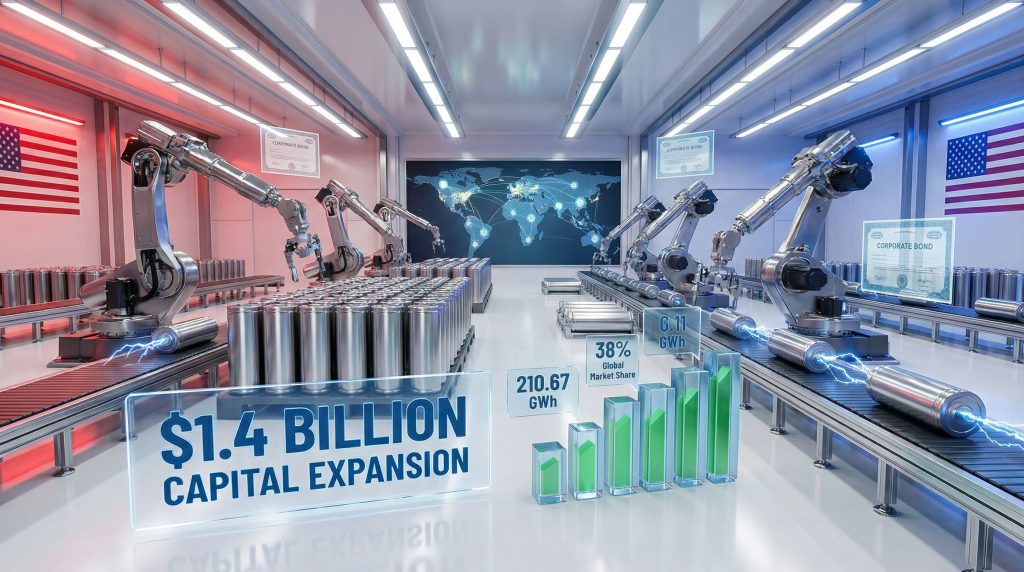
China's Contemporary Amperex Technology (CATL) recently announced plans to raise 10 billion yuan ($1.4 billion) through five-year bond issuance, demonstrating the scale of financing required for next-generation manufacturing facilities. This significant battery metals investment reflects the company's confidence in sustained market demand while positioning for continued global expansion. The bond structure supports both project construction and working capital replenishment across the company's expanding global operations.
How Does Corporate Bond Financing Shape Battery Industry Consolidation?
The global battery manufacturing sector increasingly relies on sophisticated debt financing structures to fund massive capacity expansion projects across multiple continents. Corporate bond issuances provide manufacturers with fixed-cost capital access while maintaining equity control during periods of intensive infrastructure development.
The financing announcement coincided with favourable interest rate environments, as the US Federal Reserve implemented a quarter-point rate cut to 3.5-3.75% on December 10, 2025. Lower global interest rates typically benefit capital-intensive corporations accessing international debt markets for expansion funding.
Five-Year Bond Structure Analysis for Manufacturing Scale-Up
Five-year bond maturity provides battery manufacturers with strategic advantages for multi-phase facility construction timelines. This duration aligns with typical gigafactory development cycles, from initial site preparation through full production ramp-up periods.
Key Financial Metrics:
- Bond Amount: $1.4 billion (10 billion yuan)
- Maturity: Five-year structure
- Purpose: Project construction and working capital
- Market Context: 33.6% year-over-year growth in battery installations
Working capital allocation within bond proceeds enables manufacturers to maintain operational flexibility during facility ramp-up phases. Battery production requires substantial raw material inventory management, with lithium, nickel, and cobalt procurement representing significant upfront capital commitments.
Market Positioning Through Strategic Capital Deployment
Debt financing structures enable battery manufacturers to pursue aggressive expansion strategies without diluting existing shareholder equity positions. This approach proves particularly valuable when companies maintain strong market positions and seek to consolidate industry leadership.
CATL's dominant market position provides favourable conditions for debt financing strategies:
- 38% global market share during January-October 2025
- 210.67 GWh battery installations in first three quarters
- 33.6% year-over-year growth rate in production volume
The bond proceeds support construction across multiple facilities, creating geographic diversification while scaling production capacity. This multi-regional approach reduces supply chain risks while positioning the company to serve growing demand across automotive and energy storage sectors.
When big ASX news breaks, our subscribers know first
What Drives the Economics of Gigafactory Investment Strategies?
Modern battery manufacturing facilities require substantial capital investments that span multiple years from initial construction through production optimisation. The economics of gigafactory development depend on achieving scale efficiencies while managing technology transitions and market demand fluctuations.
Contemporary battery plant construction involves complex integration of automated production lines, quality control systems, and raw material processing capabilities. Investment decisions must account for both immediate market opportunities and long-term technological evolution within the industry.
Production Capacity ROI Models Across Global Markets
CATL's current expansion pipeline demonstrates the scale of investment required for maintaining global market leadership. The company's facility development spans multiple regions with varying capacity targets and timeline expectations.
| Facility Location | Annual Capacity (GWh) | Development Status | Market Focus |
|---|---|---|---|
| Jining, China | 100 | Under construction | Domestic automotive |
| Dongying, China | 40 | Under construction | Commercial vehicles |
| Xiamen, China | 80 | Under construction | Export markets |
| Hungary | 100 | Completion early 2026 | European automotive |
| Germany | 14 | Operating | Premium vehicles |
| Indonesia | 15 | Production begins 2027 | Southeast Asian markets |
| Spain (Aragon) | Undisclosed | Construction began Nov 2025 | LFP batteries |
The combined disclosed capacity additions represent 429+ GWh annually, requiring coordinated investment across construction, equipment, and workforce development. Each facility serves specific market segments while contributing to overall production scale advantages.
Regional facility positioning enables manufacturers to optimise labour costs, raw material access, and target market proximity. China-based facilities benefit from established supply chains and lower manufacturing costs, while European operations provide market access advantages amid evolving trade policies.
Technology Integration Costs in Next-Generation Battery Plants
Modern gigafactories incorporate multiple battery chemistry platforms to serve diverse application requirements. Investment strategies must account for production line flexibility while maintaining quality standards across different technology platforms.
Technology Platform Considerations:
- LFP (Lithium Iron Phosphate): Cost-effective chemistry for commercial applications and energy storage systems
- NCM (Nickel-Cobalt-Manganese): High-energy density solutions for performance automotive applications
- Advanced Chemistries: Next-generation materials requiring specialised production capabilities
CATL's Spain facility specifically focuses on LFP battery production, targeting cost-sensitive European market segments. Construction commenced November 26, 2025, indicating confidence in demand for lower-cost battery solutions across commercial vehicle and stationary storage applications.
Production line automation represents significant capital investment components, with modern facilities requiring integrated quality control systems and material handling automation. These investments improve production consistency while reducing long-term operational costs through labour efficiency gains.
How Do Geopolitical Factors Influence Battery Manufacturing Location Decisions?
Strategic facility positioning across multiple geopolitical regions enables battery manufacturers to mitigate trade policy risks while optimising market access conditions. Geographic diversification provides operational flexibility amid evolving international trade relationships and local content requirements.
Contemporary battery supply chains face complex regulatory environments that influence manufacturing location decisions. Companies must balance cost optimisation with political stability, market access, and supply chain resilience considerations when planning major facility investments.
Supply Chain Resilience Through Geographic Diversification
CATL's global manufacturing footprint demonstrates strategic positioning across key economic regions. The company operates facilities in China, Europe, and Southeast Asia, providing access to different raw material sources and target markets.
Regional Production Strategy:
Asia-Pacific Operations:
- China facilities: 220 GWh combined capacity (Jining 100, Dongying 40, Xiamen 80)
- Indonesia plant: 15 GWh capacity beginning 2027
- Market advantages: Raw material proximity, established supply chains
European Manufacturing:
- Hungary facility: 100 GWh capacity operational early 2026
- Germany operations: 14 GWh existing capacity
- Spain LFP plant: Construction began November 2025
- Strategic benefits: EU market access, local content compliance
Indonesia's position as a major nickel producer provides strategic raw material access for battery manufacturing. The country supplies significant portions of global nickel production, creating supply chain advantages for manufacturers with local operations.
European facility development addresses evolving regulatory requirements for local battery manufacturing. EU policies increasingly favour domestically produced batteries for electric vehicles accessing government incentives and subsidies.
Market Access Optimisation via Strategic Plant Positioning
Geographic facility positioning enables manufacturers to serve regional markets while minimising trade-related costs and delays. Local production provides competitive advantages through reduced logistics costs and improved supply chain responsiveness.
Market Access Benefits:
-
European Market Penetration: Hungary and Spain facilities provide EU manufacturing credentials for serving European automotive OEMs
-
Southeast Asian Growth: Indonesia operations position CATL to capture expanding regional EV adoption
-
China Market Protection: Domestic facilities maintain cost advantages and supply chain control for the world's largest EV market
Trade policy developments continue influencing facility location decisions as governments implement policies favouring domestic manufacturing. Battery manufacturers must anticipate regulatory changes while maintaining operational flexibility across multiple jurisdictions.
What Market Dynamics Drive China's CATL to Raise $1.4bn for Battery Projects?
The timing of major capital investments reflects management assessment of market demand trajectories and competitive positioning requirements. Furthermore, this strategic decision signals confidence in sustained growth across automotive and energy storage market segments.
Market demand indicators support large-scale investment decisions as EV adoption accelerates globally. Battery manufacturers must anticipate future capacity requirements while managing current production optimisation and technology development initiatives that align with energy transition fundamentals.
EV Adoption Curves and Battery Demand Forecasting
Current market performance metrics indicate robust demand growth across key battery application segments. CATL's production statistics demonstrate the scale of capacity required to serve expanding market opportunities.
2025 Performance Indicators:
- 210.67 GWh installations in first three quarters
- 33.6% year-over-year growth in production volume
- Quarterly average: Approximately 70.22 GWh production
- Implied annual capacity: ~841 GWh based on nine-month performance
The company maintains 38% global market share during January-October 2025, indicating strong customer relationships and supply agreement security. This market position provides visibility into future demand requirements from major automotive OEMs and energy storage developers.
Electric vehicle adoption continues accelerating across major markets, creating structural demand for battery manufacturing capacity. Commercial vehicle electrification represents an emerging growth segment beyond traditional passenger car applications.
Competitive Response Analysis in Global Battery Markets
Investment timing reflects competitive dynamics as manufacturers seek to maintain market positions amid industry consolidation. Large-scale capacity investments create barriers to entry while securing long-term supply relationships with major customers.
Strategic Investment Drivers:
- Market share protection against emerging competitors
- Technology leadership maintenance through R&D facility investments
- Customer relationship strengthening via dedicated production capacity
- Scale economics achievement through volume production
The five-year bond structure aligns with typical automotive supply contract durations, providing financial flexibility for serving long-term customer commitments. Battery manufacturers often secure multi-year agreements with automotive OEMs, creating predictable demand visibility.
Energy storage system markets represent additional growth opportunities beyond automotive applications. Grid-scale storage installations require different battery specifications but utilise similar manufacturing capabilities and raw materials.
How Does Manufacturing Scale Impact Battery Cost Reduction Trajectories?
Production scale directly influences unit manufacturing costs through fixed cost amortisation, procurement leverage, and process optimisation opportunities. Battery manufacturers achieve cost advantages through volume production while investing in automation and supply chain integration.
Learning curve effects in battery manufacturing enable cost reductions as cumulative production volumes increase. Companies with large-scale operations benefit from efficiency improvements and supplier relationship optimisation that reduce per-unit costs over time.
Learning Curve Economics in Battery Production
CATL's production scale demonstrates the volume levels required for achieving competitive cost positions in global markets. The company's current performance metrics indicate substantial manufacturing capabilities.
Scale Production Metrics:
- Current production: 210.67 GWh in three quarters (2025)
- Annual run rate: Approximately 841 GWh based on quarterly performance
- Market position: 38% global share provides procurement leverage
- Growth trajectory: 33.6% year-over-year increase in installations
Planned Capacity Expansions:
- China additions: 220 GWh annual capacity (three facilities)
- International growth: 129+ GWh capacity (Europe and Southeast Asia)
- Total incremental: 349+ GWh additional annual capacity
Fixed cost amortisation across higher production volumes reduces per-unit manufacturing expenses. Facility construction, equipment depreciation, and R&D investments spread across larger production quantities create competitive cost advantages.
Procurement leverage improves as manufacturers achieve scale purchasing power with raw material suppliers. Lithium, nickel, cobalt, and other battery materials represent significant cost components that benefit from volume negotiating strength.
Vertical Integration Opportunities Through Expanded Capacity
Scale manufacturing enables battery producers to consider vertical integration strategies that further reduce costs and improve supply chain control. Large facilities can justify co-located raw material processing and component manufacturing operations.
Integration Possibilities:
- Raw material processing: Battery-grade lithium refinery innovations and nickel, cobalt refining
- Component manufacturing: Cathode and anode material production
- Recycling operations: End-of-life battery recycling breakthrough material recovery
- Quality control systems: Integrated testing and certification capabilities
Recycling facility co-location provides circular economy benefits while creating secondary raw material sources. Battery recycling operations require scale to achieve economic viability, making integration attractive for large manufacturers.
Supply chain control advantages emerge through vertical integration as manufacturers reduce dependence on external suppliers for critical materials. This integration requires substantial additional investment but provides long-term cost and supply security benefits.
What Financial Metrics Indicate Successful Battery Investment Outcomes?
Battery manufacturing investment success requires evaluation across multiple performance dimensions including production efficiency, cost competitiveness, and revenue diversification. Companies must achieve operational excellence while maintaining technological advancement and market share growth.
Financial performance metrics encompass both operational efficiency indicators and market positioning measures. Successful battery manufacturers optimise production costs while developing capabilities across multiple technology platforms and market segments.
Production Efficiency Benchmarks Across Global Facilities
Manufacturing efficiency varies significantly across different facility designs, automation levels, and regional operating conditions. Companies with multiple facilities can compare performance metrics to identify best practices and optimisation opportunities.
Efficiency Measurement Categories:
- Output per square metre: Facility design optimisation
- Energy consumption per GWh: Operational cost management
- Material yield rates: Raw material utilisation efficiency
- Quality control metrics: Customer satisfaction and warranty costs
CATL's facility network spans different regions with varying operational characteristics. The company's established German operations (14 GWh capacity) provide benchmarks for European facility performance, while new Hungary and Spain plants will incorporate latest automation technologies.
Automation investment levels significantly impact long-term operational costs and production consistency. Modern gigafactories utilise integrated material handling systems and quality control automation to minimise labour costs while maintaining product specifications.
Revenue Diversification Through Multi-Technology Platforms
Technology platform diversification enables battery manufacturers to serve multiple market segments with different performance and cost requirements. Revenue stability improves through balanced exposure to automotive, commercial vehicle, and energy storage applications.
Technology Platform Strategy:
- LFP batteries: Cost-optimised solutions for commercial applications
- High-energy density: Premium automotive segment focus
- Stationary storage: Grid-scale energy storage systems
- Specialty applications: Marine, aviation, and industrial uses
CATL's Spain facility specifically targets LFP battery production for cost-sensitive European markets. This technology platform serves commercial vehicle applications and entry-level automotive segments while supporting energy storage system demand.
Market segment diversification reduces dependence on single application areas while providing cross-selling opportunities with existing customers. Automotive OEMs increasingly seek battery suppliers capable of serving multiple vehicle platforms and price points.
The next major ASX story will hit our subscribers first
How Do Regulatory Frameworks Influence Battery Manufacturing Investment Decisions?
Regulatory environments significantly impact facility location decisions, technology choices, and operational requirements for battery manufacturers. Companies must navigate varying environmental standards, safety requirements, and trade policies across different jurisdictions.
Compliance costs vary substantially between regions, influencing the economics of manufacturing facility investments. European operations typically require higher environmental standards compared to some other regions, affecting capital and operational cost structures.
Environmental Compliance Costs in Different Jurisdictions
Environmental regulations affect facility design, operational procedures, and ongoing compliance monitoring requirements. Battery manufacturing involves chemical processing operations that must meet stringent environmental protection standards.
Regulatory Compliance Areas:
- Carbon footprint reduction: Manufacturing process optimisation
- Water usage management: Facility location and treatment systems
- Waste stream handling: Byproduct processing and disposal
- Air quality standards: Emissions control systems
European facilities operate under comprehensive environmental regulations that influence facility design and operational costs. The EU's Green Deal policies create additional requirements for sustainable manufacturing practices and carbon footprint reporting.
China's evolving environmental standards increasingly align with international best practices, affecting facility upgrade requirements and operational procedures. Battery manufacturers must anticipate regulatory development when planning long-term investments.
Subsidy and Incentive Optimisation Across Multiple Markets
Government support programmes vary significantly across regions, creating opportunities for optimising facility locations based on available incentives. Battery manufacturing attracts policy support due to strategic importance for automotive and energy transitions.
Incentive Categories:
- Investment tax credits: Capital expenditure support through lithium industry tax incentives
- Production subsidies: Volume-based operational support
- Export financing: Trade credit facilities
- R&D grants: Technology development funding
The US Export-Import Bank and other export credit agencies provide financing support for battery facility development, as demonstrated by recent commitments to lithium projects. These financing sources complement private capital for large infrastructure investments.
European Union policies favour domestic battery manufacturing through various support mechanisms designed to reduce import dependence. Local content requirements create market access advantages for manufacturers with EU-based operations.
What Strategic Partnerships Emerge from Large-Scale Battery Investments?
Major manufacturing investments create opportunities for strategic partnerships across the battery value chain. Companies leverage scale investments to develop integrated relationships with automotive OEMs, raw material suppliers, and technology development partners.
Partnership strategies enable risk sharing while providing access to complementary capabilities and market channels. Battery manufacturers use facility investments as platforms for developing comprehensive industry relationships that strengthen competitive positioning.
Automotive OEM Relationship Development Through Dedicated Capacity
Large-scale production investments enable battery manufacturers to offer dedicated capacity commitments to major automotive customers. These relationships provide supply security for OEMs while ensuring volume commitments for battery producers.
Partnership Structure Benefits:
- Long-term supply agreements: Multi-year volume commitments
- Joint technology development: Next-generation battery specifications
- Dedicated production lines: Customer-specific manufacturing capabilities
- Regional supply optimisation: Market-specific facility allocation
CATL's European facility investments position the company to serve major automotive OEMs requiring local battery supply for EU market sales. The Hungary facility (100 GWh capacity) beginning operations early 2026 provides substantial capacity for European automotive production.
However, Chinese battery giant CATL continues expanding globally, with dedicated capacity arrangements providing financial stability for battery manufacturers while ensuring supply chain security for automotive customers. These relationships often involve joint investment in facility development and technology advancement programmes.
Raw Material Supply Chain Integration Strategies
Scale manufacturing investments justify strategic partnerships with raw material suppliers and processing companies. Battery manufacturers require secure access to lithium, nickel, cobalt, and other critical materials for sustained operations.
Supply Chain Integration Opportunities:
- Mining company partnerships: Direct access to raw material sources
- Processing facility joint ventures: Battery-grade material production
- Recycling network development: Secondary material recovery systems
- Technology sharing arrangements: Material specification optimisation
Indonesia's nickel production capabilities create partnership opportunities for CATL's planned facility in the region. The 15 GWh plant scheduled for 2027 production start provides access to critical raw material sources while serving growing Southeast Asian demand.
Raw material supply chain integration reduces exposure to price volatility while ensuring adequate material availability during demand growth periods. In addition, these partnerships often involve long-term contract commitments and joint investment in processing capabilities.
Investment Strategy Implications for Global Battery Market Evolution
The scale and timing of China's CATL to raise $1.4bn for battery projects signal broader industry transformation as companies position for long-term market leadership. Capital allocation patterns reflect management confidence in sustained growth while creating barriers to entry for smaller competitors.
Strategic investment decisions influence competitive dynamics as established manufacturers expand capacity while new entrants face increasingly challenging market entry requirements. The industry continues consolidating around companies with substantial financial resources and technological capabilities.
Market Consolidation Trends Through Capital-Intensive Expansion
Large-scale facility investments create significant barriers to entry for new competitors while enabling established manufacturers to capture growing market share. The capital requirements for modern gigafactory development exceed many companies' financial capabilities.
Consolidation Drivers:
- High capital requirements: Billion-dollar facility investments
- Technology complexity: Advanced manufacturing process requirements
- Customer relationship importance: Long-term automotive OEM partnerships
- Scale economy advantages: Volume production cost benefits
CATL's $1.4 billion investment commitment demonstrates the financial resources required for maintaining competitive positioning. The company's 38% global market share provides foundation for continued expansion while smaller competitors face resource constraints.
Market consolidation benefits established players through improved pricing power and reduced competitive pressure. Companies with scale advantages can invest in next-generation technologies while maintaining operational excellence across existing facilities.
Future Investment Cycle Predictions Based on Current Strategic Moves
Current investment patterns suggest continued capacity expansion as battery demand grows across multiple application segments. The five-year bond structure indicates management expectations for sustained market growth through 2030 and beyond.
Future Investment Considerations:
- Next-generation technology transitions: Solid-state battery development
- Regional market expansion: Emerging market facility development
- Supply chain integration: Vertical integration investments
- Recycling infrastructure: Circular economy facility development
Technology transition timelines influence investment strategies as companies must balance current production optimisation with next-generation capability development. Solid-state batteries and other advanced technologies will require new facility investments and process development.
Furthermore, regional market development priorities continue evolving as EV adoption accelerates in emerging markets. For instance, CATL commits to lithium production projects in Bolivia, demonstrating the company's strategic expansion into raw material supply chains.
Battery manufacturers must anticipate future demand patterns while managing current capacity utilisation and market share objectives. Consequently, the global battery manufacturing industry continues experiencing transformational change as companies invest billions in production capacity while navigating technology transitions and evolving market requirements.
Success requires strategic capital allocation combined with operational excellence and technology leadership across multiple geographic markets. In conclusion, China's CATL to raise $1.4bn for battery projects represents a decisive move towards cementing the company's position in an increasingly competitive and capital-intensive industry.
Looking to Capitalise on Major Battery Market Developments?
Discovery Alert's proprietary Discovery IQ model delivers real-time notifications on significant ASX mineral discoveries across critical battery metals like lithium, nickel, and cobalt, empowering subscribers to identify actionable opportunities as major industry players like CATL invest billions in expanding production capacity. Begin your 30-day free trial at Discovery Alert today and position yourself ahead of the market as the battery revolution accelerates.