May 21, 2026
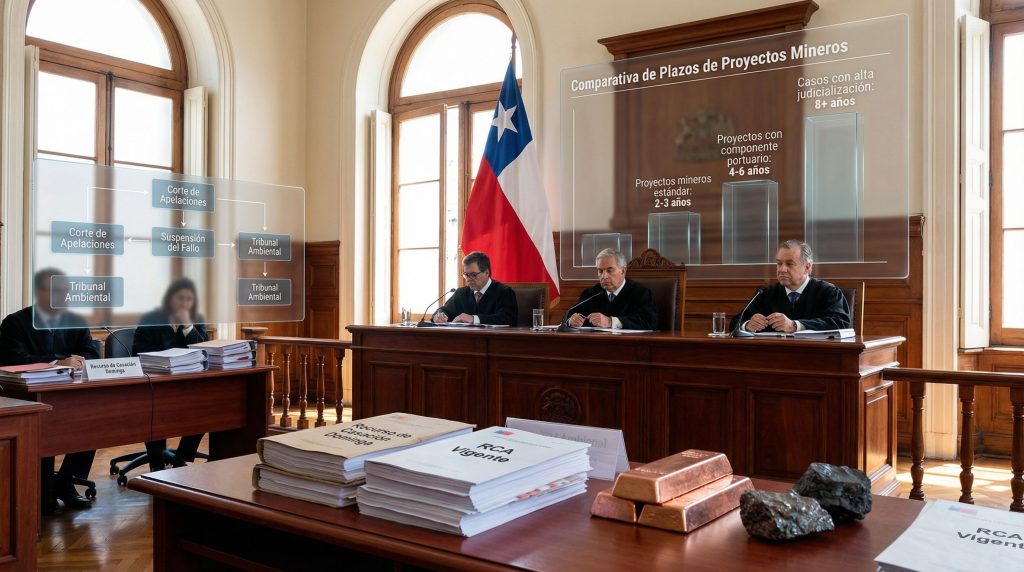
The Chilean mining sector continues to demonstrate the complex interplay between environmental litigation and project development, where the Corte de Apelaciones suspende fallo por Dominga represents a significant judicial intervention in environmental governance. This case exemplifies how administrative approvals can shift between validity and suspension through judicial review processes, creating substantial implications for industry evolution trends and investment certainty.
Análisis del Marco Procesal: Suspensión de Sentencias y Recursos de Casación
The Chilean judicial system establishes specific mechanisms to review controversial environmental decisions through different tribunal instances. When the Corte de Apelaciones suspende fallo por Dominga through accepting a cassation appeal, furthermore, it activates a legal process that temporarily modifies the project's regulatory status while the highest court evaluates the legal foundations of the controversy.
This development reflects broader challenges in mining permitting insights that mining companies face globally. The complexity of environmental approvals demonstrates how judicial interventions can fundamentally alter project timelines and regulatory certainty.
Efectos Procesales del Recurso de Casación
The cassation appeal represents an extraordinary review mechanism that allows the Supreme Court to evaluate legal errors in lower court decisions. According to the Chilean Civil Procedure Code (Articles 773-810), this appeal must demonstrate:
- Violation of substantive law in the application of environmental norms
- Procedural defects that cause material harm to parties
- Legal interpretation errors in applying environmental regulatory frameworks
The suspension of effects during appeal processing constitutes a precautionary measure that maintains the previous legal state until definitive resolution. This procedural characteristic generates significant implications for large-scale projects that have experienced prolonged evaluation processes.
Diferenciación Entre Suspensión Temporal y Resolución Definitiva
| Estado Procesal | Efecto en RCA | Duración Estimada |
|---|---|---|
| Sentencia de primera instancia | RCA suspendida | Hasta apelación |
| Recurso de casación acogido | RCA restituida temporalmente | 18-36 meses promedio |
| Resolución Corte Suprema | Estado definitivo | Variable según complejidad |
The legal distinction between precautionary measures and substantive decisions is fundamental to understanding that temporary restitution of an Environmental Qualification Resolution does not constitute definitive project approval. Instead, it represents a procedural measure that preserves rights while the substantive controversy is resolved.
When big ASX news breaks, our subscribers know first
Impacto en el Sistema de Evaluación de Impacto Ambiental (SEIA)
The SEIA, established by Law 19.300 (1994, reformed in 2010), constitutes the regulatory framework that integrates environmental considerations into development decisions before project execution. However, the interaction between this administrative system and judicial processes generates precedents that affect legal certainty for future developments.
This situation mirrors challenges seen in other jurisdictions, particularly regarding executive mining permits and their vulnerability to judicial review. The Chilean experience provides valuable insights for understanding how environmental approvals can be contested through court systems.
Precedentes Jurisprudenciales y Seguridad Regulatoria
Environmental tribunals, established through Law No. 20.600 (2012), operate as first instance for environmental disputes. Consequently, Courts of Appeals review their decisions while the Supreme Court acts as the final instance for cassation appeals.
Marco de Competencias Jurisdiccionales: Environmental Tribunals possess specialised competence to evaluate technical environmental aspects, while Courts of Appeals and the Supreme Court primarily review procedural aspects and legal application, without retaking factual evaluation.
The development of precedents regarding RCA validity during litigation processes establishes criteria that affect regulatory risk perception among extractive sector investors. Furthermore, emerging jurisprudence on suspension of effects during cassation appeals may influence the financial structuring of future projects.
Plazos y Procedimientos de Revisión Judicial
Historical data from the Supreme Court (2018-2024) indicates that cassation appeals in environmental matters require between 18 and 36 months for resolution. Cases with high technical complexity extend this period up to 48 months, generating significant financial implications for project developers.
- Standard cases: 24 months average processing
- Cases with complex technical records: 36-48 months
- Cases with multiple appeals: Additional variable extension
Análisis de Riesgo Regulatorio en Desarrollos Minero-Portuarios
Projects combining mining and port components face multiple regulatory frameworks including terrestrial environmental evaluation, marine impact review, and local community consultation under ILO Convention 169, ratified by Chile in 2009.
This complexity is evident in various international contexts, as demonstrated by the recent project suspension case in Australia, which shows similar patterns of regulatory challenges affecting major mining developments.
Factores de Complejización en Procesos de Aprobación
Mining-port infrastructure development requires coordination between different regulatory organisms:
- Environmental Assessment Service (SEA): Comprehensive impact evaluation
- Maritime Authority: Port and naval component review
- CONADI: Indigenous consultation when applicable
- Municipalities: Local construction and operation permits
- SERNAGEOMIN: Specific mining aspect supervision
This regulatory multiplicity generates intersection points where different technical criteria can create inconsistencies that subsequently translate into judicial controversies.
Estrategias de Mitigación de Riesgo Jurídico
International best practices in extractive project development suggest risk management approaches that include:
- Early technical robustness: High-quality environmental studies exceeding minimum standards
- Proactive community engagement: Participation protocols exceeding basic legal requirements
- Contingent financial structuring: Planning considering timeline extensions due to judicial processes
- Continuous compliance audits: Regular verification of adherence to environmental conditions
Participación de Actores Locales en Procesos Judiciales Ambientales
The Chilean legal framework, reformed in 2010, expanded the concept of active legitimation to include "any person defending the environment" and specifically organisations with environmental or community protection interests. This expansion has enabled effective participation of artisanal fishing organisations in environmental litigation.
Mecanismos de Participación y Standing Legal
Local organisations can participate in environmental judicial processes by demonstrating:
- Legitimate interest in the matter: Direct or potential project impact
- Injury or threat to environmental rights: Impact on traditional economic activities
- Protection organisation quality: Formal status as community or environmental entity
The concept of "diffuse environmental rights" allows collective participation beyond individual property rights claims. In addition, this facilitates fishing organisation intervention in coastal project cases.
Casos Históricos de Participación Comunitaria
Punta Arenas Thermal Plant (2012): Local environmental organisations successfully participated as intervenors in Environmental Tribunal procedures, challenging a thermal energy plant's RCA. The case reached the Environmental Tribunal with documented community participation.
Caleta Coloso Port Expansion (2018): Artisanal fishing organisations participated in the public consultation phase for port development. Consequently, they achieved evaluation period extension through presenting well-founded environmental observations.
Escenarios Futuros y Análisis de Precedentes
The Supreme Court faces multiple resolution possibilities when evaluating cassation appeals in environmental matters. Cassation standards require demonstration of substantive law violation, material procedural defects, or legal interpretation errors, without allowing fact retrial.
This uncertainty reflects broader global trends in mining governance, similar to developments in British Columbia's mining claims framework, where indigenous rights and environmental concerns create complex regulatory landscapes.
Posibles Resoluciones del Máximo Tribunal
| Tipo de Resolución | Efecto en RCA | Implicación Procesal |
|---|---|---|
| Confirmación | RCA definitivamente suspendida | Fin del proceso judicial |
| Revocación total | RCA restaurada con efectos plenos | Proyecto puede avanzar |
| Revocación parcial | RCA con condiciones modificadas | Nuevos requisitos técnicos |
| Reenvío | Nuevo análisis con criterios específicos | Proceso adicional en tribunal inferior |
Factores Determinantes en la Decisión Final
Elements that typically influence environmental cassation resolutions include:
- Technical foundation quality: Solidity of original environmental studies
- Administrative procedure adherence: SEIA requirement compliance
- Adequate citizen participation consideration: Public observation evaluation
- Correct precautionary principle application: Balance between development and environmental protection
Comparación con Proyectos de Alta Judicialización
The Chilean landscape includes multiple extractive projects that have experienced prolonged judicial processes, establishing resolution patterns that may inform expectations about similar cases. For instance, according to Reporte Minero, the recent judicial developments demonstrate ongoing complexity in environmental litigation.
HidroAysén: This hydroelectric project experienced approximately 10 years of processing before definitive cancellation, including multiple environmental and judicial review instances.
Pascua Lama: The binational mining development required more than 15 years of evaluation with multiple administrative and judicial instances, including suspension for environmental reasons.
Patrones Comunes en Resolución de Controversias
Historical case analysis reveals recurring elements:
- Timeline extension due to technical complexity: Projects with multiple regulatory components typically exceed standard schedules
- Sustained community participation: Cases with high local organisation tend to generate more prolonged processes
- Evolution of environmental criteria: Regulatory standard changes during evaluation may require additional studies
Moreover, Nueva Minería reports highlight how judicial decisions can reopen project scenarios previously considered closed.
The next major ASX story will hit our subscribers first
What Are the Key Implications for Future Environmental Governance?
The experience of highly judicialised projects suggests opportunities to strengthen the regulatory system through better practices that balance legal certainty with environmental rigour. However, the Corte de Apelaciones suspende fallo por Dominga case demonstrates ongoing challenges in achieving this balance.
Elementos Clave para Procesos Más Eficientes
- Standardised technical criteria: Development of consistent environmental metrics across different project types
- Realistic evaluation timelines: Schedules reflecting the actual complexity of mining-port projects
- Structured participation mechanisms: Processes channeling community input constructively
- Improved inter-institutional coordination: Protocols reducing inconsistencies between regulatory organisms
Consideraciones Estratégicas para Diferentes Actores
For Project Developers:
- Legal contingency planning: Financial structuring considering extended timelines due to litigation
- Early stakeholder engagement: Community relations programmes before formal evaluation
- Technical excellence in studies: Investment in environmental analyses exceeding minimum standards
For Investors:
- Comprehensive regulatory risk evaluation: Due diligence including judicial precedent analysis
- Portfolio diversification: Risk distribution among projects in different regulatory stages
- Realistic timeframe understanding: Expectations adjusted to complex process reality
For Local Communities:
- Participation mechanism optimisation: Technical capacity development for effective engagement
- Coordination with specialised organisations: Alliances strengthening positions in formal processes
- Constructive approach in observations: Technically founded contributions improving project quality
For Regulators:
- Administrative procedure enhancement: Simplification maintaining technical rigour
- Consistent precedent development: Jurisprudence providing investor predictability
- Technical capacity strengthening: Specialised human resources for complex project evaluation
Conclusión: Navegando la Incertidumbre Regulatoria
The evolution of Chilean environmental law through cases like this establishes precedents that will influence future extractive sector development. The situation where the Corte de Apelaciones suspende fallo por Dominga illustrates the delicate balance between economic growth imperatives and environmental protection with effective community participation.
Furthermore, this case demonstrates how judicial interventions can create both opportunities and challenges for mining project development. The temporary nature of the court's decision emphasises the importance of robust environmental assessments and comprehensive stakeholder engagement from project inception.
Ultimately, the resolution of this case will provide valuable insights for the mining industry, regulators, and communities navigating similar environmental challenges. The precedent established will likely influence how future projects approach environmental compliance and community relations in Chile's evolving regulatory landscape.
Looking to Capitalise on Mining Discoveries Before Market Sentiment Shifts?
Chile's evolving regulatory landscape demonstrates why timing is crucial in mining investments—administrative approvals can change rapidly through judicial review processes, creating both opportunities and risks for investors. Discovery Alert's proprietary Discovery IQ model delivers instant notifications when significant ASX mineral discoveries are announced, ensuring you're positioned ahead of regulatory shifts and market movements rather than reacting to them after sentiment has already changed.