
May 21, 2026
Understanding Criminal Organization Power Dynamics in Modern Mexico
Complex organizational structures within Mexico's criminal enterprises have evolved through decades of territorial expansion, technological advancement, and strategic adaptation. The Sinaloa cartel power struggle represents a pivotal moment in understanding how these networks operate sophisticated hierarchies that mirror legitimate business operations while maintaining violent enforcement capabilities across multiple geographic regions. Understanding how these systems function requires examining both their internal governance mechanisms and external pressure responses.
Traditional cartel structures relied heavily on centralized command systems where senior leadership maintained strict control over territorial boundaries, profit distribution, and operational protocols. This model proved effective during periods of stable government relations and limited law enforcement pressure. However, sustained targeting of leadership positions has fundamentally altered these dynamics, creating power vacuums that trigger internal competition and structural fragmentation.
When big ASX news breaks, our subscribers know first
Organizational Leadership Vulnerability Factors
Multiple destabilizing elements contribute to leadership crises within established criminal organizations. Simultaneous removal of senior commanders through coordinated enforcement operations creates knowledge gaps that cannot be easily filled through traditional succession planning. Unlike legitimate businesses, these organizations cannot openly recruit experienced managers or establish formal training programs for leadership development.
Key vulnerability factors include:
- Loss of institutional memory regarding operational protocols
- Disruption of established territorial agreements between competing factions
- Breakdown of financial management systems and profit-sharing arrangements
- Emergence of ambitious mid-level commanders seeking autonomous control
- Communication network compromises affecting coordination capabilities
The removal of experienced leadership often triggers cascading effects throughout organizational hierarchies. Junior commanders may lack the diplomatic skills necessary to maintain peaceful relationships with rival groups, leading to increased territorial disputes and resource competition.
Furthermore, these leadership gaps create opportunities for understanding tariff policy implications that affect cross-border smuggling operations and economic dynamics.
Faction Analysis: The Current Landscape
Beltrán Leyva Organization Revival
The resurgence of this particular faction represents a strategic consolidation effort within contested territories. Fausto Isidro Meza Flores, designated on the FBI's Most Wanted list, has maintained operational continuity since 2012 despite sustained enforcement pressure. This longevity demonstrates organizational resilience and adaptive capacity that contrasts sharply with more publicly visible leadership approaches.
Territorial control assessment reveals:
| Region | Strategic Value | Operational Status |
|---|---|---|
| Guasave | Agricultural hub | Active control |
| Mountain strongholds | Defensive positions | Fortified bases |
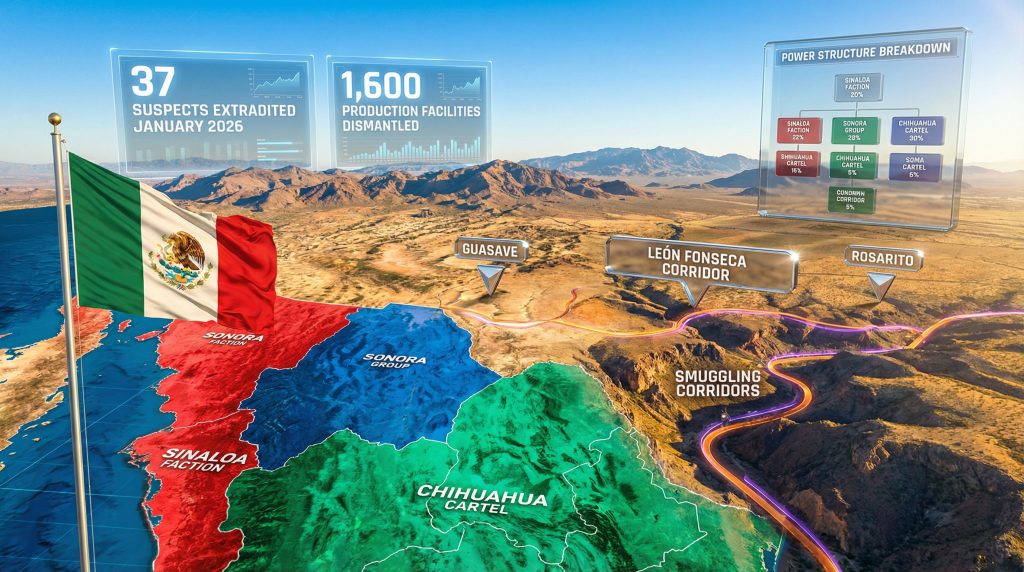
| León Fonseca corridor | Smuggling routes | Contested territory |
| Sinaloa de Leyva | Historical base | Consolidated power |
This faction's low-profile strategy has enabled sustained operations while avoiding the media attention that often accompanies high-visibility leadership styles. Their focus on maintaining effective export capabilities suggests sophisticated logistical networks that have adapted to changing enforcement environments.
Los Chapitos: Inherited Leadership Challenges
This faction faces unique operational challenges stemming from inherited rather than earned authority. Leadership transition without established credibility creates internal legitimacy questions that weaken command effectiveness. Sustained combat losses have depleted both human resources and territorial control capabilities.
Critical operational challenges:
- Authority gaps affecting subordinate loyalty
- Resource depletion from prolonged territorial conflicts
- Reduced operational effectiveness compared to peak organizational periods
- Difficulty maintaining supplier relationships and distribution networks
Los Mayos: Sanctioned Armed Operations
The U.S. Treasury Department's designation of this group as a Foreign Terrorist Organization represents a significant escalation in official response capabilities. This classification enables expanded enforcement tools beyond traditional drug trafficking prosecutions.
Designation implications include:
- Asset freezing capabilities across international financial systems
- Enhanced prosecution authorities for associated individuals
- Diplomatic pressure mechanisms against supporting governments
- Military intervention options under anti-terrorism frameworks
Key operational structure:
| Position | Territory | Specialization |
|---|---|---|
| Arzate Brothers | Rosarito Corridor | Cross-border smuggling |
| Carlos Alberto Paez Pereda | Laboratory networks | Fentanyl production |
| Los Rugrats Gang | Urban territories | Street-level enforcement |
Government Response Strategy Evolution
Extradition Acceleration Campaign
Recent enforcement statistics demonstrate unprecedented cooperation between Mexican and U.S. authorities. 37 suspects were extradited in January 2026 alone, representing part of a broader acceleration that has seen 92 total transfers within a 12-month period. These numbers indicate sustained political commitment to enforcement cooperation despite traditional sovereignty concerns.
High-profile extraditions include:
- Rafael Caro Quintero: Veteran leadership figure
- Multiple mid-level operational commanders
- Financial specialists managing money laundering operations
- Technical experts overseeing production facilities
The strategic impact of these removals extends beyond individual cases. Knowledge transfer disruptions affect organizational memory regarding supplier relationships, transportation routes, and communication protocols. Financial systems face particular vulnerability as specialized money laundering expertise cannot be easily replaced.
Moreover, the Sinaloa cartel's internal conflict has intensified as enforcement pressure creates additional strain on leadership structures.
Laboratory Disruption Operations
Enforcement agencies have dismantled approximately 1,600 production facilities across traditional stronghold regions. This systematic approach targets both large-scale manufacturing operations and smaller distribution laboratories.
Disruption metrics reveal:
- Technology seizures reducing production capabilities
- Chemical precursor supply chain interruptions
- Infrastructure destruction requiring costly rebuilds
- Specialist personnel arrests affecting technical operations
Economic Impact Assessment
Revenue Stream Competition
Fragmentation creates intense competition for established profit centers. Cocaine trafficking corridor control remains the highest-value prize, with monthly revenues potentially reaching millions of dollars for prime border crossing locations. Heroin production networks face particular pressure as synthetic alternatives gain market dominance.
Market dynamics show:
- Fentanyl manufacturing operations generating higher profit margins
- Traditional heroin networks experiencing declining demand
- Money laundering services becoming specialized profit centers
- Real estate investments providing legitimate income streams
In addition, the broader economic implications connect to trade war impact on markets as global financial pressures affect money laundering capabilities and cross-border operations.
Territorial Economics Restructuring
Local economic systems face disruption as established protection arrangements collapse. Border crossing fee structures must be renegotiated as territorial control shifts between competing factions. Small businesses operating in contested areas often face multiple taxation demands from rival groups.
Economic restructuring elements:
- Protection racket reorganization affecting local commerce
- Transportation corridor access fee modifications
- Agricultural sector extortion system changes
- Construction industry investment pattern shifts
Violence Escalation and Operational Effectiveness
Tactical Evolution in Territorial Disputes
Modern conflicts increasingly feature sophisticated military-style equipment and strategies. Drone technology deployment has become common in territorial surveillance and targeted attacks. Urban siege tactics disrupt government operations while demonstrating organizational capabilities to civilian populations.
Advanced warfare methods include:
- Unmanned aerial vehicle surveillance systems
- Improvised explosive device manufacturing
- Cyber warfare capabilities for intelligence gathering
- Sophisticated weapons procurement networks
Resource Allocation Impact
Increased security expenditures significantly reduce profit margins across all operational areas. Personnel losses affect operational capacity while infrastructure destruction requires expensive rebuilds. Legal defense costs for arrested leadership further strain organizational budgets.
Financial pressure points:
Security equipment and personnel costs now consume 30-40% of operational budgets, compared to 15-20% during peaceful periods.
However, some organizations maintain understanding of cartels' organizational structure to adapt their operations effectively.
The next major ASX story will hit our subscribers first
Strategic Scenario Analysis
Consolidation Possibility Assessment
Scenario probability depends on multiple convergent factors. Elimination or capture of competing faction leaders could enable territorial consolidation under remaining leadership. External pressure forcing cooperation agreements represents another pathway toward organizational reunification.
Consolidation requirements:
- Dominant faction achieving decisive territorial victories
- Economic incentives favoring unified operations over competition
- Leadership negotiations producing acceptable power-sharing arrangements
- External threats creating common defense necessities
Permanent Fragmentation Model
Alternative scenarios suggest sustained division into multiple independent organizations with specialized operational focus. Geographic advantages may determine territorial boundaries rather than historical organizational loyalties.
Fragmentation characteristics would include:
- Reduced overall organizational efficiency
- Increased violence levels due to ongoing territorial competition
- Specialized operational focus areas for different groups
- Potential cooperation agreements for specific activities
Government Intervention Success Scenario
Successful state intervention requires sustained commitment across multiple operational dimensions. Community development programs reducing recruitment effectiveness must accompany enforcement operations to address underlying economic conditions that enable organizational expansion.
Success requirements:
- Sustained enforcement pressure across all competing factions
- International cooperation for financial system disruption
- Alternative economic opportunities in affected regions
- Judicial system capacity improvements for prosecution effectiveness
International Response Framework Development
U.S. Policy Evolution and Implications
Foreign Terrorist Organization designations represent significant policy escalation with far-reaching consequences. Enhanced intelligence sharing agreements enable real-time operational coordination between Mexican and U.S. authorities. Diplomatic leverage for enforcement cooperation has increased substantially through these mechanisms.
Enforcement coordination elements:
- DEA operational support expanding within Mexican territory
- Treasury Department financial investigation capabilities
- State Department diplomatic pressure campaign coordination
- Defense Department potential intervention planning
Furthermore, understanding tariffs and investments becomes crucial as enforcement operations affect cross-border financial flows and investment patterns.
Sanctions Regime Effectiveness
Financial sanctions demonstrate mixed effectiveness depending on implementation consistency. Asset freezing capabilities prove most effective when applied systematically across multiple international jurisdictions. However, organizations often adapt through cryptocurrency usage and informal value transfer systems.
Consequently, the gold market surge provides alternative investment vehicles that criminal organizations may exploit for value storage and transfer.
Regional Stability and Governance Implications
Institutional Challenge Assessment
Corruption networks require comprehensive restructuring to support sustained enforcement success. Judicial system capacity limitations affect prosecution effectiveness while resource allocation priorities must balance immediate security needs against long-term development requirements.
Governance impact areas:
- Democratic legitimacy concerns in heavily affected regions
- Public service delivery disruptions during enforcement operations
- Economic development project security requirements
- Tourism industry confidence restoration needs
Long-term Development Considerations
Foreign investment confidence depends heavily on security stability. Agricultural sector protection requirements must address both criminal extortion and legitimate security needs. Infrastructure development faces elevated costs due to security provision necessities.
Development priorities include:
- Educational opportunity expansion in recruitment-vulnerable communities
- Economic diversification away from illicit activity dependence
- Transportation network security improvement
- Financial system transparency enhancement
Additionally, broader economic concerns relate to global recession analysis that affects the economic conditions underlying criminal organization recruitment and operations.
Organizational Resilience Versus State Capacity
Current fragmentation dynamics present both opportunities and risks for effective governance. Weakened criminal organizations may prove more vulnerable to sustained enforcement pressure, but increased violence levels create immediate civilian security concerns that require careful balancing.
The ongoing Sinaloa cartel power struggle demonstrates how internal conflicts can either weaken criminal organizations or intensify violence levels. Success in addressing these complex dynamics demands sustained commitment to both enforcement operations and socioeconomic development programs.
Reducing organizational recruitment capabilities through legitimate economic opportunities represents a critical long-term strategy that complements immediate security responses. The evolving situation demonstrates how modern criminal organizations adapt to changing enforcement environments while government responses must similarly evolve to address new operational realities.
Understanding these dynamics provides essential context for evaluating policy effectiveness and predicting future developments in this ongoing security challenge. The Sinaloa cartel power struggle serves as a case study in how organizational fragmentation affects both criminal capabilities and state response effectiveness.
This analysis is based on publicly available information and should be considered educational content regarding organized crime dynamics. Future developments may differ from current assessments due to the rapidly evolving nature of these situations.
Ready to Capitalise on Market-Moving Discoveries?
Discovery Alert's proprietary Discovery IQ model delivers real-time alerts on significant ASX mineral discoveries, instantly empowering subscribers to identify actionable opportunities ahead of the broader market. Begin your 14-day free trial today at Discovery Alert and secure your market-leading advantage in mineral investment opportunities.