August 7, 2026
When global energy markets face disruption, few events create more immediate uncertainty than security incidents in critical maritime chokepoints. The interconnected nature of modern commodity flows means that localised conflicts can rapidly cascade into worldwide economic turbulence, testing the resilience of supply chains that underpin industrial civilisation. Understanding these vulnerability patterns becomes essential as geopolitical tensions reshape traditional trading relationships and force market participants to recalibrate risk assumptions across multiple time horizons.
Critical Chokepoint Dynamics in Global Energy Networks
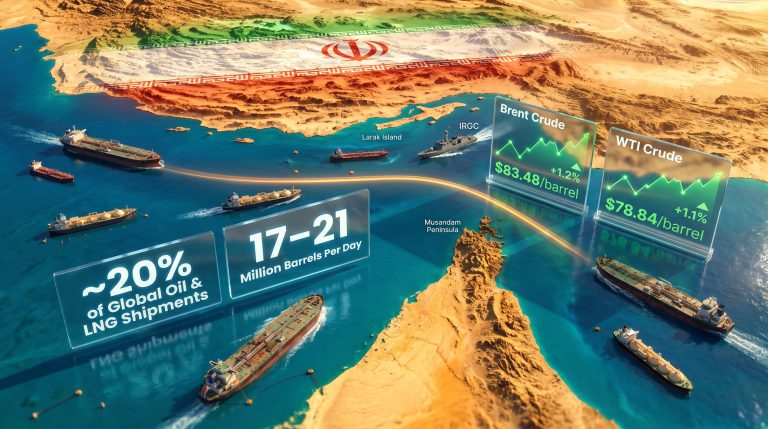
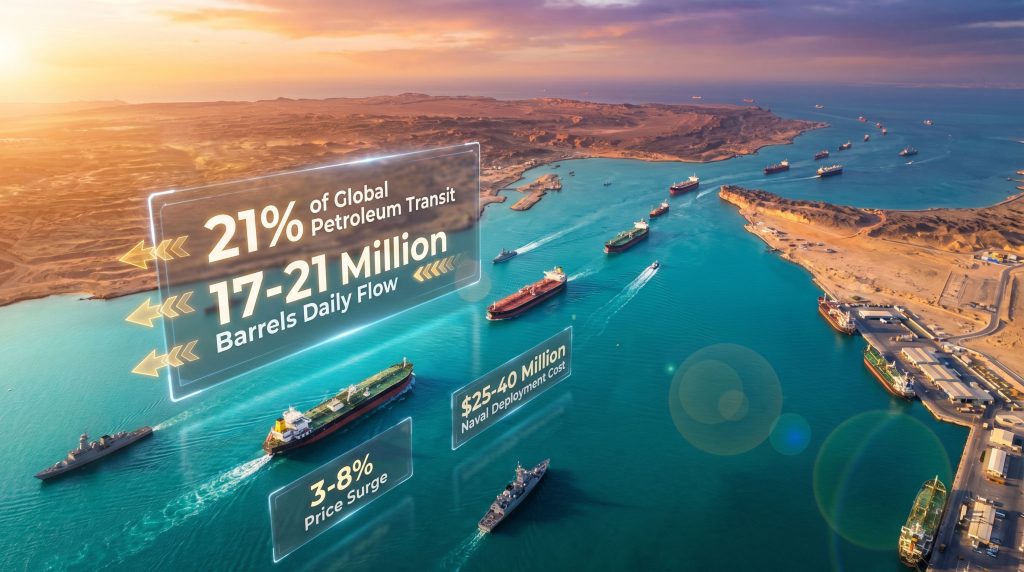
The Strait of Hormuz functions as the world's most strategically significant energy transit corridor, facilitating the movement of approximately 20% of global petroleum liquids through its narrow 34-kilometre passage. This waterway's importance extends beyond simple volume metrics, serving as the primary export route for major oil-producing nations in the Persian Gulf region.
Recent incidents demonstrate the fragility of this system. On April 18, 2026, two distinct attacks occurred when vessels attacked in Strait of Hormuz created immediate market volatility. Iranian navy gunboats fired upon an unnamed tanker approximately 20 nautical miles northeast of Oman without prior radio warning, whilst a separate container vessel sustained projectile damage in the same general area.
These incidents emerged following Iran's reimposition of strict transit controls after briefly reopening the waterway during ceasefire negotiations. The rapid policy reversals highlight how vessels attacked in Strait of Hormuz scenarios can shift from diplomatic opportunity to security crisis within 24-hour periods, creating profound uncertainty for commercial operators.
Furthermore, the US‑China trade war has compounded these supply chain vulnerabilities, whilst emerging concerns about global tariff impact add additional layers of complexity to energy market dynamics.
Maritime Traffic Disruption Patterns
Current data reveals the scale of commercial impact when security incidents affect major shipping routes. According to recent BBC coverage of the crisis, only approximately 25,000 tonnes per day of clean oil products have exited the Strait of Hormuz in April 2026, compared to 300,000 tonnes per day during the same period in 2025.
This represents a 91.7% reduction in product tanker throughput, demonstrating how security concerns can effectively paralyse commercial shipping operations regardless of physical infrastructure capacity.
Key disruption indicators include:
- 21 vessels forced to reverse course after attempting transit
- 15 tankers across all size categories among affected vessels
- 50+ days of congestion since initial conflict escalation
- Multi-week detention periods for vessels awaiting security clearance
When big ASX news breaks, our subscribers know first
Market Response Mechanisms During Transit Crises
Financial markets demonstrate distinct behavioural patterns when vessels attacked in Strait of Hormuz incidents occur, with price discovery mechanisms reflecting both immediate supply concerns and longer-term geopolitical risk assessments. Consequently, oil price movements have become increasingly volatile as traders attempt to price multiple risk scenarios simultaneously.
What Drives Price Volatility During Shipping Crises?
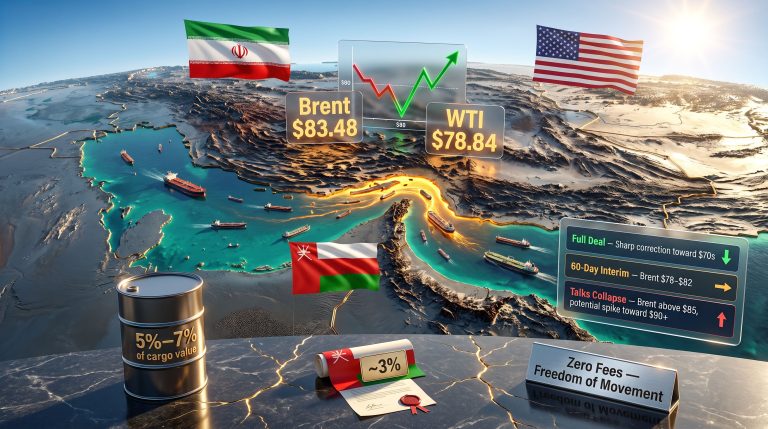
Oil futures markets typically experience immediate risk premium escalation when transit security incidents are reported. The current situation demonstrates how sustained uncertainty can extend these premiums beyond normal recovery timelines.
Clean product prices have reached multi-decade highs in European and Asian markets, with premiums against crude oil benchmarks reflecting both physical scarcity and logistical complexity. Buyers have delayed purchasing decisions whilst awaiting clearer information about shipping access reliability.
Market psychology factors include:
- Trader sentiment shifts creating amplified volatility beyond fundamental supply constraints
- Contract force majeure considerations affecting delivery obligations
- Alternative sourcing requirements increasing transaction costs
- Insurance availability limitations restricting vessel deployment
Regional Price Differential Analysis
Geographic market segments display varying sensitivity levels to Hormuz disruption scenarios. European Brent crude experiences steeper premiums due to alternative route dependencies, whilst Asian benchmarks show heightened volatility patterns reflecting regional import concentration.
US WTI crude maintains relative insulation due to domestic production capabilities and strategic reserve access, though refined product markets still face indirect pressure through international price linkages. However, the OPEC meeting impact on production decisions has further complicated pricing dynamics.
| Market Region | Import Dependency | Price Impact Level | Recovery Timeline |
|---|---|---|---|
| East Asia | 75-85% | Severe (8.5/10) | 6-12 months |
| Europe | 45-55% | Moderate (6.5/10) | 3-6 months |
| North America | 15-25% | Limited (3.5/10) | 1-3 months |
Strategic Defence and Diplomatic Response Frameworks
National governments deploy multilayered response protocols when vessels attacked in Strait of Hormuz situations threaten energy security. These frameworks combine military, diplomatic, and economic elements to maintain supply chain continuity.
Military Escort Protocol Implementation
Naval escort operations represent the most immediate tactical response to shipping security threats. Current US military positioning includes active port blockade operations against Iranian facilities, whilst maintaining protective capabilities for allied commercial vessels.
The Baltic and International Maritime Council (BIMCO) has disputed official statements about waterway accessibility, with Chief Security Officer Jakob Larsen noting that Iranian authorities maintain operational control over vessel navigation protocols.
Escort capacity considerations include:
- Standard deployment protocols utilising 15-20 vessels
- Enhanced security frameworks deploying 40-60 vessels
- Full naval presence involving 100+ vessel commitments
- Interoperability coordination between allied naval forces
Alternative Route Activation
Pipeline bypass systems provide critical redundancy when maritime routes face disruption. The UAE-Oman pipeline network offers 4.5 million barrels per day alternative capacity, whilst Saudi Arabia's East-West pipeline provides additional routing flexibility.
Strategic petroleum reserve releases can offset 30-60 days of disrupted supply through International Energy Agency (IEA) coordination mechanisms, though political considerations often complicate release timing decisions. In addition, the renewable energy transition is gaining momentum as countries seek to reduce dependency on volatile fossil fuel supply chains.
Emergency response timelines vary significantly:
- Pipeline activation: 72-96 hours for full capacity utilisation
- Strategic reserve releases: 7-14 days for significant volume impact
- Alternative shipping routes: 2-3 weeks for pattern establishment
- Diplomatic resolution: Highly variable depending on stakeholder cooperation
Insurance Market Adaptation to Security Threats
Marine insurance markets face unprecedented challenges when vessels attacked in Strait of Hormuz incidents create sustained risk elevation. War risk premium calculations must incorporate both traditional military action scenarios and evolving sanctions compliance requirements.
Premium Escalation Dynamics
Insurance underwriters have developed sophisticated risk classification systems that distinguish between high-sanctions-risk and low-sanctions-risk vessel categories. Three product tankers that successfully transited on April 18, 2026, carried high-sanctions-risk ratings despite carrying non-Iranian cargo, demonstrating the complexity of contemporary risk assessment.
Premium adjustment patterns include:
- Initial spike phase: 200-400% increases within 24-48 hours
- Assessment period: 7-14 day evaluation windows for sustained risk levels
- Long-term adjustment: 15-30% baseline elevation for 3-6 months post-incident
- Sanctions overlay: Additional premiums for regulatory compliance complexity
How Do Different Vessel Types Face Insurance Challenges?
Different vessel types face varying insurance market treatment based on cargo concentration and operational characteristics:
Very Large Crude Carriers (VLCCs): The 301,861 DWT FPMC C Lord and similar vessels face highest premiums due to cargo value concentration approaching 2 million barrels per vessel.
Aframax tankers: Mid-size vessels like the 114,790 DWT Desh Garima experience proportionally different risk assessments reflecting operational flexibility and alternative deployment options.
Product carriers: Specialised vessels carrying naphtha, gasoil, and gasoline face cargo-specific volatility premiums based on handling requirements and market value concentration.
Secondary Economic Impact Propagation
When vessels attacked in Strait of Hormuz scenarios disrupt primary energy flows, cascading effects propagate through interconnected economic sectors with varying intensity and recovery timelines.
Manufacturing Supply Chain Disruption
Petrochemical industries experience immediate feedstock cost pressures and delivery delays when crude oil and refined product supplies face uncertainty. The 91.7% reduction in clean product throughput directly affects plastic, synthetic materials, and packaging industries that depend on consistent raw material availability.
Transportation networks must rapidly adjust route planning and fuel hedging strategies to accommodate price volatility and supply uncertainty. Airlines face particular vulnerability due to limited jet fuel storage capacity and route inflexibility.
Impact severity indicators include:
- Immediate cost inflation for petroleum-derived materials
- Production scheduling disruptions requiring alternative sourcing
- Contract renegotiation pressures affecting long-term pricing agreements
- Inventory accumulation costs for companies maintaining strategic reserves
Regional Economic Vulnerability
Geographic regions display markedly different resilience levels based on energy import dependency and alternative supply access. East Asian economies face the highest vulnerability scores due to substantial oil import requirements and limited alternative supply routes.
Current data shows vessels that loaded crude oil in early February 2026 remained stranded for 6-7 weeks awaiting exit clearance, directly correlating to inventory build-up costs, demurrage fees, and financing expenses that propagate through commodity pricing structures. As reported by NDTV, the attacks have particularly affected Indian-flagged vessels.
Examples of specific impact:
- LR1 Navig8 Macallister: Loaded 60,000 tonnes of naphtha and waited six weeks
- MR Akti A: Loaded 30,000 tonnes of gasoil and waited seven weeks
- MR Torin: Required special permission coordination with Iranian authorities
- 18 additional product tankers: Remain stranded without exit attempts
Geopolitical Scenario Development Pathways
Multiple resolution and escalation scenarios remain possible as vessels attacked in Strait of Hormuz situations continue evolving. Understanding these pathways helps market participants and policymakers prepare for various outcome probabilities.
Diplomatic Resolution Mechanisms
US President Donald Trump's statement about being very close to a full deal with Tehran indicates ongoing diplomatic channels despite military escalation. However, Iranian Parliamentary Speaker Mohammad Bagher Ghalibaf's emphasis that strait regulations will be determined by the field, not by social media suggests complex negotiation dynamics.
Key diplomatic factors include:
- Multilateral mediation through UN Security Council intervention protocols
- Regional stakeholder engagement via GCC and OPEC coordination mechanisms
- Economic incentive structures involving trade agreement modifications
- Sanctions relief negotiations tied to maritime security guarantees
Military Escalation Risk Assessment
Lieutenant Colonel Ebrahim Zolfaqari's statement about American banditry and maritime piracy under the guise of blockade operations indicates Iranian military leadership views current US naval positioning as unacceptable provocation requiring response.
Escalation pathways could include:
- Proxy conflict expansion with regional allies increasing naval presence
- Direct confrontation scenarios triggering NATO Article 5 considerations
- Asymmetric response patterns involving cyber warfare and economic sanctions
- Coalition formation affecting global military positioning
The next major ASX story will hit our subscribers first
Energy Company Operational Adaptation Strategies
Commercial operators must develop sophisticated risk management frameworks when vessels attacked in Strait of Hormuz situations create sustained operational uncertainty. These adaptations affect both immediate tactical decisions and longer-term strategic planning.
Production Optimisation Responses
Energy companies have implemented alternative export route utilisation, increasing throughput at Red Sea and Mediterranean terminals to compensate for Persian Gulf limitations. Enhanced storage capacity at secure regional facilities provides operational flexibility during transit uncertainty.
The Khairpur vessel example illustrates market segmentation, as it became the first low-sanctions-risk clean product tanker to enter the Gulf since early March 2026, demonstrating how regulatory classifications affect operational access.
Operational modifications include:
- Route diversification to reduce single-point-of-failure exposure
- Strategic inventory management at secure offshore facilities
- Contractual force majeure preparation for delivery obligation modifications
- Insurance coordination with underwriters for special permission protocols
Investment Decision Recalibration
Enhanced political risk modelling for regional operations now incorporates multiple escalation scenarios and recovery timelines. Companies must integrate higher operational expenses for maritime transport into long-term financial planning.
Project timeline adjustments delay final investment decisions pending security stabilisation, whilst enhanced maritime security systems and autonomous vessel capabilities receive accelerated development funding.
Long-term Structural Market Evolution
Repeated incidents when vessels attacked in Strait of Hormuz create lasting changes in global energy infrastructure and market structure, driving investment toward redundancy and diversification.
Infrastructure Development Acceleration
Regional governments prioritise alternative export infrastructure development to reduce Hormuz dependency. Enhanced national and commercial storage capabilities provide buffer capacity during future disruption scenarios.
Pipeline capacity expansion projects receive expedited approval and funding, whilst renewable energy transition investments accelerate as energy security diversification becomes strategic priority.
Technology integration priorities include:
- Enhanced maritime security systems for real-time threat assessment
- Autonomous vessel capabilities reducing crew exposure to hostile environments
- Alternative energy infrastructure decreasing fossil fuel dependency
- Strategic reserve construction providing extended supply buffers
Market Structure Transformation
Contract term modifications toward shorter-duration agreements with enhanced flexibility clauses reflect market adaptation to increased volatility expectations. New trading hubs emerge to reduce Hormuz dependency, creating regional price benchmark development opportunities.
The high-sanctions-risk versus low-sanctions-risk classification system demonstrates how regulatory complexity creates two-tier market conditions for similar commodities, fundamentally altering pricing mechanisms and trading relationships.
Strategic Risk Assessment and Future Preparedness
Understanding the full implications of scenarios when vessels attacked in Strait of Hormuz requires comprehensive analysis of interconnected vulnerabilities and adaptive capacity limitations.
Economic Modelling Considerations
Best-case resolution scenarios assume diplomatic breakthrough within 72 hours, resulting in market stabilisation with 2-3% residual risk premiums. Comprehensive security frameworks could reduce long-term volatility through enhanced regional connectivity and crisis resilience.
Worst-case escalation projections consider extended closure scenarios lasting 30+ days, potentially triggering global recession with oil prices reaching $150+ per barrel. Multi-nation conflict involvement would create sustained supply uncertainty extending beyond energy sectors.
Critical assessment factors:
- Supply buffer adequacy during extended disruption periods
- Alternative route capacity under maximum utilisation scenarios
- International cooperation effectiveness during crisis escalation
- Market psychology resilience to repeated security incidents
The strategic importance of the Strait of Hormuz ensures that any security incidents create immediate global economic implications, requiring sophisticated risk management frameworks and unprecedented international cooperation to maintain energy market stability. As geopolitical tensions continue reshaping traditional trading relationships, market participants must develop enhanced adaptive capacity to navigate increasingly complex operational environments where vessels attacked in Strait of Hormuz scenarios represent ongoing rather than exceptional challenges.
This analysis is based on publicly available information and market data. Investors should conduct independent research and consider multiple risk factors when making investment decisions. The situation described involves ongoing geopolitical tensions that may continue evolving rapidly.
Looking to Invest in Energy Security Resilience?
Discovery Alert's proprietary Discovery IQ model delivers real-time alerts on significant mineral discoveries across critical commodities, empowering investors to identify actionable opportunities ahead of the broader market during times of geopolitical uncertainty. Explore major mineral discoveries that have generated substantial returns and begin your 14-day free trial today to position yourself ahead of supply chain disruptions and market volatility.