June 23, 2026
Critical Energy Infrastructure Under Siege: The Evolution of Petroleum Defense Strategies
Modern energy security frameworks face unprecedented challenges as asymmetric threats increasingly target critical petroleum infrastructure. The convergence of drone technology, regional conflicts, and supply chain vulnerabilities has fundamentally altered how nations approach the protection of strategic energy assets. Understanding these evolving defense paradigms requires examining recent incidents through the lens of broader energy security trends rather than isolated attacks.
The targeting of energy infrastructure represents a shift from traditional warfare models to precision strikes against economic lifelines. This transformation reflects sophisticated threat actors' recognition that disrupting energy flows can achieve strategic objectives without engaging conventional military forces directly.
When big ASX news breaks, our subscribers know first
Defense System Architecture: Multi-Layered Protection Protocols
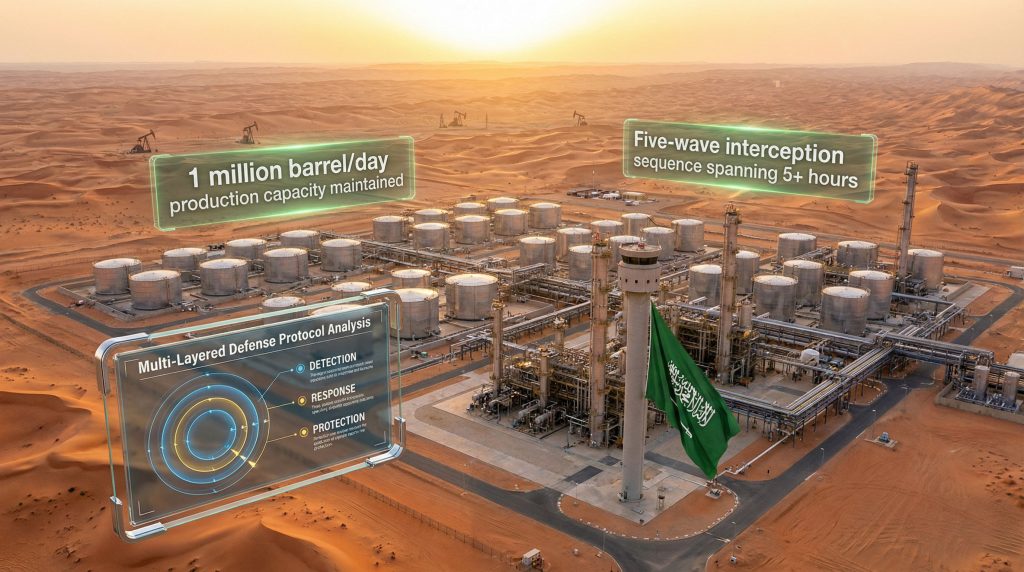
Contemporary energy infrastructure protection relies on integrated detection and response systems capable of identifying threats across multiple vectors. The Saudi Arabia drone attacks Shaybah field incident demonstrates how modern defense architectures must coordinate across vast geographic areas to protect isolated facilities.
Detection Capabilities and Response Metrics:
• Early Warning Systems: Advanced radar networks covering 200+ kilometer detection radii
• Response Coordination: Real-time communication protocols linking defense ministries with field operations
• Interception Success Rates: Multi-wave defense sequences spanning extended timeframes
• Asset Protection Standards: Maintaining operational capacity during active threat periods
The Shaybah facility, with its 1 million barrel per day production capacity, exemplifies Tier 1 strategic assets requiring maximum protection levels. Located in Saudi Arabia's Empty Quarter desert, the facility's geographic isolation necessitates specialized defense protocols that differ significantly from coastal or urban installations.
Geographic Vulnerability Assessment
Remote petroleum facilities face unique security challenges stemming from their isolation. The Empty Quarter location of Shaybah creates both defensive advantages and vulnerabilities:
Defensive Advantages:
• Extended detection ranges due to minimal civilian air traffic
• Reduced risk of collateral damage during interception operations
• Controlled access points limiting ground-based threats
Strategic Vulnerabilities:
• Extended response times for emergency services
• Limited redundant transportation infrastructure
• Dependence on specialized personnel and equipment
Regional Security Architecture: Coordinated Defence Networks
The escalation of threats against energy infrastructure has prompted regional cooperation mechanisms that extend beyond traditional bilateral agreements. Gulf Cooperation Council frameworks now emphasise shared defence protocols specifically designed for petroleum asset protection.
Infrastructure Target Pattern Analysis:
| Facility Type | Daily Capacity | Defence Priority | Regional Impact |
|---|---|---|---|
| Super-giant Fields | 1M+ barrels | Maximum | Critical |
| Major Refineries | 400K+ barrels | High | Significant |
| Export Terminals | Variable | Critical | Regional |
| Storage Hubs | Strategic | High | International |
The Saudi Arabia drone attacks Shaybah field incident occurred within a broader pattern of infrastructure targeting that has affected multiple facilities across the region. Furthermore, the Ras Tanura refinery faced similar threats, demonstrating how attackers systematically target key nodes in the petroleum supply chain.
Cross-Border Coordination Mechanisms
Regional defence cooperation now includes standardised threat assessment protocols and shared early warning systems. These mechanisms enable rapid information sharing when threats are detected, allowing neighbouring countries to adjust their defensive postures accordingly.
Key Cooperation Elements:
• Shared Intelligence Networks: Real-time threat data exchange
• Coordinated Response Protocols: Joint interception capabilities
• Standardised Protection Levels: Consistent security standards across borders
• Regional Supply Chain Continuity: Alternative supply activation procedures
Transportation Chokepoint Vulnerabilities
The effective closure of the Strait of Hormuz has highlighted the critical importance of maritime chokepoints in global energy security. This waterway previously facilitated the transit of 14 million barrels per day of crude oil and 6 million barrels per day of refined products, representing approximately 20% of global petroleum liquids.
Alternative Route Capacity Analysis:
When primary transportation routes become unavailable, the petroleum industry must rapidly adapt to alternative pathways. However, these alternatives often possess limited capacity and higher transportation costs:
• Pipeline Bypasses: Limited capacity compared to maritime routes
• Alternative Ports: Reduced throughput capabilities
• Extended Transit Routes: Significantly increased transportation costs
• Storage Buffer Requirements: Enhanced strategic reserve needs
Market Impact Assessment
The closure of critical transportation routes creates immediate price volatility and supply disruptions. Recent market movements demonstrate how quickly petroleum prices respond to infrastructure threats, particularly considering oil price crash insights and broader market dynamics.
The US Gulf medium sour Mars crude reached $100.72 per barrel, representing its fourth consecutive six-year high premium and reflecting the market's assessment of supply disruption risks.
Price Volatility Drivers:
• Supply Disruption Expectations: Market anticipation of continued threats
• Alternative Supply Costs: Premium pricing for non-traditional sources
• Storage Capacity Limitations: Constraints on inventory building
• Transportation Rate Increases: Elevated shipping costs reflecting risk premiums
Investment Protection and Risk Management Evolution
The changing threat environment has prompted significant evolution in how energy companies assess and manage infrastructure risks. Traditional risk models based on natural disasters and equipment failures now must incorporate deliberate targeting by sophisticated threat actors.
Enhanced Risk Assessment Framework:
| Risk Category | Traditional Factors | Emerging Threats | Mitigation Strategies |
|---|---|---|---|
| Operational | Equipment failure, weather | Precision attacks, cyber threats | Redundant systems, hardening |
| Financial | Market volatility, costs | Supply disruption, asset damage | Insurance expansion, reserves |
| Strategic | Competition, regulation | Geopolitical targeting | Diversification, cooperation |
Insurance Market Adaptations
Energy infrastructure insurance markets have rapidly adapted to incorporate new threat vectors. Coverage requirements now explicitly address aerial threats, cyber attacks, and coordinated infrastructure targeting:
Premium Adjustments by Risk Category:
• Aerial Threat Coverage: 15-25% premium increases
• Cyber Attack Protection: 10-20% rate adjustments
• Supply Chain Disruption: 5-15% coverage expansions
These adjustments reflect insurers' recognition that traditional actuarial models inadequately captured the risk of coordinated attacks on energy infrastructure.
Emergency Response Protocol Integration
Modern energy security requires seamless integration between defensive systems, emergency response protocols, and market stabilisation mechanisms. The Saudi Arabia drone attacks Shaybah field incident demonstrates how effective coordination can maintain operational continuity even during active threats, particularly when considering OPEC meeting impact on broader market stability.
Response Protocol Hierarchy:
- Immediate Threat Response: Detection, identification, and interception
- Damage Assessment: Rapid evaluation of infrastructure impact
- Operational Continuity: Maintenance or restoration of production capacity
- Market Stabilisation: Communication and alternative supply activation
- Long-term Resilience: System improvements and vulnerability reduction
Strategic Reserve Utilisation
Strategic petroleum reserves play crucial roles in maintaining market stability during infrastructure threats. Release authorisation procedures have been streamlined to enable rapid market intervention when supply disruptions occur.
Reserve Deployment Criteria:
• Supply Disruption Magnitude: Threshold levels triggering automatic releases
• Price Volatility Limits: Market intervention points based on percentage changes
• Duration Assessments: Expected length of supply disruptions
• Alternative Supply Availability: Assessment of replacement source capacity
The next major ASX story will hit our subscribers first
Technology Integration and Future Defence Requirements
The evolution of threats against energy infrastructure necessitates corresponding advances in defensive technologies. Future protection systems must integrate artificial intelligence, automated response capabilities, and predictive threat assessment to address increasingly sophisticated attacks.
Emerging Technology Requirements:
• AI-Powered Detection Systems: Machine learning algorithms for threat identification
• Automated Response Capabilities: Rapid interception without human intervention
• Predictive Analytics: Threat pattern recognition and early warning systems
• Integrated Communication Networks: Seamless coordination across multiple agencies
Regulatory Framework Development
Governments worldwide are developing new regulatory frameworks specifically addressing energy infrastructure protection. These regulations establish minimum defence standards whilst encouraging technological innovation in protection systems.
Key Regulatory Priorities:
• Mandatory Defence Standards: Required protection levels for strategic facilities
• Technology Integration Requirements: Specific capabilities that facilities must demonstrate
• Coordination Protocol Compliance: Standardised communication and response procedures
• Regular Assessment Mandates: Periodic vulnerability evaluations and system updates
Long-term Strategic Implications for Energy Security
The targeting of facilities like Shaybah represents a fundamental shift in how energy security must be approached. Traditional models focused on natural disasters and accidental disruptions are insufficient for addressing deliberate, coordinated attacks on critical infrastructure.
Strategic Adaptation Requirements:
• Diversified Infrastructure Networks: Reduced dependence on single critical facilities
• Enhanced Regional Cooperation: Shared defence and response capabilities
• Technology Investment Priorities: Advanced detection and protection systems
• Alternative Supply Development: Redundant production and transportation capacity
In addition to immediate defence concerns, longer-term considerations include oil price stagnation factors and broader market dynamics that influence strategic planning. Furthermore, ongoing oil price rally analysis suggests that security concerns will continue to influence market pricing mechanisms.
The Saudi Arabia drone attacks Shaybah field incident serves as a critical case study in modern energy infrastructure defence. The successful interception of multiple attack waves demonstrates the effectiveness of integrated defence systems whilst highlighting the persistent threat environment facing critical petroleum facilities. However, recent Saudi security operations indicate that these threats remain an ongoing concern requiring continuous adaptation.
Future energy security will depend on the continued evolution of defensive capabilities, regional cooperation mechanisms, and adaptive regulatory frameworks. Consequently, the industry's ability to maintain operational continuity whilst under active threat will determine the stability of global energy markets and economic security more broadly.
Disclaimer: This analysis is based on publicly available information and should not be considered as investment advice. Energy infrastructure investments carry significant risks, including geopolitical, operational, and market-related uncertainties. Readers should conduct their own research and consult with qualified professionals before making investment decisions.
Looking to Navigate Energy Security Investment Opportunities?
Discovery Alert's proprietary Discovery IQ model delivers real-time alerts on significant mineral discoveries across the ASX, helping investors identify critical materials essential for energy infrastructure and security. With tensions affecting global energy markets, understanding which companies are discovering the minerals that power modern defence systems and energy storage could provide substantial investment advantages through Discovery Alert's proven track record.