May 15, 2026

Understanding Critical Infrastructure Dependencies in Global Energy Networks
Modern economies operate through interconnected energy systems that span continents, creating unprecedented vulnerability matrices that traditional risk assessment frameworks struggle to capture. These networks, built for efficiency and cost optimization over decades, now face systematic pressure from multiple threat vectors simultaneously. The concentration of critical energy production, processing, and transportation infrastructure in geopolitically volatile regions has created what analysts describe as a perfect storm of systemic risk exposure.
The transformation of energy from a purely economic commodity to a strategic weapon represents one of the most significant shifts in international relations since the Cold War. Unlike previous disruptions that typically affected single regions or fuel types, contemporary geopolitical risks in energy supply chains manifest as complex, multi-dimensional challenges that cascade through interconnected global systems with unprecedented speed and scope.
Mapping the Architecture of Modern Energy Vulnerabilities
Contemporary energy security threats operate across multiple dimensions simultaneously, creating compound risk scenarios that traditional planning models fail to anticipate. Territorial conflicts now target critical infrastructure with precision weapons, while economic warfare manipulates supply chains through sanctions, export controls, and strategic resource allocation. Cyber-physical convergence has emerged as a particularly dangerous threat vector, where digital attacks on control systems can cause immediate physical disruption across vast geographic areas.
The evolution from crude oil embargos to sophisticated multi-vector attacks represents a fundamental shift in how nations weaponize energy dependencies. Modern disruption strategies combine cyber warfare, maritime chokepoint manipulation, critical mineral supply restrictions, and coordinated economic pressure campaigns to achieve maximum systemic impact with minimal direct military engagement.
Primary Geopolitical Risk Categories in Energy Supply Chains
| Risk Type | Manifestation | Timeline Impact | Mitigation Complexity |
|---|---|---|---|
| Territorial Conflicts | Physical infrastructure damage | Immediate-Medium | High |
| Trade Sanctions | Component/fuel access restrictions | Medium-Long | Medium |
| Resource Nationalism | Export controls, forced partnerships | Long-term | Very High |
| Cyber Warfare | Grid disruption, data theft | Immediate | High |
| Maritime Interdiction | Shipping route closures | Immediate-Medium | Very High |
The cascading nature of these risks creates exponential vulnerability amplification. When multiple threat vectors activate simultaneously, as witnessed during recent Middle East tensions, the resulting supply chain disruptions propagate through global energy networks faster than traditional response mechanisms can adapt.
When big ASX news breaks, our subscribers know first
Critical Chokepoints: Where Geography Meets Geopolitics
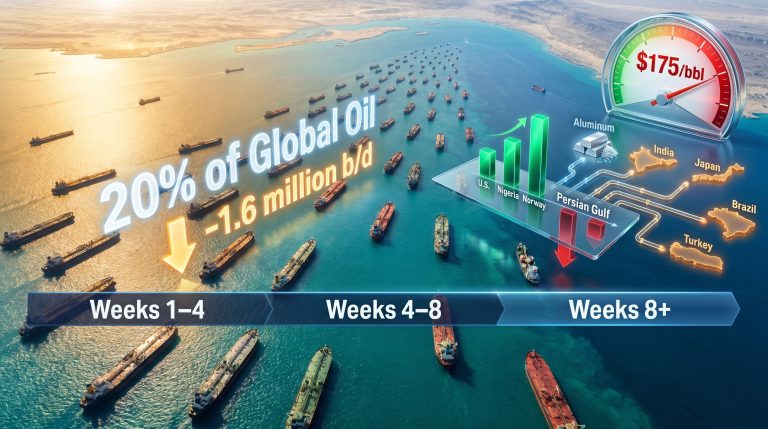
The concentration of global energy flows through narrow geographic corridors creates singular points of failure with systemic implications. Analysis of petroleum transit patterns reveals that approximately 20-21% of global petroleum liquids pass through the Strait of Hormuz, while significant portions of liquefied natural gas shipments traverse the same vulnerable waterway. This concentration represents more than statistical risk; it constitutes a structural vulnerability that affects global energy pricing, supply security, and economic stability across multiple continents.
Recent disruptions in Red Sea shipping routes have demonstrated how quickly alternative routing costs can escalate. Furthermore, the impact of tariffs impact investment decisions creates additional complexity for companies navigating supply chain alternatives. When primary maritime corridors become compromised, energy companies face immediate decisions between accepting elevated security risks or absorbing substantial cost premiums for alternative routes around the Cape of Good Hope or through other regional pathways.
Pipeline Networks as Strategic Targets
Continental pipeline infrastructure represents another category of critical vulnerability, particularly evident in European natural gas supply chains following recent geopolitical developments. The concentration of gas imports through limited pipeline routes creates dependencies that cannot be easily diversified through alternative suppliers or transportation methods in the short term.
Underground pipeline networks, while protected from surface attacks, remain vulnerable to sophisticated sabotage operations, as demonstrated by incidents involving major European gas infrastructure. Subsea pipeline systems face different but equally serious risks, including both state and non-state actor targeting capabilities that can disrupt energy flows for extended periods.
Critical Minerals: The Hidden Dependency Layer
Beyond traditional hydrocarbon supply chains, the transition toward renewable energy technologies has created new categories of geopolitical vulnerability centred on critical mineral access. China's control of approximately 84% of solar panel manufacturing capacity creates a strategic chokepoint that affects global renewable energy deployment regardless of where solar installations ultimately operate.
The lithium triangle spanning Argentina, Bolivia, and Chile contains significant portions of global lithium reserves essential for battery manufacturing, while cobalt supply chains in Central Africa face persistent political instability that threatens electric vehicle production worldwide. These dependencies reveal how energy transition challenges may inadvertently create new forms of strategic vulnerability.
Quantifying the Cascading Effects of Supply Chain Disruptions
When geopolitical tensions escalate into actual supply disruptions, the effects propagate through global energy systems in predictable yet complex patterns. According to research on geopolitical risks and energy system vulnerabilities, primary impacts typically manifest as immediate price volatility across commodity markets, with petroleum products, natural gas, and refined fuel prices responding within hours to supply threat announcements or actual disruption events.
Real-world data from recent Middle East tensions illustrates these dynamics clearly. UAE-based energy companies reported 9-10% reductions in gas consumption during peak conflict periods, while maintaining operational capacity. This pattern suggests that businesses and consumers adjust consumption patterns proactively in response to price increases and supply uncertainty, even when physical disruptions remain limited.
Secondary Economic Impacts
Manufacturing sectors dependent on consistent energy inputs face cascading delays when supply chains experience disruption. Renewable energy component production, already concentrated in specific geographic regions, becomes particularly vulnerable when transportation routes face interdiction or when key supplier facilities encounter operational challenges.
The automotive sector exemplifies these secondary effects, where battery manufacturing delays can impact vehicle production timelines months after initial supply chain disruptions. Chemical manufacturing, aluminium production, and steel processing industries similarly face extended recovery periods following energy input disruptions.
Societal and Political Consequences
Energy price inflation creates political pressure that extends far beyond immediate economic impacts. Historical analysis indicates strong correlations between energy cost spikes and social unrest, particularly in economies where energy represents significant household expenditure portions. These dynamics create feedback loops where economic disruption generates political instability, potentially amplifying initial geopolitical tensions.
Sector-Specific Vulnerability Assessment
Different energy sectors face distinct vulnerability profiles based on their supply chain structures, geographic concentrations, and technological dependencies. Understanding these variations enables more targeted risk mitigation strategies and investment allocation decisions.
Renewable Energy Manufacturing Dependencies
Solar panel production represents perhaps the most concentrated supply chain vulnerability in the renewable energy sector. Manufacturing capacity concentration in China creates systemic risk for global solar deployment, while polysilicon processing bottlenecks compound these dependencies. When geopolitical risks in energy supply chains affect this supply chain, renewable energy projects worldwide face component availability and pricing pressures.
Wind turbine manufacturing faces different but equally serious vulnerabilities, particularly regarding rare earth permanent magnet components essential for generator systems. Neodymium and dysprosium supply chains concentrate in regions where geopolitical stability cannot be guaranteed long-term, creating strategic planning challenges for wind energy deployment programmes.
Sector Vulnerability Comparison Matrix
| Energy Sector | Geographic Concentration Risk | Component Dependency Risk | Alternative Source Availability |
|---|---|---|---|
| Solar Manufacturing | Very High (China 84%) | High | Limited |
| Wind Power | Medium | High (rare earths) | Moderate |
| Oil Refining | Medium | Low | High |
| Natural Gas | High (pipeline routes) | Medium | Moderate |
| Nuclear | Medium | Very High (enrichment) | Limited |
Nuclear Energy Supply Chain Complexities
Nuclear power generation faces unique vulnerability patterns centred on uranium supply and enrichment services. Global uranium production of approximately 173 million pounds falls significantly short of reactor demand exceeding 200 million pounds annually, creating structural supply deficits that geopolitical disruptions can rapidly amplify.
The extended development timelines for new uranium mining operations, typically requiring more than 10 years from discovery to production, mean that supply disruptions cannot be quickly resolved through new source development. In addition, the recent uranium import restrictions mean that Western utilities actively seeking alternatives to Russian uranium supplies face limited near-term options and extended procurement timelines.
Nuclear reactor construction continues globally with 75+ reactors currently under development, indicating sustained demand growth that will intensify existing supply chain pressures. The pledge by 30+ nations to triple nuclear capacity by 2050 suggests these vulnerabilities will persist and potentially amplify unless addressed through strategic supply chain diversification initiatives.
Building Organisational Resilience in Uncertain Energy Markets
Organisations across energy value chains are implementing sophisticated risk management frameworks that extend beyond traditional hedging strategies to encompass operational, financial, and strategic adaptations to geopolitical uncertainty.
Diversification as Strategic Architecture
Technology-agnostic energy platforms represent one approach to managing supply chain vulnerabilities through strategic diversification. Rather than concentrating investments in single energy technologies or geographic regions, companies are building portfolios that span multiple fuel types, processing technologies, and geographic markets to reduce correlation risk during disruption events.
This approach recognises that no single technology monopolises future energy needs, creating strategic value through option preservation rather than optimisation around specific technological pathways. When individual sectors face disruption, diversified platforms can reallocate resources and maintain operational continuity through alternative business lines.
Real-World Resilience Examples
UAE-based energy distribution companies demonstrate practical resilience implementation during geopolitical stress. Alola Gas, operating for over 40 years in Dubai, maintains service continuity during regional conflicts through distributed infrastructure, local supply relationships, and flexible operational protocols. With 38,000+ customers and approximately $16 million annual revenue, the company achieved 45.9% revenue growth in 2025 despite regional instability.
The company's business model illustrates several resilience principles:
• Local infrastructure focus: Domestic distribution networks reduce exposure to international chokepoints
• Diversified supply sources: Multiple supplier relationships prevent single-source dependency
• Flexible pricing mechanisms: Ability to adjust pricing during supply cost fluctuations
• Long-term customer relationships: 45-year operational history provides stability during turbulent periods
Financial Risk Mitigation Strategies
Advanced financial instruments increasingly incorporate geopolitical risk factors beyond traditional commodity price hedging. Supply chain financing alternatives during disruption periods enable companies to maintain operations when normal banking relationships face sanctions or political pressure.
Royalty-based investment structures offer another approach to managing operational risk while maintaining energy sector exposure. Royal Uranium's 19 strategic royalties across uranium and natural gas assets in Canada, Colombia, and Argentina exemplify this approach, providing revenue streams without operational responsibilities or capital obligations.
Government Policy Integration and Energy Security
National energy security policies increasingly recognise supply chain vulnerabilities as national security priorities, driving policy frameworks that extend beyond traditional strategic reserve management to encompass comprehensive supply chain resilience strategies.
Strategic Policy Responses
Over 30 countries overhauled energy policies following geopolitical developments in Eastern Europe, prioritising domestic energy supply security over cost optimisation. These policy shifts represent fundamental changes in how nations approach energy planning, moving from efficiency-focused models toward resilience-optimised frameworks.
For instance, the strategic antimony update exemplifies this policy evolution, recognising that strategic material dependencies require government-level coordination beyond market mechanisms alone. Similar policy frameworks are emerging across multiple jurisdictions as governments reassess their energy security assumptions.
International Cooperation Mechanisms
The US-Argentina critical minerals agreement signed in February 2026 demonstrates how bilateral cooperation frameworks can address specific supply chain vulnerabilities through diplomatic channels. Such agreements create preferential access arrangements that reduce dependency on potentially hostile suppliers while strengthening relationships with strategic allies.
Meanwhile, emerging markets are expanding their exploration capabilities, as evidenced by Saudi exploration licences. Multilateral nuclear capacity development commitments, with 30+ nations pledging to triple nuclear capacity by 2050, indicate coordinated approaches to energy security that transcend individual national policies.
The next major ASX story will hit our subscribers first
Technology-Driven Solutions to Geopolitical Energy Risks
Emerging technologies offer potential solutions to traditional geopolitical vulnerabilities in energy supply chains, though they also create new categories of risk that require careful management and strategic planning.
Green Hydrogen as Strategic Independence Tool
Green hydrogen technology enables domestic energy production anywhere renewable electricity and water resources exist, potentially reducing dependency on foreign energy suppliers and vulnerable transportation routes. Electrolysis processes convert renewable electricity into stored chemical energy that can replace fossil fuels in industrial applications, heavy transportation, and power generation.
Current production costs remain 3-6 times higher than natural gas equivalents, but multiple cost reduction pathways suggest improved economic viability within strategic planning timeframes:
• Manufacturing learning curves: 15-20% cost reduction per doubling of installed capacity, similar to solar panel cost trajectories
• Renewable electricity cost declines: Continued reduction in primary energy input costs
• Carbon pricing mechanisms: Regulatory frameworks that increase fossil fuel alternative costs, particularly in European markets
Commercial viability within 3-5 years appears achievable for specific high-value industrial applications where long-term supply agreements, carbon penalties, and ESG requirements create favourable economic conditions. Bright Hydrogen Solutions' 57 megawatt pipeline with 15 megawatt front-end design contracts and €30 million infrastructure investment vehicle exemplifies commercial-scale implementation approaches.
Distributed Energy Systems and Cyber Resilience
Smart grid infrastructure creates both opportunities and vulnerabilities in energy security management. While distributed energy systems can enhance resilience against physical attacks on centralised infrastructure, they also create expanded attack surfaces for cyber operations targeting multiple smaller systems simultaneously.
Industrial IoT security protocols become critical components of energy supply chain protection as operational technology networks integrate with information systems. According to research on critical materials and geopolitical risks, data sovereignty requirements affect how energy management systems can be deployed and operated across different jurisdictions.
Artificial Intelligence in Risk Assessment
Predictive analytics for geopolitical threat assessment enable more sophisticated supply chain planning that incorporates real-time political risk factors alongside traditional market dynamics. Automated supply chain rerouting systems can adjust logistics patterns immediately when threat levels increase, minimising disruption impacts.
These technologies require significant implementation investment and ongoing maintenance, but they offer strategic advantages in managing complex, multi-variable risk scenarios that human analysts cannot process effectively at the required speed and scale.
Future Risk Landscape and Strategic Adaptation
The convergence of climate change impacts, technological transformation, and evolving geopolitical dynamics creates an increasingly complex risk environment that requires adaptive planning frameworks rather than static strategic approaches.
Emerging Threat Vectors
Space-based energy infrastructure represents a new category of potential vulnerability as satellite systems become integral to energy grid management and communication systems. Quantum computing developments threaten current cybersecurity protocols that protect energy infrastructure control systems.
Climate change-induced geopolitical instability creates cascading risks where environmental pressures amplify political tensions in regions containing critical energy infrastructure or mineral resources. Migration pressures from climate impacts may destabilise regions currently considered politically stable for energy investment.
Technology-Driven Resilience Solutions
Advanced materials research aims to reduce critical mineral dependencies through substitution technologies and recycling innovations. Distributed manufacturing capabilities could reduce geographic concentration risks in renewable energy component production.
Energy storage technologies enabling supply chain independence represent potential game-changing developments that could fundamentally alter geopolitical risks in energy supply chains by reducing transportation dependency and enabling truly distributed energy systems.
Future Risk-Resilience Development Matrix
| Time Horizon | Emerging Risks | Resilience Technologies | Policy Adaptations Required |
|---|---|---|---|
| 2025-2030 | AI-powered attacks, rare earth shortages | Advanced batteries, recycling | Supply chain transparency laws |
| 2030-2040 | Climate migration, space infrastructure | Fusion power, synthetic fuels | International space energy treaties |
| 2040+ | Quantum threats, resource depletion | Room-temperature superconductors | Global energy governance frameworks |
Geopolitical Realignment Scenarios
Multipolar energy order development suggests that traditional energy relationships centred on established producer-consumer dynamics may fragment into multiple competing blocs with limited interoperability. Regional energy bloc formation could create parallel energy systems that reduce global integration while enhancing regional resilience.
Technology sovereignty competition intensifies as nations seek control over critical energy technologies rather than relying on international supply chains for strategic energy capabilities. This trend could accelerate domestic manufacturing requirements and technology transfer restrictions that further fragment global energy markets.
Executive Preparedness for Energy Supply Chain Disruptions
Organisational leadership requires sophisticated frameworks for managing energy supply chain risks that extend beyond traditional business continuity planning to encompass strategic adaptation and stakeholder management during extended disruption periods.
Board-Level Risk Governance
Cross-functional crisis response teams must integrate operational, financial, regulatory, and communications expertise to manage multi-dimensional disruption scenarios effectively. Energy supply chain stress testing should incorporate multiple simultaneous disruption scenarios rather than single-point-of-failure analysis.
Stakeholder communication strategies during disruptions require pre-planned messaging frameworks that maintain confidence while acknowledging uncertainty. Backup supplier qualification and maintenance programmes must balance cost efficiency with redundancy requirements across multiple geographic and technological options.
Long-term Strategic Adaptation
Business model evolution toward supply chain independence may require fundamental changes in how organisations approach energy procurement, operations planning, and investment allocation. Investment prioritisation for resilience over efficiency represents a strategic shift that affects capital allocation decisions across multiple business functions.
Stakeholder alignment on acceptable risk-return trade-offs becomes essential as resilience investments may reduce short-term profitability while enhancing long-term sustainability. However, organisations must balance immediate financial performance requirements with strategic resilience building that protects against low-probability, high-impact disruption scenarios.
The integration of geopolitical risk management into core business strategy represents more than operational preparation; it constitutes recognition that geopolitical risks in energy supply chains now function as critical infrastructure requiring systematic protection and strategic redundancy planning. Organisations that successfully navigate this transition will emerge with competitive advantages built on resilience rather than efficiency optimisation alone.
Disclaimer: This analysis contains forward-looking assessments and scenarios based on current geopolitical trends and market conditions. Energy market investments involve substantial risks including political instability, regulatory changes, technological disruption, and market volatility. Readers should conduct independent due diligence and consider consulting qualified investment advisors before making investment decisions. Past performance does not guarantee future results, and all investment strategies carry risk of partial or total loss.
Ready to Capitalise on Energy Market Disruptions?
Discovery Alert's proprietary Discovery IQ model provides instant notifications on significant ASX mineral discoveries, helping investors identify actionable opportunities in critical materials and energy transition commodities ahead of broader market awareness. Explore how major mineral discoveries can generate substantial returns during periods of supply chain uncertainty, and begin your 14-day free trial today to position yourself strategically in Australia's dynamic resources sector.