June 7, 2026
Understanding Critical Infrastructure Dependencies in Modern Mining Operations
Modern copper mining operations face unprecedented challenges when managing complex supply chains that extend far beyond traditional extraction sites. The interconnected nature of contemporary mining infrastructure creates vulnerability points that can cascade throughout entire production systems, particularly in environments where natural resource scarcity demands engineered solutions.
Water-dependent mining operations in arid regions represent some of the most sophisticated industrial processes globally, requiring integration of desalination technology, extensive pipeline networks, and distributed processing facilities. When single-point failures occur within these systems, the operational impact extends well beyond immediate production metrics.
The stabilizing Mantoverde copper operation in Chile demonstrates how infrastructure dependencies can create operational bottlenecks that require comprehensive risk assessment and systematic recovery protocols. Understanding these dependencies becomes essential for mining operations seeking long-term sustainability in challenging environments.
When big ASX news breaks, our subscribers know first
How Water Infrastructure Vulnerabilities Impact Production Stability
Critical Distance Dependencies in Arid Mining Environments
Chilean copper operations in the Atacama Region face unique logistical challenges due to the extreme aridity of the environment. The Atacama Desert, recognised as the driest place on Earth, eliminates natural precipitation as a viable water source, creating absolute dependency on engineered water supply systems.
The geographical separation between processing facilities and water generation infrastructure creates extended vulnerability chains. When desalination plants operate 40 kilometres from mining deposits, the intervening infrastructure becomes a critical pathway that must maintain continuous operation for sustained production.
Key Infrastructure Risk Factors:
- Extended pipeline networks vulnerable to mechanical failure
- Remote facility access points susceptible to disruption
- Centralised water production systems without distributed backup
- Transportation route dependencies for maintenance and operations
- Limited emergency storage capacity relative to daily consumption requirements
Operational Impact Assessment During Supply Disruptions
Mining operations maintaining approximately 55% operational capacity during water supply interruptions demonstrate the cascading effect of infrastructure dependencies. This capacity reduction reflects not merely reduced water availability, but the systematic shutdown of interdependent processing systems.
| Infrastructure System | Impact During Disruption | Recovery Timeline |
|---|---|---|
| Desalination Operations | Complete shutdown | 24-48 hours |
| Pipeline Flow Restoration | Gradual pressure recovery | 48-72 hours |
| Mill Processing Systems | Reduced throughput capacity | 3-5 days |
| Cathode Production | Limited output maintenance | 5-7 days |
The distinction between operational restart and achieving stability represents a fundamental challenge in complex mining operations. Restarting requires systematic validation of water pressure, flow rates, and processing system integrity before full production capacity can be safely restored.
Furthermore, these mining labor challenges underscore the interconnected nature of workforce management and infrastructure dependencies that influence long-term operational stability.
Production Recovery Metrics and Stabilisation Indicators
Capacity Utilisation Benchmarks for Operational Normalcy
Successful stabilisation of major copper operations requires achieving specific production thresholds that demonstrate systematic recovery across multiple operational phases. Industry standards typically measure recovery success through comprehensive performance indicators that extend beyond simple workforce return metrics.
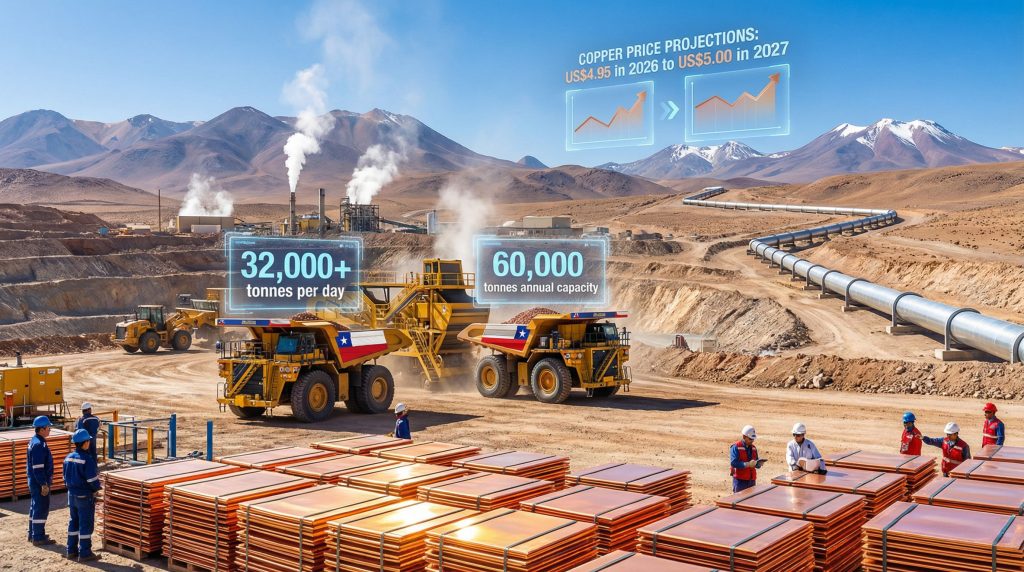
Current production data indicates 95,000 tonnes of copper equivalent annually represents baseline operational capacity. With the development of expanded processing capabilities, projections indicate potential production ranging between 125,000 to 135,000 tonnes of copper equivalent following infrastructure upgrades.
Critical Recovery Performance Indicators:
- Mill throughput restoration demonstrating consistent processing capacity
- Copper concentrate output returning to pre-disruption quality standards
- Overall equipment effectiveness achieving industry benchmark levels
- Water consumption efficiency indicating optimised resource utilisation
- Cathode production quality meeting international specifications
Systematic Process Optimisation During Recovery
The transition from reduced capacity operations involves methodical process optimisation across multiple operational areas. Each system requires individual validation while maintaining coordination with interdependent processes throughout the production chain.
Recovery protocols typically progress through emergency response phases, stabilisation periods, and full production restoration. The timeline for achieving stable operations varies based on infrastructure complexity, workforce integration, and environmental factors specific to arid region mining.
However, end-of-strike challenges extend beyond simple production restart, requiring comprehensive risk reassessment and operational protocol refinement.
Industry Insight: Successful mining operation recovery requires integrated validation of mechanical systems, workforce protocols, and supply chain restoration rather than isolated system restart procedures.
Labour Relations Framework and Operational Continuity
Multi-Union Coordination Challenges in Large-Scale Operations
Modern mining operations increasingly manage complex labour relations involving multiple union entities with distinct membership bases and negotiating priorities. Coordinating agreements across different bargaining units creates compounding operational challenges that extend beyond simple wage negotiations.
Recent labour negotiations involved approximately 640 workers affiliated with Union No. 2, representing a significant portion of operational workforce. The collective bargaining process resulted in 341 union members approving the agreement, 214 rejecting, and 82 abstaining from the final vote, indicating divided workforce sentiment regarding negotiated terms.
Multi-Union Operational Considerations:
- Wage equity concerns across different bargaining units
- Benefit standardisation challenges between union entities
- Staggered contract renewal timelines creating periodic negotiation cycles
- Risk of cascading demands when terms are disclosed across union constituencies
Government Mediation in Major Mining Disputes
Chilean labour relations framework includes government mediation mechanisms designed to maintain mining sector stability while balancing worker rights and operational continuity requirements. The Ministry of Labour's participation in mediation processes reflects broader policy frameworks supporting sector-wide stability.
Compensation packages negotiated during recent settlements included conflict-termination bonuses of approximately 15 million Chilean pesos per worker (equivalent to approximately US$17,505), alongside salary increases, university scholarships, and medical care facilities. However, the final negotiated agreement amounts were not publicly disclosed, indicating ongoing sensitivity around compensation disclosure.
The extended duration of labour actions, beginning January 2, 2026, demonstrates how commodity price expectations influence worker demands. High copper prices create heightened expectations amongst mining workforces for increased compensation aligned with commodity value appreciation.
In addition, the implementation of data-driven operations becomes crucial for monitoring labour relations metrics and predicting potential disruption patterns.
Copper Market Dynamics and Operational Planning Context
Price Projection Impact on Labour Expectations
Current copper market dynamics significantly influence operational planning and labour relations strategies. The Chilean Copper Commission (Cochilco) projects copper prices increasing from US$4.95 per pound in 2026 to US$5.00 per pound in 2027, with some analysts forecasting values reaching US$6.00 in the near term.
These price projections create measurable pressure on labour negotiations, as workers seek compensation increases that correlate with anticipated commodity value appreciation. The connection between copper price cycles and workforce compensation expectations represents a fundamental operational planning consideration.
Market-Driven Operational Pressures:
- Worker compensation demands correlating with copper price forecasting
- Production target adjustments based on market condition projections
- Capital expenditure timing influenced by commodity price expectations
- Expansion project prioritisation shifts reflecting market opportunities
Strategic Positioning in Global Supply Networks
Operations producing approximately 95,000 tonnes of copper equivalent annually must balance immediate stabilisation needs with longer-term strategic positioning within global supply networks experiencing projected copper deficits. This balance requires coordination of short-term operational recovery with medium-term capacity expansion planning.
The positioning of Chilean copper operations within global supply chains becomes increasingly critical as demand projections indicate sustained deficit conditions. Successful stabilising Mantoverde copper operation in Chile contributes to broader global supply stability during periods of increasing demand.
For instance, understanding copper-uranium investment insights provides context for global supply chain positioning and strategic commodity market analysis.
Building Operational Resilience Against Future Disruptions
Infrastructure Diversification Strategies
The experience of water supply disruption during labour actions demonstrates the importance of assessing single-point supply dependencies. Operations dependent on centralised infrastructure systems face heightened vulnerability to tactical disruptions that can achieve operational shutdown without requiring workforce participation at primary production sites.
Resilience Framework Components:
- Redundant water supply networks reducing centralised dependency
- Distributed electrical systems maintaining operational flexibility
- Emergency backup protocols for critical infrastructure systems
- Alternative transportation routes ensuring supply chain continuity
- Enhanced storage capacity providing operational buffer periods
Early Warning Systems for Operational Risk Management
Comprehensive resilience building requires systematic evaluation of potential disruption vectors extending beyond traditional operational concerns. Labour relations, infrastructure dependencies, environmental constraints, and regulatory compliance requirements all represent potential vulnerability points requiring proactive management.
Multi-Vector Risk Assessment Categories:
- Labour relations monitoring for early dispute identification
- Infrastructure redundancy assessments evaluating single-point failures
- Emergency response protocol testing ensuring system readiness
- Stakeholder communication strategies maintaining operational transparency
Modern mining operations achieving sustained operational excellence typically invest in continuous monitoring systems rather than reactive response mechanisms. This approach enables proactive identification of potential disruption sources before they achieve material operational impact.
Consequently, mining evolution trends emphasise predictive analytics and automated monitoring systems for comprehensive risk management.
The next major ASX story will hit our subscribers first
Regional Operational Environment and Sector-Wide Implications
Atacama Desert Operational Challenges
The unique operational environment of the Atacama Region creates sector-wide implications when major operations experience disruptions. The extreme aridity, remote infrastructure requirements, and limited natural resource availability create operational challenges that extend beyond individual mining sites.
Successful stabilisation approaches developed for operations in this environment often inform best practices across the broader Chilean mining sector. The lessons learned from managing complex water infrastructure dependencies, multi-union labour relations, and arid-environment logistics contribute to industry-wide knowledge development.
Regulatory Framework and Policy Considerations
Chilean mining sector regulations reflect the strategic importance of operational continuity for national economic stability. Government involvement in labour dispute mediation, environmental compliance monitoring, and infrastructure development approval processes demonstrates coordinated policy approaches supporting sector stability.
The regulatory environment balances worker rights protection with operational continuity requirements, creating frameworks that encourage proactive labour relations while providing mediation mechanisms for dispute resolution when direct negotiations prove insufficient.
Therefore, implementing natural capital strategies becomes essential for maintaining regulatory compliance whilst optimising operational performance.
Sustainable Operational Framework Development
Integration of Technical and Social Systems
Successful stabilisation of major copper operations requires integrated approaches addressing immediate production recovery whilst building long-term resilience against future disruptions. The combination of infrastructure diversification, proactive labour relations, and strategic market positioning creates foundations for sustained operational excellence in challenging environments.
The lessons learned from complex stabilisation processes in the Atacama Region contribute to broader industry knowledge about managing large-scale mining operations in water-scarce, remote environments whilst maintaining productive relationships with diverse stakeholder groups.
Future-Proofing Operational Models
Understanding these operational frameworks becomes essential for mining companies seeking to optimise production stability whilst managing the inherent risks associated with large-scale copper operations in environmentally challenging locations. The integration of technical expertise, stakeholder management, and strategic planning creates sustainable operational models capable of adapting to evolving market conditions and regulatory requirements.
The experience of stabilising Mantoverde copper operation in Chile demonstrates that successful recovery extends beyond technical restart procedures to encompass comprehensive risk assessment, stakeholder engagement, and systematic validation of interdependent operational systems.
Furthermore, these operational insights inform broader sector understanding of resilience building in mining operations facing complex environmental, social, and economic challenges in competitive global commodity markets.
Disclaimer: This analysis is based on publicly available information and industry reporting. Copper price projections, production forecasts, and operational timelines are subject to change based on market conditions, technical factors, and regulatory developments. Readers should consult official company reports and regulatory filings for the most current operational and financial information.
Ready to Capitalise on ASX Copper Mining Opportunities?
Discovery Alert's proprietary Discovery IQ model delivers real-time alerts on significant copper discoveries across the Australian Stock Exchange, empowering subscribers to identify actionable opportunities ahead of the broader market. Begin your 14-day free trial today and explore Discovery Alert's dedicated discoveries page to understand how historic mineral discoveries have generated substantial returns for early investors.