
August 14, 2026
The Evolution of Critical Infrastructure as Strategic Targets in Modern Conflict
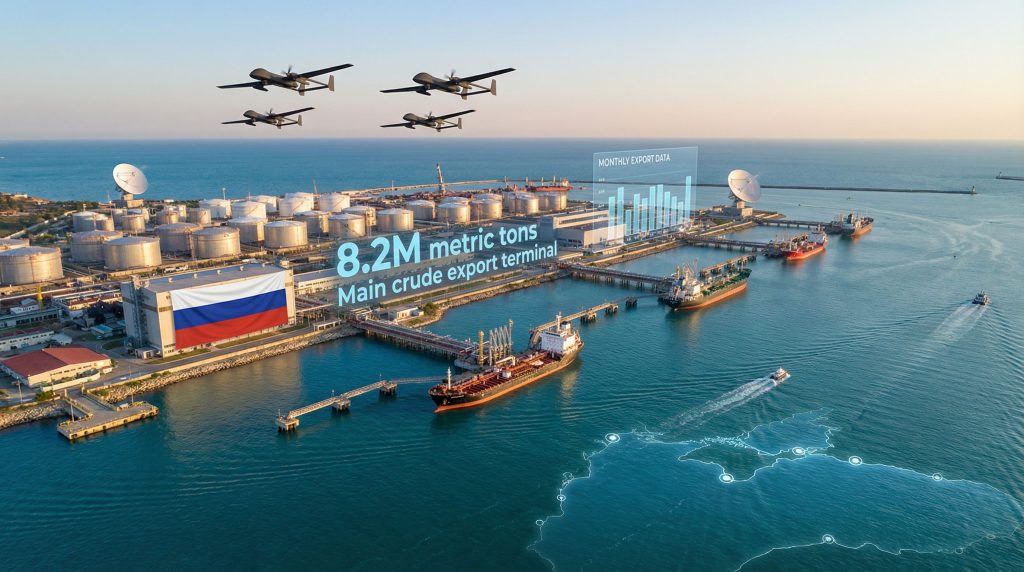
Contemporary warfare increasingly focuses on economic disruption through precision targeting of key industrial assets. Russia's Taman port damaged by Ukrainian drone strike exemplifies this tactical shift, representing a fundamental departure from traditional military objectives where physical territory control dominated strategic thinking. The Black Sea region demonstrates this transformation, where sophisticated unmanned systems now threaten decades-old energy export networks that underpin national economies.
When big ASX news breaks, our subscribers know first
Strategic Vulnerabilities Across Russia's Black Sea Energy Corridors
The concentration of critical export infrastructure along Russia's Black Sea coastline creates systemic risks that extend far beyond individual facility vulnerabilities. These ports represent irreplaceable nodes in global energy distribution networks, with specialized terminals that took decades to construct and cannot be rapidly replicated elsewhere.
Port Infrastructure Concentration Creates Single Points of Failure
Russia's Black Sea energy export capacity relies heavily on three primary coastal facilities, each serving distinct but interconnected functions. The Taman port complex alone processed approximately 4.16 million metric tons of oil products during 2025, according to industry sources. This facility simultaneously handles grain, coal, and other commodities, making it a critical economic chokepoint.
Furthermore, the geographic positioning of these terminals creates inherent defensive challenges:
- Exposed coastal locations with limited natural barriers
- Concentrated storage facilities presenting high-value targets
- Limited redundancy in specialized handling equipment
- Extended supply chains vulnerable to cascading disruptions
Weather Patterns and Operational Windows
Black Sea meteorological conditions significantly influence both offensive drone operations and defensive preparations. Winter storms can ground surveillance systems while providing cover for low-altitude approach vectors. Conversely, clear weather periods enable extended-range missions but also improve defensive radar detection capabilities.
The seasonal nature of these operational windows creates predictable vulnerability periods that military planners on both sides must consider when developing strategic timelines. This analysis connects directly with broader oil price rally analysis examining market volatility patterns.
Economic Warfare Through Infrastructure Targeting
The targeting of energy infrastructure represents a calculated escalation in economic warfare methodology. Recent attacks demonstrate how relatively modest investments in unmanned systems can generate disproportionate economic impacts through strategic targeting of irreplaceable industrial assets.
Revenue Disruption Mathematics
When facilities like the Taman port complex experience operational interruptions, the financial cascade extends well beyond immediate repair costs. Export capacity reductions translate directly into lost revenue streams, with each day of reduced throughput representing millions in foregone earnings.
Modern conflict increasingly blurs the line between military and economic objectives, where industrial infrastructure becomes both target and weapon in comprehensive national strategies.
Insurance Market Reassessment
The financial services industry has begun fundamentally reassessing risk premiums for assets located within potential conflict zones. Traditional actuarial models struggle to quantify the probability and potential impact of precision strikes on specialized infrastructure, leading to conservative coverage terms that further increase operational costs.
In addition, this insurance market evolution affects:
- Long-term capital allocation decisions for infrastructure expansion
- Operational cost structures for existing facilities
- Investment attractiveness of replacement or redundant capacity
- Financial viability of alternative routing options
Technological Transformation of Asymmetric Warfare Capabilities
The democratization of precision-strike technology through unmanned systems fundamentally alters the cost-benefit analysis of infrastructure attacks. Small, relatively inexpensive platforms can now deliver strategic-level impacts previously requiring sophisticated military assets.
Cost-Effectiveness Revolution
The economic equation underlying modern infrastructure warfare has shifted dramatically in favour of offensive capabilities. Unmanned systems costing tens of thousands of dollars can inflict millions in damage and disruption, creating favourable return-on-investment calculations for attacking forces while imposing massive defensive expenditure requirements.
However, this asymmetric advantage extends beyond immediate damage assessment:
- Psychological impact exceeding physical destruction
- Insurance and financing costs increasing for defenders
- Operational disruption affecting broader supply chains
- Resource allocation pressure toward defensive systems
Range and Coordination Capabilities
Modern unmanned systems demonstrate increasingly sophisticated operational capabilities, including extended-range missions and coordinated multi-target engagement. The February 15, 2026 attacks on multiple Black Sea facilities, including Russia's Taman port damaged by Ukrainian drone strike, illustrate this tactical evolution according to military analysts.
These capabilities suggest operational planning that considers:
- Simultaneous engagement to overwhelm defensive responses
- Geographic dispersion to complicate counter-attack planning
- Target prioritisation based on economic rather than military value
- Timing coordination to maximise psychological and economic impact
Global Energy Security Implications
The vulnerability demonstrated in Black Sea infrastructure attacks reverberates throughout global energy markets, affecting pricing mechanisms, supply chain planning, and strategic reserve management across consuming nations. This connects with broader trade war market impact considerations affecting international commerce.
Supply Chain Fragility Assessment
Critical infrastructure attacks expose fundamental weaknesses in global energy distribution networks that previously operated under assumptions of relative security. The interconnected nature of modern supply chains means that localised disruptions can generate far-reaching consequences.
Key vulnerability factors include:
- Specialised terminal equipment requiring extended replacement timelines
- Limited alternative routing capacity during disruption periods
- Insurance and financing availability for replacement infrastructure
- Technical expertise concentration in specific geographic regions
Market Response Mechanisms
Energy markets demonstrate increasing sensitivity to infrastructure security concerns, with commodity prices reflecting perceived rather than actual supply disruptions. This psychological component amplifies the strategic value of infrastructure targeting beyond immediate physical impacts.
Consequently, trading patterns now incorporate:
- Risk premium calculations for conflict-adjacent supply sources
- Alternative supplier evaluation based on security assessments
- Strategic reserve activation triggers linked to infrastructure threats
- Long-term contract renegotiation incorporating security provisions
Defensive System Evolution and Adaptation Challenges
The proliferation of precision-strike unmanned systems forces comprehensive reevaluation of infrastructure protection methodologies. Traditional air defence systems designed for conventional aircraft struggle against smaller, slower, and more numerous drone platforms.
Multi-Layer Defence Requirements
Effective protection against modern drone threats requires integrated defensive systems operating across multiple engagement zones and detection methods. No single technology provides comprehensive coverage against the diverse threat vectors that contemporary unmanned systems can exploit.
| Defence Layer | Primary Function | Coverage Limitations |
|---|---|---|
| Early Warning | Long-range detection | Weather interference, low-altitude gaps |
| Electronic Warfare | Signal disruption | Autonomous system immunity |
| Kinetic Intercept | Physical destruction | High cost per engagement |
| Point Defence | Terminal protection | Limited coverage radius |
Operational Sustainability Challenges
Continuous defensive operations place enormous strain on personnel, equipment, and financial resources. The requirement for 24/7 monitoring and response capability creates unsustainable operational tempos that defenders must address through automation or resource rotation.
Critical sustainability factors:
- Personnel fatigue from extended high-alert periods
- Equipment maintenance under continuous operational stress
- Ammunition consumption during active engagement periods
- False alarm rates affecting system credibility and resource allocation
The next major ASX story will hit our subscribers first
Regional Stability and Conflict Escalation Dynamics
Infrastructure targeting creates complex escalation management challenges that traditional military doctrine struggles to address. The economic impact of successful strikes creates pressure for reciprocal responses while maintaining sufficient ambiguity to complicate international legal interpretations.
Escalation Control Mechanisms
The resumption of energy infrastructure attacks following the expiration of US-brokered moratoriums demonstrates how tactical targeting decisions become integrated into broader diplomatic frameworks. This integration suggests that Russia's Taman port damaged by Ukrainian drone strike represents normalised infrastructure warfare as an accepted component of contemporary conflict management.
The normalisation of economic infrastructure targeting represents a fundamental shift in conflict methodology, where industrial capacity becomes both weapon and target in comprehensive national strategies.
International Law Adaptation Requirements
Current international humanitarian law frameworks struggle to address the civilian impact of precision strikes on dual-use infrastructure. Energy facilities serve both military and civilian functions, creating legal interpretation challenges that complicate international response coordination.
The legal complexity includes:
- Civilian infrastructure protection under Geneva Convention frameworks
- Military necessity justifications for economic targeting
- Proportionality assessments in asymmetric conflict scenarios
- Third-party liability for infrastructure damage affecting neutral parties
Energy Market Risk Pricing Evolution
Financial markets demonstrate increasing sophistication in pricing geopolitical risks associated with infrastructure vulnerability. Traditional risk assessment models require fundamental revision to account for the new threat environment created by precision-strike capabilities.
Insurance Industry Transformation
The insurance sector faces unprecedented challenges in assessing and pricing risks associated with infrastructure warfare. Traditional actuarial models based on historical data become inadequate when confronting novel threat vectors with limited precedent.
Risk pricing factors now include:
- Proximity to potential conflict zones affecting coverage availability
- Infrastructure hardening investments influencing premium calculations
- Alternative operational capacity reducing single-point-of-failure exposure
- Rapid repair capabilities minimising extended disruption periods
Capital Allocation Impact
Investment flows increasingly reflect security considerations that were previously secondary to purely economic factors. Infrastructure projects now require comprehensive threat assessments that influence fundamental design and location decisions. This parallels energy transition challenges faced globally.
This evolution affects:
- Project financing availability and terms
- Technology selection prioritising resilience over efficiency
- Geographic diversification strategies for risk mitigation
- Operational redundancy investments for continuity assurance
Long-Term Strategic Transformation
The demonstrated vulnerability of concentrated energy infrastructure drives fundamental changes in industrial design philosophy, moving away from efficiency-optimised centralisation toward resilience-focused distribution.
Infrastructure Resilience Evolution
Future energy infrastructure development will likely prioritise survivability over pure economic optimisation. This shift requires substantial additional investment in redundancy, hardening, and rapid repair capabilities that were previously considered economically inefficient.
Design evolution priorities include:
- Distributed processing capacity reducing single-point vulnerabilities
- Underground storage expansion minimising target exposure
- Rapid repair capabilities enabling quick operational recovery
- Multi-modal transportation integration for route flexibility
Alternative Transportation Networks
The vulnerability of coastal facilities accelerates investment in alternative transportation infrastructure, despite higher operational costs and reduced efficiency. Arctic shipping routes, overland pipelines, and rail networks gain strategic importance as risk-mitigation alternatives. This aligns with comprehensive energy security outlook assessments.
What are the typical infrastructure recovery timelines?
Recovery timelines vary dramatically based on damage severity and infrastructure type. Minor damage to loading equipment may require 2-3 weeks for restoration, while major structural damage to specialised terminals can necessitate 6-12 months for complete reconstruction. The availability of replacement components and specialised technical expertise significantly influences these timelines.
What alternative export routes exist for Black Sea energy products?
Primary alternatives include Arctic shipping routes accessible seasonally, pipeline networks through Central Asia connecting to Asian markets, and expanded rail connections to China. However, each alternative carries significant capacity limitations and cost premiums compared to traditional Black Sea routes, making them imperfect substitutes for large-scale operations. This relates to broader natural gas price forecast considerations.
Conclusion: Infrastructure Warfare as Strategic Doctrine
The targeting of energy infrastructure represents more than tactical innovation; it signifies a fundamental evolution in how nations project power and pursue strategic objectives. The economic multiplier effects of precision strikes on carefully selected industrial targets create strategic leverage that traditional military approaches cannot match.
This transformation extends beyond immediate conflict zones, influencing global infrastructure investment patterns, insurance market evolution, and international legal framework development. The demonstration that relatively modest technological investments can threaten decades of industrial development forces comprehensive reevaluation of vulnerability assessment and defensive investment priorities.
The long-term implications suggest a future where infrastructure resilience becomes as important as operational efficiency in industrial design, fundamentally altering how nations approach energy security and economic development in an increasingly interconnected but strategically contested world. Russia's Taman port damaged by Ukrainian drone strike exemplifies this new paradigm of economic warfare through precision targeting.
Disclaimer: This analysis is based on publicly available information and should not be considered as investment or policy advice. The rapidly evolving nature of contemporary conflicts means that strategic assessments require continuous updating as new information becomes available.
Looking for Investment Opportunities in Energy Infrastructure Resilience?
Discovery Alert's proprietary Discovery IQ model delivers real-time alerts on significant ASX mineral and energy discoveries, instantly empowering subscribers to identify actionable opportunities ahead of the broader market as infrastructure security becomes increasingly critical. Begin your 14-day free trial today and secure your market-leading advantage in this evolving landscape.