June 4, 2026
Understanding Critical Mineral Dependencies in Modern Economic Warfare
National economies increasingly face strategic vulnerability through their reliance on specialized materials essential for everything from smartphone production to military hardware manufacturing. The convergence of technological advancement, geopolitical tensions, and supply chain concentration has transformed seemingly obscure elements into instruments of international leverage. When single nations control the majority of global production and processing capacity for materials that power modern industry, the potential for economic disruption extends far beyond traditional trade disputes.
Strategic mineral reserves represent a fundamental shift in how governments conceptualise economic defence. Unlike traditional military assets or financial reserves, these stockpiles address the reality that modern technological superiority depends on access to specific geological resources. The interconnected nature of contemporary supply chains means that disruption of rare earth minerals stockpile availability can cascade through multiple industries simultaneously, creating vulnerabilities that extend far beyond immediate manufacturing concerns.
When big ASX news breaks, our subscribers know first
What Strategic Role Do Critical Mineral Reserves Play in Economic Defence?
Understanding the National Security Imperative Behind Resource Stockpiling
The concept of strategic mineral reserves operates on fundamentally different principles than commercial inventory management. While businesses maintain stock to optimise production costs and delivery schedules, national stockpiles serve as insurance against supply weaponisation and market manipulation. This distinction becomes critical when examining recent developments in rare earth minerals stockpile initiatives, where governments prioritise supply security over cost optimisation.
Historical precedent demonstrates the effectiveness of strategic resource management during periods of international tension. The Strategic Petroleum Reserve, established following the 1973 oil embargo, provided a template for how government-controlled stockpiles can stabilise markets and maintain industrial continuity during supply disruptions. However, the complexity of modern rare earth minerals stockpile requirements presents unique challenges that extend beyond simple volume accumulation.
The economic multiplier effects of supply chain disruption reveal why strategic reserves have become essential components of national defence architecture. When production facilities lack access to specialised materials, the consequences ripple through interconnected supplier networks, affecting industries seemingly unrelated to the original disruption. This systemic vulnerability explains why policymakers view stockpiling as economically defensive rather than merely precautionary.
Quantifying Supply Chain Vulnerability Across Key Industries
Manufacturing sector analysis reveals the concentrated nature of supply chain risks affecting critical industries. The automotive sector faces particularly acute vulnerability, with electric vehicle production requiring consistent access to lithium, nickel, and rare earth elements for battery systems and permanent magnet motors. Industry assessments suggest that a 60-day supply interruption could halt production lines across multiple vehicle categories, creating cascading effects through supplier networks.
Defence manufacturing presents even more complex vulnerability patterns due to the specialised nature of military hardware requirements. Advanced radar systems, precision-guided munitions, and communication equipment rely on rare earth elements with specific purity and performance characteristics that cannot be easily substituted. Furthermore, the defence industrial base operates with longer procurement timelines than commercial sectors, making stockpile availability crucial for maintaining production schedules.
Technology hardware production faces unique risks due to the miniaturised nature of modern electronics and the precise specifications required for semiconductor manufacturing. The integration of rare earth elements in everything from smartphone displays to data centre equipment means that supply disruptions affect both consumer and enterprise technology markets simultaneously. Consequently, the critical minerals demand surge continues to intensify these vulnerabilities.
Which Countries Currently Maintain the Largest Critical Mineral Stockpiles?
China's Dominant Reserve Strategy and Market Control Mechanisms
China's approach to critical mineral stockpiling operates through a sophisticated integration of state-controlled reserves and commercial inventory management. The country's control of approximately 70 percent of global rare earth mining and 90 percent of processing capacity provides multiple leverage points for supply management. This concentration enables coordinated responses to international trade tensions, as demonstrated during 2025 negotiations when export restrictions targeted specific technology applications including jet engines, radar systems, electric vehicles, and consumer electronics.
Chinese strategic reserve policies extend beyond simple stockpiling to encompass market timing and price management mechanisms. Export licensing systems provide granular control over which minerals reach international markets, while domestic reserve accumulation during low-price periods creates buffer capacity for supply management. This integrated approach transforms raw material control into a comprehensive geopolitical tool that influences trade war market impact globally.
The scale of Chinese market influence becomes apparent when examining processing capacity concentration. While other countries possess significant rare earth deposits, the infrastructure required for refining and processing these materials into usable forms remains predominantly Chinese-controlled. This processing bottleneck creates dependencies that extend well beyond mining operations, requiring comprehensive strategic responses from competing nations.
Emerging Stockpile Programs in Western Economies
The United States has implemented Project Vault as its primary strategic response to supply chain vulnerabilities, combining $12 billion in Export-Import Bank funding with private sector participation. This hybrid model utilises three major commodities trading firms—Hartree Partners, Traxys North America, and Mercuria Energy Group—to manage procurement and logistics operations. Furthermore, the project aims to provide 60-day emergency supply capacity for key American industries while distributing financial risk across public and private sectors.
Project Vault's operational structure represents a departure from traditional government procurement models. Rather than direct federal agency management, the initiative operates through a public-private partnership that leverages commercial expertise in global commodity markets. This approach acknowledges the complexity of rare earth minerals stockpile management, which requires specialised knowledge of quality specifications, storage requirements, and market timing.
Congressional initiatives provide additional policy frameworks for strategic stockpiling, with bipartisan legislation proposing $2.5 billion in dedicated funding for critical mineral reserves. These proposals emphasise market price stabilisation and domestic mining development as complementary objectives to emergency supply security. The legislative approach suggests broader policy commitment to supply chain resilience beyond immediate administrative priorities.
Australia represents a critical partner in Western stockpile development through the $12.2 billion Australia-US critical minerals framework signed in October 2025. This bilateral agreement targets multiple Australian rare earth projects as alternative supply sources to Chinese production. However, implementation challenges have emerged, with key projects like the Arafura mine in Northern Territory experiencing repeated delays in final investment decisions, highlighting the complex timeline requirements for developing alternative supply chains.
How Do Stockpile Investment Models Compare Across Different Approaches?
Public-Private Partnership Structures in Resource Accumulation
The Project Vault model demonstrates how hybrid funding structures can address both government strategic objectives and private sector commercial interests. By utilising Export-Import Bank financing combined with private capital, this approach allows companies to access strategic reserves while maintaining the risk off their balance sheets. This structure addresses private sector concerns about inventory carrying costs while ensuring government oversight of national security priorities.
| Funding Model | Investment Scale | Risk Distribution | Timeline to Implementation |
|---|---|---|---|
| Government Direct | $10-12 billion | Full public liability | 18-24 months |
| Export-Import Bank | $12 billion seed funding | Shared private/public | 12-18 months |
| Corporate Consortium | $2-5 billion | Private sector led | 6-12 months |
Private sector consortium models offer advantages in market responsiveness and operational efficiency but may lack the scale necessary for comprehensive strategic coverage. Corporate-led initiatives typically focus on specific supply chain requirements rather than broad-based national security objectives. This specialisation can provide faster implementation timelines but may create gaps in strategic coverage across different industries and applications.
Operational Framework Analysis: Bulk Purchasing vs Traditional Procurement
The comparison to bulk purchasing models like consumer warehouse clubs reveals how economies of scale can be applied to strategic commodities. This approach leverages volume discounts and supply chain optimisation to reduce per-unit costs while building substantial inventory capacity. For instance, the logistics comparison suggests that strategic stockpiling can benefit from commercial distribution methodologies adapted for government security requirements.
Inventory management costs represent a significant operational consideration across all stockpile models. Rare earth elements require specialised storage conditions to maintain quality and prevent degradation over extended periods. Environmental controls, security systems, and inventory tracking add substantial ongoing costs that must be factored into long-term sustainability calculations. These operational expenses can significantly impact the overall economics of different stockpile approaches.
Distribution logistics for emergency supply activation require pre-established protocols and transportation infrastructure capable of rapid deployment. The integration with existing industrial supply chains must be planned in advance to ensure that stockpile materials can reach manufacturing facilities quickly during supply disruptions. This operational complexity influences the choice between centralised and distributed storage models.
What Are the Geopolitical Implications of Strategic Stockpile Competition?
Trade War Escalation Scenarios and Resource Weaponisation
The 2025 export restrictions implemented by China during trade negotiations demonstrate how critical mineral access can be weaponised during international disputes. These restrictions targeted specific high-value applications including defence systems and advanced technology, revealing the strategic calculation behind supply chain control. The timing of these restrictions during active trade talks illustrates how resource access becomes integrated into broader diplomatic and economic negotiations.
Historical analysis reveals patterns of escalating responses when countries implement export restrictions on critical materials. Retaliatory measures typically include expanded domestic production incentives, alternative supplier development, and strategic stockpile accumulation. These responses create long-term structural changes in global supply chains that persist beyond the resolution of immediate trade disputes.
The effectiveness of resource weaponisation depends on the target country's ability to develop alternative suppliers or substitute materials. Countries with diversified supply sources and robust research capabilities can reduce vulnerability to export restrictions over time. This dynamic creates incentives for sustained investment in supply chain resilience rather than reactive responses to specific trade actions.
Regional Alliance Building Around Critical Mineral Security
The Australia-US framework represents a model for allied cooperation in critical mineral security that extends beyond bilateral trade agreements. The $12.2 billion investment commitment demonstrates how strategic partnerships can facilitate alternative supply chain development while strengthening geopolitical relationships. This approach leverages allied nation resource endowments to create supply alternatives that reduce dependence on potentially hostile suppliers.
Regional alliance structures provide mechanisms for coordinating stockpile policies and sharing strategic reserves during emergencies. The integration of multiple allied nations into supply chain resilience planning creates redundancy that enhances overall security while distributing costs across partner countries. However, coordination challenges arise when partner nations have different strategic priorities or economic constraints.
QUAD partnership implications suggest broader multilateral approaches to Indo-Pacific supply chain security. The involvement of Japan, India, Australia, and the United States in coordinated critical mineral policies could create substantial alternative capacity to Chinese-controlled supply chains. However, the complexity of coordinating four different national policies and industrial priorities presents significant implementation challenges.
How Will Stockpiling Impact Global Rare Earth Market Dynamics?
Price Volatility Mitigation Through Strategic Buffer Stocks
Strategic stockpiles can function as market stabilisation mechanisms when operated with appropriate timing and scale considerations. Government reserve accumulation during periods of oversupply can support price floors for domestic mining operations, while strategic releases during supply disruptions can prevent excessive price spikes. This buffer function requires sophisticated market analysis and coordination with private sector inventory management.
"Strategic stockpiles designed for emergency supply continuity must balance market stabilisation objectives with national security priorities, requiring careful coordination between procurement timing and market conditions."
The scale required for meaningful price impact depends on the specific mineral markets and their characteristic volatility patterns. Rare earth minerals stockpile effectiveness varies significantly across different elements based on market size, existing inventory levels, and demand patterns. Elements with smaller markets and higher price volatility may be more responsive to strategic stockpile operations than commodities with established commercial inventory management.
Market concentration risks extend beyond Chinese dominance to include processing facility vulnerabilities and transportation chokepoints. Strategic stockpiles must account for refined material requirements rather than focusing solely on raw ore accumulation. The processing bottleneck creates additional layers of vulnerability that stockpile policies must address through either domestic processing capacity development or strategic partnerships with allied processing facilities.
Market Concentration Risk and Diversification Imperatives
Current dependency ratios of 70 percent mining concentration and 90 percent processing concentration create systemic risks that extend well beyond normal market competition. These concentration levels enable coordinated supply management that can affect global pricing and availability across multiple industries simultaneously. The interdependence of different rare earth elements in many applications means that disruption of any single element can affect entire product categories.
Alternative source development requires substantial lead times and capital investment that may not be economically viable without policy support or guaranteed demand. Australian rare earth projects face regulatory approval processes, infrastructure development requirements, and financing challenges that can extend development timelines beyond immediate strategic needs. The Arafura mine delays exemplify how complex approval processes can frustrate alternative supply development despite strong government support.
Technology substitution research represents a parallel approach to supply diversification that reduces overall dependence on specific critical materials. Investment in alternative materials research and recycling technologies can reduce long-term vulnerability while providing competitive advantages in manufacturing cost and performance. However, substitution development timelines often extend beyond immediate strategic stockpile requirements.
The next major ASX story will hit our subscribers first
What Investment Opportunities Emerge from Stockpile Development?
Mining Sector Beneficiaries and Production Capacity Expansion
Strategic stockpile development creates sustained demand signals that can support mining sector investment and capacity expansion. Companies with existing rare earth production capabilities or advanced development projects benefit from the increased demand certainty that government stockpile programmes provide. This demand backstop can justify capital investment in projects that might otherwise face uncertain market conditions.
Australian rare earth projects represent primary beneficiaries of US-Australia cooperation frameworks, with multiple projects receiving development support through bilateral agreements. However, production timeline analysis reveals significant gaps between policy commitments and actual production capacity. Mining companies must navigate complex permitting processes, environmental reviews, and financing arrangements that can extend development schedules beyond government policy timelines.
North American mining revival faces unique challenges related to environmental regulations, community relations, and infrastructure development. Domestic rare earth projects benefit from national security considerations that may influence regulatory approval processes. However, the higher cost structure of North American operations requires sustained price support or policy incentives to compete with established international suppliers.
African rare earth potential presents opportunities for development partnerships that combine Western capital and technology with African mineral resources. However, political risk assessment reveals governance challenges, infrastructure limitations, and regulatory uncertainties that complicate investment decision-making. Chinese investment in African rare earth projects creates additional competitive dynamics that Western investors must navigate.
Technology Sector Implications for Supply Chain Management
Automotive industry inventory strategies must adapt to accommodate strategic stockpile availability while maintaining efficient working capital management. Electric vehicle manufacturers face particular challenges in securing rare earth supplies for permanent magnet motors and battery systems. Strategic stockpile access provides emergency backup but requires advance coordination with government allocation procedures.
Electronics manufacturing resilience planning increasingly incorporates supply chain security considerations into product design and sourcing decisions. Companies are developing dual-sourcing strategies and alternative material specifications that reduce vulnerability to specific supply disruptions. However, these resilience measures often involve trade-offs in performance, cost, or manufacturing complexity.
Defence contractor supply security requirements operate under different parameters than commercial manufacturing due to national security classifications and specialised material specifications. Defence manufacturers may receive priority access to strategic stockpile materials during emergencies, but must maintain security clearances and comply with government allocation procedures that can complicate supply chain management.
Which Technical and Logistical Challenges Must Stockpile Programs Overcome?
Storage and Preservation Requirements for Different Mineral Types
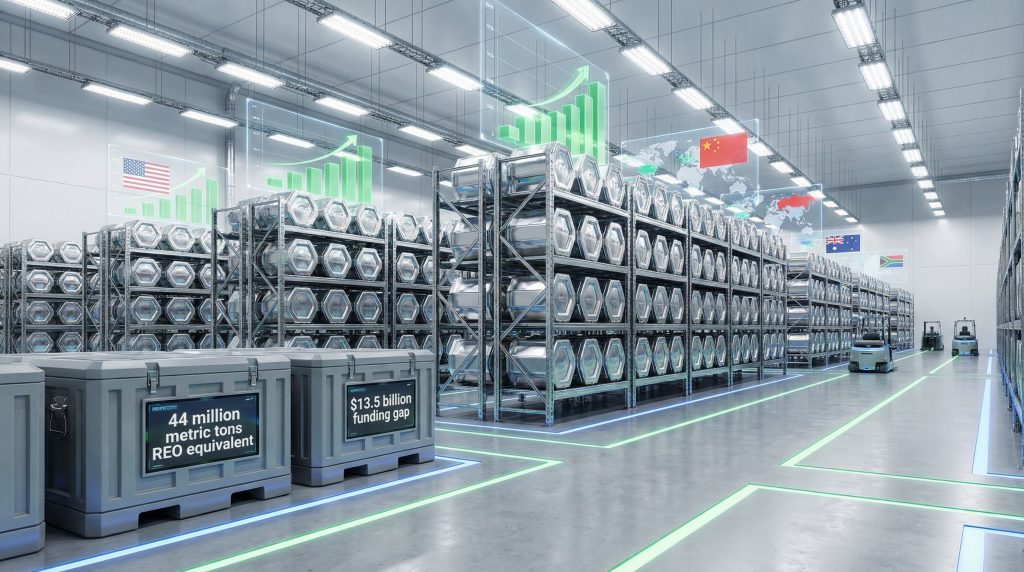
Rare earth oxide stability requires controlled environmental conditions that prevent oxidation, moisture absorption, and contamination during long-term storage. Different rare earth elements have varying stability characteristics that influence storage facility design and operational procedures. Temperature control, humidity management, and inert atmosphere systems add substantial infrastructure costs to stockpile operations.
Transportation infrastructure for emergency distribution must accommodate both bulk shipments and specialised packaging requirements for different mineral types. Some rare earth compounds require hazardous material handling procedures that complicate logistics planning. Emergency activation protocols must account for these transportation complexities while ensuring rapid delivery to critical manufacturing facilities.
Quality assurance protocols for long-term storage require regular testing and inventory rotation to ensure that stockpiled materials maintain specifications required for industrial applications. Degradation monitoring systems must track chemical composition changes over time and identify materials requiring replacement or reprocessing. These quality control requirements add operational complexity and ongoing costs to stockpile management.
Procurement Strategy Optimisation and Market Impact Management
Timing strategies for stockpile accumulation must balance rapid capacity building with market disruption minimisation. Large-scale government purchasing can create artificial demand spikes that increase prices and disadvantage private sector buyers. Procurement scheduling requires coordination with market cycles and production capacity to optimise acquisition costs while minimising market distortion.
Quality specifications for stockpile materials must accommodate multiple industrial applications while ensuring compatibility with existing supply chains. Government procurement standards may differ from commercial specifications, requiring coordination with end-user industries to establish appropriate quality parameters. Supplier certification requirements add administrative complexity but ensure reliable material quality.
Integration with existing industrial supply chains requires coordination between government stockpile managers and private sector purchasing departments. Emergency activation procedures must complement rather than disrupt established commercial relationships. This integration complexity influences decisions about centralised versus distributed storage models.
What Does the Future Hold for Global Mineral Stockpile Strategy?
Scenario Planning: 2030 Supply Chain Architecture
Projected reserve capacity requirements across major economies suggest substantial expansion of strategic stockpiling over the next decade. Current commitments by the United States, European Union, and allied nations indicate coordinated approaches to supply chain resilience that could fundamentally alter global rare earth markets. The scale of planned capacity suggests that strategic stockpiles will become permanent features of international economic competition rather than temporary responses to current tensions.
Technology advancement impact on mineral demand patterns creates uncertainties that complicate long-term stockpile planning. Electric vehicle adoption rates, renewable energy deployment, and defence modernisation programmes will drive demand growth for specific rare earth elements. However, material substitution research and recycling technology development may reduce overall demand intensity for some applications.
Climate transition mineral requirements add new dimensions to strategic stockpile considerations as governments implement policies supporting renewable energy and electric transportation. The materials required for wind turbines, solar panels, and energy storage systems overlap significantly with traditional rare earth applications, creating competing demand pressures that may influence stockpile policies.
Policy Coordination and International Cooperation Frameworks
Multilateral reserve sharing agreements represent the next evolution in strategic stockpile policy, enabling allied nations to coordinate capacity planning and emergency responses. These frameworks require standardised quality specifications, compatible inventory management systems, and agreed-upon activation procedures. The complexity of coordinating multiple national policies presents significant administrative challenges.
Trade rule modifications for strategic stockpile operations may require updates to international trade agreements and World Trade Organization policies. Current trade rules were developed for commercial market conditions and may not adequately address government strategic stockpiling activities. New frameworks must balance national security objectives with fair trade practices.
Emergency activation protocols and alliance coordination mechanisms require advance planning for rapid response during supply disruptions. These procedures must account for different national legal frameworks, security classification requirements, and industrial priority systems. The integration of military and civilian supply chains adds additional complexity to coordination planning.
Disclaimer: This analysis reflects current policy developments and market conditions as of early 2026. Strategic stockpile policies and international cooperation frameworks continue to evolve rapidly in response to changing geopolitical conditions. Investment decisions should consider the dynamic nature of government policies and international trade relationships. Future market conditions may differ significantly from current projections due to technological developments, policy changes, or geopolitical events.
Looking to Capitalise on Critical Mineral Investment Opportunities?
Discovery Alert's proprietary Discovery IQ model delivers real-time alerts on significant mineral discoveries across the ASX, including rare earth and critical mineral projects positioned to benefit from strategic stockpiling initiatives. Subscribers gain immediate insights into actionable opportunities as governments worldwide expand their mineral security programmes, whilst historic discoveries showcase the substantial returns possible when positioning ahead of major announcements.