August 25, 2026

Critical Mineral Processing: Why America's $12 Billion Strategy Misses Strategic Fundamentals
Global supply chain vulnerabilities in critical mineral sectors create unprecedented strategic challenges for developed economies. The project vault structural weakness becomes evident when examining how traditional resource security approaches focus on securing raw material access, whilst contemporary geopolitical landscapes reveal that processing capabilities determine actual supply control. This fundamental shift in resource dynamics exposes significant gaps in current U.S. strategic planning frameworks, particularly regarding energy transition in critical minerals.
The emergence of concentrated processing infrastructure in single geographic regions creates bottlenecks that raw material stockpiling cannot address. Understanding these structural dependencies requires analysing the entire value chain rather than focusing solely on extraction capabilities.
When big ASX news breaks, our subscribers know first
Understanding America's Critical Processing Infrastructure Gap
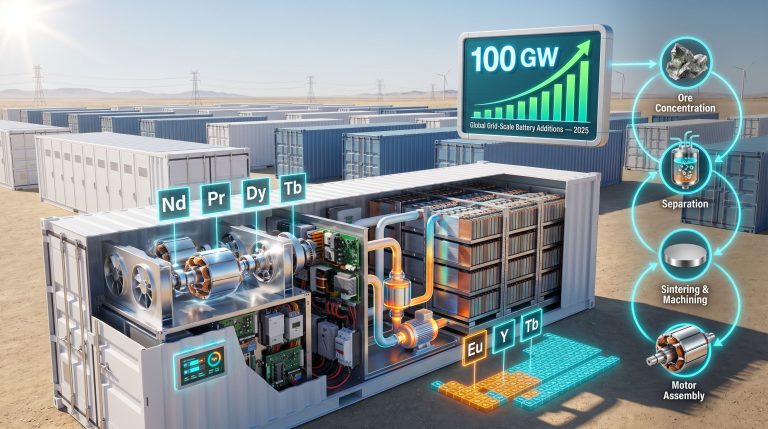
The most significant vulnerability in U.S. critical mineral security lies not in mining capacity but in midstream processing operations. China controls approximately 85-90% of global rare earth element separation and refining infrastructure, creating an insurmountable bottleneck that traditional stockpiling approaches cannot circumvent.
Processing Infrastructure Requirements:
• Separation facilities: Require 5-7 year development cycles with capital costs exceeding $300-500 million
• Refining operations: Demand specialised hydrometallurgical expertise concentrated in Asian facilities
• Magnet production: Virtually non-existent domestic capacity despite critical defence applications
• Environmental compliance: Extended permitting timelines averaging 3-5 years for major facilities
The technical complexity of rare earth separation involves sophisticated solvent extraction processes that require specialised engineering knowledge. Mountain Pass facility in California, operated by MP Materials, demonstrates the challenges involved in developing domestic processing capacity. The facility's modernisation required approximately $1.7 billion in investment over multiple phases between 2017-2022.
Workforce Development Challenges
Critical mineral processing requires highly specialised technical expertise that takes years to develop. Current domestic workforce capabilities remain concentrated in university research programs rather than commercial-scale operations, highlighting the need for comprehensive mining innovation trends to address skill gaps.
Key Training Requirements:
-
Hydrometallurgical engineering: 4-6 years specialised education plus practical experience
-
Environmental compliance specialists: Understanding complex rare earth processing regulations
-
Quality control technicians: Specialised analytical chemistry training for purity verification
-
Process optimization engineers: Experience with continuous improvement methodologies
The National Science Foundation's Critical Materials Institute operates university consortium programs with approximately $25 million annual funding, but this scale remains insufficient to address projected workforce needs through 2030.
Market Dynamics That Undermine Stockpiling Effectiveness
Project Vault's structure creates several market contradictions that potentially undermine its strategic objectives. The $12 billion allocation across multiple mineral categories creates resource dispersion that may prove insufficient to achieve meaningful supply security improvements, particularly when considering critical raw materials facility insights from European approaches.
| Component | Allocation | Timeline | Primary Challenge |
|---|---|---|---|
| EXIM Bank Financing | $10 billion | 2025-2030 | Global supply competition |
| Private Capital | $2 billion | 2025-2027 | Processing bottlenecks |
| Strategic Reserve | Variable | Ongoing | Market price distortion |
The fundamental challenge lies in global concentrate availability. Limited global production capacity means U.S. government purchases must compete with Chinese state-backed entities that operate under different financial constraints and strategic timelines.
Price Volatility and Market Distortion Risks
Large-scale government procurement in thin markets creates several unintended consequences:
• Artificial price inflation during procurement phases that makes domestic projects economically unviable
• Boom-bust cycles that destabilise emerging U.S. mining operations when stockpiling concludes
• Supply chain disruption as existing industrial users compete for limited concentrate supplies
• Market signal distortion that discourages long-term private investment in processing infrastructure
Historical analysis of Strategic Petroleum Reserve filling operations demonstrates similar market dynamics. Concentrated government purchasing created temporary price spikes that ultimately discouraged domestic oil production investments during the 1990s-2000s period.
Alternative Strategic Frameworks for Enhanced Security
Addressing the project vault structural weakness requires integrated value chain development rather than isolated stockpiling efforts. Comprehensive strategic frameworks must prioritise processing infrastructure development alongside raw material security, incorporating lessons from successful critical minerals strategy implementations.
Integrated Processing Infrastructure Investment
Priority Investment Areas:
-
Separation facility development: Direct capital allocation for rare earth processing plants
-
Technical workforce expansion: University partnership programs with guaranteed industry placement
-
Regulatory streamlining: Accelerated permitting challenges resolution for critical mineral projects
-
Technology transfer initiatives: Partnerships with Australia, Canada, and EU processing experts
-
Demand aggregation programs: Long-term offtake commitments extending beyond government procurement
Lynas Rare Earths demonstrates successful Western processing development. Their Kalgoorlie facility in Western Australia processes approximately 8,500 tonnes of rare earth oxide equivalent annually with total capital costs of AUD $305 million (approximately $200 million USD).
Public-Private Partnership Restructuring
Current partnership models inadequately address the fundamental economics of critical mineral processing. Enhanced frameworks require risk-sharing mechanisms that justify private sector investment in capital-intensive processing facilities.
Strategic partnerships must extend beyond traditional government procurement to include technology licensing, guaranteed offtake agreements, and shared development costs across the entire value chain.
Enhanced Partnership Elements:
• Risk-sharing mechanisms for processing facility development with government co-investment
• Technology licensing agreements with allied nations possessing processing expertise
• Guaranteed offtake contracts extending 10-15 years beyond traditional procurement cycles
• Tax incentive frameworks specifically targeting midstream processing operations
Geopolitical Complications in Strategic Mineral Security
Project Vault operates largely in isolation from allied critical mineral initiatives, potentially creating competition rather than coordination among Western nations. This fragmented approach reduces collective bargaining power in global markets whilst exacerbating the project vault structural weakness.
Allied Program Coordination Gaps
Major Allied Initiatives Operating Independently:
• Australia's Critical Minerals Strategy: Government partnership programs with private sector development
• Canada's Critical Minerals Strategy: Launched 2023-2024 with focus on processing capacity
• EU Critical Raw Materials Act: Adopted 2023 with implementation through 2024-2025
• Japan's Resource Security Programs: Technology-focused initiatives with ASEAN partnerships
Limited coordination mechanisms between these programs create inefficiencies and potential market distortions. Moreover, overlapping procurement efforts may drive up global prices whilst failing to address collective processing capacity needs, as analysed in recent political urgency meets mining reality assessments.
China's Counter-Strategic Responses
Chinese entities leverage processing dominance to maintain supply chain control regardless of Western stockpiling efforts. Historical precedent exists in China's rare earth export restrictions during 2010-2015, which successfully limited global access to processed materials despite adequate raw material availability.
Potential Chinese Response Mechanisms:
-
Processing capacity restrictions limiting output to global markets
-
Export quota implementations on refined rare earth products
-
Technology transfer limitations restricting Western access to processing expertise
-
Strategic partnership expansion with non-aligned mineral-producing nations
Scenario Analysis: Long-Term Strategic Effectiveness
Comprehensive scenario modelling reveals significant limitations in stockpiling approaches to supply security. Even under optimal conditions, raw material reserves provide limited protection against processing bottlenecks, which represents a fundamental aspect of the project vault structural weakness.
Best-Case Scenario Assessment
Assuming successful procurement and optimal storage conditions, Project Vault stockpiles could provide approximately 12-18 months of supply disruption buffer for most critical minerals. However, this timeline proves insufficient for developing alternative processing capabilities during crisis periods.
Critical Assumptions:
• Baseline consumption rates remain constant during supply disruption
• Alternative supply sources cannot be activated within 18-month timeframes
• Processing bottlenecks prevent effective utilisation of stockpiled materials
• Industrial demand continues at pre-disruption levels
Vulnerability Assessment Matrix
| Risk Factor | Probability | Impact Level | Mitigation Complexity |
|---|---|---|---|
| Processing bottlenecks | High | Severe | Very High |
| Global supply competition | High | Moderate | High |
| Price distortion effects | Medium | Moderate | Medium |
| Technical expertise gaps | High | Severe | Very High |
| Allied coordination failures | Medium | High | High |
The assessment reveals that high-probability, severe-impact risks concentrate in processing and technical capabilities rather than raw material availability. This pattern suggests fundamental strategic misdirection in current approaches, as highlighted in comprehensive US structural weakness analyses.
The next major ASX story will hit our subscribers first
Investment Priority Restructuring for Strategic Impact
Maximising strategic effectiveness requires redirecting Project Vault resources toward processing infrastructure development and technical capability building. This approach addresses root causes rather than symptoms of supply vulnerability.
Capital Reallocation Framework
Recommended Investment Priorities:
-
Front-loaded processing investment: 60% of resources directed toward separation facilities
-
Parallel workforce development: 20% allocation for specialised training programs
-
Regulatory reform acceleration: 10% for permitting process improvement
-
International partnership expansion: 10% for technology transfer initiatives
This reallocation framework prioritises sustainable domestic capability development over temporary supply buffering. Furthermore, long-term strategic value creation requires building permanent processing infrastructure rather than accumulating inventory.
Performance Metrics Redefinition
Success measurement must shift from stockpile tonnage to processing capacity development and value chain integration metrics:
Key Performance Indicators:
• Domestic processing capacity percentage for each critical mineral category
• Value-add percentage of domestic production versus raw material exports
• Supply chain resilience indicators measuring alternative source availability
• Technical workforce capacity relative to projected industry requirements
Strategic Implications for National Security
The analysis demonstrates that the project vault structural weakness stems from fundamental misunderstanding of contemporary supply chain vulnerabilities. Raw material stockpiling provides limited security improvements without parallel processing capability development.
Critical Strategic Realisations:
• Processing control supersedes raw material access in determining actual supply security
• Isolated national approaches prove insufficient against coordinated global supply chains
• Market-based solutions require government risk-sharing to justify private sector investment
• Technical workforce development demands sustained commitment extending beyond political cycles
Future strategic frameworks must integrate value chain development, allied coordination, and long-term capability building to achieve meaningful improvements in critical mineral security. Consequently, the current approach risks creating temporary supply buffers whilst failing to address underlying structural dependencies that create vulnerability in the first place.
Disclaimer: This analysis involves strategic forecasting and policy speculation based on publicly available information. Actual outcomes may vary significantly based on geopolitical developments, market conditions, and policy implementation details not fully reflected in current public documentation.
Could Strategic Mineral Processing Transform Your Investment Portfolio?
Discovery Alert's proprietary Discovery IQ model identifies emerging opportunities in Australia's critical minerals sector, delivering real-time alerts when ASX-listed companies announce significant discoveries that could benefit from America's evolving strategic priorities. Don't miss the next major breakthrough—begin your 14-day free trial today to gain actionable insights into this rapidly developing market sector.