
August 21, 2026
Critical Mineral Supply Chains Face Transformation as Policy Shifts Open New Resource Corridors
Modern defense manufacturing operates within an increasingly complex web of supply chain dependencies that extends far beyond traditional procurement models. The recent developments in lifting sanctions on bauxite and other critical minerals demonstrates how policy frameworks can reshape global supply chains with implications extending throughout entire defense manufacturing ecosystems. Advanced military systems require sophisticated materials engineered to withstand extreme operational conditions while delivering performance capabilities that define technological superiority on contemporary battlefields.
The defense industrial base depends heavily on rare earth elements and specialty alloys that enable everything from radar systems to hypersonic platforms. Yet this dependency exists within a global market structure where processing capabilities remain concentrated in specific geographic regions. Furthermore, these critical minerals for energy security create potential chokepoints that defense planners must navigate carefully.
Venezuela's position within this strategic landscape demonstrates how sanctions relief mechanisms can reshape mineral supply chains with implications extending far beyond immediate commercial opportunities. The country holds substantial mineral reserves that have remained largely inaccessible to Western markets for nearly a decade. Consequently, this creates pent-up supply potential that could influence global pricing dynamics and strategic stockpiling calculations.
When big ASX news breaks, our subscribers know first
Strategic Mineral Dependencies: Why Venezuela's Bauxite Reserves Matter for US Defense Manufacturing
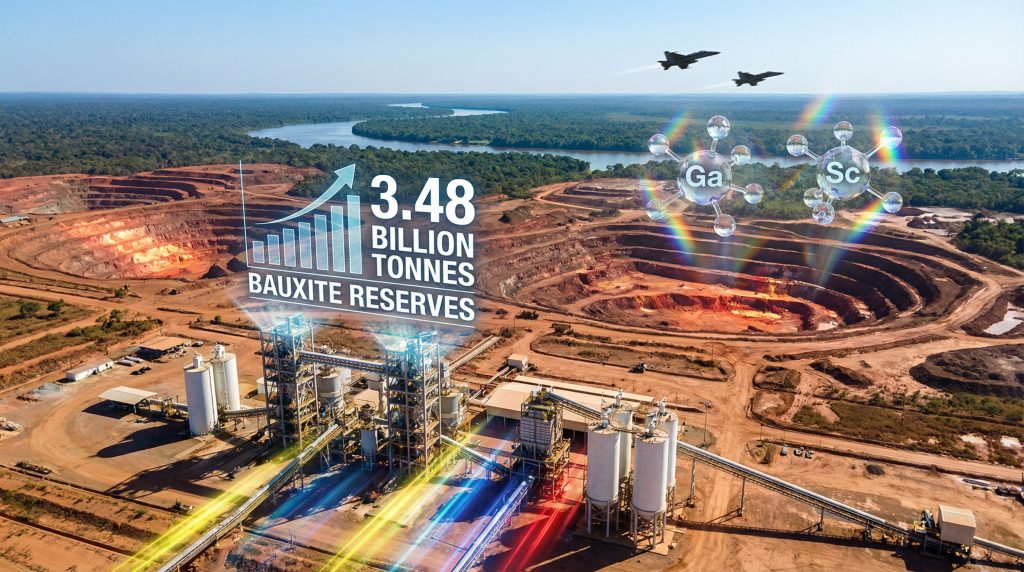
Venezuela commands one of the world's most significant bauxite resource bases, with geological surveys indicating reserves totaling approximately 3.48 billion tonnes distributed across the Bolívar and Amazonas states. These deposits concentrate primarily within the Orinoco Mining Arc, encompassing 111,843 square kilometres of mineral-rich territory. Moreover, this represents roughly 12.2 percent of Venezuela's total landmass.
Critical Minerals in Modern Defense Systems
Defense applications requiring specialised materials have expanded dramatically as military platforms integrate increasingly sophisticated electronic systems and advanced materials engineering. In addition, the bauxite project benefits demonstrate how strategic mineral extraction can support broader defense manufacturing objectives.
The following applications illustrate key uses driving demand for critical minerals in defense manufacturing:
• Gallium: AESA radar systems and electronic warfare platforms in F-35 fighter jets
• Scandium: Aerospace alloys and structural components for hypersonic vehicles
• Rare Earth Elements: Guidance systems and secure communications in naval platforms
The F-35 Lightning II program exemplifies how modern defense platforms integrate multiple critical materials throughout their systems architecture. These aircraft incorporate gallium-based semiconductors in their radar and electronic warfare capabilities. Furthermore, they utilise advanced aluminium alloys enhanced with scandium for structural applications requiring exceptional strength-to-weight performance.
AESA radar systems represent particularly material-intensive applications, requiring gallium arsenide semiconductors that enable high-frequency operation. These systems must function reliably across extreme temperature ranges while delivering precision targeting capabilities. However, they define modern air-to-air and air-to-ground engagement scenarios.
Venezuela's Mineral Resource Profile
The Los Pijiguaos mine complex represents Venezuela's primary bauxite production facility, with designed capacity reaching 5.2 million tonnes annually. However, operational challenges have severely constrained actual output, with production falling to less than 1 million tonnes per year. This decline results from infrastructure constraints and power grid reliability issues.
The Bauxilum mining and refining complex operates with nameplate capacity of 6 million tonnes but faces similar operational constraints. Most current production serves domestic alumina refining rather than export markets. This reflects both infrastructure limitations and market access restrictions that have persisted since 2017.
Geographic distribution of these resources creates logistical considerations for potential extraction and export operations. The Orinoco Mining Arc's remote location requires substantial infrastructure investment to support large-scale extraction. This includes reliable power generation, transportation networks, and port facilities capable of handling bulk mineral exports.
Production capacity analysis reveals significant potential for expansion once operational constraints are addressed:
• Immediate capacity: 1-2 million tonnes annually with existing infrastructure
• Medium-term potential: 8-10 million tonnes with infrastructure improvements
• Long-term projection: 15+ million tonnes with comprehensive development
Supply chain vulnerability assessments indicate that Venezuelan bauxite could provide strategic diversification for US defense manufacturing. This becomes particularly relevant given current concentration of rare earth processing capabilities in China and limited alternative sources for defense-grade materials.
How Do Sanctions Relief Mechanisms Impact Critical Mineral Markets?
The Office of Foreign Assets Control (OFAC) sanctions framework represents one of the most comprehensive economic policy tools available to US policymakers. Moreover, the US‑China trade war impacts demonstrate how specific applications to mineral sectors create complex compliance requirements for private sector engagement.
OFAC Sanctions Framework and Mineral Sector Exclusions
Sanctions evolution against Venezuela's mineral sector began in 2017 with targeted restrictions on specific individuals and entities. These progressively expanded to encompass broader economic sectors including oil, gold, and eventually comprehensive mineral export restrictions. The March 27, 2026 sanctions relief specifically addresses lifting sanctions on bauxite and other critical minerals whilst maintaining oversight mechanisms.
The timeline of Venezuelan sanctions demonstrates how policy frameworks can evolve based on changing geopolitical circumstances:
• 2017-2019: Initial targeted sanctions on government officials and specific entities
• 2019-2022: Expansion to include oil sector and state-owned enterprises
• 2022-2025: Comprehensive mineral sector restrictions
• 2026: Selective relief for critical minerals whilst maintaining other restrictions
Comparison with other sanctioned mineral-rich nations reveals similar patterns where strategic materials receive differential treatment. Iran's mineral sector faced selective restrictions that excluded certain strategic materials. Furthermore, Russia's post-2022 sanctions included specific carve-outs for nuclear fuel and certain rare earth elements deemed essential for Western industrial operations.
Market Access Implications for Defense Contractors
Contract opportunities with Venezuelan state-owned enterprises like Minerven require navigation of complex regulatory frameworks. These distinguish between permitted commercial engagement and prohibited activities. Defense contractors must obtain specific OFAC licences whilst demonstrating that proposed activities support national security objectives.
Risk assessment for private sector engagement encompasses multiple dimensions:
• Regulatory compliance: Ongoing OFAC licence maintenance and reporting requirements
• Political risk: Potential policy reversals based on changing diplomatic relations
• Operational risk: Infrastructure constraints affecting contract performance
• Financial risk: Currency controls and payment mechanism limitations
Legal pathways for US companies include General Licence authorisations for specific activities and Specific Licence applications for comprehensive engagement. The distinction becomes crucial as General Licences provide broader operational flexibility. However, Specific Licences require detailed justification and ongoing Treasury Department oversight.
What Are the Geopolitical Drivers Behind US Critical Mineral Strategy?
China's dominance in rare earth processing creates strategic vulnerabilities that extend beyond simple supply chain economics. These concerns encompass fundamental questions of defense industrial capacity during potential conflict scenarios. Furthermore, the Trump critical minerals order highlights how policy initiatives address these dependencies through supply chain diversification.
China's Dominance in Rare Earth Processing
Market share analysis reveals the extent of Chinese control across the rare earth supply chain. This spans from initial extraction through refined products suitable for defense applications. Current market structure concentrates approximately 85 percent of global rare earth refining capacity within Chinese facilities.
US dependency ratios for defense-critical minerals highlight specific vulnerabilities:
• Gallium: 95% import dependency, primarily from China
• Scandium: 100% import dependency, limited global suppliers
• Rare earth magnets: 85% import dependency, concentrated Chinese production
• Processed rare earths: 90% import dependency, Chinese refining dominance
Strategic competition implications extend beyond economic considerations into operational readiness during potential conflict scenarios. Defense Department assessments indicate that current dependency levels could constrain military production within 6-12 months of supply disruption. Consequently, this creates strategic vulnerabilities that require systematic address through supply chain diversification.
Interim Government Relations and Resource Access
Political risk assessment under current Venezuelan leadership requires evaluation of government stability, international recognition, and long-term policy continuity. The interim government structure creates both opportunities and uncertainties for long-term commercial engagement. However, lifting sanctions on bauxite and other critical minerals provides new avenues for strategic cooperation.
Bilateral cooperation frameworks for mineral extraction must account for potential political transitions whilst establishing legal protections for foreign investment. These frameworks typically include dispute resolution mechanisms, investment protection agreements, and force majeure provisions that address political risk factors.
Regional stability factors affecting long-term supply agreements encompass broader Latin American political dynamics. Neighbouring countries' policies toward Venezuela influence transportation corridors and regional cooperation initiatives. Furthermore, Brazil and Colombia's positions become particularly relevant given their roles in potential export logistics.
How Does Bauxite Processing Generate Defense-Critical Rare Earth Elements?
Bauxite processing generates substantial quantities of residual materials that contain concentrated rare earth elements suitable for secondary extraction. This byproduct recovery approach offers significant advantages over primary mining, including reduced environmental impact and lower extraction costs. Moreover, it utilises existing processing infrastructure whilst maximising resource efficiency.
Red Mud Processing Technology for Gallium Recovery
ElementUSA's Gramercy, Louisiana facility demonstrates commercial-scale gallium recovery from bauxite processing residues through a $29.9 million Defense Production Act investment approved in November 2025. The facility processes over 30 million tonnes of accumulated bauxite residue. Furthermore, it extracts gallium and other critical minerals without requiring additional mining operations.
Technical processes for gallium recovery involve hydrometallurgical techniques that dissolve target minerals from red mud whilst separating unwanted materials. The process typically achieves recovery rates of 60-80 percent of contained gallium. In addition, final products meet defense specification requirements for semiconductor applications.
Processing steps include:
- Acid leaching: Dissolving gallium compounds from red mud matrix
- Solvent extraction: Concentrating gallium solutions whilst removing impurities
- Electrowinning: Producing high-purity metallic gallium
- Quality control: Testing to meet defense specification standards
Cost-benefit analysis indicates that byproduct recovery produces gallium at approximately 40-60 percent of primary mining costs whilst providing environmental benefits. The elimination of new mining requirements reduces project development timelines from 7-10 years to 2-3 years for operational capacity.
Scandium Extraction from Alumina Refining Byproducts
Scandium extraction from bauxite processing byproducts represents an emerging opportunity to develop domestic supply sources for this critically important material. Current global scandium production remains limited, with annual output of approximately 15-20 tonnes globally. This creates supply constraints that limit adoption in defense applications despite superior performance characteristics.
Quality specifications for aerospace-grade scandium alloys require purity levels exceeding 99.9 percent with controlled impurity profiles. These ensure consistent metallurgical properties whilst maintaining cost-effectiveness for broader commercial adoption. However, these specifications demand sophisticated refining processes that can achieve the precision required.
Production scaling challenges include developing refining capacity adequate to meet projected demand growth whilst maintaining quality standards. Defense Department projections indicate potential scandium demand of 100-200 tonnes annually by 2030 if supply constraints are addressed. This represents a five-to-ten-fold increase over current consumption levels.
What Are the Defense Industry Applications Driving Demand?
Modern defense platforms integrate critical minerals throughout their systems architecture, with applications ranging from electronic components to structural materials. These enable advanced performance capabilities whilst driving increasingly sophisticated material requirements. Furthermore, they must be met through reliable supply chains capable of delivering consistent quality under demanding production schedules.
Gallium in Advanced Electronics and Radar Systems
High-frequency semiconductor applications in missile defense systems require gallium arsenide components that operate reliably across extreme temperature ranges. These must maintain signal integrity under electronic warfare conditions whilst enabling precision tracking and engagement capabilities. However, they define modern air defense effectiveness in contested environments.
AESA radar technology requirements demonstrate the criticality of gallium-based materials in defense platforms. Key performance benefits include:
• Frequency agility: Rapid switching across multiple frequency bands
• Electronic beam steering: Precise target tracking without mechanical movement
• Low probability of intercept: Reduced detectability during operations
• Simultaneous multi-function: Search, track, and engagement capabilities
Electronic warfare capabilities enhancement through gallium compounds enables jamming resistance and spectrum dominance in contested electromagnetic environments. These capabilities prove essential for maintaining communications and sensor effectiveness. Moreover, they function when facing sophisticated adversary electronic attack systems.
Scandium-Aluminum Alloys in Aerospace Manufacturing
Strength-to-weight ratio improvements in military aircraft through scandium-aluminium alloys provide significant performance advantages over conventional aerospace materials. These alloys typically demonstrate 15-20 percent strength increases with 5-10 percent weight reductions. Furthermore, they outperform standard aerospace aluminium grades significantly.
Corrosion resistance benefits for marine defense applications prove particularly valuable for naval platforms operating in saltwater environments. Scandium-enhanced alloys demonstrate superior resistance to stress corrosion cracking and general corrosion. In addition, they outperform conventional marine aluminium alloys in harsh operational conditions.
Cost analysis reveals that scandium alloys command premium pricing of 200-300 percent over conventional aerospace aluminium. However, performance benefits justify these costs for critical applications where weight reduction directly impacts operational capability. Fighter aircraft fuel efficiency improvements of 3-5 percent provide substantial operational cost savings over platform lifecycles.
The next major ASX story will hit our subscribers first
How Does the Orinoco Mining Arc Fit into Global Supply Chain Strategy?
The Orinoco Mining Arc represents Venezuela's most ambitious mineral development initiative, designed to leverage the country's substantial resource base. It aims to attract international investment and technology transfer whilst demonstrating the potential benefits of lifting sanctions on bauxite and other critical minerals. However, operational challenges and security considerations create complex risk factors.
Infrastructure Assessment and Operational Challenges
Los Pijiguaos mine capacity analysis reveals significant potential constrained by infrastructure limitations. The facility's designed capacity of 5.2 million tonnes annually remains largely unused due to power grid instability. Furthermore, transportation network constraints prevent efficient operations whilst limiting export capabilities.
Power grid reliability issues represent the most significant operational constraint, with frequent outages disrupting mining operations and processing activities. Venezuelan electrical infrastructure faces chronic capacity shortfalls and maintenance challenges. These affect industrial operations throughout the country whilst limiting production potential.
Transportation infrastructure for mineral export logistics requires substantial investment to support large-scale operations. Current constraints include:
• Road networks: Limited capacity for heavy truck transport
• Rail infrastructure: Aging systems requiring modernisation
• Port facilities: Insufficient capacity for bulk mineral handling
• River transport: Seasonal limitations affecting year-round operations
Operational disruption history demonstrates the challenges facing mining operations in the region. Since 2019, various facilities have experienced extended shutdowns due to power failures. Moreover, equipment maintenance issues and supply chain disruptions for spare parts affect operational continuity.
Security Considerations in Venezuelan Mining Operations
Armed group presence in the Orinoco Mining Arc creates security challenges that require comprehensive risk mitigation strategies. Various criminal organisations and illegal mining operations compete for territorial control. Furthermore, they extract resources through unregulated activities whilst creating operational risks for legitimate operators.
Risk mitigation strategies for international mining companies must address multiple threat vectors:
• Personnel security: Comprehensive protection protocols for expatriate staff
• Asset protection: Physical security for equipment and infrastructure
• Supply chain security: Secure logistics for materials and equipment transport
• Community relations: Engagement strategies to build local support
Insurance and security cost implications can represent 10-15 percent of total operational costs in high-risk environments. These significantly impact project economics whilst requiring comprehensive security frameworks. However, they enable sustainable operations in challenging operational environments.
What Are the Economic Implications for US Defense Manufacturing?
Sanctions relief on Venezuelan critical minerals creates economic opportunities that extend beyond immediate cost savings into strategic supply chain resilience. These implications span multiple sectors whilst influencing long-term defense procurement strategies. Furthermore, the European CRM facility demonstrates how regional approaches to critical minerals can complement bilateral initiatives.
Domestic Production Capacity Building
Department of Defense investment priorities for critical minerals emphasise domestic production capability development through Defense Production Act authorities. Recent investments totaling over $500 million target rare earth processing facilities and supply chain resilience projects. Moreover, these initiatives support strategic industrial base development whilst reducing foreign dependencies.
Job creation potential in US rare earth processing facilities could generate thousands of high-skilled manufacturing positions whilst developing technical expertise in critical mineral processing. These jobs typically offer wages 20-30 percent above regional manufacturing averages. Furthermore, they require advanced technical training and specialised skills development.
Import substitution benefits for national security supply chains include reduced dependency on potentially unreliable suppliers. They also develop domestic industrial capabilities that can expand during crisis situations. Defense Department assessments indicate that domestic production capability could reduce supply chain vulnerability by 40-60 percent for key materials.
Cost Structure Analysis for Defense Procurement
Price volatility reduction through diversified supply sources provides significant budgetary benefits for defense procurement programmes. Historical analysis indicates that single-source dependencies create price volatility of 30-50 percent annually. However, diversified supply chains typically experience volatility of 10-15 percent whilst providing greater stability.
Long-term contract opportunities with Venezuelan suppliers could provide price stability through multi-year agreements whilst ensuring supply continuity. These contracts typically include price escalation clauses and force majeure provisions. Furthermore, they protect both parties whilst ensuring supply reliability during challenging market conditions.
Budget impact analysis for defense manufacturing programmes indicates potential cost savings of 15-25 percent for materials currently sourced from premium suppliers. These savings could be redirected to technology development and capability enhancement initiatives. Moreover, they maintain production volume requirements whilst improving overall programme economics.
How Do Current Geopolitical Tensions Accelerate Mineral Security Priorities?
Regional conflicts and great power competition create urgency around critical mineral supply chain security that extends beyond normal procurement considerations. These dynamics drive policy initiatives and investment priorities whilst reshaping international cooperation frameworks. Furthermore, lifting sanctions on bauxite and other critical minerals becomes part of broader strategic preparedness initiatives.
Middle East Conflict Impact on Defense Stockpiling
Increased defense spending driven by regional tensions creates corresponding demand growth for critical minerals used in munitions and guidance systems. Current conflict consumption rates exceed peacetime planning assumptions, straining existing stockpiles and supply contracts. However, platform replacement requirements continue to drive demand growth across multiple material categories.
Strategic reserve requirements for extended conflicts indicate needs for substantial stockpiling of critical materials to sustain operations during potential supply disruptions. Defense Department assessments suggest reserve requirements of 6-12 months of consumption for essential materials. This represents significant procurement and storage requirements whilst ensuring operational continuity.
Supply chain resilience during international tensions depends on diversified supplier networks that can maintain operations even when specific regions face disruption. Recent experience demonstrates how quickly supply chains can be disrupted through sanctions. Furthermore, blockades or direct military action against industrial facilities create additional vulnerabilities.
Alliance Coordination on Critical Mineral Security
NATO country cooperation on rare earth supply chains emphasises shared procurement initiatives and technology sharing that reduce collective dependency. These initiatives include joint research and development programmes, coordinated stockpiling, and shared processing facilities. Moreover, they leverage collective purchasing power whilst reducing individual nation vulnerabilities.
Five Eyes intelligence sharing on mineral resource access provides strategic assessment capabilities that inform long-term procurement planning and risk assessment. This cooperation includes geological surveys, market intelligence, and political risk assessment. Furthermore, it supports investment and policy decisions across participating nations.
Multilateral approaches to reducing Chinese dependency involve coordinated investment in alternative supply sources and joint processing facilities. Recent commitments total over $2 billion across participating nations for critical mineral supply chain development. However, these initiatives require sustained political support and technical cooperation.
What Are the Long-Term Implications for Global Mineral Markets?
Venezuelan sanctions relief creates precedents and market dynamics that influence global critical mineral pricing, investment patterns, and geopolitical relationships. These implications extend beyond immediate commercial opportunities into structural market changes. Furthermore, they could reshape the industry for decades whilst creating new competitive dynamics.
Market Restructuring Through Sanctions Relief
Price impact analysis for bauxite and rare earth markets indicates potential downward pressure on current premium pricing as Venezuelan supplies enter global markets. Market modelling suggests price reductions of 10-15 percent for bauxite and 15-25 percent for recovered rare earths. However, supply increases must be balanced against infrastructure constraints and operational challenges.
Competition effects on existing suppliers, particularly Guinea and Australia for bauxite, could force operational efficiency improvements and cost reductions to maintain market share. These competitive dynamics typically benefit consuming nations through lower prices and improved service levels. Furthermore, they drive innovation and operational improvements across the industry.
Investment flow redirection to Venezuelan mining sector could total $5-10 billion over the next decade as international companies seek to develop resource assets. This investment would support infrastructure development, technology transfer, and capacity building initiatives. Moreover, it creates opportunities for equipment suppliers and service providers.
Technology Transfer and Capacity Building Opportunities
US mining technology deployment in Venezuelan operations provides opportunities for American companies to expand international presence whilst supporting supply chain development objectives. Technology transfer includes advanced extraction techniques, processing equipment, and environmental management systems. Furthermore, it creates opportunities for ongoing technical support and maintenance services.
Skills development programmes for local workforce create sustainable operational capabilities whilst building technical expertise that supports long-term industry development. These programmes typically include technical training, management development, and safety certification initiatives. However, they require sustained commitment and investment in human capital development.
Environmental standards implementation in mining operations addresses international sustainability requirements whilst demonstrating responsible resource development practices. Modern environmental management systems reduce operational impact whilst ensuring compliance with international standards. Furthermore, they meet investment criteria for ESG-focused funding sources.
Frequently Asked Questions About Venezuelan Critical Mineral Access
Understanding the practical implications of sanctions relief requires addressing specific implementation questions that companies and policymakers face. These relate to evaluating opportunities in Venezuelan critical minerals sector whilst navigating regulatory requirements and operational challenges.
Timeline and Implementation Questions
US companies can begin preliminary engagement activities immediately following the March 27, 2026 sanctions relief date, though comprehensive operations require additional permitting and regulatory approvals. Initial activities typically include due diligence assessments, partnership negotiations, and preliminary technical evaluations. However, full operational capability requires substantial preparation and investment.
Permits and approvals required for mineral extraction include OFAC compliance certification, State Department engagement authorisation, and Venezuelan government mining permits. The complete permitting process typically requires 12-18 months for comprehensive operations. Furthermore, specific timelines vary based on project scope and regulatory complexity.
Restoring full production capacity at existing facilities could require 3-5 years depending on infrastructure requirements and investment levels. Los Pijiguaos mine restoration to full 5.2 million tonne capacity would require substantial electrical infrastructure improvements. Moreover, equipment modernisation investments represent significant capital commitments.
Investment and Commercial Questions
Minimum investment requirements for Venezuelan mining projects vary significantly based on development scope and operational objectives. Greenfield developments typically require $100-500 million for commercial-scale operations. However, brownfield rehabilitation projects may require $50-200 million depending on existing infrastructure conditions.
Revenue-sharing agreements with Venezuelan government entities typically involve production-based royalties, profit-sharing arrangements, and infrastructure development commitments. Standard agreements include 5-15 percent royalty payments with additional profit-sharing above specified return thresholds. Furthermore, they often include local content requirements and employment commitments.
Foreign investment protection mechanisms include bilateral investment treaties, international arbitration clauses, and political risk insurance options. These protections provide legal recourse and financial compensation for government actions that affect investment returns. Moreover, they enable operational capabilities whilst managing political and regulatory risks.
As US mining companies explore new opportunities, the transformation of global critical mineral supply chains continues to accelerate, creating both opportunities and challenges for defense manufacturing.
This analysis incorporates forward-looking statements and projections that involve inherent uncertainties and risks. Actual results may differ materially from those projected due to political, economic, regulatory, and operational factors beyond current control or prediction. Investors should conduct independent due diligence and seek professional advice before making investment decisions based on this analysis.
Ready to Capitalise on Critical Mineral Discoveries?
Discovery Alert's proprietary Discovery IQ model delivers real-time notifications on significant ASX mineral discoveries, instantly empowering subscribers to identify actionable opportunities ahead of the broader market. Understand why historic discoveries can generate substantial returns by exploring major mineral breakthroughs, then begin your 14-day free trial to position yourself strategically for the next transformative discovery.