June 6, 2026
The contemporary mining landscape reflects an unprecedented shift toward strategic mineral portfolio diversification, as nations recognize the critical importance of securing resilient supply chains for energy transition materials. This transformation extends beyond traditional commodity trading relationships, encompassing sophisticated bilateral cooperation frameworks designed to address geopolitical vulnerabilities and technological advancement requirements. Furthermore, the recent critical minerals and sustainable mining agreement between Canada and Peru exemplifies how multilateral alliances are emerging as essential mechanisms for coordinating critical minerals development across trusted partner jurisdictions, creating parallel supply networks that reduce dependency on single-source suppliers while accelerating sustainable mining innovation.
Canada's Strategic Mineral Diplomacy Framework
Portfolio-Based Partnership Strategy
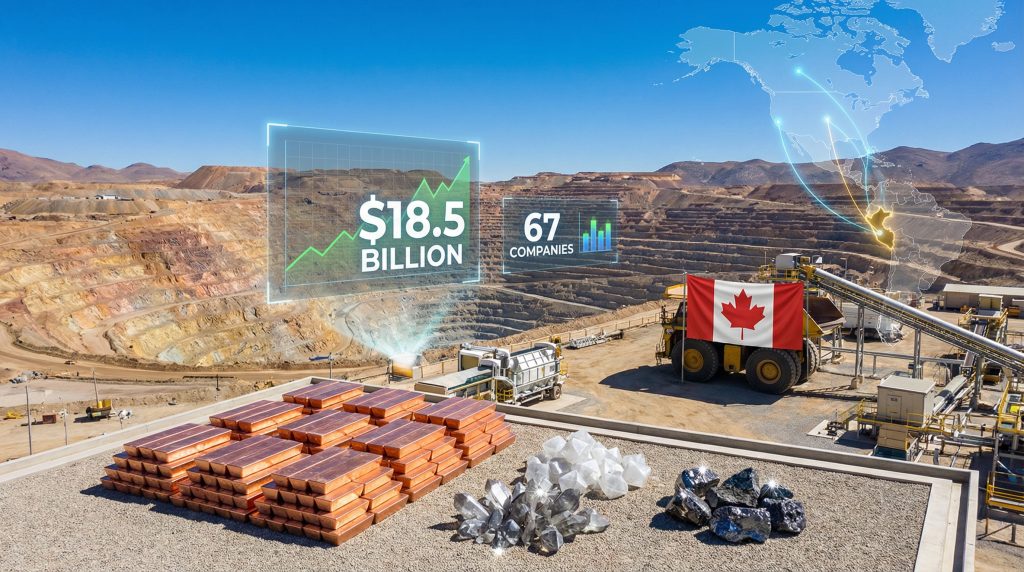
Canada's approach to critical minerals cooperation represents a comprehensive portfolio strategy encompassing 21+ bilateral agreements established through the G7 Critical Minerals Production Alliance framework. This initiative has demonstrated remarkable capital mobilization efficiency, securing US$18.5 billion in committed investment within six months of implementation.
The strategic framework prioritizes partnerships with jurisdictions possessing:
• Established mining regulatory frameworks and geological expertise
• Significant mineral endowments in copper, lithium, nickel, cobalt, and rare earth elements
• Compatible environmental and social governance standards
• Geographic advantages for supply chain diversification
Tim Hodgson, Canadian Minister of Energy and Natural Resources, emphasizes that Canada leverages its substantial mineral deposits and recognized mining expertise as central components in a strategy designed to diversify foreign trade beyond traditional US-focused relationships, drive internal economic growth, and establish new international trade and investment partnerships.
Risk Mitigation Through Geographic Diversification
The alliance structure addresses critical vulnerabilities inherent in concentrated supply chain relationships. By establishing parallel cooperation agreements across multiple continents, Canada reduces exposure to single-jurisdiction regulatory changes, political instability, or trade disruptions that could compromise critical minerals energy security.
This approach proves particularly significant given the strategic importance of minerals essential for electromotion, energy storage, digitalization, and clean infrastructure development. Moreover, the framework targets minerals specifically identified as bottlenecks for low-carbon economy transition, including:
| Critical Mineral | Primary Applications | Supply Chain Priority |
|---|---|---|
| Copper | Electric vehicles, renewable energy infrastructure | High – Limited alternative sources |
| Lithium | Battery storage, grid-scale energy systems | Critical – Concentrated production base |
| Cobalt | High-performance batteries, aerospace applications | Strategic – Geopolitically sensitive sources |
| Rare Earth Elements | Wind turbines, electric motors, electronics | Essential – Highly concentrated global production |
When big ASX news breaks, our subscribers know first
Peru's Strategic Position in Global Critical Minerals Supply
Established Investment Infrastructure and Scale
Peru occupies a unique position within Canada's Latin American mining strategy, representing the second-largest destination for Canadian mining investment globally. Current Canadian assets in Peru total approximately C$11.2 billion, distributed across 67 active exploration and mining companies. Consequently, this substantial presence reflects both geological potential and regulatory stability that supports long-term mining investment.
The scale of Canadian involvement demonstrates market maturity and operational familiarity that facilitates expanded cooperation. Unlike greenfield investment environments requiring extensive due diligence and regulatory navigation, Peru offers established relationships and proven project development capabilities.
Geological Endowments and Production Capacity
Peru's mineral portfolio aligns strategically with global critical minerals demand patterns. The country's copper production capacity positions it as a key supplier for electric vehicle manufacturing and renewable energy infrastructure development. In addition, emerging lithium exploration activities and potential rare earth element developments create opportunities for supply chain integration with North American processing facilities.
Jean-Dominique Ieraci, Canadian Ambassador to Peru, highlights that the bilateral relationship demonstrates the strength of commercial relations between both nations while underscoring shared commitment to deepening cooperation through innovation, responsible resource development, and strengthening human capital capabilities essential for future low-emission economies.
Competitive Advantages for Investment
Peru's regulatory environment offers several advantages for international mining investment:
• Established legal frameworks with predictable permitting processes
• Tax stability agreements providing long-term investment certainty
• Infrastructure connectivity linking mining regions to Pacific shipping routes
• Skilled workforce availability with extensive mining industry experience
• Political stability supporting multi-decade mining project development
Bilateral Cooperation Framework and Implementation
Technology Transfer and Innovation Development
The critical minerals and sustainable mining agreement between Canada and Peru establishes comprehensive cooperation mechanisms extending beyond traditional trade relationships. The framework emphasizes technology transfer across three primary dimensions: mining industry innovation, digital transformation and automation integration, and environmental monitoring and sustainability solutions.
The agreement seeks to deepen bilateral collaboration in the mining sector by promoting innovation, responsible resource development, and specialized human capital formation designed to meet demands of a low-carbon economy transition.
Key technology transfer areas include:
• Advanced mining equipment with improved energy efficiency and reduced environmental impact
• Automation and digitalization systems for enhanced safety and productivity
• Environmental monitoring technologies for real-time impact assessment and mitigation
• Mineral processing innovations optimizing recovery rates and reducing waste generation
Workforce Development and Capacity Building
The partnership framework prioritizes human capital development through structured knowledge exchange programs between Canadian and Peruvian mining institutions. These initiatives address critical skills gaps in sustainable mining practices, advanced technology operation, and environmental management systems.
Planned workforce development components encompass:
- Technical skills training for equipment operation and maintenance
- Environmental management certification programs
- Safety protocol development and implementation training
- Leadership development for mining industry professionals
- Gender diversity and inclusion initiatives promoting equitable participation
Supply Chain Resilience and Traceability
The agreement establishes frameworks for implementing advanced supply chain monitoring and verification systems. These mechanisms support responsible sourcing requirements while enhancing transparency and accountability throughout the mineral supply chain.
However, digital tracking and blockchain technology implementation enables:
Real-time supply chain visibility from extraction through final processing, supporting ESG compliance verification and responsible sourcing certification required by downstream manufacturers and investors.
Geopolitical Context and Strategic Implications
North American Supply Chain Integration
The Canada-Peru partnership operates within broader North American critical minerals security objectives, complementing similar US initiatives in the region. The timing of this agreement, following closely after reported US-Peru critical minerals cooperation frameworks, suggests coordinated Western Hemisphere supply chain development strategies.
This trilateral cooperation potential creates opportunities for:
• Streamlined regulatory coordination between USMCA partners
• Infrastructure development financing through multilateral investment mechanisms
• Technology standardization across North American mining trends
• Market access optimization leveraging existing trade agreement provisions
Competitive Positioning Against Alternative Partnerships
The partnership timing reflects strategic competition for critical minerals partnerships, particularly in response to Chinese Belt and Road Initiative mining investments across Latin America. While specific Chinese investment data in Peru remains limited, the accelerated pace of Western critical minerals agreements suggests recognition of first-mover advantages in securing reliable supply relationships.
Strategic considerations driving this competition include:
| Geopolitical Factor | Western Response | Strategic Objective |
|---|---|---|
| Supply chain dependency | Diversified partnerships | Reduced single-source risk |
| Technology transfer | Innovation cooperation | Advanced mining capabilities |
| Environmental standards | Sustainability frameworks | Competitive advantage through ESG |
| Market access | Preferential trading relationships | Secure long-term supply agreements |
Investment Opportunities and Market Expansion
Canadian Mining Company Expansion Prospects
The partnership framework creates enhanced conditions for Canadian mining company expansion in Peru through institutional cooperation channels and reduced bureaucratic barriers. The existing C$11.2 billion Canadian investment base provides foundation for accelerated expansion across multiple subsectors.
Expansion opportunities encompass:
• Mid-tier mining companies seeking growth through acquisition or joint venture partnerships
• Technology and services providers targeting digital transformation solutions
• Environmental consulting firms supporting sustainability compliance requirements
• Financial services companies providing project financing and risk management
Infrastructure Development Requirements
Critical minerals development in Peru requires substantial infrastructure investment to support expanded production capacity. Priority areas for development include:
- Transportation networks connecting mining regions to export facilities
- Port facility upgrades handling increased mineral export volumes
- Energy infrastructure supporting sustainable mining operations
- Water management systems ensuring environmental compliance
- Telecommunications networks enabling digital mining technology deployment
These infrastructure requirements represent significant opportunities for Canadian engineering and construction companies with mining industry expertise.
Global Critical Minerals Market Impact
Supply Chain Diversification Effects
The critical minerals and sustainable mining agreement between Canada and Peru contributes to global supply chain resilience by adding production capacity outside traditionally concentrated supplier regions. This diversification addresses market vulnerabilities associated with single-source dependencies and geopolitical supply risks.
Market impact projections include:
• Increased supply security for North American manufacturing sectors
• Price stability enhancement through diversified supplier networks
• Competition intensification among global mining jurisdictions
• Investment flow redirection toward politically stable regions
Sustainable Mining Standards Development
The partnership emphasizes advancing toward higher sustainability and competitiveness standards, potentially establishing new industry benchmarks for responsible mining practices. These standards may influence global mining industry practices through:
Technology demonstration effects where successful sustainable mining implementations in Peru create replicable models for other jurisdictions, accelerating global adoption of environmental best practices and carbon footprint reduction initiatives.
Integration of environmental best practices includes:
• Carbon footprint reduction through renewable energy integration
• Water conservation technologies minimising environmental impact
• Biodiversity protection measures supporting ecosystem preservation
• Community engagement frameworks ensuring social licence maintenance
The next major ASX story will hit our subscribers first
Implementation Challenges and Risk Factors
Regulatory Coordination Complexities
Successful implementation requires effective coordination between Canadian and Peruvian regulatory frameworks, particularly regarding environmental assessment procedures, permitting timelines, and tax treaty optimisation. For instance, the development of a comprehensive mining claims framework becomes essential for cross-border operations. Potential challenges include:
• Jurisdictional differences in environmental impact assessment requirements
• Permitting process coordination between federal and regional authorities
• Tax treaty optimisation for cross-border mining investment structures
• Labour regulation harmonisation supporting workforce mobility
Infrastructure and Logistics Constraints
Expanded critical minerals production requires substantial infrastructure development to support increased export volumes and sustainable operations. Key constraints include:
| Infrastructure Category | Current Constraints | Investment Requirements |
|---|---|---|
| Transportation | Limited rail and road capacity | $2-4 billion estimated |
| Port Facilities | Insufficient bulk handling capacity | $800 million – $1.5 billion |
| Energy Systems | Grid stability and renewable integration | $1.2 – $2.8 billion |
| Water Management | Environmental compliance systems | $500 million – $1 billion |
Long-term Strategic Outlook and Development Scenarios
Five-Year Partnership Evolution Projections
The partnership's success depends on achieving measurable outcomes across multiple dimensions within established timeframes. Consequently, implementing a comprehensive critical minerals strategy becomes crucial for long-term success. Projected development scenarios include:
Optimistic Scenario:
• Investment flows reaching $2-3 billion annually by 2031
• Technology adoption across 75% of Canadian-operated mining projects
• Workforce development training 5,000+ professionals annually
• Infrastructure completion enabling 40% increase in mineral export capacity
Base Case Scenario:
• Investment flows of $1-1.5 billion annually by 2031
• Technology adoption across 50% of relevant projects
• Workforce development training 2,500-3,500 professionals annually
• Infrastructure completion enabling 20-25% export capacity increase
Integration with Continental Supply Chain Strategy
The Canada-Peru partnership aligns with broader North American critical minerals security objectives, potentially expanding to include Mexico and creating comprehensive continental supply chain networks. Integration opportunities include:
• USMCA trilateral cooperation mechanisms for streamlined trade
• Technology standardisation across North American mining operations
• Infrastructure connectivity linking Pacific and Atlantic supply routes
• Investment coordination through multilateral financing mechanisms
Furthermore, according to Natural Resources Canada, success indicators for continental integration include achievement of supply chain resilience targets, reduced dependency on external suppliers, and sustained investment growth across participating jurisdictions.
The critical minerals and sustainable mining agreement between Canada and Peru represents a significant milestone in reshaping global supply chains for the energy transition. Through strategic partnership development, technology transfer, and sustainable mining practices, this collaboration addresses both immediate supply security concerns and long-term environmental objectives.
This analysis is based on publicly available information and industry assessments. Investment decisions should consider comprehensive due diligence including regulatory, environmental, and market risk evaluation. Projected outcomes represent scenarios based on current information and may be subject to significant variation based on economic, political, and technological developments.
Want to Capitalise on Critical Minerals Investment Opportunities?
Discovery Alert's proprietary Discovery IQ model delivers real-time alerts on significant ASX mineral discoveries, instantly empowering subscribers to identify actionable opportunities ahead of the broader market. Explore how historic mineral discoveries have generated substantial returns, then begin your 14-day free trial today to secure your market-leading advantage.