August 14, 2026
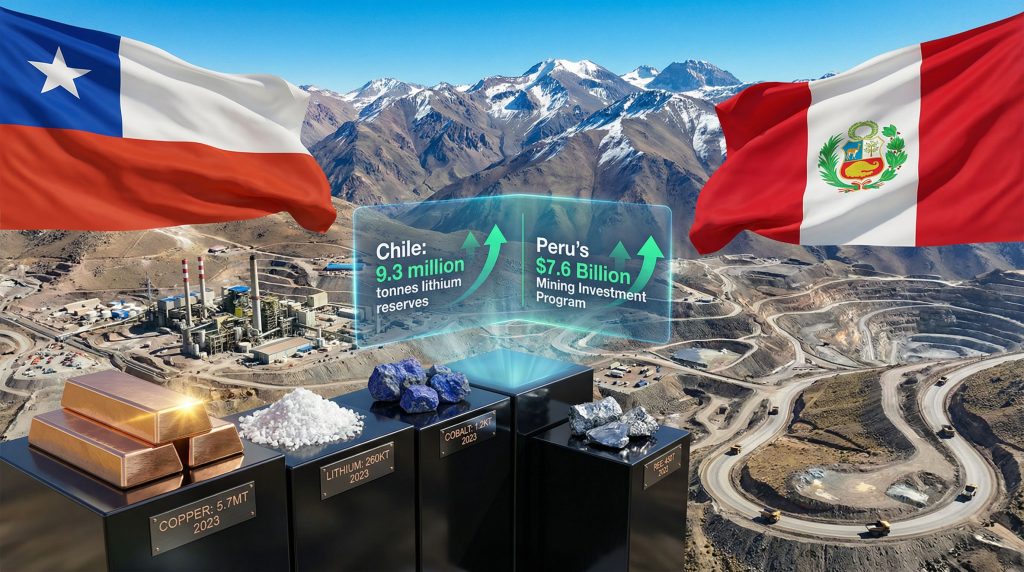
The global shift towards renewable energy has created unprecedented demand for materials essential to clean technologies, fundamentally reshaping how investors evaluate resource-rich regions. As nations worldwide accelerate their critical minerals strategy initiatives, the potential in Chile and Peru for critical minerals production emerges as a particularly compelling opportunity that could define energy transition security for decades to come.
Within this evolving landscape, both countries possess unique geological advantages, established infrastructure, and policy frameworks that align perfectly with accelerating global demand. Their combined strategic position represents one of the most significant opportunities in the international resource sector.
What Makes Chile and Peru Critical Mineral Powerhouses in 2026?
Defining Critical Minerals in the Energy Transition Context
Critical minerals encompass materials where supply risks remain high whilst substitutability options stay limited, combined with strong demand growth tied directly to clean energy infrastructure development. The International Energy Agency identifies these materials as essential components for electric vehicles, renewable energy systems, and grid storage technologies, with demand projections indicating increases of 10-30 times current levels by 2050 compared to 2020 baseline measurements.
For Chile and Peru specifically, this classification includes lithium and lithium compounds for battery technology, cobalt for battery cathodes, nickel for battery production and stainless steel applications, copper for electrical infrastructure and renewable energy systems, molybdenum for steel alloys and catalysts, plus rare earth elements for magnets used in wind turbines and electric motors.
Furthermore, the strategic importance of these materials extends beyond simple commodity value. Battery-grade purity requirements typically demand lithium carbonate exceeding 99.5% purity or lithium hydroxide monohydrate above 99.3% purity, specifications that require sophisticated processing capabilities and quality control systems that both countries have developed through decades of mining experience.
Geographic Advantages of the Andean Mineral Belt
The Andes mountain range provides exceptional geological conditions through Late Cenozoic mineralisation events that created economically viable deposits across multiple mineral categories. The Atacama Desert in northern Chile hosts remarkable lithium concentrations in salt flats, with average lithium chloride brines containing 300-1,200 mg/L of lithium compared to global averages of just 50-300 mg/L.
This geological advantage translates directly into extraction cost benefits. Brine extraction in the Atacama costs approximately $2,000-4,000 per tonne of lithium carbonate equivalent, substantially below hard rock mining operations globally that typically require $8,000-12,000 per tonne for equivalent production volumes.
Moreover, Peru's mineral belt extends this geological richness through polymetallic deposits that enable integrated extraction of multiple critical minerals simultaneously. Typical ore grades include 3-6% zinc, 0.5-2% lead, and 50-200 grams per tonne silver, creating operational efficiencies that reduce per-unit extraction costs across the entire mineral portfolio.
Current Global Market Position Analysis
The combined Andean region accounts for approximately 40% of global lithium reserves and maintains significant production shares across multiple critical mineral categories. This concentration creates both opportunities and responsibilities as global supply chains seek diversification beyond traditional producers whilst maintaining cost competitiveness and supply reliability.
| Mineral Category | Chile Global Share | Peru Global Share | Combined Regional Position |
|---|---|---|---|
| Lithium Reserves | 27-28% | <1% | 28% |
| Copper Production | 28% | 11-12% | 39-40% |
| Molybdenum Production | 40% | 25-30% | 65-70% |
| Silver Production | 5-6% | 15-16% | 20-22% |
| Zinc Production | 2-3% | 13% | 15-16% |
This market position reflects both countries' capacity to influence global supply chains whilst maintaining production flexibility across multiple mineral categories simultaneously. Additionally, it demonstrates their potential to support mining innovation trends that are reshaping the industry.
When big ASX news breaks, our subscribers know first
How Do Chile's Critical Mineral Reserves Compare Globally?
Lithium Triangle Dominance and Production Capacity
Chile maintains 9.3 million tonnes of proven lithium reserves, representing approximately 27-28% of global reserves and positioning the country as the world's second-largest lithium holder after Australia. However, Chile's operational advantage emerges through production capacity rather than pure reserve volume, with annual production reaching 39,000-40,000 tonnes and representing 26-28% of global lithium production.
The operational distinction centres on extraction methodology and cost structure. Chilean operations utilise solar evaporation processes in the Atacama Desert, where lithium brines undergo concentration through multiple pond stages over 12-18 months, achieving typical recovery rates of 40-60% of initial brine lithium content whilst consuming approximately 15 MWh per tonne of lithium carbonate produced.
| Country | Reserves (Million Tonnes) | Production Method | Annual Output (Tonnes) | Global Market Share |
|---|---|---|---|---|
| Chile | 9.3 | Brine evaporation | 39,000-40,000 | 26-28% |
| Australia | 6.0 | Hard rock mining | 55,000-60,000 | 35-38% |
| Argentina | 2.0 | Brine evaporation | 8,000-10,000 | 5-6% |
| China | 1.0 | Hard rock/brine | 14,000-16,000 | 9-10% |
Major Chilean lithium operations demonstrate the scale and sophistication of domestic production capabilities. In addition to traditional methods, companies are increasingly exploring innovative lithium extraction technologies that could further enhance efficiency.
Copper Infrastructure as Critical Mineral Foundation
Chile's copper production reaches 5.6 million tonnes annually, representing approximately 28% of global copper supply whilst providing the operational foundation for integrated critical mineral recovery. This production scale creates opportunities for associated mineral extraction that many smaller operations cannot achieve economically.
Associated Critical Mineral Recovery from Copper Operations:
- Molybdenum: Chilean operations produce 70,000-80,000 tonnes annually, representing approximately 40% of global molybdenum output and establishing Chile as the world's largest molybdenum producer
- Rhenium: Recovery as byproduct from molybdenum ore processing contributes 3-5% of global rhenium output
- Selenium: Estimated 500-600 tonnes annually recovered during copper refining processes
Consequently, the Codelco Chuquicamata Division exemplifies this integrated approach, operating as the world's largest open-pit copper mine whilst producing approximately 45,000-50,000 tonnes molybdenum annually alongside 500,000+ tonnes copper production.
Emerging Critical Mineral Opportunities
Beyond established lithium and copper production, Chile's geological potential extends into rare earth elements, cobalt, antimony, and tellurium exploration prospects. Northern Chile's mineral surveys indicate potential rare earth element deposits that could diversify the country's critical mineral portfolio, though these opportunities remain in early exploration phases requiring substantial capital investment and technological development.
Exploration Insight: Chile's geological data modernisation initiative involves approximately $50-75 million USD investment in updating mineral resource mapping through 2026, potentially identifying new critical mineral deposits that could support future production expansion.
Furthermore, titanium and tungsten reserve assessments suggest additional diversification opportunities, particularly as global demand for these materials increases through aerospace and defence applications alongside renewable energy infrastructure requirements.
What Strategic Advantages Does Peru Offer for Critical Mineral Investment?
Diversified Critical Mineral Portfolio Analysis
Peru's strategic advantage lies in its exceptional mineral diversity, producing eight metals essential for renewable energy infrastructure simultaneously. This diversification reduces investment risk through portfolio stability whilst creating multiple revenue streams from individual mining operations.
| Critical Mineral | Peru Annual Production | Global Market Share | World Ranking | Strategic Application |
|---|---|---|---|---|
| Copper | 2.3-2.4 million tonnes | 11-12% | #2 globally | Electrical infrastructure |
| Zinc | 1.3 million tonnes | 13% | #2 globally | Battery components |
| Silver | 3,900-4,100 tonnes | 15-16% | #3 globally | Solar panels, electronics |
| Molybdenum | 50,000-55,000 tonnes | 25-30% | #2 globally | Steel alloys, catalysts |
| Lead | 290,000-310,000 tonnes | 6-7% | Top 5 | Battery technology |
| Tin | 120,000-130,000 tonnes | 20% | #2 globally | Electronics, soldering |
| Nickel | 180,000-200,000 tonnes | 4-5% | Emerging | Battery cathodes |
| Cobalt | 5,000-8,000 tonnes | Top 10 | Byproduct recovery | Battery technology |
This production diversity positions Peru uniquely amongst global mining jurisdictions. Unlike countries with mono-mineral dependencies, Peru's integrated operations produce multiple critical minerals from individual mine sites, creating operational efficiencies that single-commodity producers cannot achieve. Similarly, this mirrors the diversified approach seen in gold and copper exploration across the region.
Andean Eastern Slope Exploration Potential
Peru's eastern Andean slopes represent frontier exploration territory with significant potential for nickel-cobalt laterite deposits and rare earth element occurrences. These geological formations remain relatively unexplored compared to traditional copper-gold districts, creating opportunities for discovery of new critical mineral resources that could substantially expand Peru's production capacity.
Laterite Nickel-Cobalt Potential:
- Typical ore grades: 0.8-1.5% nickel with cobalt ratios of 0.06-0.10% cobalt per nickel ratio
- Processing via heap leaching or pressure acid leaching followed by solvent extraction
- Cobalt recovery efficiency: 60-80% depending on process design and ore characteristics
- Geographic concentration in Puno and Cusco regions with favourable infrastructure access
However, the proposed Moa Bay Project represents this potential, designed for production of approximately 30,000-40,000 tonnes annual nickel and 3,000-4,000 tonnes cobalt through laterite processing, though development timelines require verification for 2026 operational status.
Mining Infrastructure and Operational Expertise
Peru's mining sector benefits from decades of operational experience across multiple commodity types, creating technical expertise and infrastructure systems that support critical mineral production expansion. The country's established road, rail, and port logistics networks connect remote mining areas to international export terminals, reducing transportation costs and improving supply chain reliability.
Key Infrastructure Advantages:
- Port Connectivity: Callao and other Pacific ports provide direct shipping access to Asian markets, reducing logistics costs for critical mineral exports
- Processing Facilities: Existing copper smelters and refineries can be adapted for critical mineral processing with minimal capital investment
- Technical Workforce: Skilled mining professionals with experience in polymetallic operations and complex mineral processing
- Regulatory Framework: Established mining codes with clear permitting processes, though community consultation requirements add timeline considerations
Major operations demonstrate this integrated approach, with companies across both countries driving significant advances in extraction efficiency and operational excellence.
How Are Government Policies Accelerating Critical Mineral Development?
Chile's National Critical Minerals Strategy Framework
Chile's government implemented a comprehensive critical minerals strategy prioritising lithium, copper, cobalt, nickel, and rare earth elements through targeted policy interventions and investment incentives. This framework includes tax incentives for new greenfield projects and exploration activities, plus regulatory reforms designed to reduce permitting timeline from historical 5-7 years to 2-3 years for critical minerals projects.
Strategic Implementation Pillars:
- Geological Data Modernisation: $50-75 million USD investment in updating Chilean geological surveys and mineral resource mapping through 2026
- Permitting Reform: Streamlined approval processes specifically for critical mineral projects with strategic classification
- Tax Incentive Structure: Reduced tax rates for new critical mineral operations during initial production phases
- Research and Development: University partnerships and technology transfer programmes for critical mineral processing innovation
- Infrastructure Investment: Targeted funding for mining infrastructure in critical mineral regions
Moreover, the geological data modernisation initiative represents a particularly strategic investment, utilising satellite imaging, geophysical surveys, and geochemical analysis to identify previously unknown critical mineral deposits.
Peru's $7.6 Billion Mining Investment Programme
Peru announced a substantial $7.6 billion mining investment programme designed to upgrade eight priority mine projects and enhance critical mineral production capacity. This programme combines government infrastructure investment with private sector expansion projects, creating a coordinated approach to critical mineral development.
| Priority Project | Investment Amount | Expected Outcome | Timeline | Critical Minerals Impact |
|---|---|---|---|---|
| Las Bambas Expansion | $1.2 billion | +150,000 tonnes copper | 2026-2028 | Molybdenum, cobalt increase |
| Quellaveco Development | $1.8 billion | +300,000 tonnes copper | 2025-2027 | Nickel, silver recovery |
| Antamina Enhancement | $800 million | +200,000 tonnes zinc | 2026-2027 | Lead, silver optimisation |
| Cerro Verde Phase III | $1.1 billion | +180,000 tonnes copper | 2027-2029 | Cobalt extraction upgrade |
| Infrastructure Upgrade | $2.1 billion | Regional connectivity | 2025-2030 | Multi-mine efficiency |
The programme includes World Bank competitiveness initiatives that focus on regulatory framework improvements for international investors, streamlined environmental assessment processes, and enhanced community engagement protocols.
Regional Cooperation and International Partnerships
Both countries participate in international critical mineral partnerships that facilitate technology transfer, financing access, and market development. These cooperative frameworks reduce individual country risk whilst accelerating critical mineral production capacity across the region.
Key Partnership Areas:
- Technology Transfer: Advanced processing technologies for battery-grade mineral production
- Financing Mechanisms: International development bank funding for critical mineral infrastructure
- Market Access: Trade agreements facilitating critical mineral exports to key consumer markets
- Environmental Standards: Collaborative development of sustainable mining practices for critical minerals
- Supply Chain Integration: Regional cooperation on critical mineral processing and value-added manufacturing
Additionally, strategic partnerships with consuming countries facilitate technology transfer and market access for value-added products, reducing dependence on raw material exports whilst creating higher-value employment opportunities. This approach aligns with broader investment trends in mining across the Andean region.
Which Critical Minerals Present the Highest Investment Potential?
Battery Technology Mineral Demand Projections
Battery technology applications drive the most substantial demand growth for critical minerals, with electric vehicle expansion and grid storage requirements creating unprecedented market opportunities. Global electric vehicle sales projections indicate growth from approximately 10 million units annually in 2022 to 30-35 million units by 2030, directly translating into critical mineral demand increases.
| Critical Mineral | 2024 Global Demand | 2030 Projected Demand | Growth Multiple | Primary Application |
|---|---|---|---|---|
| Lithium | 180,000 tonnes | 500,000-600,000 tonnes | 2.8-3.3x | EV batteries, grid storage |
| Cobalt | 140,000 tonnes | 300,000-350,000 tonnes | 2.1-2.5x | Battery cathodes |
| Nickel | 2.8 million tonnes | 4.2-4.8 million tonnes | 1.5-1.7x | Battery technology, steel |
| Copper | 25 million tonnes | 35-40 million tonnes | 1.4-1.6x | Electrical infrastructure |
Battery chemistry evolution influences specific mineral demand patterns. Lithium iron phosphate (LFP) batteries reduce cobalt requirements whilst increasing lithium and iron demand, whereas nickel-cobalt-manganese (NCM) batteries maintain cobalt demand but require higher nickel content.
Renewable Energy Infrastructure Requirements
Wind turbine and solar panel manufacturing requires substantial critical mineral inputs beyond battery applications. Wind turbines utilise rare earth elements for permanent magnets, copper for electrical systems, and various alloys containing molybdenum and other critical minerals. Solar panels incorporate silver, copper, and specialised materials that both Chile and Peru produce.
Critical Mineral Requirements by Technology:
- Wind Turbines: 600-1,000 kg rare earth elements per MW capacity, 3-4 tonnes copper per MW, plus molybdenum-containing steel alloys
- Solar Panels: 15-20 grams silver per panel, 3-4 kg copper per kW capacity, plus trace amounts of other critical minerals
- Grid Infrastructure: Substantial copper requirements for transmission lines, transformers, and distribution systems
Global renewable energy capacity additions project 150-200 GW annually through 2030, creating sustained demand for critical minerals across multiple application categories. Consequently, this demand diversification reduces dependence on single-application markets whilst creating multiple revenue streams for critical mineral producers.
Technology Sector Critical Mineral Applications
Electronic device manufacturing, telecommunications infrastructure, and advanced technology applications create additional demand for critical minerals beyond energy applications. These markets typically require higher purity specifications but offer premium pricing for qualified suppliers.
Market Insight: Technology sector applications often require 99.99% purity levels for critical minerals, compared to 99.5% purity for battery applications, creating opportunities for premium pricing but requiring advanced processing capabilities.
Semiconductor manufacturing utilises multiple critical minerals including copper, silver, cobalt, and specialised materials. Data centre expansion and 5G infrastructure development add additional demand layers that complement energy transition requirements whilst supporting the potential in Chile and Peru for critical minerals production across diverse market segments.
What Are the Key Investment Risks and Mitigation Strategies?
Environmental and Social Governance Challenges
Critical mineral extraction faces increasing environmental and social governance scrutiny, particularly regarding water usage, community impacts, and ecological preservation. These challenges require proactive management strategies that address stakeholder concerns whilst maintaining operational efficiency.
Water Usage Concerns in Lithium Extraction:
- Brine extraction consumes approximately 500,000-750,000 gallons water per tonne lithium produced
- Atacama region receives less than 1 inch annual precipitation, creating water scarcity concerns
- Competition with agricultural and municipal water demands requires careful resource management
- Advanced brine processing technologies can reduce water consumption by 20-30% through recycling and efficiency improvements
Community engagement and benefit-sharing models become increasingly important as critical mineral projects expand. Peru's constitutional requirements for indigenous consultation add timeline considerations but create opportunities for sustainable community partnerships that support long-term operational stability.
Geopolitical Supply Chain Considerations
Critical mineral supply chains face increasing geopolitical complexity as consuming countries seek supply diversification whilst maintaining cost competitiveness. This dynamic creates both opportunities and risks for Chilean and Peruvian operations.
Supply Chain Diversification Drivers:
- Strategic Autonomy: Consumer countries reduce dependence on single-source suppliers through diversified supply chains
- Trade Policy: Tariffs, trade agreements, and export restrictions affect market access and pricing
- Technology Transfer: Access to advanced processing technologies influences value-added production capabilities
- Investment Flows: Geopolitical considerations affect foreign direct investment patterns and financing availability
Both Chile and Peru benefit from established trade relationships with major consumer markets, including free trade agreements that facilitate critical mineral exports. However, changing geopolitical dynamics require continuous monitoring and adaptive strategies.
Market Volatility and Price Risk Management
Critical mineral prices exhibit substantial volatility driven by supply disruptions, demand fluctuations, and market speculation. This volatility creates both opportunities and risks that require sophisticated risk management approaches.
Price Volatility Factors:
- Supply Disruptions: Mine closures, natural disasters, or political instability affect global supply balance
- Demand Fluctuations: Economic cycles, policy changes, or technology shifts influence demand patterns
- Inventory Cycles: Consumer stockpiling or destocking activities create short-term price volatility
- Financial Speculation: Investment fund activities and commodity trading affect pricing beyond fundamental supply-demand balance
Risk Management Strategies:
- Diversified Production: Multiple mineral production reduces dependence on single commodity pricing
- Long-Term Contracts: Fixed-price supply agreements with major consumers provide revenue stability
- Financial Hedging: Derivative instruments and insurance products manage price exposure
- Operational Flexibility: Ability to adjust production levels based on market conditions optimises revenue capture
The next major ASX story will hit our subscribers first
What Does the Future Hold for Andean Critical Mineral Production?
2030 Production Capacity Projections
Production capacity expansion across both countries positions the Andean region for substantial critical mineral output increases through 2030. These projections reflect confirmed expansion projects, exploration programmes, and policy initiatives that support production growth whilst strengthening the potential in Chile and Peru for critical minerals production on a global scale.
| Critical Mineral | Current Combined Production | 2030 Projected Production | Capacity Increase | Global Market Impact |
|---|---|---|---|---|
| Lithium | 40,000 tonnes | 120,000-150,000 tonnes | 3-4x growth | 15-18% global share |
| Copper | 8.0 million tonnes | 12.0-13.5 million tonnes | 50-70% growth | 35-40% global share |
| Molybdenum | 125,000 tonnes | 180,000-200,000 tonnes | 45-60% growth | 60-65% global share |
| Silver | 4,000 tonnes | 6,000-7,000 tonnes | 50-75% growth | 20-25% global share |
| Nickel | 200,000 tonnes | 400,000-500,000 tonnes | 100-150% growth | 12-15% global share |
New Project Pipeline Analysis:
- Lithium Projects: 15-20 new lithium projects in various development stages across Chile, with combined capacity potential exceeding 200,000 tonnes annually
- Copper Expansions: 8-12 major copper expansion projects across both countries with combined capacity additions of 3-4 million tonnes annually
- Integrated Operations: 5-8 new polymetallic operations designed to produce multiple critical minerals simultaneously
- Processing Facilities: 10-15 new processing plants for battery-grade mineral production and value-added manufacturing
Technology advancement impacts extraction efficiency through improved recovery rates, reduced processing costs, and enhanced mineral purity capabilities. These improvements enable economic extraction of lower-grade deposits whilst maintaining competitive production costs.
Sustainable Mining Innovation Trends
Environmental sustainability becomes increasingly important for critical mineral operations as consumer demands and regulatory requirements evolve. Both countries invest in sustainable mining technologies that reduce environmental impact whilst maintaining economic competitiveness.
Sustainable Innovation Areas:
- Renewable Energy Integration: Solar and wind power systems for mining operations reducing carbon footprint by 40-60%
- Water Conservation: Advanced brine processing and water recycling technologies reducing consumption by 30-50%
- Waste Minimisation: Circular economy approaches utilising mine waste for construction materials and other applications
- Ecosystem Restoration: Post-mining land rehabilitation programmes creating long-term environmental benefits
- Community Integration: Sustainable development programmes supporting local communities and indigenous populations
Innovation partnerships between mining companies, technology providers, and research institutions accelerate sustainable technology development whilst reducing implementation costs through shared research and development investments.
Investment Disclaimer: Critical mineral investments involve substantial risks including commodity price volatility, regulatory changes, environmental liabilities, and geopolitical factors. Past performance does not guarantee future results. Investors should conduct thorough due diligence and consider professional advice before making investment decisions. Production projections and cost estimates are subject to change based on market conditions, technological developments, and regulatory modifications.
How Long Do Mining Permits Take to Obtain?
Permitting timelines vary between countries and project types. Chile's critical mineral strategy targets permit approval reduction to 2-3 years for strategic projects, compared to historical timelines of 5-7 years. Peru's permitting typically requires 3-5 years for major projects, with additional time required for community consultation processes mandated under constitutional requirements.
Environmental impact assessments add 12-18 months to permitting timelines in both countries, though advance preparation and stakeholder engagement can reduce delays. Experienced operators with established community relationships often achieve faster permit approval through proactive engagement and comprehensive preparation.
What Are the Main Export Markets for These Minerals?
Asian markets, particularly China, Japan, and South Korea, represent the largest consumers of Andean critical minerals. China accounts for approximately 60-70% of global lithium consumption, 65-75% of cobalt consumption, and 55-65% of copper consumption, making Asian market access essential for regional producers.
Primary Export Destinations:
- China: Battery manufacturing, steel production, electronics manufacturing
- Japan: Automotive industry, electronics, renewable energy systems
- South Korea: Battery production, shipbuilding, technology manufacturing
- United States: Electric vehicle production, renewable energy infrastructure
- Europe: Automotive industry, renewable energy systems, technology sector
Diversification across multiple consumer markets reduces dependence on single-country demand whilst optimising pricing through competitive market dynamics.
Ready to Capitalise on the Next Critical Mineral Discovery?
Discovery Alert's proprietary Discovery IQ model delivers real-time notifications on significant ASX mineral discoveries, instantly alerting subscribers to actionable critical mineral opportunities before the broader market recognises their potential. With Chile and Peru's expanding critical mineral production creating ripple effects across ASX-listed exploration companies, positioning yourself ahead of major announcements could provide the market advantage essential for capitalising on this unprecedented commodity supercycle.