July 14, 2026
The Hidden Architecture of Supply Chain Risk: Why Critical Minerals Research Is Becoming a Geopolitical Imperative
For most of the past century, the economics of resource extraction were relatively straightforward: find the ore, dig it up, ship it out. The country with the geology won the revenue. But the clean energy transition has fundamentally rewritten that logic. The materials powering the next generation of batteries, turbines, and defence systems are not just commodities; they are strategic assets. And the nations that control their processing, not merely their extraction, are rapidly becoming the new industrial powerhouses.
Australia sits at an uncomfortable intersection of enormous geological wealth and persistent downstream vulnerability. The country holds world-class reserves of lithium, cobalt, nickel, rare earth elements, and a range of other transition-critical materials. Yet for decades, the dominant model has been to ship raw ore overseas, surrendering the value-added stages of refining, processing, and technology development to nations with cheaper labour and more established industrial infrastructure. Closing that gap requires more than policy ambition; it requires a deep, multi-disciplinary knowledge base.
Furthermore, Australia's critical minerals position is directly tied to broader questions of critical minerals energy security, making it imperative that research informs both the strategic choices of government and the operational decisions of industry.
That is precisely the gap that the Monash critical minerals initiative is designed to address.
When big ASX news breaks, our subscribers know first
What Is the Monash Critical Minerals Initiative and Why Does Its Structure Matter?
Most institutional responses to complex supply chain challenges default to a single programme or centre. The Monash approach is fundamentally different. Rather than creating one research body with a broad mandate, Monash University has constructed a layered ecosystem of three interconnected but operationally distinct initiatives, each targeting a different level of the supply chain challenge simultaneously.
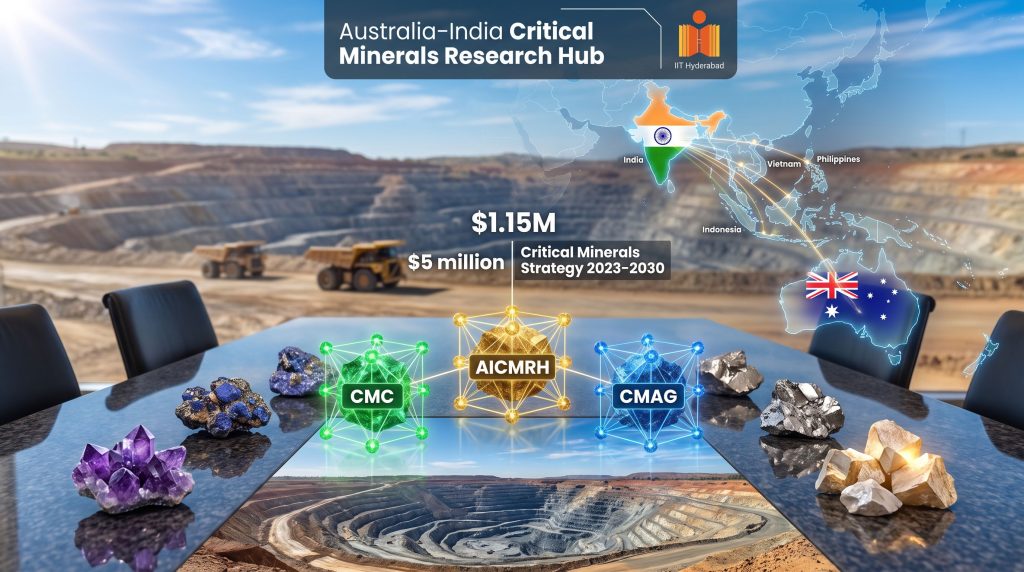
The three pillars of this ecosystem are the Critical Minerals Consortium (CMC), the Australia-India Critical Minerals Research Hub (AICMRH), and the Critical Minerals Advisory Group (CMAG). Together, they allow Monash to operate simultaneously at the level of federal policy, bilateral international research partnerships, and state-level applied governance. This is an unusually broad institutional reach for a single university, and it reflects a sophisticated understanding that supply chain security cannot be solved at any single level of the system.
"The deliberate design of multiple, complementary initiatives allows Monash to simultaneously influence federal policy, international partnerships, and state-level resource governance — a rare breadth of institutional reach in Australian academia."
Each initiative has a distinct mandate, but all three share a common intellectual foundation: the recognition that Australia's critical mineral challenges are simultaneously geological, economic, geopolitical, and environmental in nature, and that no single discipline can address them adequately alone.
The Critical Minerals Consortium: Building a National Policy Intelligence Capability
Origins and Design Philosophy
The CMC was established as a Monash-led, multi-institutional research body with a founding mandate to improve the quality and rigour of minerals criticality assessments in Australia. Its deliberate use of a staged, soft-launch model reflects a philosophy of depth over speed: the consortium assembled domain experts and validated its intellectual framework before committing to a formal institutional structure.
This approach stands in contrast to many government-commissioned research programmes, which are often structured around funding cycles rather than intellectual readiness. By prioritising the assembly of the right expertise first, the CMC has positioned itself as a credible, independent voice rather than a programme built to satisfy a funding deadline.
The Research Team and Their Specialisations
The CMC draws on a cross-disciplinary team whose collective expertise spans the full analytical spectrum of critical minerals assessment:
- Associate Professor Mohan Yellishetty leads research spanning criticality assessment methodology, geopolitical supply concentration risk, and the Australia-US critical minerals bilateral framework
- Dr Stuart Walsh contributes expertise in resource systems analysis and supply chain modelling, bringing quantitative rigour to the consortium's policy outputs
- Associate Professor Gavin Mudd from RMIT University is a recognised authority on the environmental sustainability of mining operations and long-term resource availability assessments
- Dr David Whittle provides technical and policy-facing analysis that bridges academic research and government advisory functions
The involvement of RMIT, alongside the University of Melbourne, CSIRO, and Deakin University, signals that the CMC is a genuinely multi-institutional collaboration rather than a Monash-branded project with peripheral partners. This matters for credibility: government policymakers are more likely to act on recommendations that carry independent institutional validation.
Policy Alignment and Real-World Influence
The CMC explicitly aligns its research agenda with the Australian Government's Critical Minerals Strategy 2023–2030, a framework that prioritises domestic value-adding processing and positions Australia as a strategic supplier rather than a raw commodity exporter. Consortium members have consequently contributed directly to Senate inquiries on critical minerals supply chains, providing independent expert testimony on vulnerability and diversification pathways.
| CMC Research Focus Area | Policy Relevance |
|---|---|
| Minerals criticality assessment methodology | Informs which minerals are prioritised in national strategy |
| Geopolitical supply concentration risk | Supports diversification advocacy in bilateral agreements |
| Demand forecasting for energy transition materials | Underpins investment frameworks and export strategies |
| Supply chain reliability modelling | Advises on stockpiling, processing, and trade policy |
The CMC's emphasis on supply diversification advocacy is particularly significant in the context of ongoing US-China trade tensions and broader Indo-Pacific strategic competition. As geopolitical fault lines harden, the ability to present peer-reviewed, independent evidence for diversification arguments becomes a genuine instrument of national strategy.
What Is Minerals Criticality Assessment and Why Does It Matter?
A key technical concept underlying the CMC's work is the formal methodology of criticality assessment, a practice less familiar outside specialist circles than the broader term critical minerals itself. Criticality assessment goes beyond simply listing minerals with strategic importance. It attempts to quantify two distinct risk dimensions simultaneously: the supply risk and the economic vulnerability.
A mineral can be geologically abundant globally yet score as highly critical if its processing is concentrated in a single jurisdiction or if substitution options are technically limited. Rare earth elements are the canonical example: despite being far from rare in the Earth's crust, their processing has historically been dominated by a single national supplier, creating a structural vulnerability that abundance data alone would fail to reveal. This nuance is precisely why the CMC's methodology work carries practical weight for policymakers.
The Australia-India Critical Minerals Research Hub: An Indo-Pacific Supply Chain Architecture
Why India Is the Right Bilateral Partner
The selection of India as the founding international partner for the AICMRH reflects careful strategic logic rather than diplomatic convention. India is simultaneously one of the fastest-growing demand centres for critical minerals demand globally and a nation with both the ambition and the industrial base to become a significant processing power.
India's renewable energy targets — which include reaching 500 gigawatts of non-fossil fuel capacity by 2030 — and its aggressive domestic electric vehicle manufacturing expansion are driving exponential demand growth for lithium, cobalt, nickel, and rare earth materials. Critically, India shares Australia's interest in reducing dependence on Chinese-controlled supply chains, creating a genuine alignment of strategic incentives rather than a superficial diplomatic partnership.
Funding Structure and Institutional Framework
The AICMRH was established as a joint initiative between Monash University and the Indian Institute of Technology (IIT) Hyderabad, approved by India's Ministry of Education under the SPARC (Scheme for Promotion of Academic and Research Collaboration) framework.
Funding Snapshot:
- Initial approved funding: $1.15 million
- Total planned investment: $5 million
- Approving authority: India's Ministry of Education
- Framework: SPARC (Scheme for Promotion of Academic and Research Collaboration)
- Partner institution: IIT Hyderabad
The SPARC scheme is significant not merely as a funding vehicle but as a marker of institutional credibility within India's national science and technology priorities. Approval under this framework signals that the partnership is embedded within India's own strategic research architecture, rather than operating as an externally imposed collaboration.
Research Objectives and the G20 Dimension
The AICMRH's research agenda encompasses:
- Developing sustainable mining and processing practices applicable to both Australian and Indian resource contexts
- Conducting bilateral criticality assessments that account for each nation's distinct geological endowments, economic structures, and geopolitical exposures
- Building an evidence base to support bilateral trade negotiations and investment frameworks
- Advancing the commitments made under the G20 framework toward diversifying energy transition supply chains — commitments that gained significant momentum during India's G20 presidency in 2023
The G20 alignment is worth unpacking further. During India's presidency, critical mineral supply chain diversification became a formal priority within the G20 agenda, with member nations acknowledging the systemic risks of concentrated supply structures. The AICMRH consequently positions Monash and its research outputs at the intersection of this multilateral conversation.
The Indo-Pacific Expansion Vision
Perhaps the most strategically ambitious element of the AICMRH is its design as a scalable model. The hub's long-term vision extends beyond the bilateral Australia-India relationship to encompass a multi-country research centre of excellence spanning the Indo-Pacific region.
The geographic scope of this expansion ambition is significant. Southeast Asian nations including Indonesia, the Philippines, and Vietnam hold substantial critical mineral endowments. Drawing these nations into a research and supply network anchored by the AICMRH model would represent a meaningful structural contribution to Indo-Pacific supply chain resilience, complementing initiatives such as Australia's strategic reserve and European critical raw materials frameworks.
The Critical Minerals Advisory Group: Where Research Meets Victorian Resource Governance
The Case for State-Level Applied Research
While the CMC and AICMRH address systemic and international dimensions of critical mineral supply chains, the CMAG operates at the most operationally immediate level: the practical governance challenges facing Victoria's resources sector. Convened in partnership with Resources Victoria, the CMAG focuses on applied problems including tailings management, mine rehabilitation standards, and sustainable resource development frameworks.
The inclusion of ElectraLith and the Department of Energy, Environment and Climate Action (DEECA) as collaboration partners signals that the CMAG's outputs are designed to translate directly into industry practice and regulatory evolution, not merely academic publications.
Key Operational Focus Areas
- Tailings management: Mine tailings — the residual material after ore processing — often contain meaningful concentrations of critical minerals that were not economically recoverable at the time of original processing. As processing technologies improve and mineral prices rise, historical tailings deposits are increasingly viewed as secondary resource assets.
- Mine rehabilitation: The CMAG is advancing research into cost-effective, environmentally credible rehabilitation methodologies that meet evolving regulatory standards. This is an area of growing ESG importance for project financing and social licence.
- Sustainable resource development: Integrating environmental, social, and governance considerations across the full lifecycle of critical mineral projects, from exploration through to closure and rehabilitation.
"The CMAG represents an evolution in how universities engage with the resources sector: not as external critics or passive researchers, but as embedded partners in regulatory development and operational problem-solving."
Comparing the Three Pillars: Scale, Focus, and Partnerships
| Initiative | Geographic Scale | Primary Focus | Key Institutional Partners | Funding Status |
|---|---|---|---|---|
| Critical Minerals Consortium (CMC) | National (Australia) | Supply chain reliability and policy advisory | RMIT, University of Melbourne, CSIRO, Deakin University | Multi-institutional research grants |
| Australia-India Critical Minerals Research Hub (AICMRH) | Bilateral (Australia-India) | Sustainable mining and Indo-Pacific supply diversification | IIT Hyderabad, India's Ministry of Education | $1.15M initial / $5M planned |
| Critical Minerals Advisory Group (CMAG) | State (Victoria) | Tailings management, rehabilitation, and applied governance | Resources Victoria, DEECA, ElectraLith | Government-partnered advisory |
The next major ASX story will hit our subscribers first
The Minerals Driving the Urgency: What Australia's Critical Minerals List Actually Covers
Understanding Which Resources Are at Stake
Australia's critical minerals list, updated periodically by the federal government, encompasses materials where supply disruption would carry significant economic or national security consequences. Current listings include lithium, cobalt, nickel, rare earth elements, graphite, manganese, vanadium, titanium, tungsten, and a range of technology metals including gallium, germanium, and indium.
The demand drivers reshaping global supply chains for these materials include:
- Electric vehicle batteries: Lithium, cobalt, nickel, and graphite are core inputs for lithium-ion battery chemistries. Demand is projected to grow by multiples through 2040 as EV adoption accelerates across major markets.
- Renewable energy infrastructure: Wind turbines depend on rare earth elements, particularly neodymium and dysprosium, for permanent magnets. Solar panels consume silicon, silver, and tellurium.
- Defence and aerospace: Titanium, tungsten, and rare earth elements underpin aerospace structures, propulsion systems, and precision defence electronics.
- Digital infrastructure: The semiconductor and data centre industries rely on gallium, germanium, indium, and tantalum, creating demand linkages that extend well beyond the energy transition narrative.
A Less Understood Dynamic: The Concentration Problem Beyond Extraction
A dimension of critical mineral supply risk that receives insufficient attention in mainstream coverage is the distinction between geological concentration and processing concentration. While attention often focuses on which countries hold reserves, the more acute near-term vulnerability lies in processing and refining.
A nation can hold significant ore deposits yet remain strategically dependent if it lacks domestic processing capacity. This processing concentration problem is precisely why Australia's long-standing role as a raw commodity exporter represents a strategic liability — and why the research conducted through the CMC's criticality assessment work carries practical significance beyond academic interest.
Why Academic-Led Research Provides Capabilities That Industry Cannot Replicate
The Structural Limitations of Commercial Research
Private sector research is inherently shaped by the incentive structures of commercial organisations. A mining company's research priorities are naturally aligned with its own project portfolio, tenure holdings, and shareholder obligations. This creates predictable blind spots around systemic supply chain risks that don't affect any individual company's profitability in the short term.
Independent academic research provides something qualitatively different: a non-commercial evidence base capable of identifying structural vulnerabilities across the entire system, not just within specific corporate boundaries. When a consortium like the CMC contributes analysis to Senate inquiries, it carries a credibility that company-sponsored research cannot replicate.
The Cross-Disciplinary Advantage
The multi-dimensional nature of critical mineral supply chain challenges demands a multi-disciplinary response. Criticality assessment requires geologists, economists, environmental scientists, and political scientists working in concert. No single discipline, and no single company, can assemble this range of expertise as effectively as a multi-institutional research consortium.
The Monash critical minerals initiative goes further still, embedding researchers directly into advisory bodies and bilateral partnerships. This represents an evolution beyond traditional academic publishing toward what might be described as active policy co-design: researchers who don't just produce findings but participate in translating them into governance frameworks. The Monash critical minerals programme page offers further detail on this integrated approach.
What Meaningful Success Looks Like for the Monash Critical Minerals Initiative
Evaluating the long-term impact of the Monash critical minerals initiative requires moving beyond publication counts and funding totals. Meaningful success across its three pillars would look like:
- Policy influence: Demonstrable impact on federal and state critical minerals strategies, evidenced through Senate contributions, strategy alignment, and adoption of CMC criticality assessment frameworks in national mineral lists
- Research output quality: Peer-reviewed criticality assessments and supply chain models that advance the global standard for how mineral vulnerability is measured and communicated
- Partnership expansion: Growth of the AICMRH model to include additional Indo-Pacific nations, building a distributed research network that reflects the geographic reality of the region's mineral endowments
- Industry translation: CMAG research outputs that produce measurable improvements in tailings management standards, mine rehabilitation practices, and ESG performance across Victorian critical mineral projects
- Bilateral leverage: Research outputs that strengthen Australia's negotiating position in critical minerals agreements with the United States, the European Union, Japan, South Korea, and India
"The Monash critical minerals research ecosystem is one of the few academic institutions in Australia operating simultaneously at the federal policy, bilateral diplomatic, and state governance levels — giving it unusual influence across the full spectrum of Australia's critical minerals strategy."
Australia's path from raw commodity exporter to strategic supply chain partner will not be determined solely by its geological endowment. It will be shaped by the quality of its knowledge infrastructure, the sophistication of its policy frameworks, and the depth of its international research relationships. The architecture being assembled through the Monash critical minerals initiative represents a serious attempt to build exactly that foundation.
Readers seeking additional context on Australia's critical minerals policy landscape can explore related reporting and analysis published by the Australian Mining Review at australianminingreview.com.au.
Want to Know When Major ASX Mineral Discoveries Hit the Market?
Discovery Alert's proprietary Discovery IQ model monitors ASX announcements in real time, delivering instant alerts on significant critical mineral discoveries — transforming complex geological data into actionable investment insights for both short-term traders and long-term investors. Explore historic examples of major mineral discoveries and their market returns, then start your 14-day free trial to position yourself ahead of the broader market.