July 15, 2026
The global energy sector stands at a pivotal inflection point where traditional manufacturing paradigms are being fundamentally restructured through strategic infrastructure investments. Countries worldwide are recognising that energy security requires not merely access to raw materials, but comprehensive control over the entire value chain from mineral processing to finished energy storage systems. This transformation represents a shift from import-dependent models toward integrated domestic manufacturing ecosystems that can respond rapidly to geopolitical uncertainties and market volatility, particularly as critical minerals strategy becomes increasingly important.
Strategic Investment Architecture in Battery Manufacturing
Capital Deployment Models and Infrastructure Development
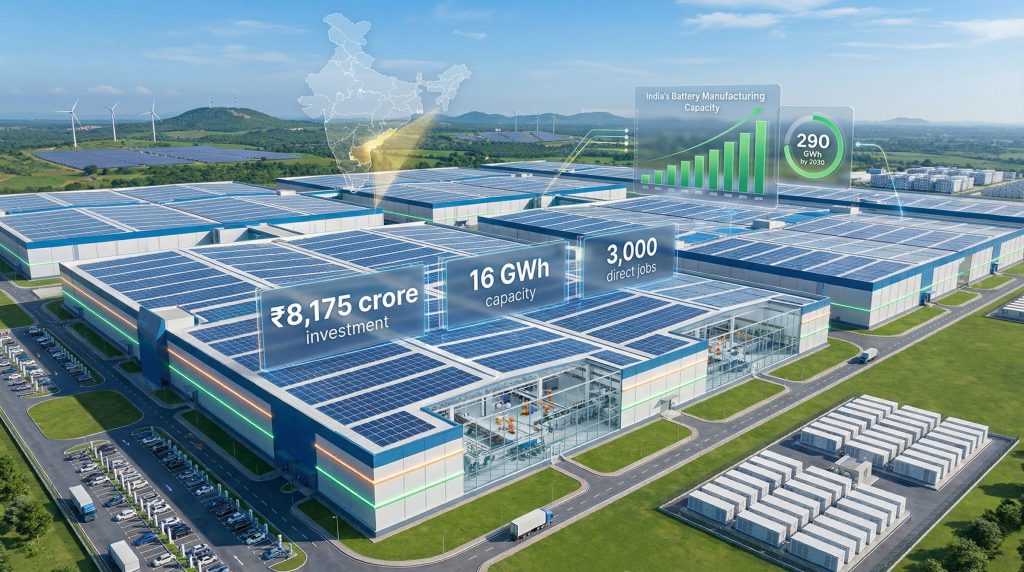
The establishment of large-scale battery manufacturing facilities requires unprecedented capital allocation strategies that extend far beyond traditional industrial investment patterns. India's largest battery gigafactory project demonstrates this evolution through its ₹8,175 crore investment commitment for 16 GWh of integrated production capacity. This investment intensity of approximately ₹511 crore per GWh establishes a new benchmark for domestic energy storage manufacturing infrastructure.
Furthermore, the employment generation metrics reveal the labour-intensive nature of advanced battery manufacturing. With 3,000 direct jobs projected for 16 GWh capacity, the facility will create approximately 188 jobs per GWh, indicating significant economic multiplier effects throughout the regional economy. These positions encompass specialised roles in cell chemistry, pack assembly, quality control, and system integration that require extensive technical training and skill development programmes.
Comparative Investment Analysis:
| Facility | Capacity (GWh) | Investment (₹ Crore) | Cost per GWh | Employment Ratio |
|---|---|---|---|---|
| WESSPL Gigafactory | 16 | 8,175 | 511 | 188 jobs/GWh |
| GoodEnough Energy | 7-25 | 450+ | 18-64 | Data unavailable |
| ChemVolt Global | 5 | 2,500 | 500 | Data unavailable |
Technology Integration and Manufacturing Capabilities
The technical architecture of integrated battery manufacturing encompasses three distinct but interconnected production systems. Lithium-ion cell manufacturing forms the foundational layer, involving precise electrochemical processes for cathode and anode production, electrolyte preparation, and cell assembly under controlled atmospheric conditions. Additionally, battery pack integration requires sophisticated thermal management systems, safety protocols, and modular design capabilities to accommodate various applications from automotive to grid-scale deployment.
Battery Energy Storage Systems (BESS) manufacturing represents the most complex integration challenge, combining power electronics, inverter technology, and grid connectivity protocols. These systems must demonstrate response times measured in milliseconds while maintaining operational reliability over 20-25 year lifecycles. The ability to manufacture all three components within a single facility creates significant advantages in quality control, supply chain management, and production cost optimisation.
When big ASX news breaks, our subscribers know first
Regional Industrial Strategy and Policy Integration
Andhra Pradesh's Clean Energy Manufacturing Ecosystem
The Integrated Clean Energy Policy 2024 represents a comprehensive approach to industrial development that extends beyond traditional manufacturing incentives. Implemented following significant political transitions in June 2024, this framework prioritises backward integration across renewable energy value chains rather than isolated manufacturing investments. Consequently, the policy creates interconnected incentive structures that reward companies for establishing multiple production stages within the state's geographic boundaries.
This strategic approach has already demonstrated measurable results through coordinated investments across the solar manufacturing sector. Premier Energies, Tata Power, and Websol Energy System have committed to major manufacturing facilities for solar cells, wafers, and ingots, creating an integrated ecosystem that reduces import dependencies and strengthens supply chain resilience. In addition, the battery gigafactory investment builds upon this foundation by addressing energy storage requirements for both renewable integration and electric vehicle adoption.
Geographic and Logistical Advantages
The Anakapalli district location provides strategic advantages for large-scale manufacturing operations through established transportation infrastructure and proximity to renewable energy generation facilities. The region's connectivity to major port facilities enables efficient import of critical minerals whilst supporting potential export opportunities for finished battery systems. Additionally, the area's industrial zoning policies accommodate the environmental and safety requirements associated with lithium-ion manufacturing processes.
Policy Framework Benefits:
- Accelerated environmental clearance procedures
- Preferential power tariff structures for manufacturing facilities
- Land allocation mechanisms with long-term lease certainty
- Tax incentive programmes extending beyond traditional investment promotion
- Workforce development initiatives aligned with industry requirements
Manufacturing Scale and Integration Analysis
Capacity Leadership in Domestic Production
India's largest battery gigafactory designation reflects both absolute capacity and integration depth rather than manufacturing volume alone. The 16 GWh annual production target positions the facility among the most significant battery manufacturing investments in South Asia, but the strategic differentiation lies in comprehensive vertical integration spanning cell production, pack assembly, and grid-scale storage system manufacturing within a single operational framework.
This integration model addresses critical supply chain vulnerabilities that have historically limited domestic battery manufacturing competitiveness. Traditional approaches required coordination across multiple suppliers for cells, packaging materials, thermal management components, and power electronics. Vertical integration eliminates these coordination complexities whilst enabling rapid response to changing market demands for different battery chemistries, pack configurations, or system specifications.
Production Timeline and Capacity Utilisation
The manufacturing ramp-up strategy will likely follow industry-standard phased deployment patterns, beginning with cell production capabilities before expanding to full pack assembly and BESS integration. Initial production phases typically achieve 30-40% of nameplate capacity during the first operational year, scaling to 70-80% utilisation by year three. This gradual increase allows for workforce training, process optimisation, and quality control system validation whilst building market relationships and distribution networks.
Furthermore, companies implementing comprehensive lithium industry innovations have demonstrated improved manufacturing efficiency during these critical initial phases.
Manufacturing Integration Benefits:
- Quality control standardisation across all production stages
- Reduced logistics costs through co-located manufacturing operations
- Supply chain security independent of external component suppliers
- Production flexibility enabling rapid chemistry or configuration changes
- Enhanced responsiveness to market demand fluctuations
Energy Security and Strategic Resource Management
Domestic Manufacturing Imperatives
India's energy security challenges extend beyond traditional fossil fuel dependencies to encompass critical mineral supply chains and advanced manufacturing capabilities. Current market dynamics reveal significant reliance on imported lithium-ion cells and battery energy storage equipment, creating vulnerabilities during geopolitical tensions or supply chain disruptions. The domestic manufacturing expansion addresses these concerns through strategic capacity building across multiple production stages.
The 500 GW renewable energy target establishes the context for massive energy storage requirements that cannot be sustainably met through import-dependent strategies. Conservative estimates suggest that achieving this renewable capacity will require 200-300 GWh of grid-scale battery storage to manage intermittency and maintain grid stability. However, additional storage capacity will be needed for electric vehicle adoption support and industrial backup power applications.
Grid Integration and Renewable Energy Support
Large-scale battery storage systems serve multiple functions within modern electrical grids, providing frequency regulation, voltage support, peak shaving, and renewable energy smoothing capabilities. Grid-scale BESS installations must demonstrate response times under 500 milliseconds whilst maintaining operational availability above 95% across seasonal and load variations. These technical requirements demand sophisticated manufacturing capabilities that integrate power electronics, thermal management, and grid connectivity protocols.
Moreover, renewable energy integration in manufacturing processes has become increasingly important for achieving sustainable production goals.
Energy Storage Applications:
- Renewable Integration: Balancing intermittent solar and wind generation patterns
- Grid Stability: Providing frequency regulation and voltage support services
- Peak Management: Reducing demand charges through load shifting strategies
- Emergency Backup: Supporting critical infrastructure during grid disturbances
- Electric Vehicle Support: Enabling rapid charging infrastructure deployment
Economic Impact and Industrial Ecosystem Development
Investment Multiplication and Supply Chain Development
The ₹8,175 crore primary investment catalyses additional economic activity through supply chain development, infrastructure upgrades, and supporting service industries. Economic multiplier analysis suggests that every rupee invested in advanced manufacturing generates 2-3 rupees of additional economic activity through indirect and induced effects. This includes investments in specialised logistics, technical services, maintenance operations, and component supply networks.
Small and medium enterprise integration represents a critical component of sustainable ecosystem development. Battery manufacturing requires hundreds of specialised components, from precision electronics to thermal management materials, creating opportunities for domestic suppliers to develop technical capabilities and manufacturing expertise. Consequently, the policy framework specifically incentivises companies that source components domestically, strengthening the entire value chain.
According to Bloomberg's analysis, India's largest battery gigafactory project timeline and capacity development have attracted significant international attention and investment interest.
Industry Projections Analysis:
Battery manufacturing expansion across India is expected to exceed 290 GWh of combined production capacity by 2030, supported by over 30 manufacturing facilities in various stages of development and operation.
Note: These projections are based on announced investments and policy targets, which remain subject to market conditions, regulatory changes, and technology developments.
Skills Development and Technology Transfer
The transition to advanced battery manufacturing requires significant workforce development initiatives that extend beyond traditional industrial training programmes. Technical education partnerships with engineering institutes and vocational schools will be essential for developing expertise in electrochemistry, power electronics, and automation systems. International collaboration agreements may facilitate technology transfer and best practice adoption from established battery manufacturing regions.
Workforce Development Requirements:
- Electrochemical engineering and cell chemistry expertise
- Automated manufacturing system operation and maintenance
- Quality control and testing protocol implementation
- Power electronics and grid integration technologies
- Safety procedures for lithium-ion manufacturing environments
Critical Minerals Strategy and Resource Security
Integrated Mineral Processing Corridor Development
The identification of Andhra Pradesh as part of a rare earth and critical minerals manufacturing corridor demonstrates strategic thinking that extends beyond final product assembly to upstream resource processing. This integrated approach addresses supply chain vulnerabilities at their source by developing domestic capabilities for lithium processing, graphite purification, and other critical battery materials. Such vertical integration reduces dependence on international suppliers whilst creating additional employment and industrial development opportunities.
Critical mineral processing requires significant technical expertise and environmental management capabilities, particularly for rare earth elements that involve complex extraction and purification procedures. The development of these capabilities within India supports not only battery manufacturing but also broader clean technology industries including wind turbines, electric vehicle motors, and renewable energy electronics.
Strategic Resource Diversification
Domestic mineral processing capabilities provide strategic flexibility during international supply chain disruptions whilst potentially reducing raw material costs through elimination of import duties and logistics expenses. However, the development of these capabilities requires substantial investment in specialised equipment, environmental controls, and technical expertise that may take several years to achieve commercial viability.
International partnerships focused on securing lithium supply chains have become increasingly critical for such large-scale manufacturing projects.
Resource Security Advantages:
- Reduced exposure to international price volatility
- Enhanced supply chain reliability during geopolitical tensions
- Improved cost competitiveness through elimination of import margins
- Development of technical expertise in advanced materials processing
- Creation of integrated industrial clusters supporting multiple clean technologies
The next major ASX story will hit our subscribers first
Environmental Impact and Sustainability Framework
Carbon Footprint Analysis and Environmental Benefits
The environmental impact of domestic battery manufacturing extends beyond direct production emissions to encompass lifecycle benefits from renewable energy integration and electric vehicle adoption support. Grid-scale battery storage systems manufactured domestically enable higher renewable energy penetration rates by providing essential grid stability services that traditional fossil fuel generators previously supplied.
Lifecycle environmental assessment must consider both manufacturing impacts and operational benefits over 20-25 year system lifespans. Battery manufacturing processes require significant energy inputs, particularly for cell production and component purification, but these impacts are typically offset within 2-3 years through renewable energy integration benefits and emission reductions from electric vehicle deployment.
Circular Economy Integration Potential
Advanced battery manufacturing facilities increasingly incorporate circular economy principles through battery recycling capabilities, material recovery systems, and component remanufacturing processes. The integration of recycling capabilities within manufacturing facilities creates closed-loop material flows that reduce raw material requirements whilst managing end-of-life battery disposal challenges.
Furthermore, implementing battery recycling breakthrough technologies could significantly enhance the sustainability profile of domestic manufacturing operations.
Sustainability Implementation Strategies:
- Integration of renewable energy sources for manufacturing power requirements
- Water recycling and treatment systems for production processes
- Material recovery and recycling capabilities for end-of-life batteries
- Waste heat recovery systems for facility energy optimisation
- Environmental monitoring and reporting protocols exceeding regulatory requirements
Market Dynamics and Competitive Positioning
Global Manufacturing Cost Competitiveness
The challenge of establishing cost-competitive battery manufacturing in India requires comprehensive analysis of labour costs, raw material access, energy pricing, and manufacturing efficiency rates compared to established production centres in China, South Korea, and other regions. Indian manufacturing advantages include lower labour costs, growing domestic demand, and government incentive programmes, whilst challenges include higher raw material costs due to import dependencies and the need to achieve manufacturing scale and efficiency levels.
Technology licensing agreements and international partnerships may be essential for rapidly achieving competitive manufacturing capabilities without extensive research and development timelines. However, such arrangements must balance technology access with long-term strategic autonomy objectives that support domestic innovation and intellectual property development.
Export Potential and Market Development
Whilst initial production will likely focus on domestic market requirements, the development of export capabilities could provide additional revenue streams and manufacturing scale benefits. Regional market opportunities in Southeast Asia, the Middle East, and Africa may offer attractive export potential for Indian battery manufacturers, particularly for grid-scale storage applications in emerging renewable energy markets.
Recent developments, as reported by MercominIndia, indicate strong regional demand for battery storage solutions across South Asian markets.
Future Outlook and Strategic Implications
Technology Evolution and Manufacturing Adaptation
The battery technology landscape continues evolving rapidly through advances in cell chemistry, manufacturing processes, and system integration approaches. Sodium-ion, solid-state, and other emerging technologies may reshape manufacturing requirements within the next decade, requiring flexible facility designs that can adapt to new production processes without complete infrastructure replacement.
Manufacturing facilities must therefore incorporate modular design principles that enable technology upgrades and production process modifications as battery technologies advance. This approach protects long-term investment value whilst ensuring continued competitiveness in rapidly evolving markets.
Industrial Policy Integration and Long-term Development
The success of India's largest battery gigafactory project will likely influence future industrial policy decisions regarding clean energy manufacturing incentives, critical mineral processing development, and technology sector investment priorities. The integration of battery manufacturing with broader renewable energy and electric vehicle adoption strategies creates synergies that strengthen the overall clean energy transition whilst building industrial capabilities that support economic development objectives.
In addition, the project's success could establish precedents for similar large-scale manufacturing investments across India's emerging clean technology sector.
Disclaimer: Market projections, investment timelines, and capacity development estimates are based on publicly available information and industry analysis. Actual outcomes may vary based on market conditions, regulatory changes, and technology developments. This analysis is provided for informational purposes and should not be considered as investment advice.
The establishment of integrated battery manufacturing capabilities represents a strategic milestone in India's clean energy transition and industrial development objectives. Success in this sector will require continued coordination between government policy, private investment, and technology development to achieve the scale and efficiency necessary for global competitiveness whilst supporting domestic energy security goals.
Want to Capitalise on Critical Minerals and Energy Storage Opportunities?
Discovery Alert's proprietary Discovery IQ model provides instant notifications on significant ASX mineral discoveries across all critical commodities powering the global energy transition. Discover why historic discoveries have generated exceptional returns by exploring Discovery Alert's dedicated discoveries page, then begin your 14-day free trial to position yourself ahead of the market.