
June 20, 2026
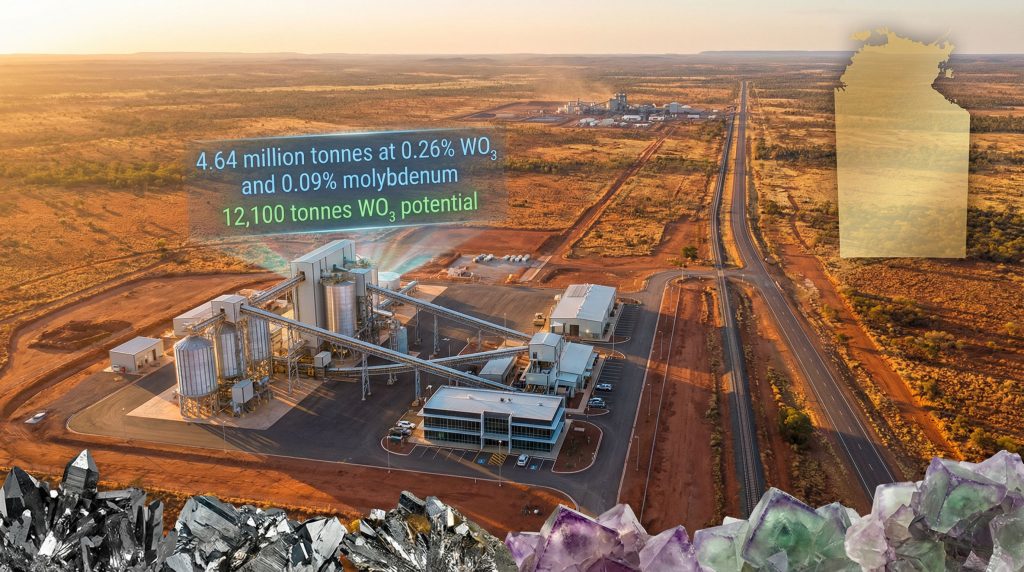
Understanding Critical Minerals Supply Chain Architecture in Central Australia
Global supply chain vulnerabilities in strategic materials present both risks and opportunities for mining jurisdictions seeking to establish alternative sourcing networks. Central Australia's geological endowments, combined with favourable investment frameworks, position the region as a potential cornerstone for Western supply chain diversification strategies across multiple commodity classes. The Tivan central Australia critical minerals hub represents a significant development in this strategic positioning.
When examining tungsten and molybdenum markets specifically, concentration dynamics create structural imbalances that affect everything from semiconductor manufacturing to defence procurement. These materials serve as critical inputs across advanced manufacturing processes, yet sourcing alternatives remain limited outside traditional supply routes dominated by single-country production.
Investment strategies targeting this supply chain reconfiguration require understanding both geological potential and operational integration models that can deliver competitive cost structures while maintaining supply security for end-users in strategic industries. Furthermore, investment strategies 2025 demonstrate the importance of strategic positioning in critical minerals sectors.
When big ASX news breaks, our subscribers know first
Strategic Infrastructure Integration Models for Multi-Commodity Operations
Integrated mining precincts represent a departure from traditional single-asset development approaches, creating operational synergies through shared infrastructure, processing capabilities, and logistics networks. This model becomes particularly compelling when examining projects with complementary commodity profiles and geographic proximity.
Operational Efficiency Framework:
- Consolidated processing facilities reducing individual project capital intensity
- Shared transportation corridors optimising logistics cost structures
- Integrated utilities management across multiple operations
- Unified environmental monitoring and compliance systems
- Combined workforce development and training programs
The Tivan central Australia critical minerals hub exemplifies this integration approach through the combination of tungsten-molybdenum operations at Molyhil with existing fluorite production at Sandover. Located 220 kilometres apart, these assets create opportunities for infrastructure sharing while targeting distinct end-market applications.
What Makes This Resource Quality Exceptional?
The Molyhil project contains a mineral resource estimate of 4.64 million tonnes at 0.26 percent tungsten trioxide and 0.09 percent molybdenum, representing 12,100 tonnes of tungsten trioxide and 4,400 tonnes of molybdenum in total contained metal. These grades compare favourably to global tungsten operations, where typical ore grades range from 0.1 to 0.5 percent tungsten trioxide.
| Asset Component | Primary Commodity | Strategic Applications | Infrastructure Synergies |
|---|---|---|---|
| Molyhil | Tungsten/Molybdenum | Defence, aerospace, electronics | Processing equipment sharing |
| Sandover | Fluorite | Chemical, metallurgical | Transportation network overlap |
| Regional Exploration | Vanadium potential | Energy storage applications | Utilities integration |
Understanding molybdenum's technical applications provides insight into demand drivers that extend beyond traditional steel alloying. In semiconductor manufacturing, molybdenum serves as a barrier layer material in advanced chip architectures, while its high-temperature properties make it essential for specialised industrial applications including catalyst production and aerospace components.
Tungsten's strategic importance stems from its unique physical properties, particularly its high melting point and density characteristics. These properties make tungsten irreplaceable in applications ranging from military armour-piercing projectiles to high-performance cutting tools used in advanced manufacturing processes. This aligns with the broader critical minerals strategy objectives across Australia.
How Do Financial Partnerships Drive Development Success?
Strategic partnerships with established trading houses provide development pathways that combine technical expertise, market access, and capital deployment capabilities. The November 2025 memorandum of understanding between Tivan and Sumitomo Corporation demonstrates how Japanese trading house partnerships can facilitate project advancement while maintaining operational control within Australian jurisdiction. Tivan has secured the Molyhil critical minerals project as part of its strategic expansion.
Such partnerships typically encompass:
- Development capital provision through structured investment agreements
- Technical expertise in processing and metallurgical optimisation
- Established marketing networks and customer relationships
- Supply chain logistics and transportation capabilities
- Risk management through long-term off-take arrangements
Market Demand Scenarios Across Technology and Defence Applications
Critical minerals demand forecasting requires analysing multiple end-use scenarios that reflect technological advancement trajectories, geopolitical developments, and energy transition pathways. Each scenario presents different demand profiles and pricing dynamics that impact project economics and strategic positioning. The energy transition & critical minerals relationship demonstrates these interconnected dynamics.
Accelerated Technology Adoption Scenario
The semiconductor industry's evolution toward more complex chip architectures drives specialised materials demand beyond traditional applications. Advanced processor designs require barrier layer materials, interconnect components, and heat dissipation solutions where molybdenum and tungsten provide unique performance characteristics.
Emerging Applications Include:
- Quantum computing hardware requiring ultra-pure metal components
- Artificial intelligence chip architectures with specialised thermal management needs
- Advanced automotive electronics for autonomous vehicle systems
- High-frequency communication equipment for 5G and beyond infrastructure
Defence and Aerospace Demand Evolution
"Western defence procurement strategies increasingly emphasise supply chain security, creating premium pricing opportunities for non-Chinese tungsten sources in military applications."
Military applications for tungsten extend beyond traditional ammunition uses to include:
- Kinetic energy penetrators for advanced missile systems
- Radiation shielding in nuclear applications
- High-temperature components for hypersonic vehicle development
- Specialised alloys for naval and aerospace applications
Energy Infrastructure Transformation
Renewable energy infrastructure development creates sustained demand for specialised materials across multiple components. Wind turbine applications require tungsten carbide cutting tools for manufacturing precision components, while high-strength molybdenum steel alloys support offshore wind platform construction.
Grid infrastructure hardening initiatives, driven by climate resilience requirements, generate additional demand for corrosion-resistant alloys and specialised electrical components where these materials provide technical advantages over alternative solutions.
Development Timeline Analysis and Industry Benchmarking
Traditional mining project development follows sequential phases that often extend development timelines significantly. Alternative approaches utilising parallel workstream execution can compress development schedules while maintaining technical and regulatory rigour. This approach aligns with broader mining industry innovation trends.
Tivan's Accelerated Development Framework:
- March 2026: Targeted drilling programme at Molyhil focusing on resource extension
- Mid-2026: Expanded exploration across integrated precinct areas
- Late 2027: Final investment decision timeline targeting production commencement
This timeline represents approximately 21 months from drilling commencement to final investment decision, compared to industry standards that typically require 36 to 48 months for comparable project complexity. The acceleration results from parallel processing of multiple development workstreams rather than traditional sequential approaches.
How Does Concurrent Development Work?
Parallel Workstream Execution:
- Metallurgical testing concurrent with resource definition drilling
- Environmental approval processes parallel to engineering studies
- Community engagement integrated with exploration activities
- Infrastructure planning concurrent with feasibility analysis
- Market development parallel to technical advancement
This approach requires sophisticated project management capabilities but reduces overall development risk by identifying potential constraints early in the development process. Each workstream feeds into the others, creating feedback loops that optimise overall project design.
Risk Management Through Integrated Planning
Central Land Council engagement represents a critical component of development planning in central Australia, where Indigenous land rights require comprehensive consultation and benefit-sharing arrangements. Early engagement reduces regulatory approval timelines while establishing community partnerships essential for long-term operational success.
Northern Territory Government support through critical minerals development initiatives provides additional regulatory certainty and potential co-funding opportunities that enhance project economics during development phases. This support reflects the australian critical minerals strategy priorities.
Investment Analysis Framework for Critical Minerals Precincts
Investment evaluation for integrated mining precincts requires analysing both individual asset economics and synergistic value creation through operational integration. Traditional discounted cash flow analysis must incorporate infrastructure sharing benefits, operational cost reductions, and market access advantages that emerge from precinct-scale operations.
What Creates Competitive Positioning Advantages?
Geographic Advantages:
- Central Australian location providing Asian market proximity while maintaining Western supply chain positioning
- Established transportation infrastructure connecting to export facilities
- Political stability and mining-friendly regulatory environment
- Skilled workforce availability and established service provider networks
Resource Quality Metrics:
Tungsten grades of 0.26 percent WO₃ at Molyhil compare favourably to global operations where grades typically range from 0.1 to 0.4 percent. Higher-grade deposits require less processing per unit of contained metal, reducing operating costs and environmental impacts while improving project economics.
Molybdenum co-production provides additional revenue streams that enhance overall project returns while diversifying commodity exposure across different end-market applications and pricing cycles. Tivan's approach to building central Australia's critical minerals hub demonstrates this integrated strategy.
Market Access and Customer Development
Strategic customer development focuses on end-users requiring supply chain security rather than purely cost-optimised procurement. Defence contractors, semiconductor manufacturers, and specialised steel producers often prioritise supply reliability over marginal cost differences, creating pricing power for alternative supply sources.
Customer Segmentation Strategy:
- Tier 1: Defence contractors requiring certified supply chain security
- Tier 2: Technology companies seeking supply diversification
- Tier 3: Industrial manufacturers requiring specialised grades and specifications
- Tier 4: Trading houses and commodity intermediaries
Each customer segment exhibits different pricing sensitivities, contract structures, and technical requirements that influence marketing strategies and product specifications.
Global Critical Minerals Policy Environment and Market Implications
Government policy frameworks increasingly influence critical minerals investment decisions through direct funding, procurement preferences, and strategic stockpiling initiatives. Understanding these policy dynamics provides insight into demand sustainability and pricing support mechanisms.
Western Government Strategic Initiatives
The United States Critical Minerals List designation for tungsten and molybdenum creates procurement preferences for domestic and allied nation sources in government contracts. Similar initiatives across allied nations create coordinated demand that supports premium pricing for strategic supply sources.
European Union Raw Materials Act implementation establishes supply chain resilience requirements that favour non-Chinese sources for critical applications. These requirements create regulatory demand that supplements market-driven purchasing decisions.
Australian government support through various initiatives provides development capital and risk-sharing mechanisms that improve project economics while maintaining strategic control within allied nation jurisdiction.
Supply Chain Resilience Investment Trends
Investment Flow Patterns:
- Government co-funding for strategic projects reducing private capital requirements
- Development finance institution participation in critical minerals projects
- Corporate strategic investments by end-user companies seeking supply security
- Trading house partnerships providing market access and working capital
These funding sources often provide capital at below-market rates in exchange for strategic supply commitments, improving project returns while establishing long-term customer relationships.
The next major ASX story will hit our subscribers first
Operational Challenges and Risk Mitigation Strategies
Central Australian mining operations face unique challenges related to remote location, infrastructure requirements, and environmental conditions. Successful project development requires comprehensive risk management strategies addressing each potential constraint. The Tivan central Australia critical minerals hub addresses many of these challenges through integrated planning.
Infrastructure Development Requirements
Logistics Infrastructure:
- Road transportation networks requiring maintenance and upgrade investment
- Port access through established Northern Territory export facilities
- Power generation requirements for processing operations in remote locations
- Water supply management in arid environmental conditions
- Communications infrastructure supporting remote operations management
Shared infrastructure across multiple operations reduces per-project costs while improving overall system reliability through redundancy and maintenance sharing arrangements.
Environmental and Regulatory Compliance
Northern Territory environmental approval processes require comprehensive impact assessment and mitigation planning. Integrated precinct development allows coordination of environmental management across multiple operations, potentially reducing overall environmental footprint through shared facilities and coordinated management systems.
Regulatory Timeline Management:
- Environmental impact assessment coordination across multiple projects
- Indigenous land use agreement negotiation and implementation
- Mining lease approval and renewal processes
- Export licensing and international trade compliance
- Safety and operational certification requirements
Early engagement with regulatory authorities and comprehensive planning reduces approval timelines while ensuring compliance with all applicable requirements.
Community Relations and Stakeholder Management
Central Land Council engagement represents more than regulatory compliance, creating opportunities for meaningful Indigenous participation in economic development. Benefit-sharing arrangements can include employment opportunities, training programmes, contracting preferences, and revenue participation that align community interests with project success.
Stakeholder Engagement Framework:
- Traditional owner consultation and consent processes
- Local community employment and training programmes
- Regional economic development partnerships
- Environmental monitoring and cultural heritage protection
- Long-term relationship maintenance and conflict resolution mechanisms
Technical Considerations for Processing and Metallurgy
Tungsten and molybdenum processing requires specialised metallurgical techniques that differ significantly from conventional base metal operations. Understanding these technical requirements provides insight into capital cost structures and operational complexity factors affecting project economics.
Metallurgical Processing Pathways
Tungsten concentration typically involves gravity separation followed by flotation processes to achieve concentrate grades suitable for downstream processing. The high specific gravity of tungsten minerals allows effective gravity separation using conventional spiral and shaking table technologies.
Molybdenum recovery often utilises flotation processes optimised for molybdenum sulphide mineral recovery. Co-production of tungsten and molybdenum requires careful circuit design to optimise recovery of both commodities while minimising interference between processing streams.
Processing Considerations:
- Gravity separation circuit optimisation for tungsten recovery
- Flotation chemistry development for molybdenum concentration
- Circuit integration for co-production efficiency
- Water management and recycling systems
- Tailings management and environmental compliance
Product Specifications and Quality Control
End-user applications require specific product grades and purity levels that influence processing complexity and capital requirements. Defence applications typically require higher purity specifications than industrial applications, creating opportunities for product differentiation and premium pricing.
Quality control systems must ensure consistent product specifications while maintaining traceability for customers requiring supply chain certification. This becomes particularly important for defence and aerospace applications where material certification requirements are stringent.
Consequently, the Tivan central Australia critical minerals hub positions itself strategically within this complex technical and regulatory landscape, offering integrated solutions for critical minerals supply chain security.
Disclaimer: This analysis contains forward-looking statements and projections based on current market conditions and available information. Mining operations involve inherent risks, and actual results may differ from projections. Investors should conduct independent due diligence and consider professional advice before making investment decisions. Commodity prices, regulatory requirements, and market conditions are subject to change.
Ready to Capitalise on Central Australia's Critical Minerals Hub?
Discovery Alert's proprietary Discovery IQ model delivers real-time alerts on significant ASX mineral discoveries, instantly empowering subscribers to identify actionable opportunities ahead of the broader market. Understand why historic discoveries can generate substantial returns by exploring Discovery Alert's dedicated discoveries page, showcasing exceptional outcomes from major mineral discoveries like those emerging from Australia's strategic critical minerals sector.