
June 30, 2026
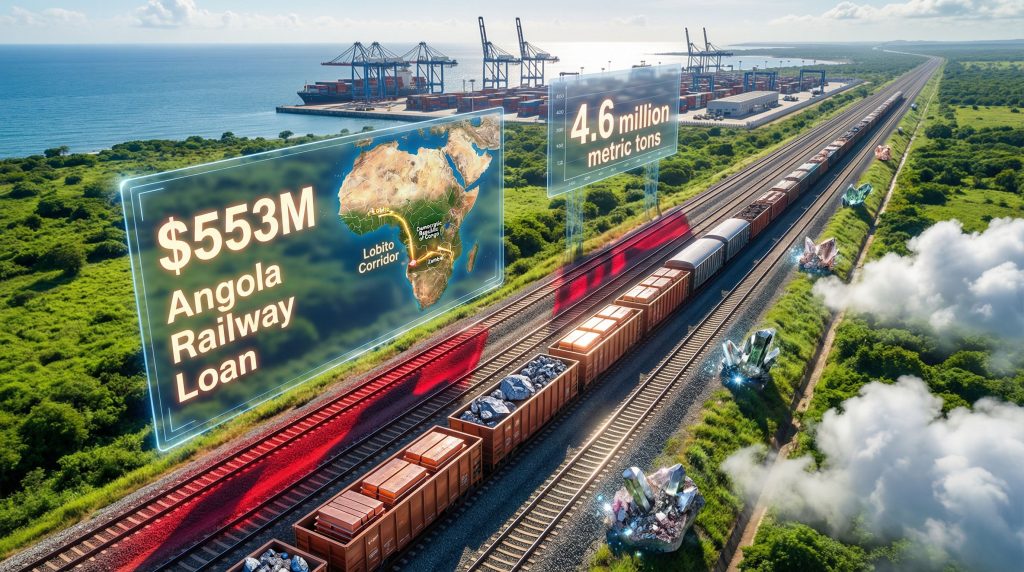
The global race for critical minerals has triggered unprecedented competition across Africa's transport infrastructure landscape. Traditional supply chains, heavily dependent on single-corridor systems and vulnerable to geopolitical disruptions, now face fundamental transformation as nations scramble to secure alternative pathways for copper, cobalt, and lithium resources essential to the critical minerals energy transition. The $553m loan for Angola railway revamp represents a pivotal moment in this strategic competition.
Multiple financing mechanisms are simultaneously reshaping continental logistics networks, with investment flows exceeding $2 billion across competing railway rehabilitation projects. These developments signal a strategic pivot in how critical minerals reach global markets, potentially restructuring decades-old transport monopolies and pricing dynamics through comprehensive critical minerals strategy implementation.
Strategic Infrastructure Competition Reshaping African Mineral Corridors
The emergence of parallel transport corridor investments reflects deeper concerns about supply chain vulnerabilities in critical minerals markets. Current systems concentrate risk through limited route options, creating bottlenecks that affect global renewable energy deployment timelines and electric vehicle production capacity.
Furthermore, the US Development Finance Corporation has announced a significant investment supporting the development along the Lobito Corridor. This strategic commitment demonstrates the heightened importance of securing alternative mineral transport routes.
Geographic Advantages of Atlantic Coast Access Routes
Western African transport corridors offer distinct logistical benefits compared to traditional eastern routes. The Lobito Corridor project positions Angola's Atlantic coastline as a strategic gateway for landlocked mineral resources, potentially reducing transport distances for copper and cobalt shipments to European and American markets by thousands of kilometres.
The corridor's design targets a significant capacity expansion to 4.6 million metric tons annually, representing a tenfold increase from current port throughput levels. This scale transformation addresses existing infrastructure constraints that limit mining output growth in the Zambian Copperbelt and Democratic Republic of Congo mining regions.
Distance reduction calculations show potential savings of 30% in transport costs for mineral exports, creating competitive advantages for producers utilising Atlantic routing compared to traditional Indian Ocean pathways through Tanzania or Mozambique ports.
Addressing Critical Supply Chain Dependencies
Current mineral transport networks exhibit concerning concentration risks that threaten supply security for renewable energy industries. Single-corridor dependencies create vulnerability points where infrastructure failures, political instability, or capacity constraints can disrupt global supply chains for battery metals and renewable energy components.
The strategic importance of diversifying transport options extends beyond immediate cost savings. Alternative routing capabilities provide insurance against supply disruptions that could affect electric vehicle manufacturing timelines, grid-scale battery storage deployments, and renewable energy project development schedules worldwide.
In addition, infrastructure dependencies on Chinese-backed transport systems have prompted Western nations to invest in competing corridor development. This competition reflects broader geopolitical concerns about supply chain control in sectors considered critical to national security and economic competitiveness.
When big ASX news breaks, our subscribers know first
Analysing the Multi-Billion Dollar Financing Architecture
The financing structure for competing African transport corridors reveals complex geopolitical motivations and strategic partnerships between development finance institutions, private sector consortiums, and regional banks.
Detailed Investment Breakdown and Partnerships
The US Development Finance Corporation has committed $553 million as the primary financing vehicle for the Lobito Corridor rehabilitation project. This investment represents the largest single US infrastructure commitment in Angola's transport sector, signalling strategic priorities beyond traditional development assistance.
Development Bank of Southern Africa contributes an additional $200 million to the financing package, bringing total disclosed funding to $753 million. However, project developers anticipate securing additional financing agreements by the end of 2026, suggesting the final investment could exceed $1 billion.
The private sector consortium includes Mota Engil (Portuguese construction giant), Trafigura (global commodities trading firm), and Vecturis SA (specialised rail operations company). This partnership combines construction expertise, commodity market knowledge, and railway operational capabilities essential for long-term project success.
Lobito Atlantic Railway (LAR) secured a 30-year operating contract in 2022 for the 1,300-kilometre Benguela railway line, providing operational certainty that supports financing arrangements and long-term investment planning.
Competing Investment Frameworks
China's infrastructure strategy in the region includes China Civil Engineering Construction Corporation's $1.4 billion commitment to rehabilitate the Tanzania-Zambia railway corridor. This competing investment targets similar mineral resources but utilises Indian Ocean routing through Tanzanian ports.
The scale of competing investments demonstrates how critical minerals access has become a priority for major economic powers. Investment decisions reflect calculations about future supply security, geopolitical influence, and economic benefits from controlling strategic infrastructure networks.
Consequently, regional development banks play crucial roles in these financing arrangements, providing local knowledge, regulatory expertise, and risk mitigation capabilities that international investors require for large-scale infrastructure projects in African markets.
Critical Minerals Flow Mapping and Market Impact
The upgraded railway systems will fundamentally alter global critical minerals supply chains by creating new pathways for copper, cobalt, and potentially lithium resources from central and southern African mining regions.
Zambian Copper Production Corridor Integration
Zambian copper production, concentrated in the Copperbelt region, currently faces transport limitations that constrain mining output growth. The proposed 515-kilometre railway extension from existing Angolan infrastructure would provide direct Atlantic coast access for copper concentrates and refined products.
This connectivity improvement addresses bottlenecks that currently limit Zambian copper exports to approximately 800,000 tons annually. Enhanced transport capacity could support production increases to over 1 million tons annually, meeting growing global demand for copper in renewable energy infrastructure, as outlined in the copper production outlook.
Transport cost reductions of up to 30% would improve Zambian copper competitiveness in global markets, potentially affecting pricing dynamics and market share distribution among major copper-producing nations.
Democratic Republic of Congo Cobalt Supply Chain Transformation
The Democratic Republic of Congo produces approximately 70% of global cobalt supply, making transport infrastructure critically important for electric vehicle battery supply chains. The planned 315-kilometre railway connection would provide alternative routing options for cobalt concentrates currently dependent on limited transport corridors.
Cobalt transport improvements directly impact electric vehicle manufacturing costs and battery storage system economics. Reduced transport costs and enhanced supply reliability could accelerate electric vehicle adoption timelines and grid-scale battery storage deployments worldwide.
Supply chain diversification through multiple transport corridors reduces concentration risks that have historically affected cobalt pricing volatility and supply security concerns among battery manufacturers and automotive companies.
Emerging Mineral Resources and Transport Potential
Beyond copper and cobalt, the transport corridor could facilitate exports of lithium, nickel, and rare earth elements from regional mining developments. These materials are essential for advanced battery technologies, renewable energy systems, and electric vehicle manufacturing.
Regional geological surveys indicate significant untapped mineral potential that remains undeveloped due to transport infrastructure limitations. Enhanced connectivity could unlock new mining investments and expand the diversity of critical minerals available to global markets.
Comparative Analysis of African Transport Corridor Competition
Multiple transport corridors compete for mineral traffic from central and southern African mining regions, each offering different advantages in terms of capacity, investment levels, and strategic backing.
Infrastructure Investment and Capacity Comparison
| Transport Corridor | Total Investment | Annual Capacity | Primary Backer | Completion Timeline |
|---|---|---|---|---|
| Lobito (Angola) | $753M+ (disclosed) | 4.6M metric tons | US/Regional Banks | 2026-2028 |
| TAZARA (Tanzania) | $1.4B (rehabilitation) | Variable | China (CCECC) | 2025-2027 |
| Nacala (Mozambique) | Previously developed | 18M metric tons | Multi-national | Operational |
| Dar es Salaam (Tanzania) | Ongoing upgrades | 12M metric tons | Various | Operational |
The Nacala Corridor in Mozambique currently offers the highest capacity at 18 million metric tons annually, but serves primarily coal and agricultural exports rather than critical minerals. This capacity advantage demonstrates the potential scale achievable through comprehensive infrastructure development.
Investment efficiency varies significantly among corridors. The Lobito project targets 4.6 million metric tons capacity for $753 million disclosed investment, suggesting approximately $164 per annual ton of capacity. This compares favourably to rehabilitation costs for existing corridors with lower capacity targets.
Strategic Positioning and Route Economics
Atlantic coast routing through Angola offers shorter shipping distances to European and North American markets compared to Indian Ocean alternatives. This geographic advantage could reduce total logistics costs by 15-25% for shipments to major consuming regions.
Indian Ocean corridors through Tanzania and Mozambique provide better access to Asian markets, particularly China and India. Route selection increasingly reflects end-market destinations and strategic relationships between producing and consuming nations.
Port infrastructure quality varies significantly among competing corridors. Lobito port requires substantial upgrades to achieve 4.6 million metric tons capacity, while Dar es Salaam and Nacala offer more developed facilities but serve multiple commodity types beyond critical minerals.
Economic Development Implications for Regional Economies
Large-scale transport infrastructure projects generate significant economic impacts beyond their primary function of moving minerals, creating employment opportunities, skills development programmes, and industrial clustering effects.
Employment Generation and Skills Transfer
Railway rehabilitation and operation projects typically create 2,000-4,000 direct jobs during construction phases and 500-1,000 permanent positions for ongoing operations. These employment opportunities often provide higher wages than traditional economic activities in rural regions.
Technical training programmes associated with modern railway operations transfer valuable skills to local workforces. LAR has committed to staff training investments as part of their financing arrangements, potentially creating a skilled workforce capable of supporting other industrial developments.
Local content requirements in major infrastructure projects can stimulate domestic supplier networks and small business development. These requirements typically mandate 20-40% local sourcing for construction materials, equipment maintenance, and service provision.
Revenue Generation and Economic Multiplier Effects
Transit fees and port service charges generate direct government revenues from mineral exports. Angola could potentially earn $15-25 million annually in transit fees based on 4.6 million metric tons of throughput and typical fee structures of $3-5 per ton.
Economic multiplier effects from transport corridor development include increased demand for logistics services, warehousing facilities, equipment maintenance, and financial services. These indirect benefits often exceed direct project revenues by factors of 2-4 times.
Infrastructure improvements enable diversification beyond mining sector dependence. Enhanced connectivity supports agricultural exports, manufacturing development, and regional trade facilitation that broadens economic benefits across multiple sectors.
Implementation Challenges and Risk Assessment
Complex cross-border infrastructure projects face numerous technical, political, and financial risks that could affect completion timelines, cost projections, and operational performance.
Technical Infrastructure Requirements and Timelines
The 1,300-kilometre Benguela railway line requires comprehensive rehabilitation including track replacement, signalling system upgrades, bridge reinforcement, and station modernisation. This scope of work typically requires 3-4 years for completion under optimal conditions.
Rolling stock procurement involves acquiring specialised locomotives and freight cars suitable for mineral transport. Lead times for railway equipment orders often extend 18-24 months from placement to delivery, requiring early procurement decisions to meet operational timelines.
Port terminal expansion at Lobito requires construction of mineral handling facilities, storage areas, and ship loading equipment. These facilities must meet international standards for mineral export quality and environmental protection requirements.
Cross-Border Coordination Complexities
The 515-kilometre Zambia extension requires coordination between Angolan and Zambian railway authorities, customs agencies, and regulatory frameworks. Africa Finance Corporation has completed feasibility studies and sought contractor proposals, but construction timelines depend on regulatory approvals and financing arrangements.
Democratic Republic of Congo connectivity through 315 kilometres of new railway faces additional complexities due to security considerations, regulatory requirements, and coordination with existing mining operations in the region.
Regulatory harmonisation between three countries involves standardising technical specifications, operational procedures, customs processes, and safety requirements. These negotiations often require 12-18 months to complete and can significantly affect project timelines.
Financial and Political Risk Factors
Currency fluctuation risks affect project costs denominated in multiple currencies. Infrastructure projects spanning several years face exposure to exchange rate movements that can increase costs by 10-20% in volatile economic conditions.
Political stability considerations include changes in government policies, regulatory requirements, and international relationships that could affect project support or operational permissions. Long-term infrastructure projects require stable political frameworks to ensure completion and successful operation.
Financing disbursement conditions from development finance institutions often include performance milestones, environmental compliance requirements, and governance standards that must be maintained throughout project implementation.
The next major ASX story will hit our subscribers first
Global Pricing Impact and Market Dynamics
Enhanced transport infrastructure capacity and alternative routing options will influence global critical minerals pricing through improved supply reliability, reduced logistics costs, and increased market competition.
Supply Chain Cost Structure Analysis
Transport costs currently represent 8-15% of total delivered costs for copper and cobalt from central African mining regions. A 30% reduction in transport costs could reduce total delivered costs by 2-4%, improving competitiveness against alternative supply sources.
Time-to-market improvements reduce inventory holding costs and enable more responsive supply adjustments to demand fluctuations. Faster transport links allow miners to optimise production scheduling and reduce working capital requirements.
Inventory optimisation through reliable transport schedules enables just-in-time delivery systems that reduce storage costs and capital requirements for both producers and consumers of critical minerals.
Market Structure and Competitive Implications
Alternative routing options reduce bargaining power of existing transport monopolies and create competitive pressure on service pricing and quality. This competition benefits mineral producers through lower logistics costs and improved service reliability.
Regional processing facility development becomes more attractive when transport costs decrease and infrastructure reliability improves. Value-added processing closer to mining sources can reduce transport volumes and improve profit margins for mineral producers.
However, the mining industry evolution suggests that downstream manufacturing location incentives may shift toward regions with improved access to raw materials. Reduced transport costs for critical minerals could influence investment decisions for battery manufacturing, renewable energy component production, and electric vehicle assembly facilities.
Environmental and Social Responsibility Framework
Modern infrastructure projects must comply with international environmental and social standards that protect biodiversity, community interests, and long-term sustainability objectives.
Environmental Protection and Compliance Requirements
International environmental standards require comprehensive impact assessments covering biodiversity protection, water resource management, air quality monitoring, and habitat preservation along transport corridors.
Carbon footprint reduction through rail transport offers significant environmental benefits compared to road transport alternatives. Railway transport typically generates 60-80% lower carbon emissions per ton-kilometre compared to truck transport for mineral shipments.
Biodiversity conservation measures along the corridor must address habitat fragmentation, wildlife crossing provisions, and ecosystem protection requirements. These measures often require 5-10% of project budgets but provide long-term environmental benefits.
Community Engagement and Benefit Sharing
Local community consultation processes ensure that infrastructure development considers traditional land uses, cultural sites, and community economic needs. These consultations are mandatory under international financing standards and affect project approval timelines.
Social licence to operate requires ongoing community support through transparent communication, fair compensation for land use, employment opportunities, and local development programmes that share project benefits with affected populations.
Benefit-sharing mechanisms include local hiring preferences, skills training programmes, small business development initiatives, and infrastructure improvements that serve community needs beyond mineral transport requirements.
Success Metrics and 2030 Performance Targets
Project success will be measured through operational performance indicators, financial returns, and broader economic development outcomes that justify the substantial investment commitments.
Operational Excellence Indicators
Annual tonnage targets for the Lobito Corridor aim to achieve 4.6 million metric tons by 2028-2030, representing successful utilisation of upgraded infrastructure capacity. This target requires coordination with mining production schedules and market demand growth.
Transit time benchmarks should demonstrate competitive advantages over alternative transport corridors. Target improvements include 20-30% faster delivery times compared to existing routing options, enabling more responsive supply chain management.
Capacity utilisation rates above 70-80% indicate successful market penetration and financial sustainability for infrastructure investments. Lower utilisation rates may require additional market development or pricing adjustments to achieve project objectives.
Strategic Impact Assessment
Market share capture in critical minerals transport should reach 25-35% of regional mineral exports within five years of full operations. This market share represents sufficient volume to justify investment costs and demonstrate competitive advantages.
Regional economic development outcomes include employment creation, skills development, local business growth, and government revenue generation that exceed direct project benefits. Multiplier effects should generate 2-3 times the direct economic impact of infrastructure investments.
Moreover, insights from the global resources expo indicate that geopolitical influence indicators reflect enhanced strategic partnerships, reduced dependency on single-source transport systems, and improved access to critical minerals for partner nations. These outcomes support broader foreign policy objectives beyond commercial returns.
Investment Opportunities and Economic Development Potential
The transport corridor development creates numerous secondary investment opportunities that could generate additional economic returns and support broader industrial development objectives.
Value-Added Processing and Manufacturing Potential
Special economic zones along transport corridors offer advantages for mineral processing facilities that reduce transport volumes and increase value-added exports. These zones typically offer tax incentives, simplified regulations, and infrastructure support for manufacturing investments.
Technology transfer opportunities include partnerships with international companies that bring advanced processing technologies, environmental management systems, and skilled workforce development programmes to regional economies.
Manufacturing location advantages near critical mineral sources could attract battery component production, electric vehicle assembly, and renewable energy equipment manufacturing that benefits from reduced input costs and reliable supply access.
Service Sector Development and Integration
Logistics and warehousing facilities provide essential support services for mineral transport operations while creating additional employment and business opportunities for local entrepreneurs and international logistics companies.
Financial services expansion includes trade finance, commodity hedging, insurance services, and project financing capabilities that support both mineral export operations and broader economic development initiatives.
Furthermore, according to The Africa Report's analysis, "Lobito will be six times faster than other corridors," as CEO Fournier states, demonstrating the significant operational advantages this $553m loan for Angola railway revamp will deliver.
Digital infrastructure improvements required for modern transport operations enable enhanced communication networks, data processing capabilities, and technology services that benefit multiple economic sectors beyond mineral transport.
Conclusion
The transformation of African mineral transport infrastructure represents a fundamental shift in global supply chain architecture for critical minerals. Success in implementing these ambitious projects will determine competitive advantages in renewable energy transitions, electric vehicle adoption, and broader sustainable technology deployment worldwide.
The $553m loan for Angola railway revamp stands as a cornerstone investment that could reshape how critical minerals reach global markets. This financing package, combined with broader regional development initiatives, demonstrates the strategic importance of diversifying supply chains and reducing dependencies on single-corridor systems.
Investment considerations should include comprehensive due diligence on political risks, operational challenges, and market dynamics. Past infrastructure project performance in the region suggests that timeline delays and cost overruns are common, requiring careful risk assessment and contingency planning for potential investors.
Looking to Invest in Africa's Critical Minerals Boom?
Discovery Alert's proprietary Discovery IQ model delivers real-time alerts on significant ASX mineral discoveries, instantly empowering subscribers to identify actionable opportunities ahead of the broader market as Africa's transport revolution unlocks new mining potential. Explore Discovery Alert's dedicated discoveries page to understand why major mineral discoveries can generate substantial returns, then begin your 30-day free trial to position yourself ahead of the market.