May 21, 2026
Understanding Cross-Border Mining Frameworks in South America
The Andean Cordillera represents one of the world's most mineral-rich geological formations, spanning multiple national boundaries and creating unique challenges for resource development. When mining deposits traverse international borders, traditional regulatory frameworks often prove inadequate for managing complex extraction operations that must comply with multiple jurisdictions simultaneously.
This geological reality has driven South American nations to develop innovative bilateral agreements that enable coordinated mineral extraction while preserving national sovereignty. The tratado minero Chile Argentina exemplifies this approach, establishing a comprehensive framework for transborder mining operations across one of the continent's most extensive frontiers.
When big ASX news breaks, our subscribers know first
Bilateral Mining Integration Framework
Legal Structure and Jurisdictional Scope
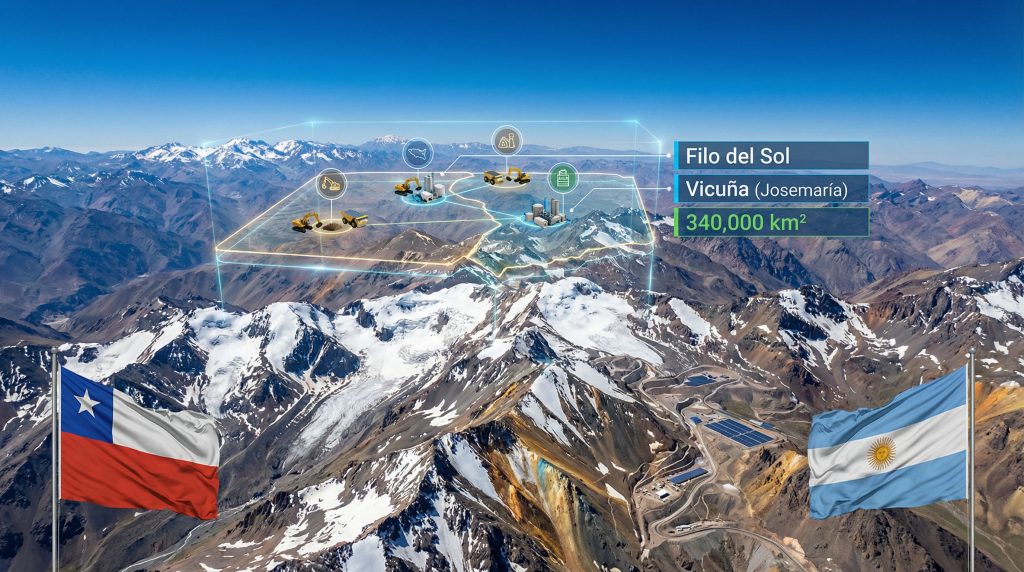
The tratado minero Chile Argentina creates a specialized legal corridor extending 40 kilometers on each side of the 6,691-kilometer border between both nations. This framework encompasses approximately 340,000 square kilometers of potential mining territory, representing one of the world's largest transborder mining zones.
Unlike traditional trade agreements that focus primarily on commercial exchanges, this treaty establishes operational protocols for joint resource development. The agreement enables companies to develop mining projects that span both countries under unified regulatory oversight, reducing administrative complexity and operational costs whilst addressing mining permitting basics.
Strategic Objectives and Economic Framework
The treaty addresses several critical challenges facing modern mining operations:
• Regulatory harmonisation between different national mining codes
• Infrastructure sharing for remote Andean projects
• Risk distribution across multiple jurisdictions
• Investment facilitation for large-scale developments
• Environmental coordination for cross-border impacts
These objectives support the development of mineral deposits that would otherwise remain economically unfeasible due to jurisdictional complications or infrastructure limitations. Furthermore, the framework reflects broader trends in mining industry evolution towards integrated regional approaches.
Administrative Structure and Governance
Binational Commission Operations
The treaty operates through a Binational Administrative Commission comprising representatives from mining and foreign affairs ministries in both countries. This body makes decisions through unanimous consensus, ensuring equal participation in project approvals and regulatory oversight.
Commission Structure:
| Chilean Representatives | Argentine Representatives |
|---|---|
| Ministry of Mining | Mining Secretariat |
| Ministry of Foreign Affairs | Ministry of Foreign Affairs |
| Cochilco (Technical Body) | National Mining Institute |
The commission meets semiannually, alternating between Chilean and Argentine locations. These sessions review project proposals, evaluate environmental compliance, and address operational challenges for active developments.
Executive Coordination Mechanisms
Each country maintains an Executive Secretariat responsible for day-to-day treaty administration. Chile's secretariat operates through Cochilco and the Mining Undersecretariat, while Argentina coordinates through its Mining Secretariat and Foreign Ministry.
Recent developments indicate strengthened institutional commitment. In April 2026, Chilean authorities confirmed Rodrigo Urquiza's continuation as executive secretary, signalling policy continuity and operational stability for the treaty framework.
Economic Benefits and Investment Advantages
National Treatment Principles
The treaty establishes national treatment protocols, ensuring investors from either country receive equivalent regulatory treatment as domestic operators. This principle eliminates discriminatory practices and creates a level playing field for binational projects.
Investment advantages include:
• Shared infrastructure costs between multiple projects
• Coordinated permitting processes reducing approval timelines
• Access to both countries' export infrastructure
• Diversified political risk exposure
• Enhanced project scale economies
Regional Development Impact
Mining developments under the treaty generate significant economic activity in remote Andean regions previously lacking industrial development. Projects create employment opportunities in areas with limited alternative economic activities, supporting local communities through direct hiring and supplier relationships.
The framework also facilitates technology transfer between Chilean and Argentine mining sectors, enabling knowledge sharing and technical capacity building across both countries. Additionally, these developments often incorporate innovative mine reclamation innovation practices from the outset.
Project Implementation and Case Studies
Active Project Portfolio
Several major mining developments operate under treaty protocols, demonstrating the framework's practical application:
Current Treaty Projects:
| Project Name | Primary Minerals | Development Status | Protocol Year |
|---|---|---|---|
| Filo del Sol | Copper-Gold-Silver | Advanced Development | 2020 |
| Vicuña (Josemaría) | Copper-Gold | Construction Phase | 2020 |
| Pascua Lama | Gold-Silver | Suspended | 2005 |
Filo del Sol, located in Argentina's San Juan Province near the Chilean border, represents a successful treaty implementation. The project benefits from coordinated environmental assessments and shared logistical infrastructure, reducing overall development costs and regulatory complexity.
Josemaría (operated as Vicuña in Chile) exemplifies the treaty's potential for large-scale developments. With estimated capital requirements exceeding US$7 billion, the project demonstrates how the framework enables investments that would be challenging under single-country regulatory approaches.
Operational Protocols and Special Areas
Projects operating under the treaty establish Special Operation Areas with customised regulatory frameworks. These areas feature:
• Integrated customs procedures for equipment and personnel movement
• Coordinated environmental monitoring across both jurisdictions
• Joint emergency response protocols
• Shared technical standards for safety and environmental protection
Commission Reactivation and 2026 Developments
Renewed Government Commitment
The April 2026 announcement regarding commission reactivation reflects both governments' commitment to accelerating cross-border mining development. This decision addresses project delays and regulatory bottlenecks that had accumulated during periods of reduced bilateral coordination.
According to mining industry reports, the reactivation aims to:
• Expedite pending project evaluations
• Streamline administrative processes
• Identify new development opportunities
• Enhance bilateral technical cooperation
Strategic Priority Projects
The commission's renewed focus targets projects with significant economic potential and advanced development status. Priority areas include copper deposits in the northern Andean regions and lithium resources in frontier salt flats, aligning with opportunities in Argentina lithium opportunities.
"There are great opportunities for cooperation with Argentina to promote mining projects and investments that generate employment and development in both countries."
This governmental perspective reflects broader South American trends toward regional mining integration and coordinated resource development strategies.
The next major ASX story will hit our subscribers first
Regulatory Challenges and Risk Management
Sovereignty and Border Demarcation
The treaty carefully preserves permanent border demarcation while enabling operational flexibility for mining projects. This balance addresses concerns about territorial sovereignty whilst facilitating practical cross-border operations, as outlined in official Chilean-Argentine documentation.
Key regulatory principles include:
• Maintenance of national legal frameworks within each jurisdiction
• Preservation of environmental standards according to each country's requirements
• Coordination without subordination of national regulatory authorities
• Respect for international water treaties and watershed management
Environmental Coordination Protocols
Cross-border mining projects require coordinated environmental assessments addressing impacts in both countries. The treaty establishes protocols for:
• Joint environmental impact studies
• Coordinated monitoring programmes
• Shared remediation responsibilities
• Integrated closure planning
These protocols ensure environmental protection while avoiding duplicative regulatory requirements that could delay project development.
Resource Potential and Geological Advantages
Andean Mineral Endowment
The Andean Cordillera along the Chile-Argentina border contains some of the world's highest-grade copper deposits, along with significant gold, silver, and lithium resources. The geological continuity across borders creates opportunities for integrated development that maximises resource extraction efficiency.
Key Mineral Resources:
• Copper porphyry systems extending across both countries
• High-altitude lithium brines in frontier salt flats
• Epithermal gold-silver deposits in remote Andean locations
• Critical minerals including molybdenum and rhenium
Furthermore, the region includes substantial copper resources similar to those found in the Argentina copper system, demonstrating the cross-border geological continuity.
Competitive Advantages in Global Markets
Treaty projects benefit from several competitive advantages:
• Scale economies from large integrated developments
• Diversified market access through both countries' export infrastructure
• Reduced political risk through bilateral government support
• Enhanced technical capabilities through knowledge sharing
These advantages position treaty projects favourably in global mineral markets, particularly for copper and lithium resources critical to energy transition technologies.
International Benchmarking and Best Practices
Global Mining Treaty Comparisons
The tratado minero Chile Argentina represents one of the most comprehensive cross-border mining agreements globally. Comparable arrangements exist in Africa and Asia, but few match the geographical scope and operational detail of the South American framework.
Distinctive Features:
• Geographic scope covering 340,000 square kilometres
• Operational integration beyond simple commercial agreements
• Environmental coordination protocols
• Long-term institutional commitment spanning multiple government changes
Lessons for Regional Integration
The treaty's implementation provides valuable insights for other mineral-rich regions considering similar arrangements:
• Institutional continuity proves essential for long-term success
• Technical coordination requires permanent secretariat functions
• Political commitment must transcend electoral cycles
• Environmental protocols require early integration into project planning
Future Prospects and Strategic Outlook
Development Pipeline and Investment Projections
The treaty's reactivation positions both countries to capitalise on growing global demand for critical minerals. Industry projections suggest significant investment potential in copper and lithium projects spanning the border region through 2030.
Projected Development Areas:
• Northern copper belt extensions into Argentina
• Lithium triangle salt flats near the Chile-Argentina border
• High-altitude gold projects in remote Andean locations
• Industrial minerals supporting regional construction markets
Critical Success Factors
Several factors will determine the treaty's continued effectiveness:
• Political stability and policy continuity in both countries
• Infrastructure development improving access to remote areas
• Technical capacity building in both regulatory systems
• Environmental protection maintaining social licence for mining
• Market conditions supporting long-term investment commitments
The tratado minero Chile Argentina demonstrates how bilateral cooperation can unlock mineral resources that would remain undeveloped under traditional single-country approaches. Its reactivation reflects growing recognition of mining's role in supporting economic development and energy transition goals across South America.
Disclaimer: This analysis is for informational purposes only and does not constitute investment advice. Mining investments carry significant risks, and readers should conduct their own due diligence before making investment decisions. Regulatory frameworks and project status can change rapidly in the mining sector.
Interested in Cross-Border Mining Investment Opportunities?
Discovery Alert's proprietary Discovery IQ model delivers real-time alerts on significant ASX mineral discoveries, including international projects with exposure to South American operations, instantly empowering subscribers to identify actionable opportunities ahead of the broader market. Begin your 14-day free trial today and secure your market-leading advantage in the rapidly evolving mining sector.