
May 14, 2026
What Makes Cross-Sector Collaboration Essential for Mining's Sustainable Future?
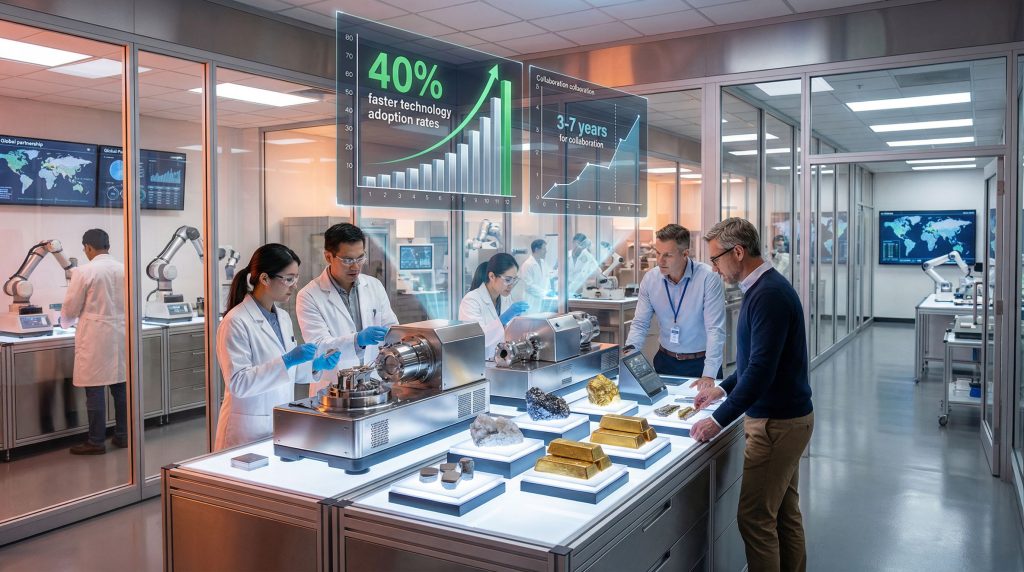
In an era where technological advancement cycles compress from decades to years, mining companies face unprecedented pressure to innovate rapidly while managing substantial risks. The convergence of energy transition demands, environmental regulations, and digital transformation creates a complex landscape that no single organization can navigate alone. CSIRO collaboration in sustainable mining represents a fundamental shift from traditional isolated research models toward integrated partnership frameworks that leverage collective expertise.
Energy transition minerals demand has experienced dramatic growth, doubling between 2019 and 2024 according to International Energy Agency data. This trajectory is projected to double again by 2030, creating sustained pressure for mining operations to develop new extraction and processing capabilities. Such rapid market evolution requires research and development timelines that traditional approaches cannot accommodate.
The Australian mining sector operates under increasingly stringent environmental targets, with the federal government announcing emissions reduction goals of 62-70 percent of 2005 levels by September 2025. These regulatory frameworks necessitate collaborative innovation to develop technologies that can simultaneously meet production demands and environmental compliance requirements.
The Innovation Acceleration Imperative
Traditional mining research and development cycles often span 15-20 years from concept to commercial deployment. However, current market conditions demand acceleration of these timelines to maintain competitive positioning. Louise Fisher, Director of Mineral Resources at CSIRO, emphasizes that collaborative approaches can help accelerate learning curves and leverage knowledge developed by others, maintaining competitiveness in fast-moving spaces.
Risk mitigation through partnership becomes critical when organizations face the substantial capital requirements of developing new technologies. By pooling resources and expertise, mining companies can distribute financial risk while accessing specialized knowledge that would be prohibitively expensive to develop internally.
The iterative nature of technological development requires extensive experimentation and learning cycles. Fisher notes that going alone means learning slower, as considerable iteration and experimentation are required for successful innovation adoption.
Building Australia's Critical Minerals Competitive Advantage
Australia's strategic positioning in global critical minerals supply chains depends heavily on technological advancement and processing capability development. Research partnerships enable access to cutting-edge extraction and refinement technologies that can enhance resource recovery rates and product quality.
Technology transfer mechanisms between research institutions and industry create pathways for rapid commercialisation of laboratory innovations. These frameworks reduce the time between scientific breakthrough and operational implementation, providing competitive advantages in rapidly evolving markets.
Furthermore, international competitiveness factors increasingly favour organisations with strong collaborative networks. Countries and companies that can effectively coordinate research efforts across multiple stakeholders demonstrate superior capability development and market responsiveness, particularly in energy transition strategies.
When big ASX news breaks, our subscribers know first
How Are Australian Research Institutions Restructuring Mining Innovation?
Australian research institutions are fundamentally reorganising their approach to mining innovation through multi-stakeholder partnership models that integrate government, industry, and international collaborators. CSIRO collaboration in sustainable mining exemplifies this transformation through initiatives such as the $10 million Green Metals Innovations Network, co-led with the Heavy Industry Low-carbon Transition Cooperative Research Centre.
The Multi-Stakeholder Partnership Model
| Partnership Type | Primary Focus | Typical Duration | Success Metrics |
|---|---|---|---|
| Industry-Academia | Technology development | 3-5 years | Patent applications, pilot deployments |
| Government-Research | Policy-aligned innovation | 5-10 years | Regulatory adoption, national capability |
| International Collaboration | Knowledge exchange | 2-7 years | Global standard development |
This four-year government-supported initiative demonstrates the scale of investment required for transformative mining technology development. The partnership structure enables coordinated research programmes that span the complete mining value chain, from exploration to critical minerals processing and green metals pathways development.
CSIRO maintains active partnerships with major mining operators including Northern Star Resources in gold exploration, creating direct pathways for research application in operational environments. These partnerships provide real-world testing grounds for emerging technologies whilst offering mining companies early access to innovative solutions.
Additionally, these collaborations align with broader mining industry innovation trends that emphasise technological convergence and cross-sector partnerships.
Research Infrastructure as Collaboration Catalyst
Shared facility models reduce individual investment barriers by distributing the costs of expensive research equipment across multiple participants. This approach enables smaller mining companies and emerging technology developers to access world-class research capabilities that would otherwise be financially inaccessible.
Digital collaboration platforms facilitate remote partnership management, enabling geographically dispersed teams to coordinate research activities effectively. These systems support real-time data sharing, progress monitoring, and collaborative analysis across multiple organisations simultaneously.
Equipment and expertise sharing protocols maximise resource utilisation whilst minimising duplication of expensive research infrastructure. Standardised sharing agreements enable efficient allocation of research assets based on project priorities and organisational capabilities.
Intellectual Property and Revenue Sharing Frameworks
Balanced intellectual property ownership structures encourage broad participation by protecting individual organisation investments whilst enabling collaborative benefit sharing. These frameworks typically allocate IP rights based on contribution levels, research leadership roles, and commercialisation responsibilities.
Commercialisation pathways protect research investment by establishing clear routes from laboratory development to market application. Revenue sharing models incentivise continued participation by ensuring that successful innovations generate returns for all contributing parties.
Licensing models support industry adoption by providing accessible pathways for technology implementation across the mining sector. Flexible licensing terms can accelerate widespread adoption whilst maintaining appropriate returns for research investment.
Which Technological Breakthrough Areas Drive Partnership Formation?
Technological innovation requirements in modern mining operations span multiple disciplines, creating natural incentives for collaborative research approaches. Environmental impact reduction technologies represent a primary driver of partnership formation, as mining companies seek solutions for carbon footprint minimisation, waste stream optimisation, and water management improvements.
Automation and AI Integration Priorities
Autonomous systems development requires cross-disciplinary expertise combining robotics engineering, artificial intelligence, geological science, and operational mining knowledge. No single organisation possesses comprehensive capabilities across all these domains, necessitating collaborative approaches for successful system development.
Machine learning applications in geological analysis and prediction depend on vast datasets and specialised analytical capabilities. Research partnerships enable access to diverse geological data sources whilst combining computational expertise with domain knowledge for algorithm development and validation.
Safety technology advancement through collaborative research addresses industry-wide challenges that benefit from shared learning and standardised approaches. Innovation in hazard detection, emergency response systems, and personal protective equipment creates value for all industry participants, particularly in the context of digital mining operations.
Environmental Impact Reduction Technologies
Process innovation areas requiring collaborative attention include by-product recovery enhancement and decarbonisation of processing operations. Fisher explains that increasing focus on by-product recovery is changing process design approaches, whilst decarbonisation efforts drive development of novel reductants and ambient temperature processing methods.
Novel reductant development for mineral processing represents a significant technological challenge requiring chemistry expertise, metallurgical knowledge, and industrial scaling capabilities. Collaborative research enables combination of specialised knowledge domains whilst distributing development risks across multiple organisations.
Ambient temperature and pressure processing technologies offer potential for dramatic energy consumption reductions in mineral processing operations. Development of these technologies requires fundamental research in materials science combined with practical engineering knowledge and operational validation capabilities.
Critical Minerals Processing Innovation
Advanced extraction techniques for complex ore bodies require integration of geological understanding, chemical processing innovation, and mechanical engineering expertise. Collaborative research programmes enable comprehensive approaches to technology development that address all aspects of extraction challenges.
Separation technology improvements for rare earth elements involve sophisticated chemical processes that benefit from shared research investment and knowledge exchange. The high development costs and specialised expertise requirements make collaborative approaches particularly attractive for these technologies.
Energy-efficient processing methods development addresses both environmental concerns and operational cost pressures. Research partnerships enable investigation of multiple technological approaches whilst sharing the substantial investment required for pilot-scale testing and validation, particularly supporting sustainable production initiatives.
What Partnership Models Generate the Highest Innovation Returns?
Hub-and-spoke collaboration structures demonstrate superior performance in coordinating complex research programmes across multiple organisations. Central research institutions serve as coordination points for industry partners whilst maintaining specialised working groups that address specific technological challenges.
The Hub-and-Spoke Collaboration Structure
CSIRO collaboration in sustainable mining exemplifies effective hub-and-spoke models through coordinated research programmes that span exploration technologies, critical minerals processing, and green metals development pathways. This structure enables resource optimisation through coordinated research activities whilst maintaining focused attention on specific technological challenges.
Specialised working groups within hub-and-spoke structures address targeted innovation challenges whilst benefiting from broader network resources and expertise. This approach balances focused research attention with collaborative knowledge sharing and resource pooling benefits.
Resource optimisation through coordinated research programmes reduces duplication whilst maximising research impact. Central coordination enables strategic allocation of research efforts based on industry priorities and technological readiness levels.
International Knowledge Exchange Networks
Cross-border research partnerships expand capability access by connecting Australian mining research with global innovation networks. These partnerships provide access to specialised expertise and research facilities that may not be available domestically whilst offering opportunities for Australian knowledge export.
Technology transfer agreements accelerate innovation adoption by establishing clear pathways for international technology implementation. These agreements enable Australian mining companies to access global best practices whilst providing opportunities for Australian innovations to reach international markets.
Global best practice sharing reduces development risks by enabling learning from international experience and avoiding duplication of research efforts. Knowledge exchange networks provide early warning of technological dead ends whilst highlighting promising research directions, as outlined by CSIRO's sustainable mining technology research.
Start-up Integration and Acceleration Programs
Research institutions increasingly integrate start-up companies into collaborative frameworks to access innovative thinking and entrepreneurial energy. These partnerships combine research institution capabilities with start-up agility and market focus to accelerate technology development and commercialisation.
Start-up integration provides access to emerging technologies and innovative approaches that may not be under development within traditional research programmes. This diversity of technological approaches increases the likelihood of breakthrough innovations whilst expanding the overall innovation pipeline.
Acceleration programmes provide structured support for start-up development whilst connecting emerging companies with industry partners and research capabilities. These programmes create pathways for rapid scaling of promising technologies whilst maintaining quality control and industry relevance.
How Do Collaborative Frameworks Address Workforce Development Challenges?
The Australian mining sector faces significant workforce challenges, with declining enrolment in science, technology, engineering, and mathematics programmes at universities. Fisher emphasises that this trend affects all areas needed in the resources sector, requiring innovative approaches to talent development and retention.
Skills Gap Bridging Through Partnership
Industry-academia training programme development creates practical pathways for students to gain mining-relevant experience whilst pursuing academic credentials. These programmes combine theoretical knowledge with hands-on experience in research and operational environments.
Practical experience integration in research environments exposes students and early-career professionals to real-world mining challenges whilst they contribute to innovative solutions. This approach develops job-ready skills whilst building long-term industry connections.
Cross-sector mobility enables knowledge transfer between research institutions and industry whilst providing career development opportunities for technical professionals. Collaborative frameworks facilitate movement of expertise where it can create maximum value.
STEM Education Enhancement Strategies
Research institution outreach programmes targeting mining careers provide early exposure to industry opportunities whilst demonstrating practical applications of STEM education. These programmes help reverse declining enrolment trends by showing clear pathways from academic study to meaningful career opportunities.
Hands-on learning opportunities through industry partnerships enable students to work on real mining challenges whilst developing technical and professional skills. These experiences provide concrete examples of how STEM knowledge applies to industry problems.
Diversity and inclusion initiatives expand talent pools by creating accessible pathways into mining careers for underrepresented groups. Fisher emphasises that diversifying talent pools unlocks fresh perspectives and drives meaningful progress, particularly at intersections between disciplines.
Professional Development and Continuous Learning
Collaborative training programmes for existing workforce upskilling address the need for continuous learning in rapidly evolving technological environments. These programmes enable mining professionals to develop new capabilities whilst maintaining operational responsibilities.
Technology adoption support through research institution expertise helps mining companies implement new technologies effectively whilst building internal capabilities. This support reduces implementation risks whilst accelerating technology adoption timelines.
Leadership development in innovation management builds organisational capabilities for effective collaboration and technology adoption. These programmes develop skills in partnership management, innovation strategy, and change leadership that support successful collaborative initiatives.
What Economic Models Support Sustainable Research Collaboration?
Sustainable research collaboration requires carefully structured economic models that align incentives across multiple stakeholders whilst ensuring adequate funding for long-term research programmes. The Green Metals Innovations Network demonstrates effective funding approaches with its $10 million four-year commitment combining government support with industry participation.
Funding Structure Optimisation
| Funding Source | Typical Contribution | Focus Areas | ROI Expectations |
|---|---|---|---|
| Government Grants | 30-50% | National priority research | Long-term strategic benefit |
| Industry Investment | 40-60% | Commercial application | 3-5 year payback |
| International Partners | 10-30% | Knowledge exchange | Mutual capability building |
Government funding typically focuses on research areas that align with national strategic priorities, including critical minerals development, environmental technology advancement, and international competitiveness enhancement. These investments support longer-term research horizons that may not align with immediate commercial timelines.
Industry investment concentrates on research areas with clear commercial applications and reasonable payback periods. Companies typically expect return on investment within 3-5 years, driving focus toward applied research and technology development rather than fundamental science.
International partner contributions often emphasise knowledge exchange and mutual capability building rather than direct financial returns. These partnerships provide access to specialised expertise and research facilities whilst distributing costs across multiple organisations.
Cost-Benefit Analysis of Collaborative Innovation
Shared infrastructure reduces individual organisation costs by distributing expensive research facility and equipment expenses across multiple users. This approach enables access to world-class research capabilities at a fraction of individual ownership costs.
Risk distribution across multiple stakeholders reduces individual organisation exposure to research failures whilst maintaining access to potential breakthrough innovations. Collaborative approaches enable participation in multiple research programmes simultaneously, improving overall success probability.
Accelerated time-to-market generates competitive advantages that justify collaborative investment. Fisher emphasises that collaboration can help accelerate learning curves and leverage knowledge developed by others, maintaining competitiveness in fast-moving technological environments.
Long-term Sustainability Metrics
Partnership longevity indicators include renewal rates for collaborative agreements and expansion of partnership scope over time. Successful collaborations typically evolve into broader and deeper relationships as initial projects demonstrate value and trust develops between partners.
Technology adoption success rates across industry provide measures of collaborative research impact and practical value. High adoption rates indicate effective translation of research outcomes into commercially viable solutions.
Economic impact measurement methodologies track broader benefits of collaborative research including productivity improvements, cost reductions, and market expansion opportunities. These metrics support continued investment in collaborative research programmes.
The next major ASX story will hit our subscribers first
Which Regulatory and Policy Frameworks Enable Effective Collaboration?
Government policy frameworks play crucial roles in enabling effective research collaboration by establishing regulatory environments that support innovation whilst maintaining appropriate oversight. The Australian government's emissions reduction target of 62-70 percent of 2005 levels creates clear policy signals that drive collaborative research priorities toward sustainable mining technologies.
Government Policy Alignment with Industry Needs
Research priority setting through stakeholder consultation ensures that government-supported research programmes address industry-identified challenges whilst supporting national strategic objectives. This alignment maximises research impact by focusing resources on high-priority areas with clear application pathways.
Regulatory sandbox environments for technology testing enable controlled evaluation of innovative approaches without full regulatory compliance requirements. These frameworks reduce barriers to innovation testing whilst maintaining appropriate safety and environmental protections.
Tax incentive structures supporting collaborative research and development investment provide financial benefits that encourage private sector participation in research partnerships. These incentives can significantly improve return on investment calculations for collaborative research programmes, particularly those supporting Australia's green metals leadership.
International Standards Development Through Partnership
Australian leadership in global mining technology standards development provides opportunities to influence international best practices whilst creating market advantages for Australian technology developers. Collaborative research programmes contribute to standards development by generating technical data and validation evidence.
Collaborative research informing regulatory framework development ensures that new regulations reflect technological realities and industry capabilities. This approach reduces regulatory barriers to innovation adoption whilst maintaining appropriate protection standards.
Cross-border technology transfer facilitation through international agreements enables broader application of Australian research outcomes whilst providing access to global technological developments. These frameworks support competitive positioning in international markets.
Environmental and Social Governance Integration
Community engagement requirements in research partnerships ensure that technological development considers broader social impacts and stakeholder concerns. These requirements support social licence maintenance whilst identifying potential implementation challenges early in development processes.
Traditional owner involvement in collaborative frameworks recognises Indigenous knowledge and ensures that research programmes respect cultural values and land relationships. This involvement can enhance research outcomes whilst supporting reconciliation objectives.
Social licence considerations in technology development address community concerns about mining impacts and technological risks. Collaborative research programmes that include community engagement components demonstrate commitment to responsible innovation.
How Can Organisations Implement Successful Collaboration Strategies?
Successful implementation of collaborative research strategies requires careful attention to organisational culture, partnership selection, and management processes. Fisher identifies culture as a fundamental barrier, noting that the issue is moving from conception to implementation of new ways of working as workflows may not yet allow for cultural shifts.
Partnership Selection and Due Diligence
Compatibility assessment frameworks for potential collaborators should evaluate technical capabilities, cultural alignment, and strategic objectives. Organisations must ensure that potential partners possess complementary strengths whilst sharing compatible approaches to research collaboration and intellectual property management.
Capability mapping and complementary strength identification enable strategic partnership formation by matching organisational needs with partner capabilities. This process helps avoid duplication whilst ensuring comprehensive coverage of required expertise areas.
Cultural alignment evaluation in partnership formation addresses differences in organisational culture, communication styles, and decision-making processes. Fisher emphasises that ensuring there are champions for collaboration and vision, having a view of what we're trying to accomplish and how we'll work together towards it, is key to making innovation successful.
Project Management and Communication Protocols
Collaborative governance structures ensuring equal participation require clear decision-making processes, communication protocols, and conflict resolution mechanisms. These structures balance partner interests whilst maintaining project momentum and quality standards.
Progress monitoring and milestone achievement tracking enable early identification of challenges whilst maintaining accountability across partner organisations. Regular reporting and review processes support continuous improvement and partnership adjustment as needed.
Conflict resolution mechanisms maintaining partnership integrity provide structured approaches for addressing disagreements whilst preserving collaborative relationships. These mechanisms should address both technical disputes and organisational conflicts that may arise during collaborative projects.
Success Measurement and Continuous Improvement
Key performance indicators for research collaboration include technology transfer rates, patent applications, industry adoption speed, and long-term partnership sustainability metrics. These measures provide objective assessment of collaborative effectiveness whilst supporting continuous improvement efforts.
Technology transfer success rates indicate effectiveness of collaboration in moving research outcomes into practical application. High transfer rates suggest effective partnership structures and appropriate research focus areas.
Long-term partnership sustainability demonstrates collaborative value through continued engagement and expanding scope of collaboration. Sustained partnerships indicate successful cultural integration and mutual value creation.
What Future Trends Will Shape Mining Research Collaboration?
Future mining research collaboration will be shaped by accelerating technological change, sustainability imperatives, and global supply chain considerations. Energy transition minerals demand trajectory, having doubled between 2019 and 2024 and projected to double again by 2030, creates sustained demand for collaborative research innovation.
Digital Transformation Impact on Partnership Models
Virtual collaboration platforms enabling global research networks will expand partnership opportunities beyond geographical constraints whilst reducing collaboration costs. These platforms support real-time collaboration across multiple time zones and organisational boundaries.
Data sharing protocols supporting distributed research programmes enable collaborative analysis of large datasets whilst maintaining appropriate intellectual property protections. Standardised data formats and sharing agreements facilitate broader participation in research collaborations.
Artificial intelligence-assisted partnership matching and project optimisation will improve collaborative efficiency by identifying optimal partner combinations and research strategies. These systems can analyse partnership performance data to recommend improvements and new collaboration opportunities.
Sustainability Imperatives Driving Innovation Focus
Net-zero emissions targets requiring collaborative technology development create urgency for breakthrough innovations in mining processing and energy systems. Fisher notes that organisations will need to make new connections and collaborate with partners they've not worked with before to build new supply chains, whether in critical minerals, hydrogen supply, or sustainable aviation fuel development.
Circular economy principles influencing research priorities drive focus toward waste minimisation, by-product recovery, and resource efficiency improvements. These priorities require interdisciplinary collaboration across traditional industry boundaries.
Social impact considerations shaping partnership structures emphasise community engagement, environmental protection, and social licence maintenance. Future collaborations will need to integrate these considerations into research design and implementation processes.
Global Supply Chain Resilience Through Collaborative Innovation
Strategic mineral security driving national research priorities creates government incentives for collaborative research that enhances domestic capability and reduces import dependence. These priorities influence research funding allocation and partnership formation.
Technology sovereignty considerations in partnership formation balance collaboration benefits with national security concerns. Organisations must navigate these considerations whilst maintaining access to global knowledge networks and research capabilities.
International collaboration balancing competition and cooperation requires sophisticated partnership structures that enable knowledge sharing whilst protecting competitive advantages. Future collaborations will need to address these tensions through carefully designed intellectual property and commercialisation agreements, as highlighted in CSIRO's sustainable resources research.
Frequently Asked Questions About Mining Research Collaboration
How long do successful research partnerships typically last?
Effective mining research collaborations generally span 3-7 years, with many extending through multiple phases as initial projects demonstrate value and new opportunities emerge. The Green Metals Innovations Network exemplifies this approach with its four-year initial commitment that can be extended based on performance and continued strategic alignment.
Partnership duration depends on research complexity, technology development timelines, and commercial application requirements. Fundamental research projects may require longer timeframes, whilst applied technology development partnerships often show results within shorter periods.
What are the main barriers to establishing research partnerships?
Organisational culture represents the primary implementation challenge according to Fisher, who notes that the issue is moving from conception to implementation of new ways of working as workflows may not yet allow for cultural shifts. This barrier affects partnership formation and ongoing collaboration effectiveness.
Additional challenges include intellectual property concerns, differing organisational timelines, and varying risk tolerances between research institutions and industry partners. Successful partnerships require careful negotiation of these differences through structured agreements and ongoing communication.
Resource allocation conflicts can arise when partners have different priorities or financial constraints. Clear governance structures and communication protocols help address these challenges whilst maintaining partnership momentum.
How do small mining companies access collaborative research opportunities?
Smaller operators can participate through industry associations, government-facilitated programmes, and hub-based collaboration models that aggregate multiple companies around shared research objectives. The hub-and-spoke model enables smaller companies to access research capabilities through coordinated partnerships.
Government-supported initiatives like the Green Metals Innovations Network provide structured pathways for smaller companies to participate in large-scale research programmes without requiring individual major investments. These programmes distribute costs whilst providing access to world-class research capabilities.
Industry association partnerships enable collective participation in research programmes that address sector-wide challenges. This approach allows smaller companies to contribute to and benefit from research that would be beyond their individual capabilities to support.
Want to Stay Ahead of Major ASX Mineral Discoveries?
Discovery Alert instantly alerts investors to significant ASX mineral discoveries using its proprietary Discovery IQ model, transforming complex geological data into actionable insights that can identify potential opportunities like those at De Grey Mining (DEG) and WA1 Resources (WA1). Understand why historic discoveries can generate substantial returns by exploring real-world examples, then begin your 14-day free trial today to position yourself ahead of the market with cutting-edge mining intelligence.