June 25, 2026
Global energy markets face unprecedented uncertainty as crude oil price drop Ukraine war resolution scenarios intensify amid evolving geopolitical landscapes. The interconnected nature of commodity pricing, sanctions frameworks, and international diplomatic negotiations creates a complex web of market forces that extends far beyond traditional supply-demand fundamentals. Understanding these dynamics requires examining the psychological mechanisms that drive trader behavior, the technical infrastructure that supports global energy flows, and the strategic positioning of major producing nations within an increasingly volatile international system.
Understanding the Geopolitical Risk Premium in Energy Markets
What Drives Oil Price Volatility During International Conflicts?
Risk premium fundamentals operate through a dual mechanism that combines immediate supply threat assessment with forward-looking uncertainty pricing. Current market conditions demonstrate this principle dramatically, with Brent crude declining more than 20% over a two-week period, pushing prices below $60 per barrel to their lowest level since February 2021. This velocity of adjustment reflects not merely fundamental supply changes, but a comprehensive reassessment of geopolitical stability expectations.
Jorge Leon from Rystad Energy's geopolitical analysis division emphasises that markets demonstrate extreme sensitivity to political headlines, particularly when peace negotiations gain momentum. According to Leon's assessment, "over the past year, markets have come close to pricing in a peace deal several times, only for talks to stall," highlighting the psychological volatility that characterises commodity trading during uncertain periods.
The correlation between political developments and energy pricing extends beyond crude oil into natural gas markets, where European prices fell below €27 per megawatt-hour, representing approximately 16% decline from mid-November levels. This synchronised movement across energy commodities indicates that risk premiums operate as broad-based adjustments rather than product-specific reactions.
Historical precedents reveal distinct patterns:
• Gulf War resolution (1991): Oil prices dropped 40% within six weeks of ceasefire announcements
• Libya crisis normalisation (2011-2012): Gradual price compression over 18 months as production resumed
• Iran nuclear agreement periods: Immediate 10-15% corrections followed by sustained lower volatility
Market psychology factors centre on institutional positioning and hedging behaviour changes. During conflict periods, commercial traders maintain higher inventory levels and extend hedging horizons, creating structural demand for crude oil futures. When peace prospects emerge, this positioning unwinds rapidly, amplifying downward price movements beyond what fundamental supply additions alone would justify.
How Much of Current Oil Pricing Reflects Ukraine War Resolution Risk?
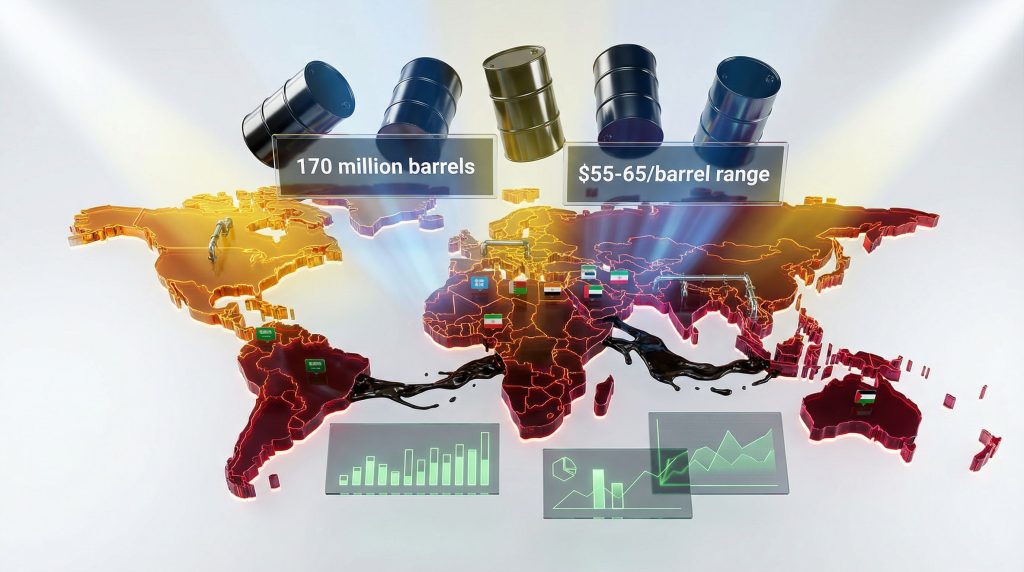
Quantifying the specific premium attributed to crude oil price drop Ukraine war resolution involves decomposing current pricing into fundamental equilibrium levels versus uncertainty-driven inflation. Leon's analysis indicates that approximately 170 million barrels of Russian oil currently stored offshore awaiting market access represents a significant supply overhang that markets are beginning to price into forward expectations.
European gas storage levels above 95% capacity provide additional context for understanding risk premium compression. According to global oil market reports, storage adequacy has reduced immediate supply security concerns, enabling markets to focus on medium-term normalisation scenarios rather than crisis-driven procurement.
Regional variations in risk pricing demonstrate geographic proximity effects:
| Market Benchmark | Premium Estimate | Key Driver |
|---|---|---|
| European TTF Gas | 25-30% above fundamental | Pipeline infrastructure dependency |
| Brent Crude | 15-20% above equilibrium | Refined product supply chain disruption |
| Asian LNG Contracts | 10-15% premium | Alternative supplier availability |
The European benchmark TTF gas price trading below €27/MWh represents its lowest level since early 2021, indicating substantial risk premium compression as markets reassess supply disruption probabilities. This pricing level reflects not only adequate storage but also successful diversification efforts including increased LNG imports from the United States and Qatar.
Furthermore, comparative analysis reveals that pre-February 2022 pricing baselines established different equilibrium levels across regional markets. Current pricing below these historical references suggests that markets are anticipating not merely conflict resolution, but comprehensive normalisation of trade relationships and supply chain infrastructure.
When big ASX news breaks, our subscribers know first
Russian Energy Supply Dynamics and Market Reintegration
What Would Happen to Russian Oil Exports Post-Resolution?
Current offshore storage capacity represents one of the most significant immediate supply factors facing global oil markets. Leon's analysis identifies approximately 170 million barrels of Russian crude currently stored on water awaiting market access, equivalent to roughly 5-6 days of global oil consumption. This accumulated inventory creates substantial economic pressure for rapid liquidation once sanctions frameworks begin normalisation.
Infrastructure readiness assessments indicate that Russian production and export systems have maintained technical capability despite extended sanctions periods. Leon emphasises that "attacks on Russian oil infrastructure would come to an end" upon ceasefire implementation, addressing both production capacity constraints and logistical bottlenecks that have limited export flexibility.
Production ramp-up scenarios involve three distinct phases:
• Immediate response (0-3 months): Offshore inventory liquidation and pipeline capacity testing
• Capacity optimisation (3-6 months): Full production resumption and export infrastructure verification
• Market integration (6-12 months): Complete normalisation of trade flows and pricing mechanisms
Transportation infrastructure considerations extend beyond pipeline capacity to include tanker fleet availability and routing optimisation. The Russian shadow tanker fleet, estimated at 80-100 vessels currently utilised for sanctions-circumvention logistics, would redeploy to conventional routing patterns, reducing transportation costs and delivery timelines.
Floating storage economics create additional pressure for rapid market entry. The carrying costs associated with 170 million barrels of offshore storage represent significant daily expenses that increase incentives for immediate market liquidation rather than gradual supply increases. This dynamic could create initial supply surge effects rather than smooth market reintegration.
How Would Sanctions Lifting Affect Global Supply Balance?
Asymmetric sanctions removal frameworks present complex market integration challenges. Leon's analysis suggests that "US sanctions on Russian oil companies would likely be lifted relatively quickly, while European sanctions would probably be removed more gradually," creating arbitrage opportunities and supply flow distortions during transition periods. This asymmetric approach relates closely to oil price stagnation factors that affect global markets.
This asymmetric approach reflects different political and economic constraints across Western allies. US sanctions removal enables immediate transatlantic trading relationships, while European Union consensus requirements necessitate coordinated member-state agreement processes that extend implementation timelines.
Market impact progression follows predictable patterns:
| Phase | US Policy | EU Framework | Supply Impact |
|---|---|---|---|
| Initial (0-90 days) | Rapid removal | Selective easing | +2.0-2.5 million bpd |
| Intermediate (3-6 months) | Full normalisation | Gradual expansion | +3.5-4.5 million bpd |
| Complete (6-12 months) | Standard trade relations | Comprehensive restoration | +5.5-6.5 million bpd |
Trade flow normalisation effects extend beyond simple volume additions to pricing mechanism changes. Leon notes that "the discounts on Russian barrels would likely narrow as trade flows normalise," indicating that sanctions-era pricing discounts (estimated 10-15% below regional benchmarks) will compress as standard commercial relationships resume.
Global demand absorption capacity becomes critical during rapid supply increases. Current global crude consumption approximately 100 million barrels per day suggests that Russian supply additions represent 2.5-3.5% market share shifts, requiring corresponding demand growth or competitive displacement of alternative suppliers.
Regional Trade Flow Restructuring
Asian market dynamics face significant adjustment as discounted Russian crude availability normalises. Current importing patterns developed during sanctions periods have created dependency relationships with non-traditional suppliers and pricing mechanisms that will require restructuring as conventional trade relationships resume.
European energy security frameworks have undergone fundamental transformation during the conflict period. The European Commission's coordinated procurement approach, including diversified LNG imports and strategic reserve management, has reduced immediate supply vulnerability while creating new commercial relationships that may persist beyond conflict resolution.
Transportation cost implications involve multiple components:
• Insurance premium reduction: Political risk coverage costs declining from 5-10% premiums to standard commercial rates
• Routing optimisation: Direct Baltic and Black Sea exports replacing circuitous sanctions-avoidance shipping
• Fleet utilisation: Shadow tanker capacity redeployment to higher-margin conventional routes
Pipeline infrastructure utilisation rates will require comprehensive assessment following extended maintenance and reduced utilisation periods. The Druzhba Pipeline system and Eastern Siberia-Pacific Ocean pipeline networks maintain technical capacity, though inspection and verification protocols may temporarily limit throughput during initial reopening phases.
In addition, storage facility optimisation across regional markets reflects changed import patterns and strategic reserve management approaches. European storage levels above 95% capacity indicate successful adaptation to alternative supply sources, though long-term optimisation may favour renewed pipeline imports for cost efficiency.
OPEC+ Strategic Response Framework
How Would Peace Affect OPEC+ Production Coordination?
Alliance recalibration within OPEC+ faces fundamental strategic shifts as Russian participation normalises. Leon's analysis indicates that "the lifting of sanctions would also change incentives within the OPEC+ alliance, making it more likely that the group resumes a market-share strategy after the planned pause in the first quarter of 2026."
This strategic pivot from price support to volume maximisation reflects changed competitive dynamics when Russian production constraints disappear. Current oil prices below $60 per barrel already pressure high-cost producers and may accelerate OPEC+ decision-making toward market share protection rather than price optimisation.
Saudi Arabia's positioning becomes particularly complex as the alliance's de facto leader faces competing objectives. Fiscal revenue requirements support higher price preferences, while market stability considerations and long-term demand preservation favour gradual supply increases that maintain competitive positioning against alternative energy sources.
Production strategy scenarios involve competing frameworks:
• Cooperative stabilisation: Coordinated supply increases maintaining price stability around $65-75/barrel
• Market share competition: Aggressive volume increases prioritising competitive positioning
• Hybrid approach: Selective member flexibility with core group price support
The planned pause in Q1 2026 represents a strategic checkpoint for reassessing market conditions and member state preferences. This timing coincides with Russian market reintegration scenarios, creating opportunities for comprehensive alliance restructuring rather than incremental policy adjustments.
Production Strategy Scenarios
Competitive dynamics post-resolution involve fundamental reassessment of global market positioning. Russian production capacity additions combined with normalised export infrastructure create pressures for coordinated supply management or aggressive market share competition among major producers. These dynamics align with broader patterns discussed in US-China trade war impact analyses.
Industry analysts project OPEC+ could abandon current production restraints by Q2 2026, prioritising market share over price support if Russian supply normalises rapidly and alternative energy adoption accelerates faster than expected.
US shale response mechanisms provide additional complexity for OPEC+ strategic planning. Shale production economics typically break even around $45-55 per barrel, suggesting that sustained lower prices could reduce US production growth while enhancing OPEC+ market influence.
Investment flow considerations extend beyond immediate production decisions to long-term capacity development. Lower price environments typically reduce capital allocation to frontier exploration while increasing focus on operational efficiency and enhanced recovery technologies for existing assets.
Technology acceleration becomes more critical for marginal producers facing compressed profit margins. Enhanced oil recovery techniques, digitalisation investments, and operational optimisation programmes gain priority when commodity prices provide limited buffer for inefficient operations.
Demand-Side Economic Implications
What Are the Macroeconomic Consequences of Lower Oil Prices?
Inflation relief mechanisms operate through both direct energy cost reductions and indirect economic stimulus effects. Lower crude oil prices reduce transportation costs, manufacturing inputs, and household energy expenses, creating deflationary pressures that may influence central bank monetary policy decisions. These effects contribute to the broader global recession outlook considerations.
Consumer spending power increases provide economic stimulus effects that vary by regional income levels and energy intensity. Developed economies typically experience moderate benefits, while emerging markets with higher energy cost burdens relative to household income see more substantial economic impacts.
Industrial competitiveness advantages become particularly significant for energy-intensive manufacturing sectors. Petrochemical production, steel manufacturing, and transportation services benefit from reduced input costs, potentially improving export competitiveness and domestic investment attractiveness.
Regional economic impact assessment reveals varied outcomes:
| Region | Immediate Benefits | Structural Adjustments | Policy Responses |
|---|---|---|---|
| Europe | Reduced inflation pressure | Supply chain diversification review | Strategic reserve optimisation |
| Asia-Pacific | Manufacturing cost advantages | Trade route reconfiguration | Energy security planning |
| North America | Consumer spending increase | Domestic production adjustment | Climate policy acceleration |
Central bank policy implications involve reassessing inflation targeting frameworks when energy price volatility decreases. Sustained lower energy costs may enable more accommodative monetary policies, though central banks must balance inflation relief against potential asset bubble risks from extended low interest rates.
Sectoral Demand Evolution
Transportation sector dynamics face accelerated transition pressures when conventional fuel costs decline substantially. Lower petrol and diesel prices may temporarily slow electric vehicle adoption rates, though long-term electrification trends depend more on infrastructure development and regulatory frameworks than fuel price fluctuations.
Petrochemical industry optimisation benefits from reduced feedstock costs, potentially enabling capacity expansion and improved competitive positioning against bio-based alternatives. Natural gas and crude oil derivatives become more cost-competitive, affecting investment decisions in chemical manufacturing complexes.
Power generation switching economics change significantly when natural gas prices compress. Coal-to-gas switching accelerates in markets where infrastructure permits, while renewable energy projects face increased competition from lower-cost fossil fuel alternatives, potentially slowing transition timelines.
Consequently, aviation sector recovery prospects improve substantially with lower jet fuel costs, enabling route expansion and fare reductions that stimulate travel demand. However, long-term sustainability commitments may limit airlines' ability to fully capitalise on temporary fuel cost advantages.
Market Structure and Trading Dynamics
How Do Financial Markets Price Peace Prospects?
Futures curve implications demonstrate market expectations through contango versus backwardation patterns. Current curve structures suggest that markets anticipate supply increases over 6-12 month horizons, with forward prices declining relative to near-term contracts as supply normalisation progresses.
Options markets provide direct measures of uncertainty through implied volatility metrics. Energy option premiums typically expand during geopolitical uncertainty and compress as resolution prospects improve, offering quantitative measures of market confidence in peace dividend scenarios.
Volatility expectations affect multiple market participants:
• Commercial hedgers: Reduced hedging costs enable longer-term price risk management
• Speculative traders: Lower volatility reduces profit opportunities but improves risk-adjusted returns
• Institutional investors: Portfolio allocation models require recalibration for changed risk-return profiles
Institutional positioning involves comprehensive reassessment of commodity allocation strategies. Pension funds, sovereign wealth funds, and university endowments typically maintain strategic commodity allocations that require rebalancing when fundamental market structures change.
Furthermore, commodity index rebalancing creates additional trading volume as passive investment products adjust exposure levels. Major indices including the Goldman Sachs Commodity Index and Bloomberg Commodity Index require periodic reweighting that can amplify price movements during transition periods.
Risk Management Evolution
Corporate hedging strategies face fundamental reassessment as energy price volatility patterns change. Airlines, shipping companies, and manufacturing firms typically maintain 12-24 month hedging horizons that require adjustment when underlying price dynamics shift substantially.
Financial product innovation responds to changed market conditions through new derivative instruments. Peace dividend swaps, geopolitical volatility caps, and supply disruption insurance products may emerge to address specific risk management needs during transition periods.
Insurance market adjustments extend beyond traditional political risk coverage to operational and transportation insurance. Marine insurance for oil tankers, pipeline operator coverage, and refinery business interruption policies require premium recalibration as regional risk profiles normalise.
Credit market implications affect energy sector financing costs as perceived risks decline. Corporate bond spreads, bank lending terms, and project finance availability typically improve when operational environments stabilise, enabling increased capital investment in infrastructure and expansion projects.
Investment and Infrastructure Considerations
What Infrastructure Investments Become Viable at Lower Prices?
Refining capacity expansion economics improve substantially when crude oil supply stability increases and price volatility decreases. Complex upgrading projects require long-term feedstock security and predictable margin environments that become more attractive under normalised supply conditions.
Pipeline development projects gain economic justification when throughput certainty improves and regulatory environments stabilise. Long-term transportation infrastructure investments typically require 15-20 year payback horizons that depend on sustained commercial relationships between suppliers and consumers.
Storage facility optimisation involves balancing strategic reserve requirements against commercial storage economics. Government strategic petroleum reserves may require reassessment when supply disruption risks decrease, while commercial storage operators face changed utilisation patterns and price volatility premiums.
Capital allocation priorities shift across project categories:
• Exploration budgets: Frontier region development becomes less attractive relative to infrastructure optimisation
• Technology investment: Enhanced recovery and digitalisation gain priority over new field development
• Environmental compliance: Carbon capture and emission reduction projects gain relative importance
Capital Allocation Shifts
Exploration and production investment decisions require fundamental reassessment when market volatility decreases. High-risk, high-return exploration projects become relatively less attractive compared to infrastructure optimisation and operational efficiency improvements.
Technology development priorities evolve toward operational optimisation rather than supply security. Enhanced oil recovery techniques, predictive maintenance systems, and automated operations become more valuable than supply diversification or strategic stockpiling investments.
Renewable energy competition faces complex dynamics when fossil fuel prices decline substantially. Solar and wind project economics remain attractive due to declining technology costs, though reduced fossil fuel price volatility may slow commercial adoption in sectors with flexible fuel switching capability.
Alternative energy infrastructure development continues based on long-term policy frameworks rather than short-term price competition. Electric vehicle charging networks, hydrogen production facilities, and battery storage systems depend more on regulatory support and technology costs than commodity price fluctuations.
The next major ASX story will hit our subscribers first
Timeline and Probability Assessment
Negotiation Progress Indicators
Diplomatic milestone tracking involves monitoring specific agreement components and implementation phases. Reports from Berlin regarding NATO-like security guarantees represent substantive framework development beyond preliminary ceasefire discussions, indicating progress toward comprehensive resolution mechanisms.
Market confidence building requires sustained political momentum rather than isolated diplomatic announcements. Leon cautions that "markets have come close to pricing in a peace deal several times, only for talks to stall," emphasising that durability depends on "tangible progress toward a credible and lasting agreement." This aligns with current oil market volatility observations.
Verification mechanisms involve multiple international frameworks:
• United Nations monitoring: Ceasefire compliance and humanitarian access verification
• European Union oversight: Economic assistance and reconstruction coordination
• NATO involvement: Security guarantee implementation and regional stability assessment
Implementation phases require coordination across multiple policy domains. Economic sanctions lifting, diplomatic relationship normalisation, and trade agreement restoration involve different timelines and decision-making processes that may create temporary market uncertainties.
Potential Disruption Scenarios
Negotiation collapse risks remain substantial despite current optimism. Leon emphasises that "caution is still warranted" and markets "are likely to remain highly sensitive to political headlines" until sustained peace dividends materialise over extended periods. This sensitivity relates to broader geopolitical oil analysis trends.
Risk assessment frameworks suggest even successful negotiations carry implementation risks, with markets likely to maintain 10-15% risk premiums until sustained peace dividends materialise over 12-18 months of verified compliance.
Alternative escalation scenarios could reverse current price compression rapidly. Expansion of conflicts to additional regions, breakdown of international cooperation frameworks, or domestic political instability in key producing regions would restore risk premiums immediately.
Supply disruption contingencies require continuous monitoring even during peace processes. Infrastructure vulnerability, cyber security threats, and operational accidents maintain baseline risk levels that prevent complete risk premium elimination.
Price Projection Framework
Base case scenarios assume gradual conflict de-escalation with coordinated international support, suggesting oil price ranges of $55-65 per barrel as fundamental supply-demand balance reasserts influence over geopolitical premiums.
Optimistic outcomes involving rapid, comprehensive peace agreements with verified implementation could enable $45-55 per barrel pricing as Russian supply integration proceeds smoothly and alternative suppliers adjust production levels cooperatively.
Disruption risk scenarios maintain relevance despite current optimism, with potential price rebounds to $75-85 per barrel if negotiations collapse or conflicts expand to additional regions requiring immediate market repricing of supply security concerns.
Probability weighting involves assessing multiple scenario paths rather than single-point forecasts. Market pricing reflects continuous adjustment of probability distributions across potential outcomes rather than commitment to specific price trajectories.
Strategic Implications for Energy Security
How Should Nations Adjust Energy Policies?
Strategic reserve optimisation requires balancing cost efficiency against security requirements when supply disruption probabilities change. Government petroleum reserves maintained for emergency supply typically cost $2-3 per barrel annually in storage and maintenance expenses that require justification against reduced threat assessments.
Supplier diversification strategies face reassessment when previously restricted sources become available. Long-term contract portfolios developed during sanctions periods may require renegotiation to optimise cost structures while maintaining adequate supply security margins.
Infrastructure resilience planning must account for potential future disruptions rather than assuming permanent peace dividends. Pipeline redundancy, port capacity flexibility, and emergency response capabilities require maintenance even when immediate threats diminish.
Policy framework adjustments involve multiple considerations:
• Regulatory oversight: Environmental standards and safety requirements during rapid infrastructure utilisation changes
• International cooperation: Coordinated response mechanisms for future supply disruptions
• Economic competitiveness: Balancing energy security against commercial cost optimisation
Corporate Strategy Evolution
Supply chain restructuring involves transitioning from crisis-optimised procurement to cost-efficient sourcing strategies. Companies that developed alternative supplier relationships during sanctions periods must evaluate whether to maintain diversification or optimise for lowest-cost sourcing.
Investment horizon planning requires reassessing project economics under different geopolitical scenarios. Capital projects with 10-20 year payback periods must incorporate probability-weighted scenarios rather than assuming sustained low-price environments.
Risk management integration involves comprehensive approaches to political and market volatility that extend beyond traditional hedging strategies. Operational flexibility, supplier diversity, and strategic inventory management become components of integrated risk frameworks.
Competitive positioning strategies require anticipating market structure changes beyond immediate price movements. Companies that gain operational efficiency during challenging periods may achieve sustained competitive advantages even when market conditions normalise.
Disclaimer: This analysis contains forward-looking statements and scenario projections based on current geopolitical developments. Energy market outcomes depend on numerous factors including diplomatic negotiations, international sanctions policies, production decisions by major oil producers, and global economic conditions. Actual market developments may differ materially from projected scenarios. Readers should conduct independent analysis and consult qualified advisors before making investment or strategic decisions based on this information.
Want to Stay Ahead of Market-Moving Developments?
Discovery Alert provides instant notifications on significant ASX mineral discoveries using its proprietary Discovery IQ model, turning complex market data into actionable insights for investors navigating volatile commodity environments. Whether you're tracking energy sector opportunities or broader resource plays, begin your 30-day free trial today to position yourself ahead of major market movements.